[pageLogInLogOut]

#Dyeing, Drying, Finishing

Covestro makes new breakthroughs in sustainable textile coatings

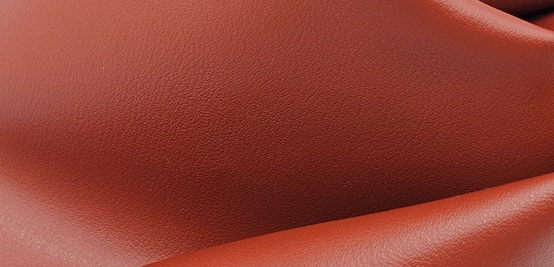
Covestro presents breakthroughs in its INSQIN® waterborne polyurethane (PU) technology at K 2016 in Germany, the world’s largest plastics trade fair. A new process technology for the production of PU synthetic base material combined with new products in the Impranil® range enables significant reduction in manufacturing cost of PU textiles and a broader range of fashionable material effects.
INSQIN® enables wider application scope and reduction in manufacturing costs

In accordance with an increasing demand for sustainable textile materials, INSQIN® waterborne polyurethane technology enables an entirely new level of material sustainability for PU-coated fabrics, key materials for apparel and footwear, furniture and diverse other industries. By enabling solvent-free material manufacturing processes, the technology brings significant improvement to worker safety, eliminates risks of environmental pollution and drastically reduces the consumption of water and energy.

More flexible production PU base materials are essential intermediates in the manufacture of many PU synthetic textile materials, particularly those used in the fashion industry, since they permit a very high level of production flexibility that is of critical importance in this industry. The new technology developed using INSQIN® shows the same high performance, especially softness, of materials manufactured using solvent-based products.

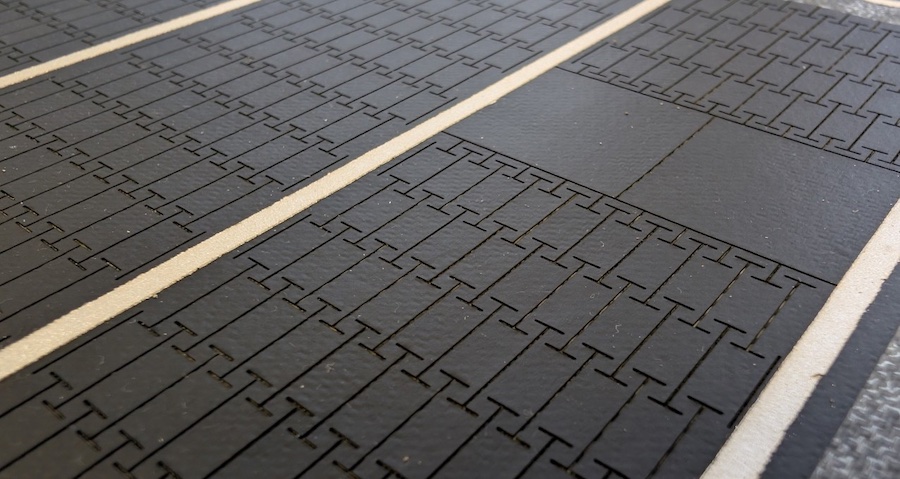
Furthermore, it can be embossed directly, bringing about a significant reduction in manufacturing costs and permitting manufacturers to bring an enormous range of surface effects to the material, another key success factor in the fashion industry. Manufacturers can adopt this new achievement utilizing existing production lines, without need for a major investment.

“We are particularly proud of this new breakthrough in the technology for base material manufacture”, says Nick Smith, Global Head of Textile Coatings. “It will further increase the appeal of our waterborne PU material to the textiles industry, that is searching for sustainable materials. It is a wonderful example of a combined development of both new products and textile coating application technology, that we carried out in close concert with key customers.”

Broadening the application of waterborne PU textiles Covestro has also launched new PU dispersions that further broaden the application possibilities of waterborne PU. The new products focus on both the creation of new material effects and on new performance levels.

Newly launched Impranil® CIL enables the production of fine nubuck material, a popular material effect that until now has posed a significant challenge for waterborne chemistry. Similarly, Impranil® DLI is a new PU dispersion designed for excellent wrinkle or fold recovery in the coated material. This is an important performance criterion in some applications, for example garment. The new materials are under trial with top brand owners in the industry.

Pic: The new Impranil® eco range of waterborne, bio-based polyurethane dispersions of Covestro has a renewable content of up to 65 percent.

Next leap in sustainability Covestro has developed a range of waterborne, bio-based polyurethane dispersions. With a renewable content that reaches as high as 65 percent, Impranil® eco contributes to a further reduction of CO2 emissions, thus further improving the sustainability of waterborne PU. The first products in the series have been designed for applications in fashion apparel, accessory and footwear, and more products are being developed for other uses.

Visit Covestro at the K 2016 plastics trade fair from October 19 to 26 in Düsseldorf, Germany, Hall 6, Stand A 75.

More News from Covestro AG

#Smart Textiles

Covestro, FILK Freiberg, and OUT e.V. develop flexible, conductive polymer smart textile system

As the smart textiles market continues to grow across healthcare, personal protection, sportswear, and automotive applications, developers are seeking new ways to integrate electronic functionality directly into textiles, without the rigidity and complexity of conventional wiring. To address this challenge, FILK Freiberg Institute, an independent research institution with expertise in polymer coatings for textile applications, collaborated with Optotransmitter-Umweltschutz-Technologie (OUT) e.V. The joint project, funded under the German Industrielle Gemeinschaftsforschung (IGF) program of the Bundesministerium für Wirtschaft und Energie (BMWE), focused on developing flexible, conductive polymer surfaces for next-generation smart textiles.

#Techtextil 2026

Covestro to exhibit solutions for a more sustainable and productive textile industry at Techtextil 2026

Covestro will present a broad portfolio of material innovations for textile coatings, adhesive films and thermoplastic polyurethanes (TPUs) at Techtextil 2026 (Hall 11.0, Booth C79). The exhibits will demonstrate how advanced solutions can enhance durability, recyclability and manufacturing efficiency across applications such as automotive, infrastructure, protective apparel and sportswear. A particular focus will be on more sustainable coating technologies, including antimicrobial systems based on INSQIN® in combination with AGXX from Heraeus Precious Metals, as well as the integration of Pontacol® thermoplastic adhesive films into Covestro’s offering.

#Technical Textiles

Covestro showcases monomaterial concept in autonomous SUE People Mover

UE | STUDIOS has unveiled the fully autonomous electric minibus “Self-driving Urban E-Shuttle” (SUE), placing strong emphasis on sustainable material design. Developed within a project funded by the Federal Ministry for Economic Affairs and Energy (BMWE) and the European Union, the vehicle will begin public road testing this year. At the core of the concept is the consistent use of recyclable monomaterials to improve circularity at end of life.

#Textile chemistry

Covestro and Heraeus Precious Metals collaborate to enable safer, more sustainable antimicrobial textile coatings

Laboratory tests reveal that AGXX antimicrobial surface technology from Heraeus Precious Metals is fully compatible with Impranil® PU dispersions which are part of the waterborne INSQIN® textile coating technology from Covestro, paving the way for more sustainable antimicrobial textile coatings. This discovery comes at a key moment for the textile coatings industry. As the sharing economy continues to grow, more people are coming into regular contact with high-use surfaces, creating ideal conditions for bacteria, viruses, and other microorganisms to thrive.

More News on Dyeing, Drying, Finishing

#Dyeing, Drying, Finishing

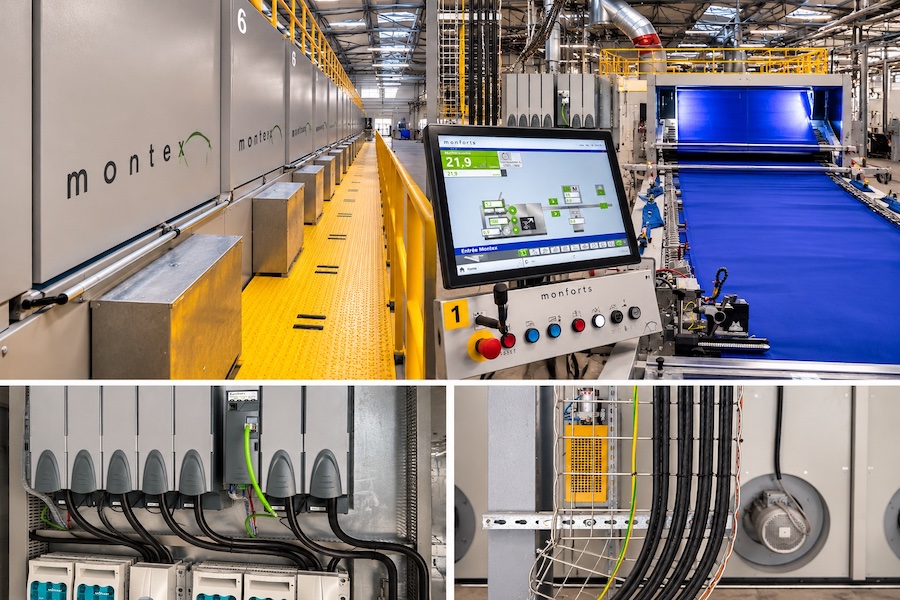
AEI reaps the benefits of all-electric new Monforts range

The impact of the rising cost of energy on the textile industry has been well documented, with some European countries paying up to seven times more to run their manufacturing operations than in other regions of the world.

#ITMA Asia + CITME 2026

Brückner showcases sustainable technologies for the future of textile finishing at ITMA ASIA 2026

With rising energy costs, increasing environmental requirements, and growing competitive pressure, textile manufacturers worldwide are facing the challenge of making their production processes both more sustainable and more cost-effective. As one of the world's leading specialists in textile finishing machinery, Brückner will present innovative solutions and advanced production technologies at ITMA ASIA 2026 in Shanghai. These technologies can play a key role in significantly reducing both energy consumption and emissions.

#India ITME 2026

Monforts ready for India’s next phase of textile growth at ITME 2026

Advanced finishing, coating and energy-efficient processing will be highlighted by Monforts at India ITME 2026, as the region’s textile manufacturers increasingly look beyond volume production towards higher-value fabrics. The German finishing machinery specialist sees considerable potential in India as investment continues in conventional apparel and home textiles alongside rapidly developing markets for technical textiles, activewear, sportswear, filtration and automotive applications.

Latest News

#Recycling / Circular Economy

Circulose resumes recycling of discarded cotton textiles and appoints interim CEO

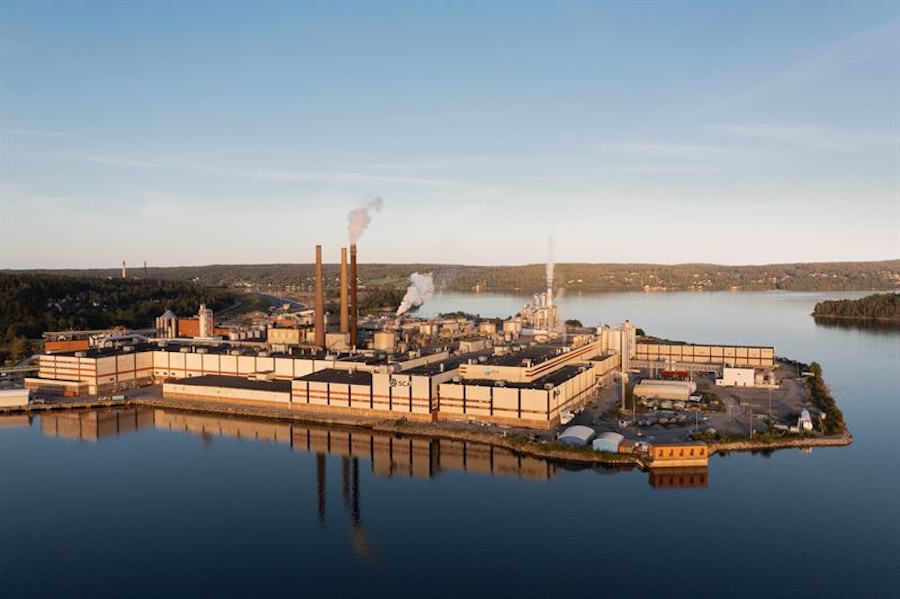
Circulose today announced its restart of commercial-scale production plant at Ortviken in Sundsvall, Sweden, marking a significant step in scaling next-generation materials for the global fashion industry. The Ortviken plant is the world’s first commercial-scale chemical textile recycling facility. Its restart demonstrates that the fashion industry is seeking ways to scale proven solutions that move beyond pilots and into commercial production.

#ITMA Asia + CITME 2026

Itema brings textile versatility to ITMA ASIA + CITME 2026

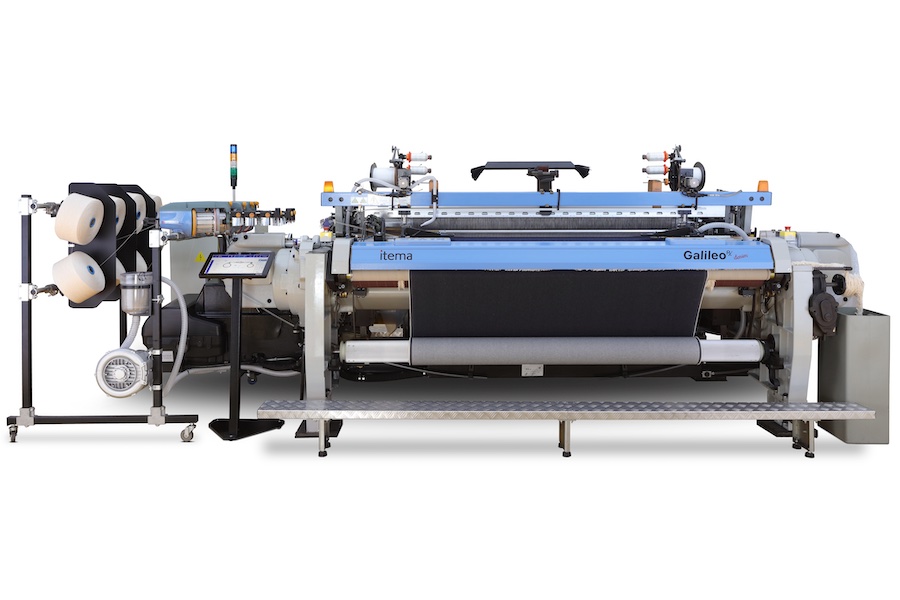
Itema announces its participation in ITMA ASIA + CITME 2026, taking place November 20–24 at the National Exhibition and Convention Center in Shanghai. In Hall 3 – Stand D06, the company will showcase two Galileo-RX rapier weaving machines weaving heavy denim and conveyor belt fabrics, demonstrating its ability to address different textile requirements with application-specific configurations. Five additional Itema machines at partner booths will extend the exhibition lineup to upper shoe fabric, label, Jacquard leno fabrics, and shirting, offering visitors a broader view of Itema rapier and air-jet weaving technologies.

#India ITME 2026

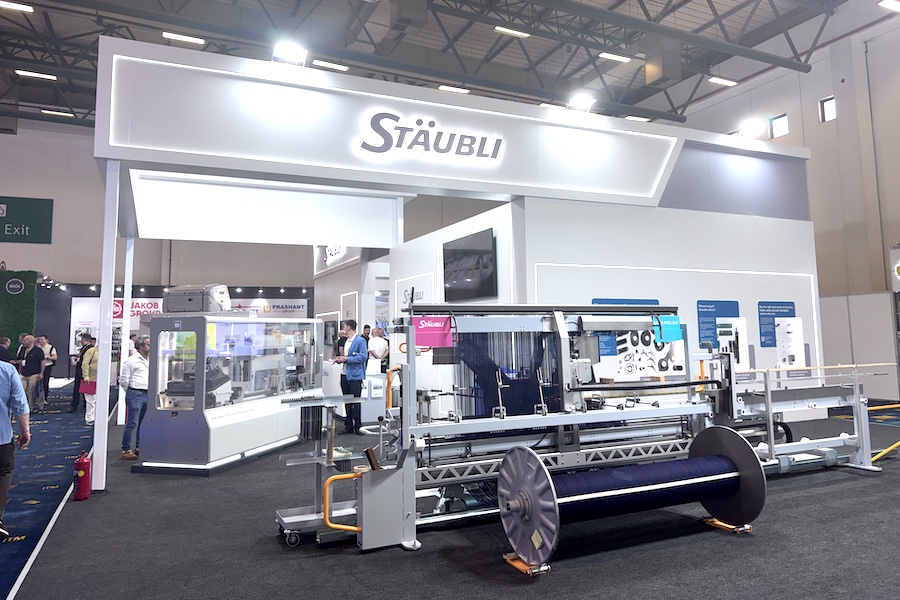
Stäubli to introduce new S3292 dobby for high-speed weaving at ITME India 2026

Stäubli will introduce its new S3292 dobby at ITME India 2026, taking place from December 4 to 9 at the India Expo Centre & Mart in Greater Noida, Uttar Pradesh. Designed for high-speed air-jet weaving, the new machine will be among the highlights of the company's presentation, which also includes warp preparation systems, cam motions, Jacquard technologies and digital services.

#Research & Development

DITF develops bio-based binding fibers for wood-fiber insulation materials

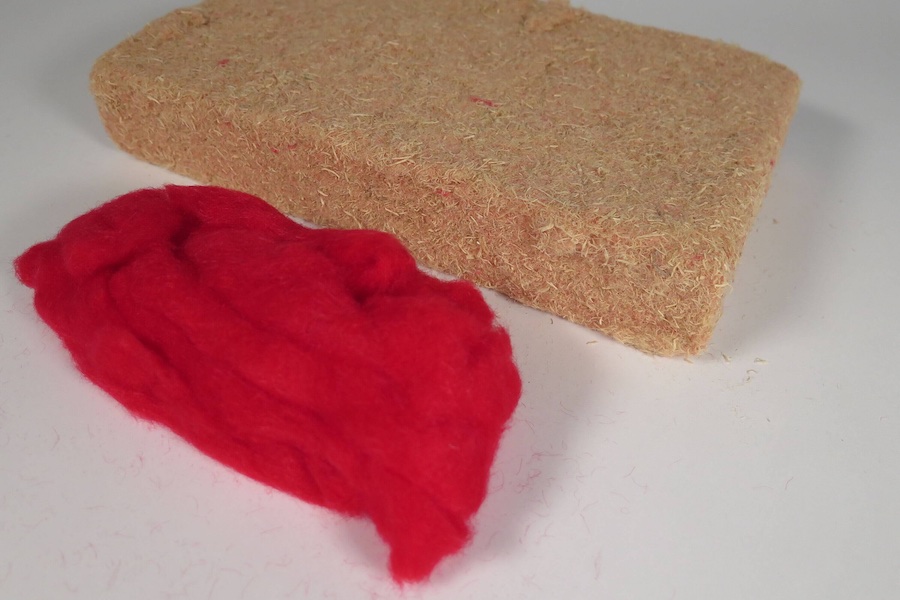
As part of the CelluWoodFlex project, the German Institutes of Textile- and Fiber-Research in Denkendorf (DITF) are developing bio-based cellulose ester fibers as alternative binding fibers for flexible wood fiber insulation materials. In addition to the spinning process and the production of suitable staple fibers, the institute is also investigating how wood and cellulose fibers can be separated and recycled at the end of their useful life.

TOP