[pageLogInLogOut]

#Associations

Beihilfe-Expertise mit konkreten Ergebnissen

Mitgliedschaft im IVGT: Kompetenz, die sich auszahlt.
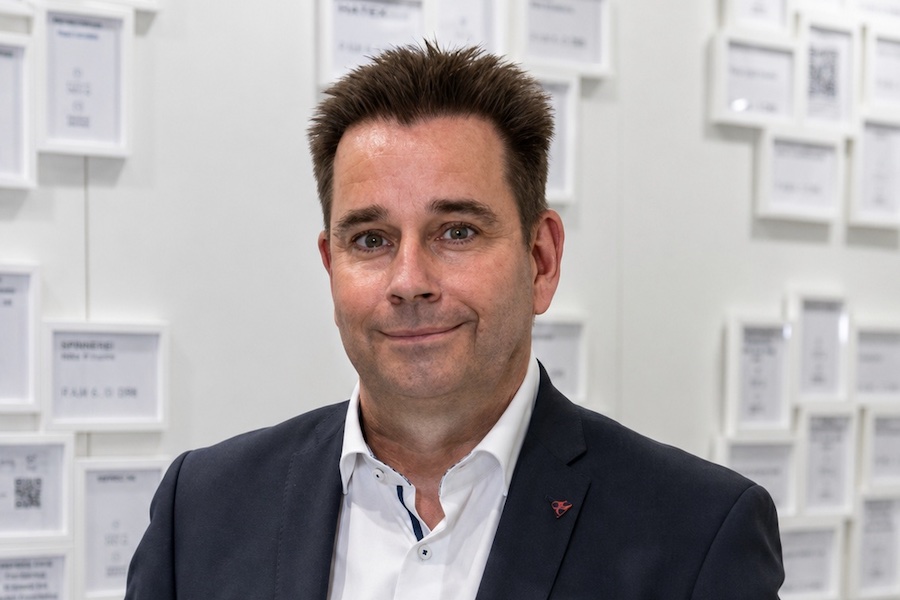
„Allein durch die vom IVGT begleiteten BECV-Anträge konnten Mitgliedsunternehmen bislang jährlich rund 500.000 Euro an CO₂-Kosten zurückerhalten.“ Michael Pöhlig, Hauptgeschäftsführer des IVGT e.V., Frankfurt a.M. © 2026 IVGT
Für energieintensive Textilunternehmen sind staatliche Kompensationsmechanismen ein wichtiger wirtschaftlicher Faktor. Der IVGT begleitet seine Mitgliedsunternehmen erfolgreich bei der Beantragung von Beihilfen und trägt damit regelmäßig zu erheblichen finanziellen Entlastungen bei. Die Grundlage dafür bildet die BEHG-Carbon-Leakage-Verordnung (BECV), die seit 2021 Unternehmen aus besonders wettbewerbsintensiven Branchen von den Kosten des nationalen Brennstoffemissionshandels entlastet.

Voraussetzung ist unter anderem ein Energiemanagementsystem nach ISO 50001, EMAS oder ISO 50005. Die Anträge sind jährlich bei der Deutschen Emissionshandelsstelle (DEHSt) einzureichen.

Um eine Carbon-Leakage-Kompensation nach der BECV zu erhalten, müssen Unternehmen ab dem jeweiligen Abrechnungsjahr ein Energiemanagementsystem nach den Vorgaben der BECV nachweisen und festgelegte Klimaschutzmaßnahmen umsetzen. Der IVGT begleitet seine Mitgliedsunternehmen gemeinsam mit erfahrenen Servicepartnern durch das anspruchsvolle Antragsverfahren. Mit Erfolg: Durch bewilligte BECV-Anträge konnten Mitgliedsunternehmen bislang jährlich rund 500.000 Euro an CO₂-Kosten zurückerhalten.

SPK: Erweiterte Entlastung für stromintensive Betriebe

Neben der BECV können besonders stromintensive Unternehmen auch von der Strompreiskompensation (SPK) profitieren. Sie gleicht einen Teil der CO₂-Kosten aus, die Stromerzeuger infolge des europäischen Emissionshandels tragen und über den Strompreis an ihre Kunden weitergeben. In der Textilindustrie sind die Wirtschaftszweige 13.10 (Spinnstoffaufbereitung und Spinnerei einschließlich Zwirnerei) sowie 13.95 (Herstellung von Vliesstoffen und Erzeugnissen daraus) beihilfeberechtigt. Für die Abrechnungsjahre 2025 bis 2030 können bis zu 75 Prozent der indirekten CO₂-Kosten erstattet werden; eine Doppelförderung über EEG-, EEV- oder KWKG-Regelungen ist ausgeschlossen.

Die im BECV-Verfahren aufgebaute Expertise des IVGT und seiner Servicepartner lässt sich unmittelbar auf die Strompreiskompensation übertragen. Derzeit unterstützt der Verband seine Mitgliedsunternehmen gezielt bei der Antragstellung.

Antragsfrist: Jetzt Fördermöglichkeiten prüfen

Die Antragsfrist bei der Deutschen Emissionshandelsstelle (DEHSt) endet bereits am 17. August 2026. Für betroffene Unternehmen empfiehlt sich daher eine frühzeitige Prüfung der Fördermöglichkeiten, um bestehende Entlastungspotenziale auszuschöpfen. Der IVGT unterstützt seine Mitgliedsunternehmen dabei, Förderpotenziale zu identifizieren, die Voraussetzungen für eine Antragstellung zu prüfen und den gesamten Antragsprozess gemeinsam mit erfahrenen Servicepartnern professionell zu begleiten.

Für energie- und stromintensiv produzierende Textilunternehmen bietet eine Mitgliedschaft im IVGT einen konkreten Mehrwert: fundierte regulatorische Expertise, ein etabliertes Netzwerk spezialisierter Servicepartner und eine nachweisliche Erfolgsbilanz bei der Beantragung von Entlastungen aus der BECV. Diese Erfahrung bringt der Verband nun auch in die Strompreiskompensation (SPK) ein. Unternehmen, die noch nicht Mitglied sind und ihre Fördermöglichkeiten im Rahmen der BECV oder der Strompreiskompensation (SPK) prüfen möchten, können sich unverbindlich an den IVGT wenden. In einem Online-Gespräch erläutert Michael Poehlig die Fördermöglichkeiten, die Voraussetzungen für eine Antragstellung sowie die Vorteile einer Mitgliedschaft im IVGT. Vereinbaren Sie hierfür gerne per E-Mail-Nachricht einen Online-Termin (michael.poehlig@ivgt.de).


More News from Industrieverband Veredlung - Garne - Gewebe - Technische Textilien e.V.

#Recycling / Circular Economy

Eco-design as the foundation of circular textiles

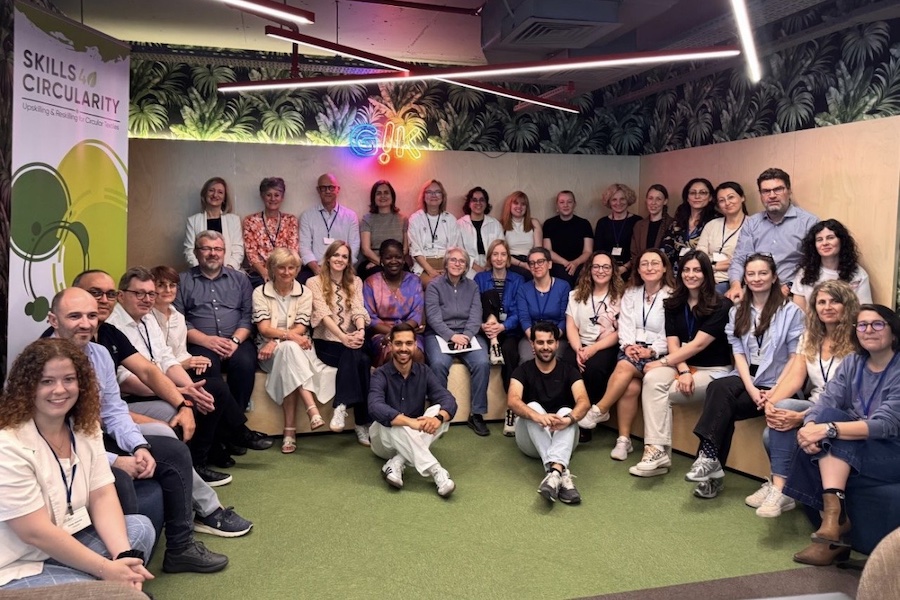
Based on the results of an extensive European analysis, the Erasmus+ project Skills4Circularity is currently developing three practice-based training modules covering recycling technologies, eco-design for the circular economy and sustainable manufacturing. This was preceded by a comprehensive company survey and a joint analysis conducted by the project partners under the leadership of IVGT. The results show that the greatest challenges lie not so much in a lack of technology as in skills gaps.

#Associations

IVGT membership: expertise that pays off

For energy-intensive textile companies, government compensation mechanisms are an important economic factor. The IVGT successfully supports its member companies in applying for state aid and thereby regularly contributes to significant financial relief.

#Recycling / Circular Economy

New skills for a circular textile economy

Based on the results of a comprehensive analysis, the Erasmus+ project Skills4Circularity is developing three practical training modules covering recycling technologies, eco-design for the circular economy and sustainable manufacturing. The content of the first module, Recycling Technologies, has now been developed and validated together with industry representatives. The module provides participants with knowledge of regulatory requirements, material sorting and the preparation of textile waste for recycling.

#Recycling / Circular Economy

The textile industry in transition

Recycling, traceability, eco-design and digitalisation are among the key future challenges facing the European textile industry. The Erasmus+ project Skills4Circularity, involving 21 partners from twelve countries, is investigating the skills required to address these challenges. As the German industry partner, the Industry Association for Finishing – Yarns – Fabrics – Technical Textiles (IVGT) is bringing the industry’s perspective to the project.

More News on Associations

#Associations

Business situation weakens slightly, but the industry stays cautiously optimistic

The International Textile Manufacturers Federation (ITMF) has published the results of its 39th Global Textile Industry Survey (GTIS), conducted from 14 to 22 July 2026 among companies along the entire global textile value chain. Worldwide, 10% of participants rated their business situation as good, 53% as satisfactory and 37% as bad — a balance of -26pp, down from -17pp in May but still well above the 2023 lows. All regions are now in negative territory, from South Asia at -3pp to North & Central America at -58pp.

#Associations

Italian textile machinery orders show quarterly recovery in Q2 2026

In the period between April and June 2026, order intake for Italian textile machinery manufacturers showed mixed but encouraging signals for the second half of the year. The order index at constant prices stood at 46.6 points (taking 2021=100 as the base year), showing a slight decrease of 3% compared to the same quarter of 2025. This trend was largely due to the contraction recorded in the domestic market, which fell by 25% compared to the corresponding period of the previous year.

#Associations

Consolidation amidst difficult market conditions

The International Textile Manufacturer Federation has published its International Textile Industry Statistics (ITIS) on productive capacity and raw materials consumption in the short-staple organized (spinning mill-) sector in virtually all textile-producing countries in the world.

#Recycling / Circular Economy

ReSpin joins TMAS to advance textile recycling technology

Swedish textile recycling company ReSpin has joined the Textile Machinery Association of Sweden (TMAS) as a new member. The company develops a patented mechanical recycling technology designed to transform textile waste into new fibres suitable for yarn production.

Latest News

#Yarn & Fiber

Expansive innovations converge in Shanghai as Yarn Expo Autumn 2026 opens doors next week

With just days to go, industry enthusiasm is building for the opening of Yarn Expo Autumn, Asia’s premier yarn and fibre trade fair, running from 25 – 27 August at the National Exhibition and Convention Center (Shanghai). Across 27,000 sqm in Hall 8.2, buyers will find nearly 600 exhibitors from 14 countries and regions, spread across seven specialised zones that range from cutting-edge man-made and regenerated fibres to time-honoured cashmere and silk. Beyond the extensive sourcing options, a fringe programme of trend showcases, presentations and product launches rounds out the three¬day event with design, innovation and market intelligence.

#Carpets

DOMOTEX Southeast Asia 2026 - Building the Gateway to ASEAN's fast-growing flooring market

From 11–13 November 2026, the inaugural DOMOTEX Southeast Asia will take place at BITEC (Bangkok International Trade & Exhibition Centre) in Bangkok, Thailand. Jointly organized by GLOBUS Events Limited and Hannover Milano Fairs Shanghai Ltd., with Worldex G.E.C. Co., Ltd. as the local partner, the exhibition marks the expansion of the internationally recognized DOMOTEX brand into Southeast Asia. As the newest addition to the global DOMOTEX portfolio, the exhibition has been developed specifically to serve the rapidly evolving ASEAN market, creating a dedicated business event for the flooring and interior finishing industry.

#Sustainability

Execs help steer Cascale’s consumer goods agenda in Athens

The 2026 Cascale Annual Meeting, taking place September 15–17 in Athens, Greece, will convene leaders from across the global consumer goods value chain to tackle one of the industry’s defining questions: how to accelerate meaningful, system-wide transformation. Guiding those conversations as this year’s co-chairs are Sean Cady, vice president, global sustainability, responsibility, trade, and government affairs at VF Corporation, and Dr. Delman Lee, vice chair at TAL Apparel Limited.

#Research & Development

MELANGE starts with a co-creative design workshop at Aalto University to shape the visual identity of this new project transforming colouration in textiles

Over the next three years, MELANGE will lower the environmental impact of interior textile production by moving colour design to the beginning of the manufacturing process. This Horizon Europe project officially started on 1 August 2026, and will be publicly launched on 27 August 2026.

TOP


