[pageLogInLogOut]

#Yarn & Fiber

TENCEL™ refreshes brand identity, championing collective innovation towards a more responsible textile industry¹
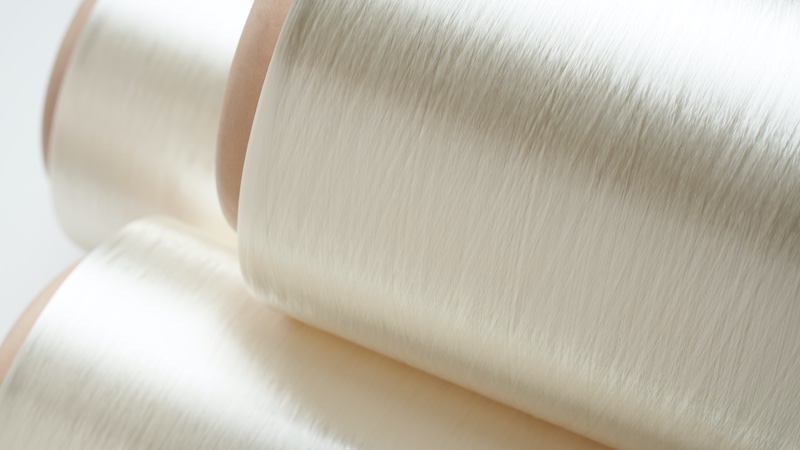
The Lenzing Group, a leading supplier of regenerated cellulose fibers for the textile and nonwovens industries, today unveiled the latest evolution of its flagship textile brand TENCEL™, with a refreshed branding theme of “Nature. Future. Us.”. The updated brand identity embodies TENCEL™’s ethos of striving to embrace innovation and empower collaboration, with a focus on being a catalyst of change in the textile industry to safeguard the planet’s shared future(1).
TENCEL™ lyocell filament yarn  © 2024 Lenzing
TENCEL™ lyocell filament yarn © 2024 Lenzing


“The new theme ‘Nature. Future. Us.’ creates a very inspiring and inclusive voice for TENCEL™,” said Eva McGeorge, Senior Director of Global Marketing and Branding, Commercial Textiles, Lenzing AG. “Since introducing TENCEL™ Lyocell in 19925 and bolstering the overall brand positioning in 2018, TENCEL™ has been striving to bring innovative, sustainable textile fibers to the world(1,2,3). The latest TENCEL™ brand evolution expands on our vision to spearhead resource-efficient4 and circular business practices(1,6,7) attributed to our fibers, from raw material sourcing8 to end-of-life disposal of consumer products9. To facilitate real change in the value chain, everyone in the industry needs to transform together(1,2). We will continue to build stronger collaborations and dedicate our efforts to creating a future for fashion that we can all be proud of.(1,2)”

Harnessing the power of innovation, collaboration and transparency

TENCEL™ is a brand founded on deep-seated respect for nature(1,4). TENCEL™ branded regenerated(10),biodegradable(9) fibers are carefully sourced from sustainably managed forests8 and produced using resource-efficient methods(4). To enhance circularity, Lenzing has been experimenting with and using waste materials like orange peel and cotton waste in the production of limited edition TENCEL™ Lyocell fibers, showcasing the brand’s unwavering commitment to championing sustainable textile innovation(1).

The growth of the TENCEL™ brand has also been fueled by collaboration. From the first waterless dyeing technology(11) for wood-based cellulosic fibers to the first plastic-free alternative(12) for stretch fabrics, TENCEL™ has been a catalyst in the revolution of fiber processing and applications. Collaboration has also brought the products made using fiber innovations to fashion shows, red carpets and retailers, extending TENCEL™’s reach. 

In an industry where transparency is highly valued, TENCEL™ published its full set of fiber claims on a dedicated webpage, offering unprecedented visibility(2) of raw material certification in the industry. Lenzing’s fiber identification technology enables the traceability of TENCEL™ fibers across all stages of textile production. This not only helps strengthen trust within the value chain, but also empowers consumers to make informed purchasing decisions.

“When consumers see the TENCEL™ trademark, they can rest assured that they are choosing renewable, traceable fibers(11) that guarantee quality and comfort(12). As we foster fiber innovation, we will continue to bolster trust and collaboration with like-minded partners, to empower value chain customers and amplify our impact(1,2). We will also further refine our fiber identification technologies and Lenzing E-Branding Service offerings, to make transparency and traceability a norm across various stages of textile production,” said Kit Ping Au-Yeung, Executive Vice President of Global Textiles Business at Lenzing AG.

The new TENCEL™ branding will be unveiled during the Intertextile Shanghai Apparel Fabrics Trade Fair, on August 27–29, 2024, at the Lenzing booth E55 at Hall 4.1.

(1) To foster a sustainable global textile and nonwovens industry, Lenzing follows three strategic principles within the context of its “Naturally Positive” sustainability strategy, which focuses on greening the value chain, driving systemic change, and advancing the circular economy through partnerships with key industry stakeholders, such as Textile Exchange, Cascale, Canopy, Together for Sustainability, Renewable Carbon Initiative, and UN Global Compact.

(2) With a process in place that factors in rapidly evolving regulatory requirements when developing and updating claims, TENCEL™ provides QR-coded claims and a Claims webpage that offers value chain partners and conscious consumers more clarity on what its fibers offer.

(3) TENCEL™ Lyocell and Modal fibers are certified with the EU Ecolabel for textile products (license no. AT/016/001) for environmental excellence.

(4) TENCEL™ Lyocell and Modal fibers are made with at least 50% less carbon emissions and water consumption, compared to generic (unbranded) lyocell and modal. The results were calculated according to LCA standards (ISO 14040/44) and are made available via the Higg Materials Sustainability Index (MSI) v3.7 by Cascale (formerly Sustainable Apparel Coalition).

(5) TENCEL™ Lyocell fibers’ first production was in Alabama, U.S. in 1992 when the production facility was owned by Courtalds.

(6) Lenzing – Focus Paper on Sustainability Strategy “Naturally Positive”, April 2024

(7) TENCEL™ Lyocell fibers produced with REFIBRA™ technology use cotton textile waste as a raw material, in addition to wood. The fibers contain a minimum of 30% recycled material.

(8) Adhering to the company’s commitment to environmental protection and resource preservation, Lenzing procures wood and pulp only from certified or controlled sustainable sources. In its Wood and Pulp Policy, Lenzing is committed to procuring wood and pulp exclusively from non-controversial sources.

(9) LENZING™ Lyocell and Modal standard fibers are certified by TÜV AUSTRIA as biodegradable in soil, freshwater and marine environment.

(10) TENCEL™ Lyocell and Modal fibers are made from wood, a natural and renewable raw material.

(11) Lenzing partnered with technology start-up Exponent Envirotech to introduce ECOHUES™, a waterless dyeing technology to Lenzing’s cellulosic fibers. ECOHUES™ technology effectively replaces the use of water in the dyeing process with a non-aqueous solvent that is 99.8% reusable and streamlines the pre-treatment and finishing processes by nearly removing the need for soap washing after dyeing. This helps to reduce the overall water usage by 95% compared to traditional dyeing methods.

(12) TENCEL™ Lyocell fibers are derived from the natural raw material wood and have been used to develop the industry’s first stretch fabrics that enable reduced usage of fossil-based materials.

More News from Lenzing

#Man-Made Fibers

Lenzing AG announces new leadership and establishment of Executive Committee

Lenzing AG announced that Rohit Aggarwal, Managing Board Member and Chief Executive Officer of Lenzing AG, has informed the Supervisory Board of his decision to resign from his position due to personal reasons, effective 31 January 2026. To support a smooth transition, Mr. Aggarwal will remain with Lenzing AG as an advisor to the company until end of September 2026. The Supervisory Board expresses its appreciation for Mr. Aggarwal’s leadership and contributions during his tenure.

#Man-Made Fibers

Lenzing invests EUR 15 mn to strengthen position in the hygiene market

The Lenzing AG is investing approximately EUR 15 mn to expand its production capacity for premium viscose fibers at its site in Lenzing, Austria. This strategic investment is part of the recently announced investment program of EUR 100 mn in total to secure the long-term competitiveness of Lenzing’s Austrian production sites. The capacity expansion reinforces the company’s commitment to providing sustainable solutions to the global hygiene market. It also strengthens the company's role as a trusted provider of high-quality fibers for feminine care applications.

#Man-Made Fibers

Lenzing AG: Stable revenue and improved EBITDA despite market headwinds

In the first nine months of 2025, Lenzing AG recorded revenue growth and higher EBITDA, but a market-driven volatile third quarter. This performance reflects the effects of ongoing market volatility, tariffs and geopolitical uncertainties. Nevertheless, the medium to long-term outlook remains positive.

#Man-Made Fibers

Lenzing confirmed as global leader in Canopy sustainability ranking

Lenzing AG has once again taken first place in this year's Hot Button Report published by the Canadian non-profit organization Canopy. With 34.5 out of 40 points and no known risk of sourcing from ancient and endangered forests, Lenzing remains one of the most sustainable companies in regenerated cellulose fiber production – setting a benchmark for responsible business practices in the textile and nonwovens industries.

More News on Yarn & Fiber

#Yarns

January 2026 marks Asahi Kasei’s restart of Bemberg production in restored sections of the Nobeoka facility

Beginning January 2026, production at the Asahi Kasei Nobeoka facility – Bemberg’s only production site – will gradually resume, marking a new chapter following the partial shutdown caused by the April 2022 incident. This progress is the result of significant investments and continuous work toreinforce safety measures, restore full operational capacity, and establish long- term stability.

#Yarns

Acelon introduces new functional yarns for fire safety and comfort applications

Acelon has presented two new functional yarn developments, AceXflame® and MistX®, aimed at expanding performance options for home textiles, industrial applications, and apparel.

#Yarns

Durak Tekstil enters 2026 with positive momentum, strengthens its global market focus

Durak Tekstil, maintaining its profitability and turnover levels in 2025 compared to the previous year, prioritizes growth through its export-oriented sales strategy. Increasing both its capacity and utilization rate, the company anticipates further gains in 2026 through expansion in global markets.

#Weaving

Vandewiele Group: Innovation across the textile value chain at ICFE Istanbul 2026

At the 2026 Istanbul Carpet & Flooring Expo (ICFE), Vandewiele Group presents its latest advancements spanning the entire textile value chain. From spinning and weaving to tufting, carpet manufacturing and digital finishing, the Group demonstrates how integrated innovation can boost performance, efficiency and sustainability across all stages of production. As a global technology leader, Vandewiele continues to develop solutions that strengthen processes, enhance product quality and enable smarter, greener manufacturing.

Latest News

#Research & Development

Innovation center for textile circular economy inaugurated

Just over eight months after the foundation stone was laid, the new Innovation Center for Textile Circular Economy was officially inaugurated today at TITK Rudolstadt. Thuringia's Minister President Mario Voigt, TITK Director Benjamin Redlingshöfer, and other guests of honor cut the ribbon to the modern building complex and viewed the premises, which are now ready for occupancy. The “DICE – Demonstration and Innovation Center for Textile Circular Economy” is TITK's largest single investment to date. The Free State of Thuringia supported the total cost of €11.5 million with €8 million in GRW and FTI funding.

#Research & Development

Sustainable design of Geosynthetics and roof underlayments made from recyclates

Is it possible to recover plastic recyclates from previously unused waste streams in order to produce high-quality fibers and films? How can bio-based polymer fibers be manufactured so as to allow adjustable biodegradability? These are the questions being addressed by researchers from the Fraunhofer Cluster of Excellence Circular Plastics Economy CCPE in the Zirk-Tex project.

#Associations

Waste2Fashion: FTTH Committed to advancing Circular Fashion in the Mediterranean

As an official partner of the Waste2Fashion project, the Tunisian Federation of Textile and Apparel (FTTH) participated in the Kick-off Meeting held on 10–11 December in Spain. The event brought together project partners from across the Mediterranean, including Spain, Italy, Egypt, Lebanon, and Tunisia, to align on a shared vision and initiate the first implementation steps.

#Associations

AATCC announces 2025 Herman & Myrtle Goldstein Graduate Student Paper Competition winners

The American Association of Textile Chemists and Colorists (AATCC) recognized the winners of the 2025 Herman & Myrtle Goldstein Graduate Student Paper Competition. Founded in 1982 to give student members the chance to conduct and present original research, the competition was renamed in 1994 in honor of Herman and Myrtle Goldstein, following their US$60,000 endowment. Their gift is a lasting remembrance of their dedication to young people in the textile industry.

TOP