[pageLogInLogOut]

#Yarn & Fiber

Lenzing receives EU Ecolabel for environmentally friendly fiber production at Indonesian production plant
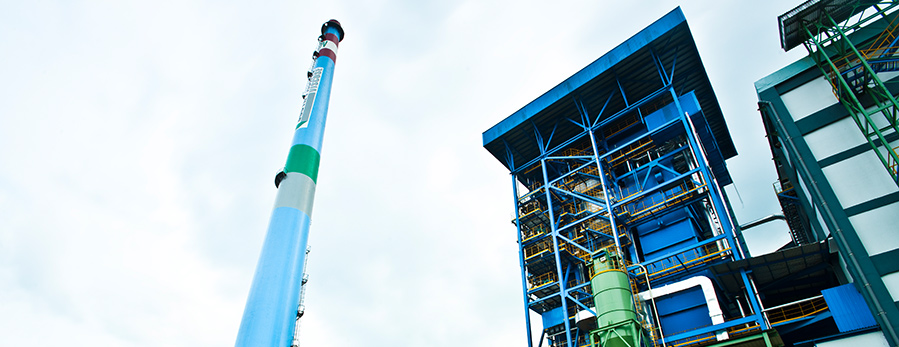
PT. South Pacific Viscose (SPV), Purwakarta - factory premises © 2023 Lenzing
The Lenzing Group, a world-leading provider of specialty cellulose fibers for the textile and nonwoven industries, has received certification from the internationally recognized EU Ecolabel[1] for its fibers at the Indonesian site. This means that Lenzing fibers produced in Purwakarta (PT. South Pacific Viscose) meet high environmental standards.

The product portfolio thus expands and qualifies for the production of LENZING™ ECOVERO™ brand fibers for textiles and VEOCEL™ brand fibers for nonwoven applications. By switching its previous production capacities to specialty viscose, Lenzing is in a better position to serve the strongly growing demand for environmentally friendly viscose fibers.

• EU Ecolabel certification confirms high ecological standards in Lenzing’s viscose fiber production in Indonesia

• Product portfolio thus successfully expanded to include special fibers of the LENZING™ ECOVERO™ and VEOCEL™ brands

• Modernization of the Indonesian production site brings significant reduction in emissions


The substantial investment of EUR 100 mn to modernize the Indonesian site has enabled Lenzing to significantly reduce its specific emissions. In addition, the site recently began sourcing energy from renewable sources and is driving the conversion to biomass in line with Lenzing's goals of reducing group-wide carbon emissions per ton of product sold by 50 percent by 2030 and achieving carbon-neutral production by 2050.

“We are working tirelessly to make the industries in which we operate even more sustainable and to drive the transformation of the textile business model from a linear to circular. I am therefore very pleased that we have now received the EU Ecolabel, which once again confirms our sustainability performance. Our investments in Indonesia, as well as in other Lenzing sites around the world, put us in an even better position to meet the growing demand for specialty fibers with low environmental impact,” said Stephan Sielaff, Chief Executive Officer of the Lenzing Group.


Boosting growth in specialty fibers

Anthropogenic climate change is one of the most pressing problems of our time, to which both the global textile and nonwovens industries make a major contribution. LENZING™ ECOVERO™ viscose fibers (for textiles) and VEOCEL™ Viscose (for nonwovens) have been proven to cause significantly less greenhouse gas emissions and water pollution than conventional viscose. At the Indonesian site, Lenzing also plans to produce the innovative LENZING™ ECOVERO™ Black fibers in the future, which also require less energy and water in textile chain thanks to the spun-dyeing process and thus also have a lower carbon footprint in their life cycle as a textile product.


[1] The EU Ecolabel is recognized in all member states of the European Union, as well as Norway, Liechtenstein and Iceland. The voluntary label, introduced by an EU regulation in 1992 (Regulation EEC 880/92), has gradually become a reference point for consumers who want to help reduce pollution by purchasing more environmentally-friendly products and services.

More News from Lenzing

#Nonwovens

Lenzing Group highlights scalable, bio-based nonwovens solutions at leading global industry fairs

From CIDPEX in China to Techtextil in Frankfurt and INDEX in Geneva, the Lenzing Group showcases ready-for-market, bio-based nonwoven solutions and receives industry recognition for LENZING™ Nonwoven Technology.

#Yarn & Fiber

Lenzing AG appoints Georg Kasperkovitz as Chief Executive Officer

The Supervisory Board of Lenzing AG has appointed Georg Kasperkovitz, Member of the Management Board and Chief Operations Officer, as Chief Executive Officer (CEO) of Lenzing AG with effect from June 1, 2026.

#Denim

TENCEL™ Lyocell - HV100 achieves global denim availability in six months; Vol. 2 debuts at Kingpins Amsterdam

When TENCEL™ Lyocell - HV100 debuted at last year’s Kingpins Amsterdam in October, 17 mill partners across five countries presented fabrics featuring the new fiber. Just six months on, participation has more than doubled, evolving into a global network that spans nine countries and four continents, signaling both strong industry momentum and growing demand.

#Techtextil 2026

Lenzing unveils three-tier cellulosic fiber portfolio for next generation protective wear

The Lenzing Group, a leading supplier of regenerated cellulosic fibers for the textile and nonwovens industries, today introduces Lenzing Solutions for Protective Wear. This integrated three-tier portfolio is anchored by LENZING™ FR fibers at the highest protection tier for inherent flame resistance and brings together complementary solutions including TENCEL™ Lyocell fibers, both EU Ecolabel-certified² and derived from certified or controlled wood sources³, within a unified protective wear architecture for the first time. The launch marks the most significant expansion of Lenzing’s protective wear business since the company pioneered inherently flame-resistant cellulosic fiber in 1977, and comes as the global personal protective equipment (PPE) market accelerates toward an estimated USD 130 billion by 2033⁴.

More News on Yarn & Fiber

#Man-Made Fibers

Ministry of Industry Delegation visits NatureWorks’ second global manufacturing site at Nakhon Sawan Biocomplex

NatureWorks Asia Pacific Limited welcomed a high-level delegation led by Mr. Varawut Silpa-archa, Minister of Industry, to its manufacturing site at the Nakhon Sawan Biocomplex (NBC). The visit follows the successful inauguration of the site on April 29, 2026, and highlights the role of public-private collaboration in advancing Thailand’s sustainable industrial development and bioeconomy ambitions.

#Man-Made Fibers

Sorona® and WGSN announce top bio-based material trends of 2027

Sorona®, the partially bio-based polymer from Covation Biomaterials (CovationBio™), and global trend forecasting authority WGSN today release the material trends shaping the textile industry through 2027 and beyond following a comprehensive examination of bio-based functional fiber applications and global data.

#Sustainability

The first widely accessible Life Cycle Assessment study for cashmere production published by Textile Exchange.

Crucial new data to better understand, measure, and address the impacts of cashmere production has been made available to the fashion, textile, and apparel industry through a new Life Cycle Assessment (LCA) published by Textile Exchange.

#Yarn & Fiber

R-Evenge chooses Q-NOVA® yarn by Fulgar for its line of technical socks dedicated to wellness

Q-NOVA®, Fulgar’s sustainable polyamide 6.6 yarn, has been selected by R-Evenge for the development of its collection of technical socks dedicated to wellness, fitness, and water-based activities.

Latest News

#Recycling / Circular Economy

Indorama Ventures advances circularity tthrough PETValue Philippines' “Zero Waste to Landfill Partnership” with Republic Cement

Indorama Ventures Public Company Limited, a global sustainable chemical company, is advancing the circular economy through a new Zero Waste to Landfill initiative at its recycling site PETValue Philippines, further demonstrating how collaboration across industries can maximize resource efficiency and reduce waste.

#Associations

IVGT membership: expertise that pays off

For energy-intensive textile companies, government compensation mechanisms are an important economic factor. The IVGT successfully supports its member companies in applying for state aid and thereby regularly contributes to significant financial relief.

#Research & Development

Networking Day 2026: Industry stakeholders unite around textile recycling

In 2026, the Industry Research Group (IRG) Polymer Recycling once again brought together some of the key stakeholders in textile recycling for its annual Networking Day. This year, the event took place at EREMA’s premises in Ansfelden, Austria. It brought together key players from across the textile recycling value chain for a day of structured exchange and in-depth discussions.

#Knitting & Hosiery

The new RDJ 7/3 defines the design footprint of modern athletic shoes

Stylish, functional, and efficient to produce – spacer fabrics are the all-arounders among textile materials. These versatile fabrics are particularly in demand in the sports and casual footwear sector, as they combine comfort, breathability, and design freedom. At the same time, this industry is trend-driven, dynamic, and price-sensitive like few others. Innovations are therefore a decisive factor for success. With the RDJ 7/3, KARL MAYER offers a solution specifically tailored to these requirements. The particular strength of the new double raschel machine: its exceptional flexibility, thanks to its three jacquard bars.

TOP