[pageLogInLogOut]

#Nonwovens / Technical Textiles

Borealis Bornewables™ polymers for personal hygiene fabrics help PFNonwovens Group accelerate its journey towards climate neutrality
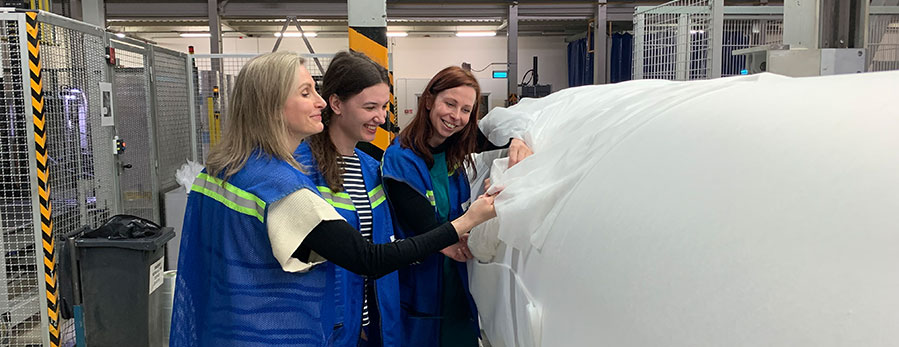
PFNonwovens production facilities © PFNonwovens
The nonwovens industry is moving towards a circular business model. As the growing world population is increasingly depending on soft and lofty nonwoven materials for absorbent products in everyday personal hygiene, from baby diapers to feminine hygiene products and incontinence care, certified renewable ™ polymers from Borealis help manufacturers combine efficient processability with significant benefits for the climate.

• PFNonwovens Group (PFN) reduces eco-footprint of nonwovens and sets new industry standard with Bornewables™ polypropylene (PP) for absorbent hygiene products

• Bornewables PP from ISCC PLUS mass balanced certified second-generation renewable feedstock derived entirely from waste and residue vegetable oil streams

• Industrial partnership embodies the Borealis EverMinds™ spirit of accelerating circularity and minimising carbon dioxide (CO?) emission


Significantly better environmental profile

In order to achieve their mission and offer value-added as well as more sustainable solutions to their customers, PFNonwovens Group teamed up with Borealis to enhance their production of nonwoven materials for the personal hygiene market and set a new industry standard by using Bornewables PP resins for spunbond and meltblown solutions.

“Anticipating the growing demand for more sustainable nonwoven solutions, we have focused our development resources over the past several years on the circular sphere to accelerate our journey towards climate neutrality,” explains Tonny De Beer, Chief Product, Technology & Sustainability Officer at PFNonwovens Group. ““For PFN’s nonwoven products, fossil-based resins are today the main contributor to the carbon footprint. Therefore, using the Borealis Bornewables instead of standard fossil-based resins will significantly reduce the carbon footprint, even enabling products with a carbon footprint under zero.”

Bornewables can be used as direct drop-in replacements for comparable fossil-based polyolefins. In PFN’s nonwoven production, they required no changes to the existing manufacturing process while delivering the same high quality and performance as previous non-renewable virgin materials.

Re-inventing essentials for sustainable living

In line with Borealis’s EverMinds™ ambitions to accelerate action on circularity, the Bornewables PP used by PFN is made with second-generation raw material feedstock derived entirely from waste and residue vegetable oil streams. The renewable content in all Bornewables products is mass balance accredited under the ISCC (International Sustainability and Carbon Certification) PLUS certification standard, confirming their authenticity and fully transparent traceability from the raw materials to the finished products.

“The combination of our expertise in polymer science and development with PFN’s processing know-how has resulted in nonwovens that make full use of the Bornewables advantages to minimise CO? emissions. Together we are reducing both waste and fossil depletion, while delivering cost-efficient products for the hygiene market with a premium look and feel,” adds Peter Voortmans, Global Commercial Director Consumer Product at Borealis. “At the same time, it serves as a role model of Borealis’ commitment to re-invent essentials for sustainable living in collaboration with value chain partners who share common goals.”


Taking a stand against climate change

Borealis adopted the mass balance approach for its renewable and chemically recycled polymers to provide products addressing climate change and circularity. The mass balance approach allows manufacturers to trace the exact share of sustainable feedstock allocated to their products, and Borealis’ ISCC PLUS certificates are audited annually to ensure that all requirements are met. Mass balancing makes it possible for customers to meet ambitious sustainability targets and stay on top of changing legislation. For PFN this means that for every tonne of certified Bornewables PP used in production, a maximum equivalent amount of nonwoven material can be claimed as certified renewable.

PFNonwovens Group’s new Bornewables based products for the personal hygiene market will be on display at INDEX™ 23, the world's leading nonwovens exhibition, from April 18 to 21 at the Palexpo Convention Centre in Geneva at Booth 1540.
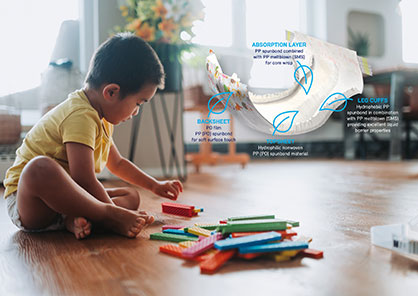

Nonwoven material for diapers produced by PFNonwovens contains renewably-sourced and ISCC PLUS mass balance certified polypropylene from the Borealis’ Bornewables™ portfolio of circular polyolefins. © Borealis


More News from TEXDATA International

#Recycling / Circular Economy

textile.4U publishes special edition “Top 100 Textile Recycling Companies 2025”

With a comprehensive 176-page special edition, textile.4U is dedicating its latest issue entirely to one of the most dynamic and influential topics in today’s textile industry: textile recycling. The new issue, published exclusively in high-quality print, presents the Top 100 textile recycling companies researched and selected by TexData – organizations that already play a key role in the transition to circular textiles or are expected to have a significant impact in the near future.

#Recycling / Circular Economy

Responsible Textile Recovery Act of 2024 signed by Governor

Senator Josh Newman (D-Fullerton) is proud to announce that Senate Bill 707 (SB 707), the Responsible Textile Recovery Act of 2024, has been signed into law by the Governor of California, Gavin Newsom. This groundbreaking legislation establishes the country’s first Extended Producer Responsibility (EPR) textile recycling program, marking a significant step forward in the state’s efforts to combat waste and promote sustainability.

#Textiles & Apparel / Garment

Modtissimo promotes sustainability with 28 coordinates in the Green Circle

Modtissimo is proving more and more to be a textile and clothing show that delivers the latest innovations in the area of sustainability, with the iTechStyle Green Circle being the main showcase for companies' creations. In this 60+4 edition, taking place on 12 and 13 September, 28 coordinates will be exhibited in a section organised by CITEVE and curated by Paulo Gomes.

#Europe

The EU and Egypt team up to mobilise private sector investments at Investment Conference and sign a Memorandum of Understanding underpinning €1 billion in macro-financial assistance for Egypt

At the EU-Egypt Investment Conference, co-organised by the EU and the Government of Egypt on 29-30 June, the EU and Egypt are teaming up to intensify private sector investments in Egypt. They are also signing a Memorandum of Understanding (MoU) for the disbursement to Egypt of up to €1 billion in Macro-Financial Assistance.

More News on Nonwovens / Technical Textiles

#ITMA Asia + CITME Singapore 2025

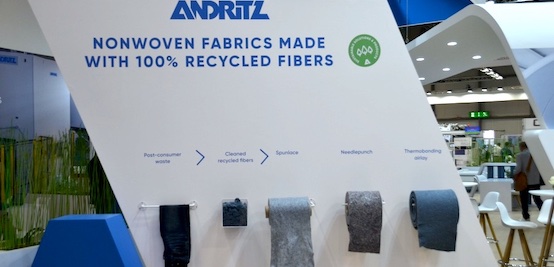
ANDRITZ sets focus on textile recycling and durable nonwoven production technologies at ITMA Asia 2025

International technology Group ANDRITZ will be presenting its innovative nonwovens production and textile solutions at ITMA ASIA + CITME 2025 in Singapore, from October 28 to 31, 2025 (Hall 2, D106). ANDRITZ will showcase its MMCF production plants, textile sorting and recycling, bast fiber processing, needlepunch, airlay, and life-cycle service technologies, with a focus on sustainable solutions. Discover how these innovations can grow your business opportunities and support a greener future.

#ITMA Asia + CITME Singapore 2025

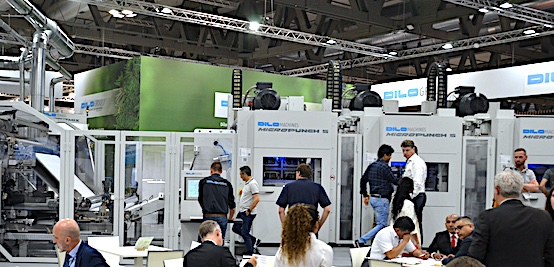
Dilo Group at ITMA ASIA Singapore 2025

At ITMA ASIA Singapore, the Dilo Group will exhibit at Booth No. H2 – D202. Together with Kansan Materials, Izmir, the company will present its latest developments and looks forward to welcoming visitors to exchange ideas and explore innovations in needling technology.

#Nonwovens

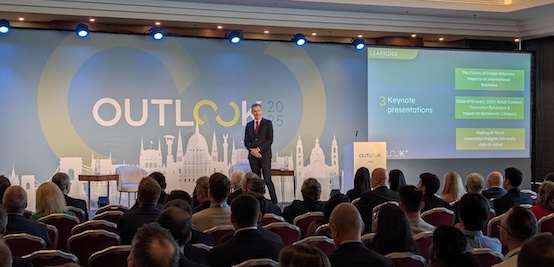
OUTLOOK™ 2025: Charting a sustainable and innovative future for the Nonwovens Industry

EDANA concluded its flagship event, OUTLOOK™ 2025, last week, marking it as a major success and addressing the biggest questions facing the industry. The three-day conference highlighted the urgent need for a unified approach to sustainability, regulation, and innovation in the absorbent hygiene and wipes sectors.

#Nonwovens

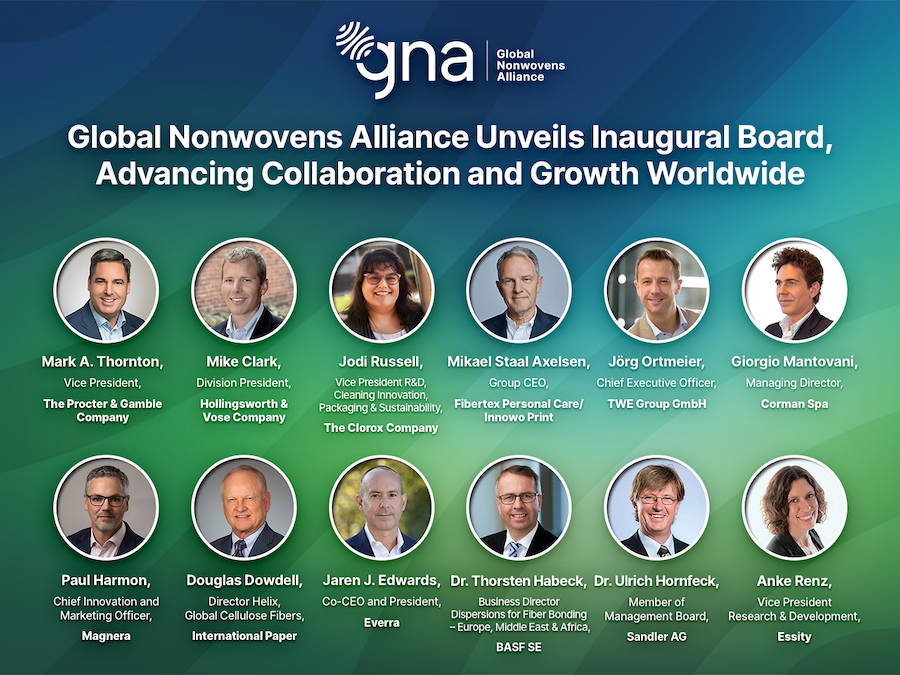
Global Nonwovens Alliance unveils Inaugural Board, advancing collaboration and growth worldwide

The Global Nonwovens Alliance (GNA), a tax-exempt federation jointly founded by INDA, the Association of the Nonwoven Fabrics Industry, and EDANA, the Voice of Nonwovens, announces the appointment of its founding Board of Directors. This group of leaders represents some of the most influential executives across the nonwovens value chain and reflects GNA’s mission to foster global collaboration, innovation, and growth in the industry.

Latest News

#Natural Fibers

38th International Cotton Conference Bremen: Let´s Talk about Cotton!

The 38th International Cotton Conference Bremen, to be held on 25-27 March 2026 in Bremen’s parliament building on market square, once again sends a powerful signal for professional excellence and international dialogue. The focus is on the latest market trends and technical innovations throughout the entire value chain – from agriculture and quality assurance to processing and the circular economy. With its high-calibre speakers, the conference remains an indispensable forum for anyone involved in shaping the cotton industry scientifically, technically, or economically.

#Recycled_Fibers

Leading fashion brands step up to unlock the next chapter of Circulose

Since 2024, under new ownership and leadership, Circulose has set a renewed strategic direction focused on securing long-term commitments with partner brands to bring CIRCULOSE® back to market at scale. This strategy has proven successful.

#Research & Development

More safety and comfort for protective clothing thanks to auxetic fabrics

When everyday materials are pulled, they stretch or elongate in the direction of the pull and become narrower in cross-section. We can also observe this property in two-dimensional textiles. Auxetic structures behave differently here. They have the striking property of not changing under tensile stress or even increasing their width or thickness. These properties are advantageous, for example, in protective textiles or textile filter media. The DITF are researching auxetic fabrics for various applications.

#Recycled_Fibers

Recycling mixed-fibre garments becomes a reality: RadiciGroup, The LYCRA Company and Triumph take circular fashion a step forward

The process, which is both economically and environmentally sustainable, has enabled the production of an underwear set made from 100% recycled nylon and LYCRA® fibre in a closed-loop system.

TOP