[pageLogInLogOut]

#Yarn & Fiber

Fashion for Good’s newest project with bestseller, Inditex, and reformation prototypes Kintra Fibers’ biobased polyester
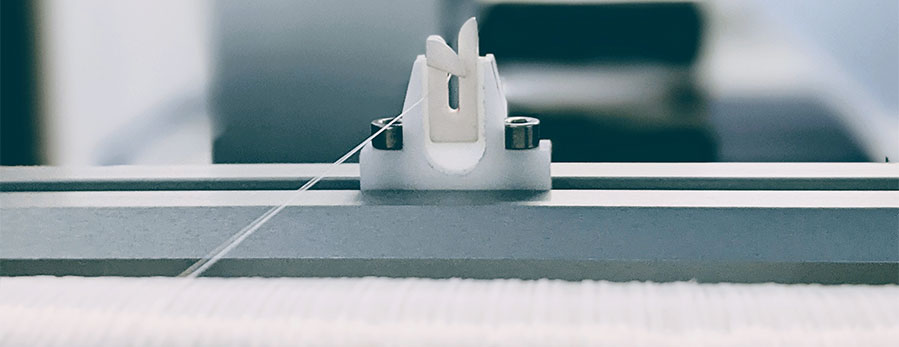
Kintra Fibers yarns at their Brooklyn, NY lab. Image credit: Kintra Fibers.
Orchestrated by Fashion for Good, the project allows brands to prototype Kintra Fibers’ materials in a year-long collaborative engagement.

"Kintra's yarns and fabrics offer a versatility similar to traditional polyester, making them ideal for luxury, athletic, and ready-to-wear markets. Each brand in the consortium has chosen an application that is unique to their product design needs and sustainability goals. The consortium gains the benefit of advancing multiple applications using Kintra's materials while prototyping just one." — Katrin Ley, Managing Director at Fashion for Good

Industry leaders BESTSELLER, Inditex and Reformation have come together as a consortium to prototype Kintra's materials in their product lines, driven by a shared goal to explore more sustainable materials and processes.

With a successful $8 million Series A funding round in December, Kintra Fibers is positioned to scale their resin and yarn production capacities in line with the volume demands of their brand partners. The funding was led by H&M Group, with participation from BESTSELLER Invest FWD, Fashion for Good, New York Ventures, TRE Ventures, Tech Council Ventures, FAB Ventures, and a selected group of angel investors from the fashion industry.

Kintra's material has undergone yarn testing, which shows impressive strength and durability comparable to traditional polyester, while also being much softer. Additionally, the material possesses an inherent stretch quality, with yarn test results indicating a stretch recovery of 10-15%, resulting in a comfortable stretch. The team has tested these properties in various fabric constructions, including silk-like satin wovens, technical outerwear wovens, and knits produced using air-jet texturing and draw-texturing processes.

"Given the significant environmental impact of traditional polyester and the expected growth of the synthetic fibre market, there is a clear need for the industry to change. Kintra Fibers fits our Invest FWD strategy where we continuously investigate alternative fibres for long-term viability, and we are excited to be among the brands taking action to help Kintra Fibers scale its promising solution." — Camilla Skjønning Jørgensen, Innovation Manager at BESTSELLER


This unique combination of strength, softness, and comfort stretch recovery produces a material with an ultra-soft hand feel and elegant drape without compromising the garment's durability and longevity. This blend of characteristics has additional environmental benefits since textile engineers generally require blending traditional polyester with cotton and spandex to achieve a soft, strong, and comfortable stretch material. Kintra's mono-material construction provides all of these performance benefits, while also making recycling easier.

“We’re proud to collaborate with Kintra Fibers and Fashion for Good as part of the first consortium of brands to prototype Kintra’s materials. Innovations like this that help reduce our reliance on fossil fuel-based synthetics are essential to our sustainability efforts at Reformation, particularly our goal to be Climate Positive by 2025. It’s on us as an industry to take an active role in scaling next generation solutions, like Kintra, that have the potential to power the future of fashion.” — Kathleen Talbot, Chief Sustainability Officer and Vice President of Operations at Reformation

Kintra Fibers estimates its environmental impact by comparing its raw materials and resin production processes to traditional polyester, in doing so, they found that their resin production could result in a 95% reduction in GHG emissions, a 30% reduction in water usage, and a 20% reduction in energy consumption. The team anticipates even greater energy savings when it completes a full life cycle assessment, as its preliminary analysis did not include yarn spinning, dyeing, or finishing, for which Kintra uses a lower temperature than traditional polyester. Processing the material at lower temperatures could result in reduction of Scope 3 emissions in the manufacturing supply chain.

“Kintra's solution aligns with both nature and existing industrial processes, empowering a transformation towards an industry that operates in harmony with the planet. By utilizing bio-based inputs and designing a biodegradable material from the outset, Kintra addresses the environmental impact caused by traditional polyester at every stage, from production to usage and end-of-life, providing a comprehensive solution for a truly circular fashion industry.” — Alissa Baier-Lentz, COO and Co-Founder of Kintra Fibers
More News from TEXDATA International

#ITM 2026

ITM 2026: The new geography of textile production

New production hubs are emerging across North Africa and Central Asia, while Türkiye is accelerating its transformation toward higher-value, technology-driven and more sustainable textile manufacturing.

#Research & Development

“Production is a product”

From technical textiles and AI-driven robotics to the limitations of textile circularity: Professor Dr Thomas Gries looks back on more than two decades of development at ITA Aachen. In the interview, he explains why production technology remains a decisive success factor, discusses international collaborations and innovation ecosystems, and shares his views on the transformation of production landscapes and the challenges facing an increasingly regulated industry.

#Knitting & Hosiery

“We need to move away from the price trap and return to a value-driven mindset.”

With its new Textile Innovation Center, KARL MAYER is sending a strong signal for innovation, collaboration, and the future of textile applications. In this interview, Karl Josef Mayer discusses new opportunities in warp knitting, the processing of staple fibres, recycling, the changing role of machinery manufacturers, and why the textile industry must once again focus more strongly on the value of textiles. by Oliver Schmidt

#Associations

“Innovation, resilience and international experience remain the great strengths of the Swiss textile machinery industry”

Geopolitical uncertainty, growing competitive pressure from China, new free trade agreements and the shift towards a circular economy are currently reshaping the global textile industry. In this interview, Cornelia Buchwalder discusses the current mood within the Swiss textile machinery sector, the industry’s distinctive innovative strength, new market opportunities in India and Asia, and the technological trends that could shape the upcoming trade fair cycle leading up to ITMA 2027.

More News on Yarn & Fiber

#Man-Made Fibers

Dyneema® to unveil next-generation mooring fiber at SMM 2026

Dyneema®, the world's strongest fiber™, will introduce Dyneema® SK80 fiber at SMM 2026 (Shipbuilding, Machinery, and Marine Technology), the world’s leading international maritime trade fair, held in Hamburg, Germany.

#Man-Made Fibers

Capturing malodor rather than masking it: Indorama Ventures presents innovative odor capturing technology at Dornbirn Global Fiber Congress

Indorama Ventures, a global leader in fibers and nonwovens serving customers in hygiene and technical markets, will present its latest technological innovation in odor management at the Dornbirn Global Fiber Congress.

#Yarn & Fiber

Expansive innovations converge in Shanghai as Yarn Expo Autumn 2026 opens doors next week

With just days to go, industry enthusiasm is building for the opening of Yarn Expo Autumn, Asia’s premier yarn and fibre trade fair, running from 25 – 27 August at the National Exhibition and Convention Center (Shanghai). Across 27,000 sqm in Hall 8.2, buyers will find nearly 600 exhibitors from 14 countries and regions, spread across seven specialised zones that range from cutting-edge man-made and regenerated fibres to time-honoured cashmere and silk. Beyond the extensive sourcing options, a fringe programme of trend showcases, presentations and product launches rounds out the three¬day event with design, innovation and market intelligence.

#Man-Made Fibers

Dornbirn GFC 2026 expands conference program with new thematic sessions

For 65 years, Dornbirn GFC has stood for innovation and is one of the world’s leading conferences in the fiber industry. From September 16 to 18, 2026, the international fiber community will meet in Dornbirn, Austria, to discuss current trends, technological developments, and forward-looking solutions. More than 600 experts from industry and academia from over 30 countries are expected to attend. With around 100 presentations by renowned speakers, a 2,5-day conference program, and three parallel presentation rooms with moderated sessions, Dornbirn GFC provides a first-class platform for knowledge exchange, networking, and international collaboration. Together, participants will generate ideas and impulses that will sustainably shape the future of the global fiber industry.

Latest News

#Weaving

Lindauer DORNIER GmbH welcomes new apprentices and dual-study students

For 22 new “DORNIER Talents”, these days mark the beginning of a new chapter at Lindauer DORNIER. For the family-owned company, in-house training is a key pillar in developing skilled professionals and retaining them within the company for the long term.

#Raw Materials

Cotton Brazil Dialogues 2026 concludes with 50 international participants immersed in Brazilian cotton production

The Cotton Brazil Dialogues concludes its 2026 edition after a series of technical visits to farms, cotton gins and reference centers, as well as workshops focused on Brazilian cotton production. A total of 50 participants from 14 countries took part in the field trips. The initiative is led by the Brazilian Association of Cotton Growers (Abrapa) and the National Association of Cotton Exporters (Anea), with support from the Brazilian Trade and Investment Promotion Agency (ApexBrasil).

#Research & Development

Novel flame-retardant and recyclable fiber-reinforced composite

Airplanes and passenger trains must meet strict safety requirements, including fire safety standards. This calls for materials that are flame-retardant, lightweight, robust, and scalable. Empa researchers, in collaboration with their industry partner Elantas, have now succeeded for the first time in making such a material – a composite – fully recyclable.

#Composites

WHILL selects Teijin’s tough, lightweight Carbon Fiber Composite for new last-mile mobility

Teijin Limited announced today that WHILL Inc., a global leader in inclusive mobility technology, has selected Sereebo® P CFP series, a carbon fiber-reinforced thermoplastic (CFRTP) material, for key structural components of the upcoming WHILL Model C Lite. Sereebo® P CFP series provides high strength, light weight, design flexibility and system cost advantages to the Model C Lite, which is a battery powered, single-seat, last-mile device. This new model combines maneuverability with light weight and one-handed folding to ensure ease of handling and operation.

TOP