#Yarn & Fiber
IST Safety Ltd’s protective clothing comes to life with Durak Tekstil aramid sewing threads
Durak Tekstil aramid threads provide high durability and reliability against fire
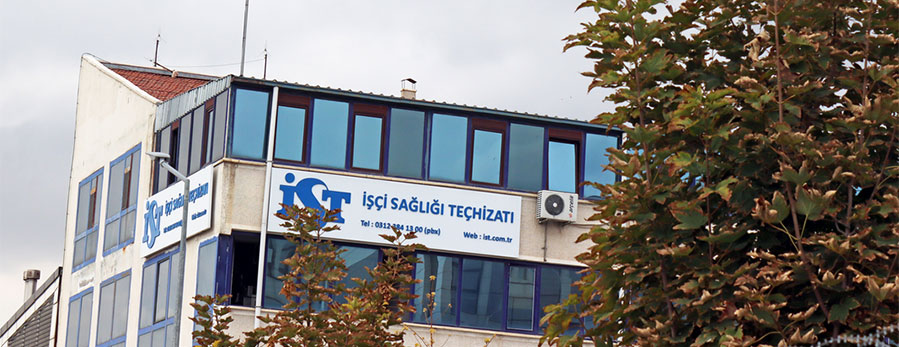
Today, special protective clothings and equipments are needed for hazardous and high-risk jobs. Sewing threads that can withstand these difficulties should be used in the production of protective and durable clothing. Durak Tekstil, the leading industrial sewing and embroidery threads manufacturer, responds strongly to this demand with its heat-resistant and high-strength meta-aramid and para-aramid threads in its product range. Ankara-based IST Safety Ltd uses para-aramid threads that can withstand temperatures up to 500 C degrees and meta-aramid threads that can withstand temperatures up to 370 C degrees from Durak Tekstil, who has proven themselves in its protective clothing portfolio for a long time. The cooperation between the two companies based on mutual trust and innovative vision makes it possible to produce more durable and protective clothing.
Founded in 1979 by Arif Vidinli in Ankara, IST entered the sector by producing firefighting suits and heat and fire resistant clothings. The company, closely following the technological developments in this regard, has succeeded in becoming a pioneer in its segment by obtaining internationally valid certificates and standards. IST is in a strong position in export markets as well as in Turkey with its heat and fire-resistant protective clothings, emergency safety showers, safety cans & containers and mobile breathing air supply units.
The company has four main titles in the textile segment, in which they produce with high capacity. The main titles include heat and fire-resistant clothing, firefighting suits, fire entry/proximity and arc flash protective clothings. The special protective clothings are combined with other reinforcement materials and accessories such as protective boots, helmets, visors, gloves produced in other departments of the company and made ready for use.
“IST is a company that produces personal protective equipment”
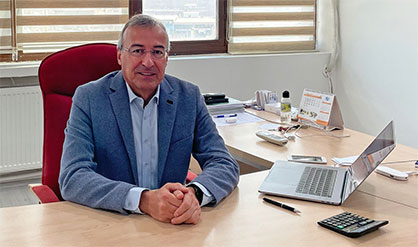
Underlining that they are a complete solution provider in the field of protective clothing and equipment, IST Managing Partner Serdar Türkuçar stated that all the products they produce meet high quality and safety standards. Türkuçar said; “Our end-to-end production process and the raw materials we use fulfil European and international standards. Since human life is in question, we never compromise on producing according to these standards, moreover, this is a legal obligation. Therefore, we work with the best materials. The threads we use in protective clothing also need to be special in this context. The aramid thread is the only type that can respond to our requirements, and the manufacturer has only been Durak Tekstil in recent years. We are strengthening our cooperation day by day as a company using 100% Durak Tekstil’s meta-aramid and para-aramid threads in their clothing production”.
5 thousand bobbins of aramid thread are used annually
On average, 13 to 20 different materials are used in the protective clothing produced by IST, mainly technical fabric, reflective strips and closure elements (velcro fasteners, zippers). Durak Tekstil’s aramid sewing threads fulfil the critical task of bringing these different materials together. IST has been working with Durak Tekstil since 2017 and reached an annual supply volume of 5 thousand bobbins of para-aramid and meta-aramid threads with an ever-increasing capacity.
Durak Tekstil’s meta-aramid and para-aramid threads, which have different technical properties, proved their success in different applications in the production process of IST. Meta-aramid threads produced by IST are able to withstand heat up to 370 degrees in the general sewing of the clothes. Meta-aramid threads have different colour options. Those threads contribute to the preservation of the entire structure of the clothing with their superior strength properties. IST mainly uses navy blue, black and blue meta-aramid threads. Durak Tekstil can also provide a quick response for their special colour requests.
Para-aramid threads, light yellow dyed or undyed, show superior performance by resisting heat up to 500 C degrees. IST uses these aramid threads for light coloured reflective seams and for general sewing of aluminized protective clothing. Resembling an astronaut suit, aluminized protective clothing is used extensively for special industry and firefighting applications and should not be below the standards determined in terms of worker health and life safety. Durak Tekstil sewing threads provide superior resistance to heat up to 500 C degrees in aluminized fire proximity suits.
Tests confirm the success of Durak Tekstil aramid threads
Durak Tekstil’s meta-aramid and para-aramid threads are offered to the market with safety and quality standards such as durability, flame retardancy and OEKO-TEX. In addition to these certificates, IST also carries out their own tests within the framework of the production of protective clothing against flame and high heat. A convective heat test is applied to Durak Tekstil threads in the laboratory. It is observed that meta-aramid and para-aramid threads, subjected to 40 millimetres of flame and heat for 10 seconds, are repellent to heat and that there is no breakage, ignition or puncture in the thread.
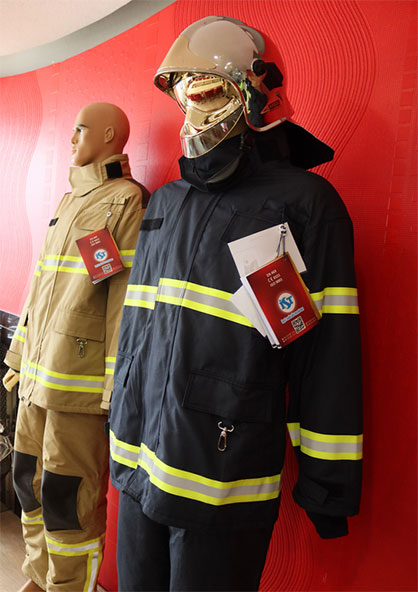
In addition to the tests carried out in the laboratory, tests are carried out at regular intervals at Ege University Apparel Center and also at an international independent organization. It is determined that Durak Tekstil’s aramid threads meet the required Newton value and get certified. Having international certificates such as SATRA and IQNET, IST protective clothing and equipment provide strong confidence in difficult and dangerous working conditions.
Electric arc flash protective clothing is exported abroad
IST Safety Ltd exports 50% of its production to numerous parts of the world. Europe, Far Asia, America and Middle East countries are amongst the prominent markets of the company. Producing mostly single-layered protective clothing for the domestic market, IST receives demand for products with high added value from foreign markets. IST exports firefighting suits as well as other types of heat and fire-resistant clothings. And at the same time, the company also has a say in protective clothing against electric arc flash. Besides producing operational protective clothing against electric arc flash with an ATPV value of up to 63 cal/cm2, IST is constantly increasing its strength in foreign markets.
Durak Tekstil para-aramid and meta-aramid sewing threads, produced in accordance with international fireproof tests are also extensively used in textiles in hotels and accommodation areas, work clothes, anti-ballistic uniforms, industrial protective gloves and shoes, filtering and thermal insulation applications as well as protective clothing.