[pageLogInLogOut]
USTER Think Quality

#Yarn & Fiber

DSM Dyneema successfully defends attack against one of its key patents in China

Royal DSM, a global science-based company active in health, nutrition, materials, today announced the successful defense of one of its key patents in China. The patent relates to the company’s innovative Dyneema® cut resistant yarns that are used in several protective applications, especially gloves with the highest levels of cut resistance available in the market.

“Competition tried to have the patent invalidated. They did not succeed. This outcome once again confirms the quality and value of our patents”, says Olivier Janin, VP Marketing and Sales of DSM Dyneema. 

The result of this decision further adds to the company’s positive track record in intellectual property (IP) cases. It confirms the strength of DSM Dyneema IP portfolio that protect the company’s innovations, as well as protecting our customers against copycats and possible infringements.

The patent for this innovation is granted and protected in the US, Europe and Asia Pacific. In addition to this patent, DSM Dyneema patent portfolio covers more than 200 UHMWPE fiber and fabric related inventions, protected by nearly 2000 individual patents and patent applications in numerous countries worldwide. This vast IP portfolio is the result of the company’s enduring focus on innovation in the field of high performing fibers aimed at protecting people in mechanical industrial markets.


“Innovation is about creating technological advancements and bringing game-changing material science solutions to our customers. This is what makes DSM Dyneema the innovation leader in UHMWPE fibers and fabrics. Protecting our advanced solutions via IP certification is of highest importance to our business. We have consistently and vigorously defended our innovations and IP in numerous industries and will continue to do so”, said Olivier Janin.


More News from DSM Dyneema B.V.

More News on Yarn & Fiber

#India ITME 2026

Uster to present novel solutions at India ITME 2026

Tackling contamination is a critical quality target in yarn production – and Uster now enables spinners to make the right choices for optimized profitability, with top technology, precise data and integrated analysis across the entire process. The new Uster Contamination Control solution and latest Uster Vision Shield 3i put spinners in command of contaminant removal, ensuring yarn quality, minimizing waste and protecting profits. These exciting developments – and even more news – will be featured at India ITME 2026.

#Man-Made Fibers

Lenzing improves profitability as strategic transformation gains momentum

The Lenzing Group reported improved operating profitability in the first nine months of 2026 despite declining revenue and a challenging market environment. Revenue decreased by 2.3 percent to EUR 1.93 billion, while adjusted EBITDA remained stable at EUR 353 million. The adjusted EBITDA margin increased from 17.9 percent to 18.3 percent, reflecting progress in the company's strategic transformation under its “Grow Nonwovens. Reset Textiles.” strategy.

#Recycled Fibers

C&A and Zalando join Altag® Fiber Club to accelerate adoption of agricultural waste-based fibres

Fashion for Good and AltMat announced today that C&A and Zalando have joined the Altag® Fiber Club as its first brand signatories, marking a critical commercial milestone in the journey to mainstream adoption of next-generation fibres derived from agricultural waste.

#Man-Made Fibers

Kraig Biocraft Laboratories launches performance yarn development program based on spider silk

Kraig Biocraft Laboratories has launched a development program for high-performance yarns based on its recombinant spider silk technology. The initiative follows the company's first commercial shipment of a custom spider silk yarn to a performance apparel customer and includes the delivery of spider silk samples to a textile technology company with experience in aerospace-related material development.

Latest News

#Textile processing

Jeanologia combines digitalisation, laser and ozone technology to strengthen China’s textile competitiveness

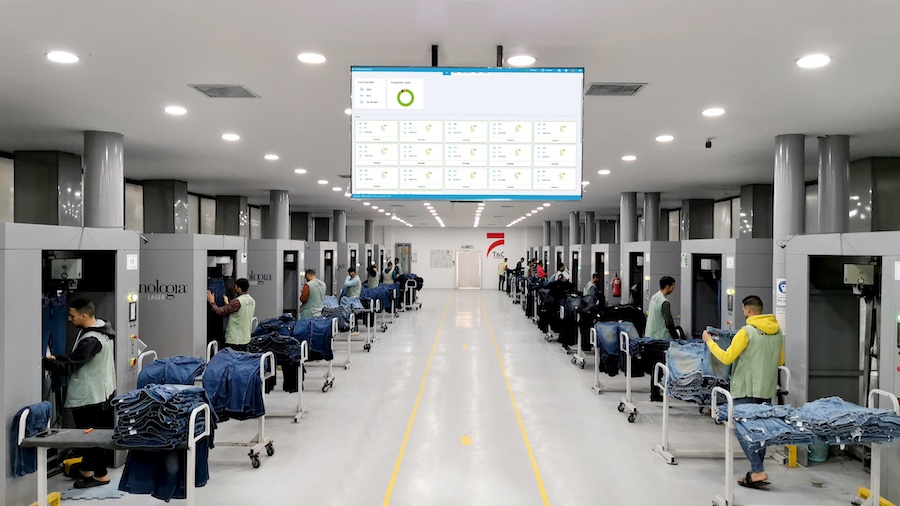
At ITMA Asia + CITME 2026 in Shanghai, Jeanologia showcased how the combination of digitalisation, laser technology and G2 Ozone can help China’s textile industry improve productivity, speed, quality and efficiency. With its Compact Super Flash laser system and integrated production concepts, the Spanish technology specialist demonstrated how connecting product development and industrial production can enable faster, more automated and sustainable manufacturing processes.

#Textile chemistry

Flame protection and OEKO-TEX® certification: Gulec Chemicals clears an important hurdle

Three halogen-free flame retardants from German specialist Gulec Chemicals have been included in the OEKO-TEX® list of accepted Active Chemical Products (ACP). The listing opens up additional opportunities for textile finishers, coaters and manufacturers of technical textiles seeking to combine demanding fire protection requirements with certification according to OEKO-TEX® STANDARD 100.

#Dyeing, Drying, Finishing

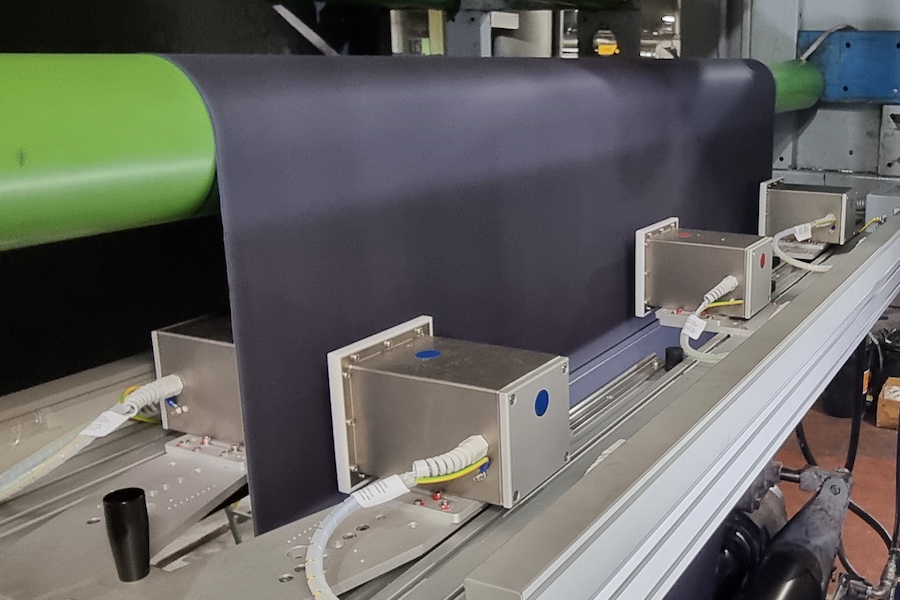
PLEVA improves dyeing consistency with inline microwave measurement of liquor pick-up

Consistent shades are essential in continuous textile dyeing. Yet variations in fabric absorbency or uneven padder pressure can go unnoticed until the end of the line. By then, hundreds of metres of fabric may already be affected and may become second-choice or rejected.

#Recycling / Circular Economy

DITF establishes CYCLOTEXUM recycling center to advance mechanical and solvent-based textile recycling

As part of the CYCLOTEXUM research project, the German Institutes of Textile and Fiber Research Denkendorf (DITF) established the CYCLOTEXUM recycling center. There, in collaboration with industry partners, the center develops application-oriented solutions for mechanical and solvent-based recycling processes. The technologies developed make a significant contribution along the textile value chain toward the efficient use of textile resources in the future and the transition of production in the German textile sector to a circular economy. The project was funded by the Ministry for the Environment, Climate and Energy Sector of the State of Baden-Württemberg.

TOP