[pageLogInLogOut]

#Weaving

ITEMA shows Maestro: A New Weft Monitoring Approach

Rapier looms have long since been equipped with a weft detector based on the piezoelectric effect. During weft insertion, the rapid movement of the weft stimulates the piezo crystal to produce a small signal. Utilizing amplification and electronic circuitry, the weft detector causes the rapier loom to stop in the event of weft breakage.

By Dario Pezzoni and Bernard Cruycke (ITEMA Weaving - Italy)

Today’s weft stop detector systems are used in such a way that the detector gives very little information to the micro-processor of the rapier weaving machine. In very basic terms, the weft detector signals the loom to continue to run or to stop. Certain advanced types of weft detectors allow detection of desired or undesired double insertion, but no other information is transmitted to the loom other than the “go / no go” decision made by the detector itself.

In most situations, weft detectors require significant time & attention in the creeling of packages and the thread-up of weft yarns through the detector eyelets. Double insertion must originate and be maintained from designated eyelets and it is not always possible to change. Also, mixing of the same weft in single and then in double insertion is not always possible. Further, even if the detector offers an individual sensitivity setting for each eyelet, the procedure is complex and requires an experienced technician. 

During ITMA 2011 in Barcelona, ITEMA introduced the Maestro Weft Monitoring System on its new Silver 501 Rapier Machine. Maestro, unlike any of its competitors, uses a special weft detector that transmits signals from each eyelet to the micro-processor of the loom. Innovative software from the loom’s micro-processor allows real time analysis of the signal and thus efficient handling of all weft breakage conditions.


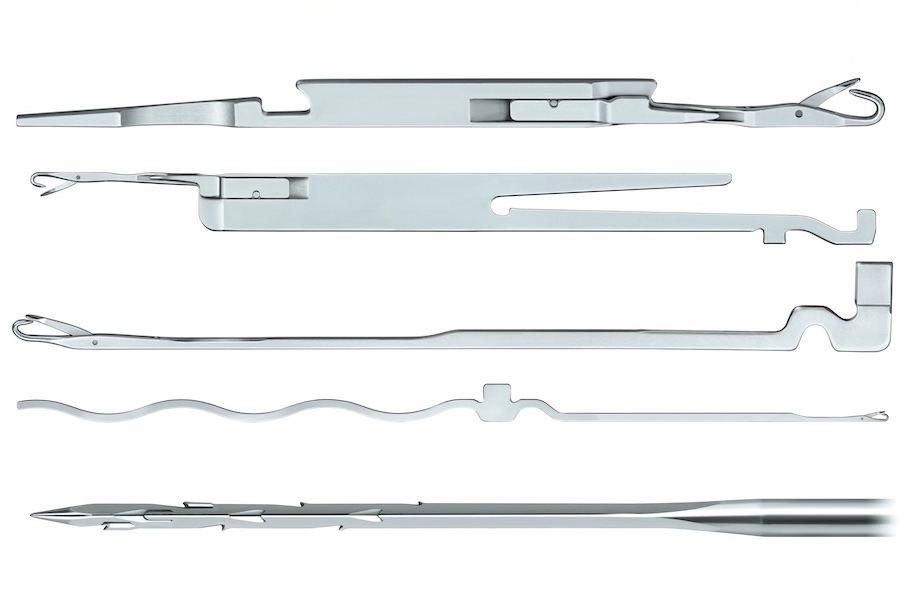
The Maestro weft detector on the Silver 501 as it was introduced during ITMA 2011 in Barcelona. (c) 2011 ITEMA
  The weft detector has been designed to produce a numerical value for each of the 8 or 12 eyelets of the detector. If no weft is inserted for a given position the signal value will be extremely low (the signal noise level), if a weft yarn is moving in the eyelet, the numerical value can go up as high as 4000, thus offering a very good signal/noise ratio. For each pick insertion, the 8 or 12 numerical values are continuously transmitted to the loom’s micro-processor, multiple times for each pick. In fact, the numerical values are transmitted for each degree of the weaving cycle. The data communication between weft detector and the loom’s electronics is handled by a very fast and secure means of data communication. Clearly this weft monitoring method also requires a fast loom micro-processor. With ITEMA’s new electronic NCP (common electronic platform for all ITEMA’s loom types) which was also introduced during ITMA 2011, the required computation power is guaranteed even at extremely high rapier weaving speeds; such as the 750RPM demonstrated on the Silver 501 during ITMA. 

With transmission of the numerical values, the software is capable of drawing the insertion curve for each eyelet of the weft detector. This curve can be viewed on the touch screen display of the weaving machine. The insertion curve is available for each of the 8 or 12 eyelets of the weft detector.   

Typical to other weft detection systems, the sensitivity and control zone have to be defined. With the Maestro System, the control zone is defined specifying the degree in the weaving cycle for the start and stop of the 2 zones in which the weft insertion is controlled. The first zone goes from the beginning to the middle of the insertion; the second zone from the middle to the end. In each of the 2 control zones, the software will check if the numerical value of the inserted weft is above the threshold. The thresholds are predetermined and defined for each eyelet. This is an easy procedure by using the up/down arrows on the touch screen display. Therefore, the need to use potentiometers or other setting methods is eliminated.

The individual sensitivity setting or definition of the threshold does not make the Maestro more expensive, all functionalities are handled through software. During weaving Maestro will continuously compare if the numerical values transmitted by the weft detector stays, while in a control zone, above the defined threshold. If not, Maestro will stop the loom for weft breakage.  

Another feature of the new Maestro System allows the weft pattern information to be linked with the signal processing of the numerical values provided by the weft detector. This is completely automatic, requiring no technician intervention. What does this mean?  

  • If the weft of one eyelet position has to be inserted and for some reason another weft is inserted, Maestro will detect this and stop the loom.
  • If two wefts are to be inserted and for some reason only one or three wefts are inserted, Maestro detects this and the loom will be stopped.
  • If two wefts are to be inserted and for some reason one of the two wefts is the wrong one, Maestro will detect this and stop the loom.
The same applies for any other wrong insertion, be it a triple or quadruple insertion; in every case – if the signals transmitted from the weft detector are inconsistent with the weft pattern, Maestro will stop the loom.

Because of this functionality any malfunction of the weft selector or any case where a weft yarn gets entangled with a neighboring weft, Maestro will stop the rapier loom. Clearly Maestro is a further step in the direction of a rapier weaving machine which guarantees perfect fabric quality.

Some further words concerning the definition of the thresholds, which can be set individually for each eyelet. For a fine weft yarn count, the numerical value will be lower than for a course yarn. If the technician wants to weave with minimum weft yarn deflection (weft yarn as much as possible in a straight line) the numerical values produced by the weft detector will be lower. Maestro visualizes these values and illustrates the weft insertion curve on the loom’s display. The technician can easily define the individual threshold for each weft yarn in such a way that every weft break will be detected without creating false or unwanted weft stops. The insertion curves also allow the technician to have a clear view of the signals received at the end of the weft insertion. This allows him to weave with the longest weft control zone. What is meant here is that the yarn will be monitored to the point the weft is released from the gripper. This feature certainly serves to eliminate defects for short picks while also preventing false stops. Further, a more controlled and precise release from the gripper is assured. Consequently, the Maestro System also reduces weft yarn waste.

 With Maestro, ITEMA introduces a new look at weft monitoring and the detection of weft breakages on rapier looms. Thus, the complexity for the technician is removed and handled by the software operating with the micro-processor of the weaving machine.

 Without adding cost to the weaving machine, the Silver 501 rapier loom assures better quality with Maestro in charge of weft detection.
More News from ITEMA S.p.A.

#ITM 2026

Itema to showcase weaving excellence at ITM 2026

From June 9 to 13, Itema will exhibit at ITM 2026 in Istanbul (Hall 8 – Stand 806D), unveiling a distinctive exhibition concept designed to highlight the Company’s expertise across the entire weaving value chain. For this year’s edition, Itema will introduce an innovative stand experience built around two core areas: advanced weaving and spare parts solutions and an immersive textile gallery featuring fabrics produced by Itema Customers worldwide.

#Weaving

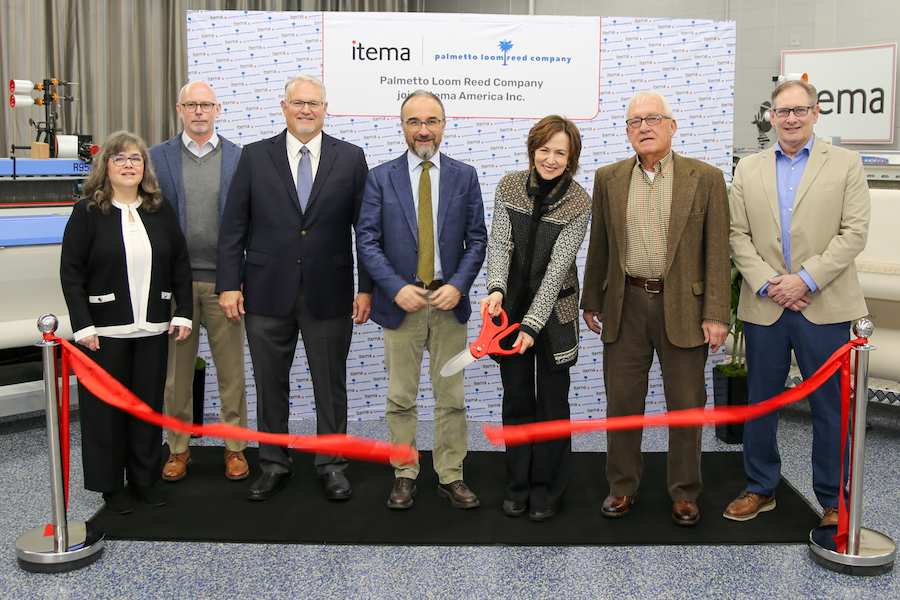
Itema America acquires Palmetto Loom Reed, strengthening local manufacturing and service in the U.S.

Itema America, the U.S. subsidiary of Italy-based Itema Group, has acquired – through an Assets Purchase Agreement – Palmetto Loom Reed, a Greenville, South Carolina-based manufacturer of weaving reeds and one of the last remaining domestic producers of these precision components in the United States.

#Weaving

Itema exhibits the two best-selling high-end rapier weaving machines of the Region, R9500EVO and Galileo-RX at SITEX 2026

Following the opening of its new Surat Service Center in November, Itema will exhibit at SITEX (Stand 286) from February 21st to 23rd at the Surat International Exhibition and Convention Centre (SIECC). Surat has long been one of Itema’s most strategic markets, a role further reinforced by the inauguration of the Surat Service Center last November. Equipped with an advanced electronic repair center, a weaving machine behavior simulator, and a local spare parts warehouse, the new facility strengthens Itema’s presence in the region while bringing the company even closer to its Customers.

#Weaving

Itema announces strategic partnership with Ivy Decarb to accelerate decarbonization in weaving process

Itema is pleased to announce the strategic partnership with Ivy Decarb, the digital platform helping textile companies measure and reduce their carbon footprint.

More News on Weaving

Latest News

#Home Textiles

Intertextile Shanghai Home Textiles unveils Trends 2027 alongside new lifestyle zone and product expansion

Intertextile Shanghai Home Textiles – Autumn Edition 2026 will spotlight forward-looking design directions and evolving consumer demand, as the global home and lifestyle market continues to adapt to sustainability priorities, emotional well-being, and diversified living spaces. Taking place from 18 – 20 August 2026 at the National Exhibition and Convention Center (Shanghai), the fair will present its latest trend theme, ‘BREATHE UP!’, developed in collaboration with leading international trend forecaster NellyRodi™ Agency, alongside expanded product categories, and the debut of the Home Textiles Lifestyle Zone.

#Textiles & Apparel / Garment

Global size study for brands and retailers to optimize fit and market coverage

Hohenstein Apparel Fit Solutions, a global leader in apparel fit, sizing, and product development, today announces the launch of its Global Size Study, a new initiative designed to equip brands to better understand and serve their target consumers through more accurate, market-relevant sizing.

#ITMA 2027

Last chance to apply: ITMA 2027 Start-Up Valley closes tomorrow

Applications for the Start-Up Valley at ITMA 2027 close tomorrow, offering young technology companies the opportunity to follow in the footsteps of several successful participants from the 2023 edition. The initiative, organised under the CEMATEX Start-Up Grant programme, has already helped a number of textile start-ups accelerate their transition from early-stage concepts to industrial partnerships, funding rounds and commercial deployment.

#Denim

Jeanologia brings “Billy” to China, the AI transforming denim design

The denim industry is turning its attention to Hangzhou this week, where a new edition of Kingpins, the leading international trade show for the sector, takes place on May 21 and 22. There, the Spanish company Jeanologia, a global leader in sustainable technologies for the textile industry, is introducing its latest innovation to the Chinese market: “Billy”, the first artificial intelligence specifically developed for denim finishing design.

TOP