[pageLogInLogOut]

#Weaving

DORNIER presents new A2 air-jet weaving machine for the first time at ITMA
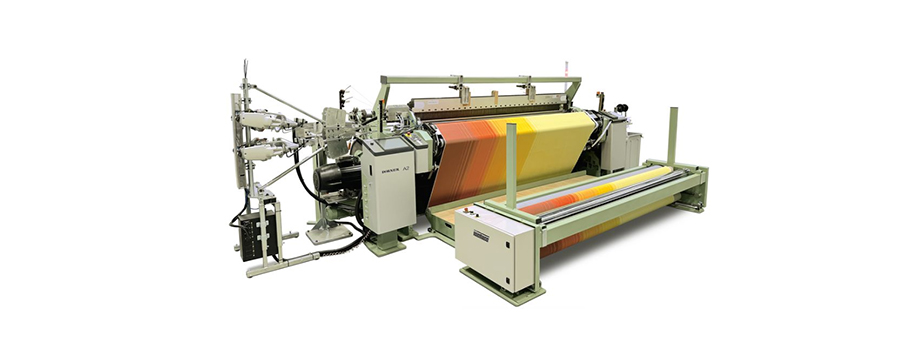
DORNIER air-jet weaving machine A2 © 2023 Lindauer DORNIER
Lindauer DORNIER presents its new A2 air-jet weaving machine for the first time at the ITMA (June 8 - 14, Milan, booth A106, hall 10). The successor of the A1 combines all outstanding features of its predecessor with numerous improvements and new functions for future-oriented fabric production on a completely new level.

When DORNIER introduced the A1 air-jet weaving machine in 1989, a new era of weaving began – not only for the weaving machine technology leader, who has been manufacturing weaving machines since 1950. Since then, weaving mills around the globe are using DORNIER weaving machines to produce the finest curtains, multi-width jacquard table linen, robes made of African damask, high-quality suits, but also tire cord or airbags from various materials such as wool, cotton, silk, worsted yarn or polyester. It is not without reason that the insertion system, which accelerates the weft thread up to 280 kilometres per hour, is still considered the most flexible in the world. At ITMA, the largest international trade fair for textile and clothing technology, DORNIER is now presenting the new A2 air-jet weaving machine. Its sale starts with immediate effect. "The A2, equipped with many new functions, raises the efficiency, flexibility and reliability of fabric production in the sectors of clothing, home textiles and technical textiles to a completely new level," says Wolfgang Schöffl, Head of the Weaving Machine Product Line at DORNIER.

Better operating efficiency with intelligent electronics?In order to produce fabrics even more efficiently, the new A2 air-jet weaving machine features numerous electronic control systems. They continuously monitor and control the reliable weft insertion (ServoControl®-2), the nozzle valves (EcoValveControl+) and the compressed air supply (Electronic Pressure Monitoring and Electronic Pressure Regulation). This form of intelligent production monitoring not only increases operating efficiency and reduces downtime – it also permanently reduces the consumption of air and energy. "Under sustainability aspects, it was important to us to further noticeably increase the energy efficiency of the A2 compared to the proven predecessor model," explains Schöffl. In addition, thanks to the electronic warp let-off device, the warp tension on the A2 can be regulated automatically; optical and electronic warp stop motions ensure consistently reliable control of the production process.

More digital, easier to operate & faster to change over?The scope of digitisation has also been significantly extended on the A2. With the redesigned and even more user-friendly DORNIER ErgoWeave® operating panel, the personnel has an optimal overview of the fabric production at all times. Via the high-resolution interface, data on the machine, articles and weft material can now be monitored even better on the A2 – this shortens changeover times and optimises reproducibility. DoXNet software networks weaving machines and provides a user-friendly production overview. DoXNet does not require Internet access – the customer thus has full control over sensitive production data. With the DORNIER DoXWeave control desk, weaving machine data can be managed centrally – remote access to networked weaving machines is also possible. Via the myDoX® customer portal (powered by SAP HANA), which is based on state-of-the-art database technology, customers can directly order DORNIER original spare parts 24/7, access user manuals and view their current and previous orders.


Innovation based on proven technology?There is a simple reason why not everything on the A2 has been redesigned: Proven quality features of the A1 have been maintained. These include, among others, the options for setting an ideal shed geometry, along with gentle DORNIER air-jet weft insertion, the patented maintenance-free direct drive DORNIER SyncroDrive®, as well as long-life components requiring little maintenance. The unique solutions of the selvedge forming devices as well as the wide spectrum of materials and articles complete the range. "When it comes to new developments, it is not always easy to find the optimum balance between the tried and tested and the new," says product line manager Schöffl. "With the A2, we have succeeded in doing just that."
More News from Lindauer DORNIER GmbH

#Weaving

Lindauer Dornier announces leadership transition in weaving machine business

After more than ten successful years at Lindauer DORNIER GmbH, Mr Wolfgang Schöffl will leave the family-owned company at the end of the year to enter well-deserved retirement.

#ITMA Asia + CITME Singapore 2025

DORNIER celebrates its anniversary at ITMA Asia + CITME

To mark its 75th anniversary, machine and plant manufacturer Lindauer DORNIER will be presenting the latest developments in its rapier and air-jet weaving machines at ITMA Asia + CITME in Singapore (Hall 2, Stand B401) from 28 to 31 October 2025. The focus will be on energy-efficient weaving technologies, new IoT solutions for networked textile production and systems for the series production of modern fibre composite components.

#Weaving

From the Venus flytrap to foldable aircraft wings: Peter Dornier Foundation Prize 2025 honours bionic research on 3D weaving technology

Long wings with foldable tips have the potential to reduce aircraft fuel consumption and make aviation more sustainable. An interdisciplinary research team has now developed a new solution based on the Venus flytrap: Freely movable wingtips made of fibre composites which are produced using innovative 3D weaving technology. For this pioneering combination of textile technology, aviation and bionics, researchers Patrick Meyer (TU Braunschweig) and Michael Vorhof (TU Dresden) were awarded the Peter Dornier Foundation Prize 2025 in mid-July.

#Weaving

Pattern-controlled “pic-a-pic” setting of rapier release timing on right-hand side

DORNIER PIRO enables the operator to set the timing of the rapier release on the right-hand side of the machine “pic-a-pic” and pattern-controlled. For applications with weft yarns of different fineness or elasticity, the optimum timing can be set for each weft channel. This offers great potential for reducing weft waste on the right-hand side.

More News on Weaving

#Research & Development

More safety and comfort for protective clothing thanks to auxetic fabrics

When everyday materials are pulled, they stretch or elongate in the direction of the pull and become narrower in cross-section. We can also observe this property in two-dimensional textiles. Auxetic structures behave differently here. They have the striking property of not changing under tensile stress or even increasing their width or thickness. These properties are advantageous, for example, in protective textiles or textile filter media. The DITF are researching auxetic fabrics for various applications.

#Weaving

Itema announces strategic partnership with Ivy Decarb to accelerate decarbonization in weaving process

Itema is pleased to announce the strategic partnership with Ivy Decarb, the digital platform helping textile companies measure and reduce their carbon footprint.

#Exhibitions & Events

Groz-Beckert showcases textile innovation at ShanghaiTex 2025

From December 16 to 19, 2025, the global textile industry will gather at ShanghaiTex at the Shanghai New International Expo Center (SNIEC), where Groz-Beckert will present its latest highlights and innovations across its five product areas – Knitting, Weaving, Nonwovens, Sewing, and Spinning – at Hall N3, Booth A05.

#Weaving

Vandewiele Group: Innovation across the textile value chain at ICFE Istanbul 2026

At the 2026 Istanbul Carpet & Flooring Expo (ICFE), Vandewiele Group presents its latest advancements spanning the entire textile value chain. From spinning and weaving to tufting, carpet manufacturing and digital finishing, the Group demonstrates how integrated innovation can boost performance, efficiency and sustainability across all stages of production. As a global technology leader, Vandewiele continues to develop solutions that strengthen processes, enhance product quality and enable smarter, greener manufacturing.

Latest News

#People

Happy Holidays!

Dear reader, the year 2025 is drawing to a close. We are entering what we hope will be a peaceful holiday season, spending time with our families and taking a moment to pause and reflect. We hope we have been able to support you once again this year with relevant news and articles, and we look forward to surprising you with many innovations in the coming year. Enjoy the festive season, stay healthy, and we wish you a happy and joyful holiday season.

#Heimtextil 2026

Texpertise Focus AI: Messe Frankfurt puts Artificial Intelligence centre stage at its international textile and apparel trade fairs

Under the banner 'Texpertise Focus AI, Messe Frankfurt will place a strong emphasis on Artificial Intelligence (AI) across its international textile and apparel trade fairs from 2026 onwards, setting a future-shaping signal for the industry. The initiative highlights the responsible use of AI along the entire textile value chain, from fibre production to the point of sale. The programme will launch at Heimtextil in Frankfurt in January 2026.

#Technical Textiles

Autoneum and Polestar set new benchmarks for passenger experience and sustainability

As the global market leader in sustainable acoustic and thermal management, Autoneum is a key supplier of interior and exterior components for the highly anticipated Polestar 5 model. The successful collaboration between Autoneum and Polestar marks a significant milestone in sustainable automotive engineering: the electric grand tourer sports car features several innovations in lightweight, fully recyclable polyester-based components that ensure a superior driving experience. Polestar 5 was revealed at the IAA Mobility 2025 in Munich and is available in 24 markets.

#Natural Fibers

Cashmere producers stress the importance of The Good Cashmere Standard®

At the invitation of the Aid by Trade Foundation (AbTF), over 70 experts from the cashmere production and supply chain, as well as other specialists, met at the GCS Unit Meeting in Shanghai, China to discuss the progress and new objectives of The Good Cashmere Standard (GCS). The meeting focused on implementation and verification of the standard, important aspects of animal welfare and the importance of the standard in the global textile market.

TOP