[pageLogInLogOut]

#ITMA Asia + CITME 2020

Lindauer DORNIER presents new solutions for the production of filter fabrics and fiber composites at ITMA Asia

For the first time in years, ITMA Asia (12. - 16.6., Shanghai) takes place again this spring. Lindauer DORNIER is looking forward to the trade fair, which – due to the pandemic – will be held both on-site and in a virtual format. The machine and plant manufacturer from Lindau will present its latest developments in the production of high-quality filter fabrics and future-oriented fiber composite components.

"We have succeeded in launching the most flexible weaving machine in the world," says Wolfgang Schöffl, head of the weaving machine product line. "We are talking about the P2 rapier weaving machine. It is the successor to the P1, which for years defined the international industry standard in the production of high-performance fabrics. DORNIER first presented the P2 in its standard version two years ago at the ITMA in Barcelona. Then came Corona. For a machine and plant manufacturer with an export quota of over 90 percent, this was initially a bitter blow," Schöffl recalls. But the concern that Corona would slow down the success of the new P2 was unfounded.

The world's largest filter manufacturers weave on DORNIER

Despite the global cutbacks caused by the pandemic, demand for the P2 rose steadily, for example among technical weavers in the filtration sector. Traditionally, some of the world's largest filter manufacturers rely on rapier and air-jet weaving machines from DORNIER. One of them is Jingjin Environmental Protection Inc., China's largest filter manufacturer, who, among other things, produces water filters on these machines. Recently, Jingjin has also started weaving on the P2, whose productivity has been further increased compared to its predecessor, the P1, thanks to improved shed geometry, frame rigidity and a maintenance-free drive.

Yet Schöffl believes that the great interest in the P2 is also due to the fact that it is available in three versions: with a maximum reed impact of 2.3 t, 3.7 t and 5.0 t. "We cover the entire spectrum of fabric production from very fine to very coarse fabrics." Because no matter whether water, air, blood or gases are to be filtered: The demand for high-quality filter fabrics is growing worldwide. Among other things, this is due to stricter environmental and sustainability requirements, which demand ever more comprehensive performance parameters. "In order to continuously improve the tightness and quality of filter fabrics, we are further developing our machines in close cooperation with our customers," says Schöffl.

Modern composite lightweight construction: PROTOS® and TRITOS®

The Composite Systems Division will also be present in Shanghai. Here, the newly developed production lines PROTOS® and TRITOS® will be the main focus of interest. Both are used to produce highly complex fiber structures and components for lightweight construction.

DORNIER customers, for instance, use PROTOS® (Polymer and Roving to Sheet) to produce modern high-performance materials based on unidirectional, thermoplastic continuous fiber reinforcements (UD tapes). They are intended to ensure low weight in vehicles, wind turbines or robots, thereby helping to improve their economic efficiency and sustainability.
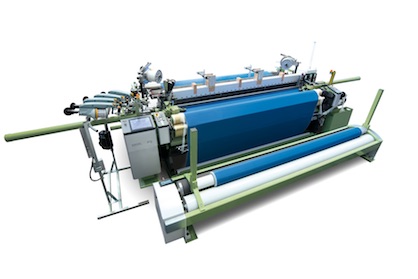


DORNIER P2 rapier weaving machine in the 3.7 t version for the production of high-performance filter fabrics (c) 2021 Lindauer DORNIER


TRITOS® (Textile Roving into Three-dimensionally Oriented Structure) is used, among other things, to create 3D fabrics for aircraft parts. Here, customers benefit from the decades of experience DORNIER has gained in the development of machines and systems with customers from the aerospace industry. "The demands on material quality and performance of fiber composite components are extremely high in this field," says Josef Klingele, head of the Composite Systems product line.

With both new developments, DORNIER once again demonstrates its technological leadership. Sectors such as mobility, energy and mechanical engineering are under enormous pressure to meet the increasing demands for environmental protection and resource efficiency. "With PROTOS® and TRITOS®, we optimize the manufacturing processes of lightweight construction, today’s megatrend”, says Klingele. In addition to existing customers, customers from "non-fibre" industries, including metal or wood, are now also working together with DORNIER at the technical centers in Lindau and Esseratsweiler on tomorrow’s composite applications.

Service 4.0: Digital solutions with added value

The new DORNIER customer portal myDoX® will also be a center of attention at ITMA Asia. Based on state-of-the-art database technology, it answers the question of how a traditional machine manufacturer handles the virtual data volume of its machines and systems. In addition to online parts order processing and as a substitute for thwarted customer visits and travels, Lindauer DORNIER has recently started offering virtual tours. Machines and lines can be viewed digitally according to customer-specific focal points in our Lindau and Esseratsweiler plants: Another essential factor for improving the ecological assessment, given the strong international orientation of German mechanical and plant engineering.
More News from Lindauer DORNIER GmbH

#Weaving

Lindauer DORNIER GmbH welcomes new apprentices and dual-study students

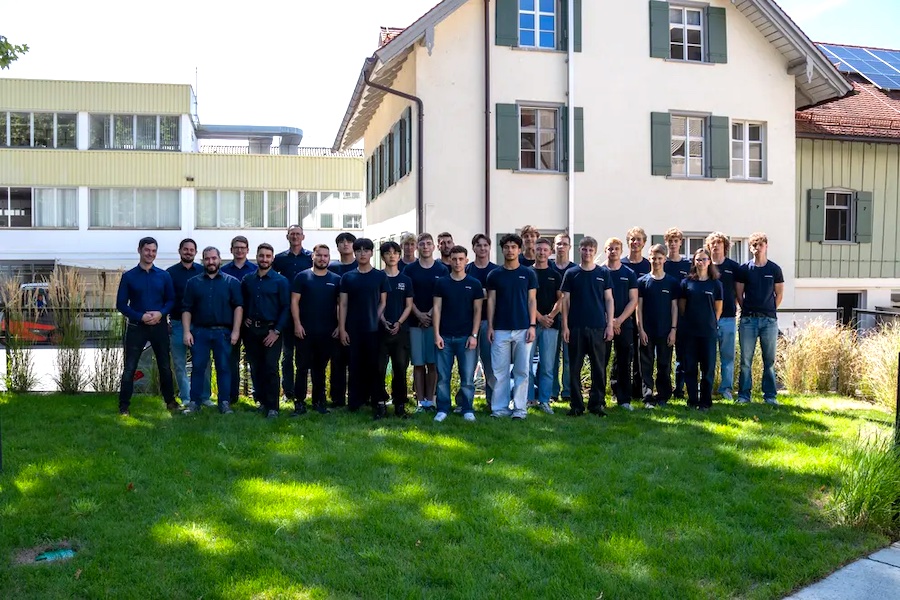
For 22 new “DORNIER Talents”, these days mark the beginning of a new chapter at Lindauer DORNIER. For the family-owned company, in-house training is a key pillar in developing skilled professionals and retaining them within the company for the long term.

#Weaving

"Dynamic markets do not only create uncertainty – they also create opportunities."

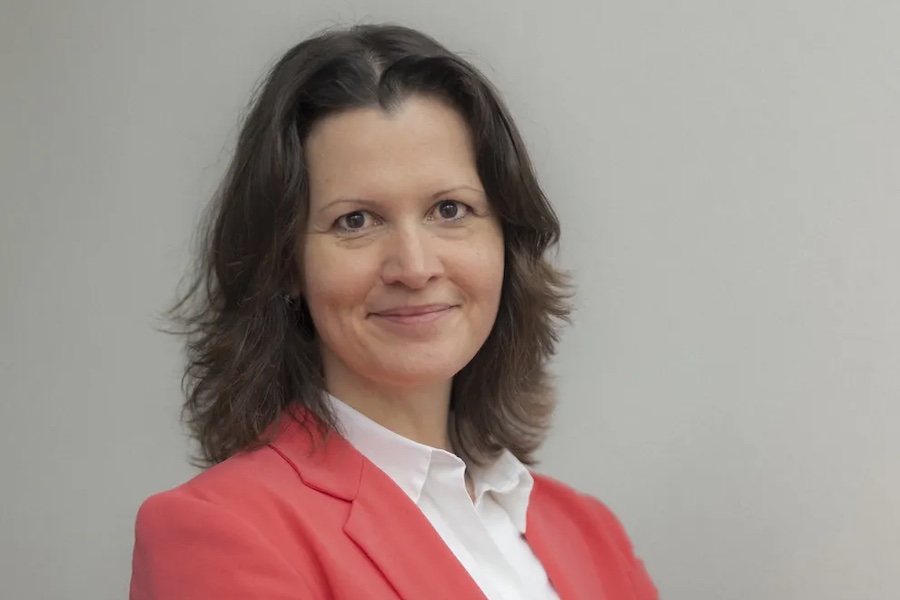
Volatile markets, increasingly complex materials and growing demands for flexibility are changing the weaving industry. At the same time, new opportunities are emerging in technical textiles, filtration, composites and many other specialised applications. Since taking over as Head of DORNIER's Weaving Machines Product Line at the beginning of 2026, Yvonne Schuberth has been helping to shape this development. In this interview with TexData, she explains why process stability and customer proximity remain the foundation of innovation, how digitalisation is transforming weaving mills, and why she believes the future belongs to technologically demanding applications.

#Composites

Fewer pores, greater impact tolerance: Peter Dornier Foundation Prize 2026 honours material research on fibre-reinforced composite components for aerospace industry

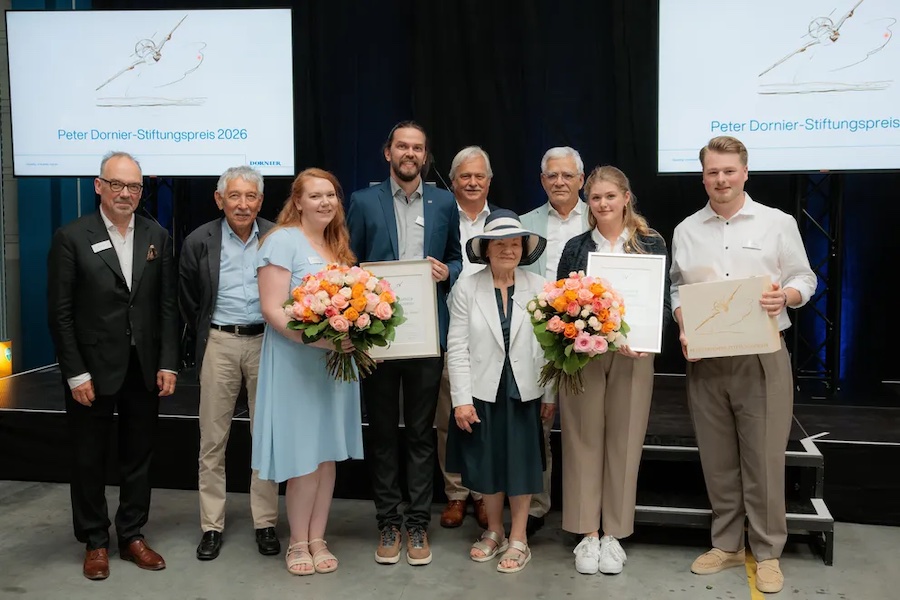
Microscopically small pores that form during manufacture, or barely visible impact damage, can severely impair the load-bearing capacity and service life of fibre-reinforced composite components. Two young researchers have presented groundbreaking work in this field and will both be awarded the 2026 Peter Dornier Foundation Prize: Dr.-Ing. Benedikt Neitzel from the Technical University of Ilmenau for his doctoral thesis on pore minimisation in the RTM process, and Johanna Buschmann, M.Sc., for her master’s thesis, completed at the German Aerospace Centre, on the improved impact tolerance of 3D fabrics compared to 2D laminates.

#Techtextil 2026

From carbon to canvas: DORNIER presents flexible and reliable weaving technologies for 3D weaving and dynamic markets at Techtextil

At Techtextil from 21 to 24 April 2026 in Frankfurt am Main (Hall 12.0, Stand D95), Lindauer DORNIER will be showcasing reliable and flexible weaving technologies for ever-changing market requirements. The machine and plant manufacturer will present retrofits for existing machines, the new TRITOS® FLEX 3D weaving technology, intuitive automation concepts and software solutions for data-sovereign networking of the weaving machine fleet.

More News on ITMA Asia + CITME 2020

Latest News

#Industry 4.0 / Digitalization

Coats Digital launches AI-powered GSD RealMotion for motion analysis

Coats Digital has launched GSD RealMotion, an AI-powered solution designed to provide apparel manufacturers with greater visibility into factory-floor operations. By analysing shop-floor video and applying Coats Digital’s GSD methodology, the solution turns video recordings into structured, motion-by-motion method studies.

#Textile chemistry

Archroma and Lameirinho partner in pioneering deployment of InOneGO single-step dyeing

Archroma, a global leader in specialty chemicals, and Lameirinho, a leading home textiles manufacturer based in Portugal, are collaborating to bring InOneGO by Archroma, a new single-step dyeing process, into commercial production. Lameirinho’s first InOneGo bedlinens collection is now available worldwide.

#Knitting & Hosiery

KARL MAYER launches extra-wide HKS 3-M EL for increased productivity

KARL MAYER has launched a new extra-wide version of its HKS 3-M EL tricot machine, designed to increase productivity particularly in the manufacture of textiles for sports, activewear and athleisure applications.

#Research & Development

Reducing development times for technical textiles by accelerated thermo-oxidative aging in a high-pressure autoclave

Synthetic polymers used in technical textiles can be effectively protected against degradation caused by heat, oxygen, and water through the use of stabilizer systems. This enables service lives of several decades, extending to more than 50 years. As the use of durable technical textiles continues to grow, so does the demand for reliable methods to predict their service life within economically feasible testing periods. For the first time the German Institutes of Textile and Fiber Research Denkendorf (DITF) developed methods for robust service life prediction for textiles in an IGF research project.

TOP