[pageLogInLogOut]

#Textiles & Apparel / Garment

Sails produced by Ogemar put to sea with Durak Tekstil threads
© 2023 Durak Tekstil
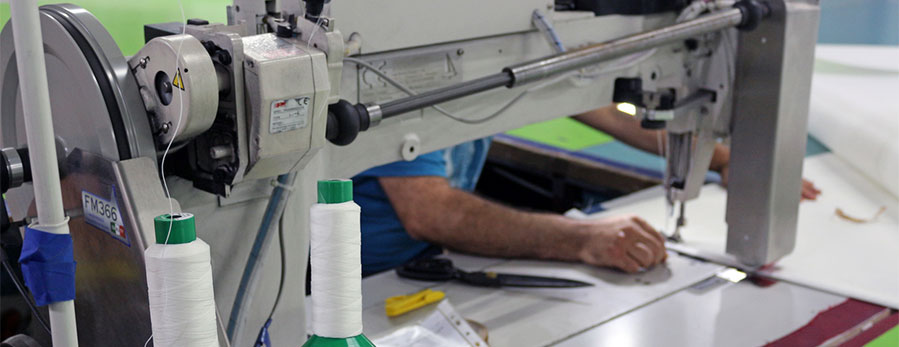
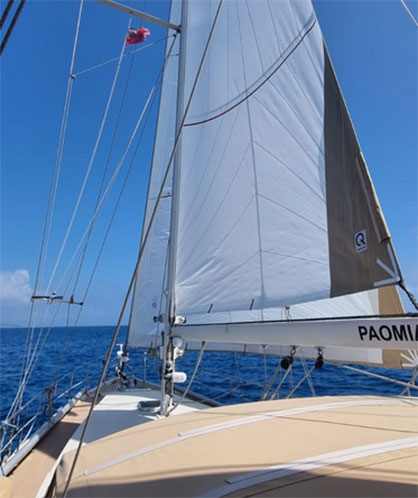
Türkiye-based sail manufacturer Ogemar’s products in different types and sizes bring the boats of sea enthusiasts and professionals together with the seas. Ogemar fully prefers Durak Tekstil sewing threads in sail production focused on trust and quality.

The main threat to sails is the sun’s UV rays and stretching

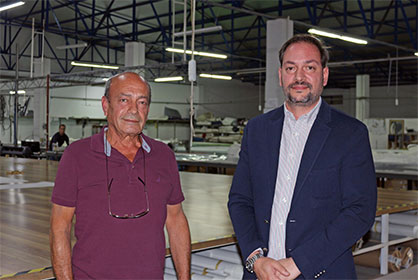
Tahsin Öge, saying ‘The sea is no joke, it does not accept mistakes’, expressed that the trust in them is the only element they cannot afford to give up in sailing production. Underlining that for this reason, they pay attention to the necessary quality and safety criteria at all stages of production, Öge stated that sail fabric and sewing thread are the two basic materials. Öge continued his words as follows: “The biggest problem with sails is not the salty sea water as everyone thinks, but the sun. UV rays cause sails to deform very quickly. In addition, stretching, not tearing, causes the sail to die and become unusable. To meet these criteria and to produce durable sails, polyester fabric with a special coating is used. When this fabric is cut and sewn in the form of a sail, threads with the same properties are needed. Polyester-based threads resistant to UV rays from the sun should be used (in production). All standards in the fabric are also demanded in the sewing thread in order to avoid any risk caused by sewing. The threads we supply from Durak Tekstil completely meet these criteria.”
© 2023 Durak Tekstil


Öge, explaining that Durak Tekstil has been working closely with them from the first day for the threads they requested, said that as of today, they are using Durabond P 20 - 30 F UV WR thread with high technical properties in sewing, and that they have also purchased Polysoft 30 UV and Vardola 1.2 mm W sewing threads. Öge disclosed: “Threads for sails need to be produced through special finishing processes and waxed to a certain extent. Because the sewing machines we use in sail production and its mechanical parts require the thread to have slippage. Otherwise, the thread burns and if you do not notice this at that stage, you may end up with an unsuccessful sewn product. A sail that tears or opens at the seam destroys the trust in you and as a result you lose customers. We have seen that the products we previously supplied from foreign thread manufacturers can now be produced domestically and we have full trust. For this reason, we started to use only Durak Tekstil threads in all of our production.”

Öge explained that in order to prove the reliability of their products to their customers, they obtain the necessary certificates and documents from both the fabric manufacturer company and Durak Tekstil, from which they supply the threads, and that they can also present the international test results for these products when requested by their customers. Öge reiterated that they purchase polyester-based threads from Durak Tekstil and emphasized that these threads fully meet the durability and quality standards they demand.

Durabond thread provides superior performance against UV destruction

Durabond P UV sewing thread, produced by Durak Tekstil from 100% continuous fiber polyester, shows a superior performance against the effects caused by UV rays such as decrease in thread strength, decrease in abrasion resistance and color fading. Durabond P UV, minimizing this effect called UV destruction, enables perfect sewing applications on difficult-to-process textile surfaces. In addition to UV resistance, Durabond users also benefit from friction and abrasion resistance, the ability to work at high speeds, water resistance at the correct stitch tension, maximum working performance and efficiency, easy needle penetration thanks to its special coating and comfortable operation on the sewing machine. Thanks to their technical superiority, these threads can be used with great confidence in the sailing and shipbuilding industry, as well as in outdoor textiles, tents and tarpaulins, automotive and furniture sewing.


Durabond P WR, Durabond’s version with a specially formulated water-repellent coating, is resistant to water being carried through the needle hole in seams. This thread is especially preferred for protective clothing such as leather goods, protective footwear, hiking shoes, safety shoes, furniture, raincoats and jackets.
© 2023 Durak Tekstil


Durak Vardola, another sewing thread used by the company in sail production, is produced by knitting rather than twisting, unlike normal sewing threads. Therefore, Vardola, providing impressive looks, is generally used to create decorative effects.

Ogemar uses Durak Polysoft 30 UV embroidery thread for embroidery applications in sail production. This high performance thread has an improved resistance to chemical effects such as chlorine and outdoor weather conditions such as sunlight. Polysoft UV thread is especially suitable for outdoor applications such as tents, tarpaulins, awnings, sails, etc.

Common synergy with Durak Tekstil creates power

Tahsin Öge said that they are very pleased with their cooperation with Durak Tekstil and that the fact that both companies work with a focus on customer satisfaction creates a common synergy. Explaining that the company exhibited a very sensitive approach to their demands, Öge stated that they were also satisfied with the speed of the service. Öge disclosed that they expect a serious revival in the market in the coming period and that Durak Tekstil threads will continue to give them strength and confidence in this process.
More News from TEXDATA International

#Techtextil 2026

Performance Apparels: Functional textiles drive innovation at Techtextil 2026

From high-performance fibres and advanced membranes to smart textiles and sustainable material concepts – functional apparel is becoming one of the most dynamic innovation fields in technical textiles. At Techtextil 2026, exhibitors demonstrate how new materials, finishing technologies and digital functions are shaping the next generation of protective, workwear and outdoor systems.

#Texprocess 2026

Texprocess 2026: Automation, digitalisation and AI reshape textile processing

Investment decisions in textile processing have become increasingly complex. Rising energy prices, labour shortages and geopolitical uncertainties are forcing companies to prioritise technologies that deliver measurable improvements in efficiency and process stability. This applies not only to apparel production, but also to the processing of technical textiles and high-performance materials. Modernisation projects are therefore being evaluated more selectively – but the pressure to upgrade production systems continues to grow. Texprocess 2026 reflects this tension between cautious investment behaviour and increasing technological demand.

#Techtextil 2026

Textile Chemicals & Dyes: Innovation in Textile Chemistry moves into focus at Techtextil 2026

From PFAS-free finishes and water-saving dyeing technologies to advanced coatings and recycling-compatible formulations, innovation in textile chemistry is accelerating across the industry. Reflecting this development, Techtextil 2026 introduces Textile Chemicals & Dyes as a dedicated product segment, highlighting the growing role of chemical solutions in shaping the next generation of technical textiles.

#Recycling / Circular Economy

textile.4U publishes special edition “Top 100 Textile Recycling Companies 2025”

With a comprehensive 176-page special edition, textile.4U is dedicating its latest issue entirely to one of the most dynamic and influential topics in today’s textile industry: textile recycling. The new issue, published exclusively in high-quality print, presents the Top 100 textile recycling companies researched and selected by TexData – organizations that already play a key role in the transition to circular textiles or are expected to have a significant impact in the near future.

More News on Textiles & Apparel / Garment

#Recycling / Circular Economy

Solving the Feedstock Gap: Unlocking Post-consumer Feedstocks for Textile-to-Textile Recycling in Europe

Fashion for Good launches Project FAE (Feedstock Activation Europe) to develop the sorting and pre-processing infrastructure needed to channel non-rewearable post-consumer textiles into textile-to-textile (T2T) recycling at scale. The project is a practical response to one of the most pressing problems in textile circularity: making post-consumer waste a viable, commercially competitive raw material for recyclers.

#Sustainability

Practical toolkit to drive coordinated climate action launched

An open-access workshop toolkit enables brands, suppliers, policymakers and investors across the textile industry to apply the System Map in their own work, identifying leverage points to halve emissions and enable a just transition.

#Textiles & Apparel / Garment

YKK launches “YZiP® Light” aluminum alloy zipper for cotton pants

YKK Corporation (Headquarters: Chiyoda-ku, Tokyo; President: Koichi Matsushima; hereafter, YKK) has launched YZiP® Light, a lightweight aluminum alloy zipper for cotton pants, with sales beginning in late March. The introduction of YZiP® Light expands YKK’s zipper portfolio—led by the flagship YZiP® copper alloy zipper—providing customers with greater flexibility to meet diverse garment needs.

#Textiles & Apparel / Garment

Coats to showcase innovative reinforcement and filler materials for leather goods and accessories at APLF 2026

Coats, a world-class Tier 2 manufacturer and trusted partner for the apparel and footwear industries, will be promoting four advanced materials from its ‘Lifestyle Solutions’ portfolio at APLF 2026 in Hong Kong in March. Each innovation has been specifically engineered to help luxury and premium brands elevate the craft, durability, sustainability and creative expression required in the manufacturing of handbags, purses, and other high-end designer accessories.

Latest News

#Techtextil 2026

SAHM Winding Solutions and Vandewiele Automation present integrated automation solution for winding processes

For the first time at the Techtextil trade fair in Frankfurt am Main, Germany (21 - 26 April), SAHM Winding Solutions (Hallo 12.0. / Booth 95) and Vandewiele Automation will be showcasing their combined automation expertise for industrial winding processes. Under the motto “Combining Automation. Maximizing Flow”, the two companies will demonstrate how automated package handling and robot-assisted yarn knotting can be integrated into a continuous production flow.

#Recycled Fibers

UNIFI celebrates recycled and circular Innovation with ninth annual REPREVE® Champions of Sustainability Awards

Unifi, Inc. (NYSE: UFI), the makers of REPREVE® and one of the world’s leading innovators in recycled and synthetic yarns, today announced the winners of its ninth annual REPREVE Champions of Sustainability Awards, recognizing brands and mills that are advancing circularity and responsible manufacturing across the global textile industry.

#Man-Made Fibers

Teijin Frontier announces new Stretch Polyester yarn offering exceptional compatibility with high-performance Polyester materials

Teijin Frontier Co., Ltd. announced today that it has developed a new stretch polyester yarn that offers new opportunities to create comfortable, all- polyester fabrics for sports and outdoor wear. The new polyester yarn demonstrates exceptional compatibility with high-performance polyester materials. Further, Teijin Frontier’s proprietary polymer design and spinning technology impart excellent elasticity to the new yarn. In turn, this yarn adds stretchability and recovery to the advanced functionality and excellent texture of high-performance polyester materials.

#Man-Made Fibers

Lenzing commissions 14 MW power‑to‑heat facility, strengthening grid stability and heat management

The Lenzing Group has successfully commissioned a new power‑to‑heat (P2H) facility with an electrical capacity of 14 megawatts. The installation converts renewable electricity directly into process heat, is fully integrated into the existing heat network at the industrial site, and represents a key building block for a fossil‑free heat supply. As project partner, VERBUND was responsible for the energy‑market integration and will operate the facility for balancing energy marketing, enabling it to respond flexibly to short‑term fluctuations in the power grid.

TOP