[pageLogInLogOut]

#Textiles & Apparel / Garment

Inditex and IndustriALL to cooperate on garment industry recovery plan
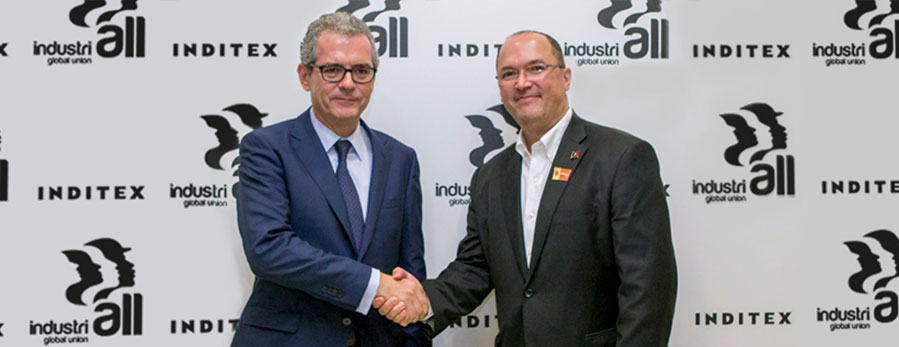
Inditex Executive Chairman, Pablo Isla, and Industriall Global Union General Secretary, Valter Sanches, during the X Anniversary of the Global Framework Agreement in 2017 (c) 2020 Inditex
Inditex, the leading multinational company in the garment industry that owns Zara and other high street brands, and IndustriALL Global Union, which represents 55 million industrial workers, will together support the global garment industry to recover from the crisis created by the pandemic.

The organizations pledged to do this in a joint declaration signed in Arteixo and Geneva on 4 August.

In many countries that produce garments for the sector, there have been large scale job losses and economic hardship for workers. This agreement deepens Inditex’s longstanding commitment to freedom of association and collective bargaining rights and social dialogue. Additionally, the agreement enhances Inditex’s commitment to stable payment terms and to broader access to financing for suppliers in order to support their cash flow. This enables them to honour payments to workers so that jobs and incomes are protected.

The agreement builds on a longstanding partnership between the company and the global union, which began with a global framework agreement signed in 2007 and renewed in 2019.

The agreement pledges to respect freedom of association and collective bargaining rights, giving workers the right to join a union to advance their interests. It promotes social dialogue at all levels, and commits both organizations to working with governments and business organizations in source countries.

The agreement reinforces commitments to other multi-stakeholder initiatives, including the ILO Call to Action in the Global Garment Industry and the ACT initiative.

The health and safety of workers will be ensured. Supplier companies will implement protective measures, and provide personal protective equipment. As Covid-19 restrictions are lifted and economies reopen, Inditex and the global union committee will monitor the safe resumption of normal operations.


Inditex Executive Chairman Pablo Isla said:

“Our priority through this crisis has been and continues to be the health and safety of our people, the workers in our supply chain and our customers.

“Our longstanding and fruitful work with IndustriALL for over 13 years makes our framework agreement a strong tool to keep working to protect and promote workers’ rights and well- being, while supporting the global garment industry during these unprecedented times.”

Industriall Global Union General Secretary Valter Sanches said:

“The Covid-19 pandemic caused a crisis in the textile and garment industry that led unions to experience mass job losses, unsafe working conditions and attacks on workers’ rights. Many of our members saw their livelihoods collapse entirely.

“The manufacturing suppliers need stability and predictability so that employment and income can be preserved. That’s what this commitment entails. We are working together to help the industry to develop the resilience to recover from the crisis, saving jobs and preserving the rights and income of workers.”

Inditex is one of the world's largest fashion retailers, with eight brands (Zara, Pull&Bear, Massimo Dutti, Bershka, Stradivarius, Oysho, Zara Home and Uterqüe) selling in 202 markets through its online platform or its over 7,000 integrated stores in 96 markets.

IndustriALL represents 55 million workers in energy, mining and manufacturing worldwide, including textile and garment workers in the producing countries.
More News from TEXDATA International

#Techtextil 2026

Performance Apparels: Functional textiles drive innovation at Techtextil 2026

From high-performance fibres and advanced membranes to smart textiles and sustainable material concepts – functional apparel is becoming one of the most dynamic innovation fields in technical textiles. At Techtextil 2026, exhibitors demonstrate how new materials, finishing technologies and digital functions are shaping the next generation of protective, workwear and outdoor systems.

#Texprocess 2026

Texprocess 2026: Automation, digitalisation and AI reshape textile processing

Investment decisions in textile processing have become increasingly complex. Rising energy prices, labour shortages and geopolitical uncertainties are forcing companies to prioritise technologies that deliver measurable improvements in efficiency and process stability. This applies not only to apparel production, but also to the processing of technical textiles and high-performance materials. Modernisation projects are therefore being evaluated more selectively – but the pressure to upgrade production systems continues to grow. Texprocess 2026 reflects this tension between cautious investment behaviour and increasing technological demand.

#Techtextil 2026

Textile Chemicals & Dyes: Innovation in Textile Chemistry moves into focus at Techtextil 2026

From PFAS-free finishes and water-saving dyeing technologies to advanced coatings and recycling-compatible formulations, innovation in textile chemistry is accelerating across the industry. Reflecting this development, Techtextil 2026 introduces Textile Chemicals & Dyes as a dedicated product segment, highlighting the growing role of chemical solutions in shaping the next generation of technical textiles.

#Recycling / Circular Economy

textile.4U publishes special edition “Top 100 Textile Recycling Companies 2025”

With a comprehensive 176-page special edition, textile.4U is dedicating its latest issue entirely to one of the most dynamic and influential topics in today’s textile industry: textile recycling. The new issue, published exclusively in high-quality print, presents the Top 100 textile recycling companies researched and selected by TexData – organizations that already play a key role in the transition to circular textiles or are expected to have a significant impact in the near future.

More News on Textiles & Apparel / Garment

#Sustainability

Practical toolkit to drive coordinated climate action launched

An open-access workshop toolkit enables brands, suppliers, policymakers and investors across the textile industry to apply the System Map in their own work, identifying leverage points to halve emissions and enable a just transition.

#Textiles & Apparel / Garment

YKK launches “YZiP® Light” aluminum alloy zipper for cotton pants

YKK Corporation (Headquarters: Chiyoda-ku, Tokyo; President: Koichi Matsushima; hereafter, YKK) has launched YZiP® Light, a lightweight aluminum alloy zipper for cotton pants, with sales beginning in late March. The introduction of YZiP® Light expands YKK’s zipper portfolio—led by the flagship YZiP® copper alloy zipper—providing customers with greater flexibility to meet diverse garment needs.

#Textiles & Apparel / Garment

Coats to showcase innovative reinforcement and filler materials for leather goods and accessories at APLF 2026

Coats, a world-class Tier 2 manufacturer and trusted partner for the apparel and footwear industries, will be promoting four advanced materials from its ‘Lifestyle Solutions’ portfolio at APLF 2026 in Hong Kong in March. Each innovation has been specifically engineered to help luxury and premium brands elevate the craft, durability, sustainability and creative expression required in the manufacturing of handbags, purses, and other high-end designer accessories.

#Textiles & Apparel / Garment

Design, innovation and sustainability propel VIATT 2026’s expanding role in ASEAN textile sourcing

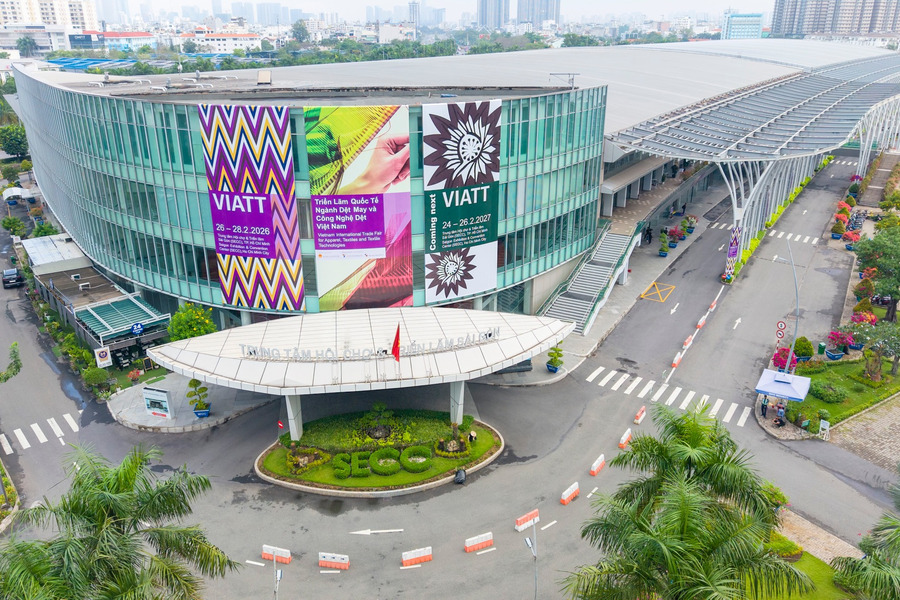
At its third edition, the Vietnam International Trade Fair for Apparel, Textiles, and Textile Technologies (VIATT) further reinforced its role as a key sourcing and business platform for ASEAN’s textile industry. The three-day fair welcomed over 17,000 visits from 54 countries and regions, and featured over 460 exhibitors from 21 countries and regions across 18,000 sqm. The 2026 edition was marked by the introduction of new international pavilions and zones, broadening the fair’s sourcing scope across new geographies and product categories. The fringe programme, headlined by the debut Trend Forum, further distinguished VIATT as the region’s most integrated textile trade platform – uniquely spanning the entire value chain.

Latest News

#Raw Materials

New study shows low environmental impact by Cotton made in Africa Organic Cotton from Tanzania

Today, the Aid by Trade Foundation (AbTF) is announcing the results of a comprehensive life-cycle analysis (LCA) for cotton produced in Tanzania under the Cotton made in Africa Organic (CmiA Organic) standard. The study emphasises the small ecological footprint of CmiA Organic verified cotton. This can largely be traced back to the absence of synthetic pesticides, artificial fertilisers, and artificial irrigation. Consequently, CmiA Organic cotton can help the textile industry meet regulatory requirements as well as science-based targets. The results also show that the consequences of climate change threaten the livelihoods of these cotton farmers, even though the type of agriculture they practise barely contributes to climate change.

#Raw Materials

Better Cotton Initiative strengthens regenerative focus in standard update

The Better Cotton Initiative (BCI) has strengthened the regenerative focus of its field-level standard with the launch of a new version of its Principles & Criteria (P&C), which marks the next step in the organisation’s journey to becoming a regenerative standards system.

#Man-Made Fibers

Selenis and Kintra Fibers partner to scale 100% bio-based synthetic fiber technology

Selenis, a leading global specialty polyester manufacturer, today announced a strategic manufacturing partnership with materials science company Kintra Fibers to scale Kintra’s patented fiber-grade PBS resin - a 100% bio-based and biodegradable material designed for textile applications.

#Functional Fabrics

PERFORMANCE DAYS proves its relevance as the industry’s key meeting point

Held on March 18–19, 2026, PERFORMANCE DAYS once again confirmed its position as a leading international platform for functional textiles. A total of 3.366 trade visitors and around 560 exhibitors gathered in Munich, with the event already kicking off successfully on DAY 0, which received highly positive feedback for its interactive format. Despite challenging conditions caused by the public transport strike in Munich, the event saw strong attendance and a consistently high level of activity across both exhibition days.

TOP