[pageLogInLogOut]

#Textiles & Apparel / Garment

Gore manufacturing plant for fabrics products in Putzbrunn achieved ISO14001 certification
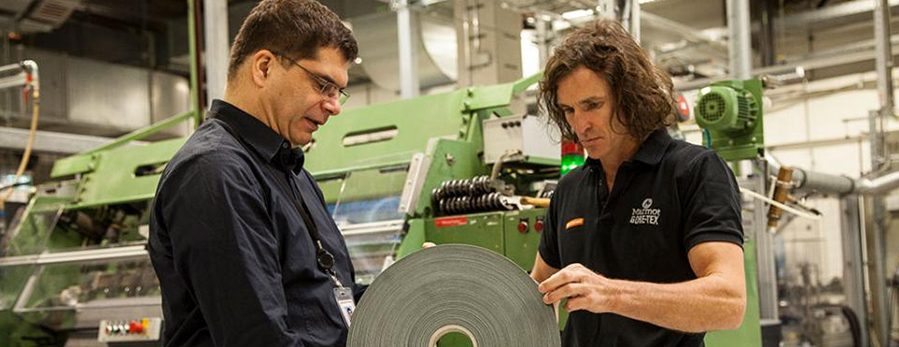
(c) 2020 Gore
W. L. Gore & Associates GmbH (Gore) announced today that its fabrics manufacturing plant in Putzbrunn, Bavaria, has been certified according to the environmental and quality management standard ISO 14001.

Now all fabrics manufacturing plants of Gore are certified according to ISO 14001

"With this certification, all three Gore-owned plants around the world that manufacture fabrics products are compliant with this globally accepted standard for environmental management systems. All our plants comply with equally high standards – for a smaller environmental footprint and safe working conditions. This ISO 14001 certification emphasizes our commitment to comply with the same high standards, partly going beyond legal requirement, in all plants of our Fabrics Division worldwide – for a smaller environmental footprint and safe working conditions.”

Environmental protection, together with social aspects, play a key role in the sustainability strategy of Gore Fabrics’ division. Worldwide accepted standards of environmental management, such as ISO 14001, help establish internationally consistent processes at the plants in order to identify potential improvements within Gore´s environmental management system and support its implementation.

Daniel Eckardt, Regional Quality Leader Europe for Gore fabrics products and in charge of the ISO 14001 introduction in Putzbrunn, says: “I am glad that we received this important certification. Our team did an excellent job, and I am proud of the fact that our manufacturing plant in Putzbrunn completed the range of ISO 14001 certified fabrics manufacturing plants of Gore around the world.”

ISO 14001 was presented by the International Organization for Standardization (ISO) in 1996. It specifies worldwide accepted requirements for environmental management systems that enable organizations, to improve its environmental footprint, comply with legal and other duties, and achieve its environmental goals. This international standard focusses on the concept of “continuous improvement”, based on the “plan-do-check-act” process cycle.

In 2010, Gore began establishing management systems at their manufacturing plants for fabrics products inspired by the ISO standard.


In order to obtain ISO 14001 certification, the plant in Putzbrunn was asked to fulfill a range of specific tasks and requirements similar to the Gore manufacturing plants for its fabrics products in Elk Mills, US and Shenzhen, China:

  • Identify significant environmental impacts such as gas or electrical energy usage and the waste from plants;
  • Monitor energy usage to achieve sustained energy reductions;
  • Measure environmental impact through greenhouse gas emissions;
  • Track projects to show progress;
  • Comply with all legal requirements relating to the environmental performance of Gore´s people, processes, plant and products (4Ps); an example would be, meeting the requirements of Gore´s environmental permit;
  • Follow operational controls, meaning that Gore follows proper procedures for handling and storage of chemicals, and has trained Associates for emergencies in place.

Daniel Eckardt shares the team´s high motivation to work hard on preparing for the audit and certification in Putzbrunn, and also knows about its reasons: “Ensuring that our impact on the environment becomes transparent was one of the most important steps to make all Gore Associates understand and accept the true value of our activities for improving our environmental footprint.”

Gore revolutionized the outerwear industry with waterproof, breathable GORE-TEX Fabric more than 40 years ago and remains a leading innovator of performance apparel. Gore fabrics products provide comfort and protection in challenging environments and in everyday life, enabling wearers to safely and confidently achieve and experience more. From hiking in downpours to defense operations and fighting fires, Gore’s deep understanding of consumer and industry needs drives development of products with meaningful performance advantages.?gore-tex.com and gore-workwear.com





More News from TEXDATA International

#ITM 2026

ITM 2026: The new geography of textile production

New production hubs are emerging across North Africa and Central Asia, while Türkiye is accelerating its transformation toward higher-value, technology-driven and more sustainable textile manufacturing.

#Research & Development

“Production is a product”

From technical textiles and AI-driven robotics to the limitations of textile circularity: Professor Dr Thomas Gries looks back on more than two decades of development at ITA Aachen. In the interview, he explains why production technology remains a decisive success factor, discusses international collaborations and innovation ecosystems, and shares his views on the transformation of production landscapes and the challenges facing an increasingly regulated industry.

#Knitting & Hosiery

“We need to move away from the price trap and return to a value-driven mindset.”

With its new Textile Innovation Center, KARL MAYER is sending a strong signal for innovation, collaboration, and the future of textile applications. In this interview, Karl Josef Mayer discusses new opportunities in warp knitting, the processing of staple fibres, recycling, the changing role of machinery manufacturers, and why the textile industry must once again focus more strongly on the value of textiles. by Oliver Schmidt

#Associations

“Innovation, resilience and international experience remain the great strengths of the Swiss textile machinery industry”

Geopolitical uncertainty, growing competitive pressure from China, new free trade agreements and the shift towards a circular economy are currently reshaping the global textile industry. In this interview, Cornelia Buchwalder discusses the current mood within the Swiss textile machinery sector, the industry’s distinctive innovative strength, new market opportunities in India and Asia, and the technological trends that could shape the upcoming trade fair cycle leading up to ITMA 2027.

More News on Textiles & Apparel / Garment

#Textiles & Apparel / Garment

YKK subsidiary Golden Hill Tower Limited marks 25 years of operations in Myanmar

Golden Hill Tower Limited, a subsidiary of YKK Corporation, celebrated its 25th anniversary with a ceremony in Myanmar on September 21, 2026. The event brought together approximately 230 guests, including senior executives from the YKK Group, to commemorate the company's development since the launch of its serviced apartment business in November 2000.

#Recycling / Circular Economy

NEUMÜHLE launches mono-material hoodie designed for textile recycling

With the Circular Mono Hoodie, Zurich-based label NEUMÜHLE introduces a new essential designed around a single-material principle. The textile construction is cotton throughout, right down to the sewing thread. Entirely free from elastane, the hoodie launches as a Limited Drop for CHF 139. Take-back, collection and existing recycling partnerships complement its circular design.

#Technical Textiles

Penn Solutions files for insolvency and launches investor process

German textile manufacturer Penn Solutions GmbH is continuing operations under preliminary insolvency proceedings while a structured investor process is underway to find a long-term solution for the company.

#Textile processing

YKK India holds groundbreaking ceremony for new plant in Southern India

YKK held a groundbreaking ceremony on September 25, 2026, to mark the start of construction of YKK India Private Limited's new plant in southern India. Approximately 40 participants, including Jin Deguchi, Managing Director of YKK India, attended the ceremony.

Latest News

#Knitting & Hosiery

SHIMA SEIKI to showcase digital product creation at Apparel Sourcing Week

Leading digital textile solutions provider SHIMA SEIKI MFG., LTD. of Wakayama, Japan will exhibit at Apparel Sourcing Week 2026 in Bengaluru, India next month. The exhibition provides a platform for the entire apparel value chain, bringing together manufacturers, brands, suppliers and solution providers in one location.

#Digital Printing

SNA GZ accelerates its on-demand production strategy with Kornit Digital

SNA GZ is leveraging the Kornit Atlas MAX PLUS to expand its music merchandise production, streamline e-commerce order fulfillment, and grow its print-on-demand business across Europe. This investment increases SNA GZ's textile production capacity by 150% (2.5×), enabling the company to meet growing demand and support its continued expansion.

#Raw Materials

New Cotton Review examines competitiveness, market risk, and opportunities

From moving record volumes of Brazilian cotton to market, to managing price volatility, unlocking Ethiopia’s production potential, and strengthening African textile trade, the latest edition of Cotton: Review of the World Situation examines some of the most consequential opportunities and challenges facing the global cotton industry.

#Knitting & Hosiery

Long John puts KARL MAYER's RDJ 7/3 into operation and strengthens its position as a market leader

KARL MAYER has just unveiled its new RDJ 7/3 Jacquard Double Needle Bar Raschel Machine in the international trade press, and the innovation is already causing a stir in the market: The Long John Group, a leading manufacturer of performance footwear fabrics and a long-standing partner of renowned brands, was the first customer to invest in the new machine and celebrated its official launch at its Indonesian plant on August 20.

TOP