[pageLogInLogOut]

#Textiles & Apparel / Garment

World premier during 2020 ISPO

(c) 2020 Sympatex Technologies GmbH
Sympatex Technologies and Schoeller Textil introduce the first circular functional jacket made from used textiles

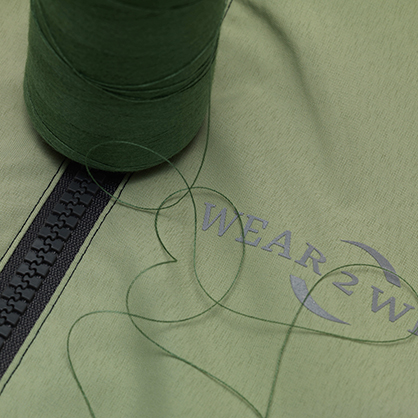
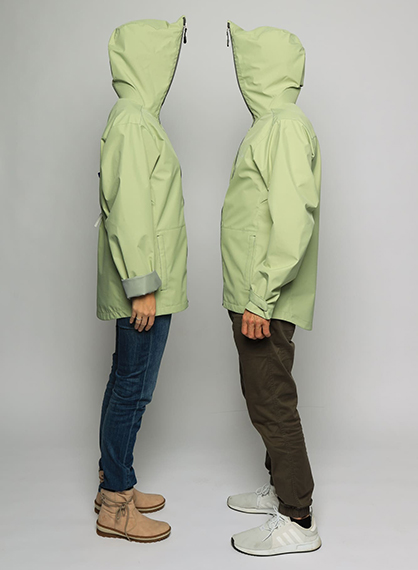
rEvolution Hybrid generated a lot of buzz on day three of the 2020 ISPO in Munich. The world’s first upcycled functional jacket made from 30 percent recycled used textiles and 70 percent recycled PET bottles is the latest development from wear2wearTM. The three-layer, high-performance jacket was developed and produced in collaboration with the European industry partnership, which meanwhile has grown to nine core members and three technology partners with the aim of rapidly closing the textile loop. This outdoor jacket offers not only maximum wearing comfort, but also EN 343-certified rain protection. Inspection of the sustainable and skin-friendly rEvolution Hybrid jacket is carried out by OEKO-TEX® und bluesign® in line with the stringent STANDARD 110. Two of the wear2wearTM founding members – Sympatex Technologies and Schoeller Textil – will have the jacket on display at their respective exhibit booths (hall 1, booth 300 / hall A1, booth 218).

rEvolution Hybrid: born from used textiles

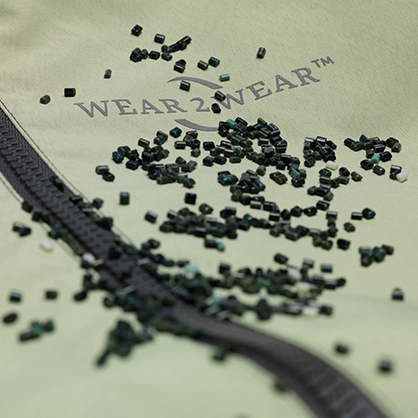
The manufacturing process for the rEvolution Hybrid jacket begins by mechanically reducing used, 100 percent polyester (PES) textiles into fibers and converting them into granulate using an additional polymer melting process. The granulate is subsequently melted again and spun into new PES filament yarn. The yarns are then processed into textile polyester fabrics by Schoeller Textil AG and laminated together with the 100 percent recyclable polyetherester-based Sympatex membrane to create an unmixed, highly-functional and 100 percent waterproof functional textile that can be recycled again. The rEvolution Hybrid manufacturing process currently relies on 30 percent recycled used textiles. The remaining 70 percent is derived from PES yarns produced from recycled PET bottles. By using chemical upcycling processes, other substances such as PU adhesives can also be dissolved into a spinnable concentration so that they gradually vanish from the recycled textiles. The goal is to increase the percentage of recycled used textiles to 100 percent within the coming months.

Design2Recycle – the underlying concept of rEvolution Hybrid is unmixed materials

The Design2Recycle concept that was developed for the rEvolution Hybrid is based on a selection of low-seam cuts of materials that are as pure-grade as possible, in combination with unmixed ingredients and environmentally-compatible equipment and dyes that do not affect the recycling process.

“The de facto proportion of polyester materials within the entire textile industry already exceeds 50 percent. If you limit this to synthetic materials – still two-thirds of our industry – it even increases to 80 percent. It should be obvious that we have to try make it a priority to manufacture apparel from pure polyester materials, so that once the clothing is used, it can be recycled using a process that is easy to implement and cost-effective,” explains Dr. Rüdiger Fox.

“In other words, the hurdles involved in implementing a textile loop are much lower than generally assumed. The only thing holding back the creation of a waste-free synthetic clothing industry is the limits of our imagination – the collective will to make it happen as soon as possible,” says Fox.
(c) 2020 Sympatex Technologies GmbH


End of life – rEvolution Hybrid returns to the wear2wearTM loop

Using an integrated RFID chip, all wear2wearTM products, including the rEvolution Hybrid, are traceable and transparent for the consumer and the process partner. TEXAID, the new wear2wearTM partner, can determine if a clothing article belongs to the concept by reading the RFID chip. And partners such as CWS ensure the collection of used clothing from the rental business and the protective work clothing segment. Once the clothing has been collected, sorted and separated, it then finds its way to wear2wear™ partner Carl Weiske, which re-initiates the upcycling process through a special combination of mechanical and chemical methods. Using a water-soluble PVA (polyvinyl alcohol) yarn in the Design2Recycle process, non-recyclable residues can be cost-effectively removed without impacting the material. The yarn, which withstands the daily wear and wash cycle typical for outdoor and protective work clothing, first begins to dissolve at 100°C. After the raw materials are reprocessed, new PES filament yarn is created, which is then processed into new upcycled polyester fabrics. The wear2wearTM loop is closed and a new high-quality, sustainable functional textile can be created.
(c) 2020 Sympatex Technologies GmbH


“The wear2wear™ collaboration is not about waiting until there is an optimal solution. The partners are continually improving the state of the technology together and constantly enhancing their capabilities. As a result we are assuming responsibility for making the world of textiles more sustainable, day-by-day and step-by-step. Perhaps you could describe us as realistic idealists,” says Hendrikus van Es, head of BU Protection Textiles and member of the executive board at Schoeller Textil.

“This is something that would nevertheless be impossible on our own. The only way to show how the entire textile loop works and ensure that clothing is responsibly manufactured and then recycled after it is used, is through partnerships and transparency,” adds van Es.
(c) 2020 Sympatex Technologies GmbH


More News from TEXDATA International

#Recycling / Circular Economy

textile.4U publishes special edition “Top 100 Textile Recycling Companies 2025”

With a comprehensive 176-page special edition, textile.4U is dedicating its latest issue entirely to one of the most dynamic and influential topics in today’s textile industry: textile recycling. The new issue, published exclusively in high-quality print, presents the Top 100 textile recycling companies researched and selected by TexData – organizations that already play a key role in the transition to circular textiles or are expected to have a significant impact in the near future.

#Recycling / Circular Economy

Responsible Textile Recovery Act of 2024 signed by Governor

Senator Josh Newman (D-Fullerton) is proud to announce that Senate Bill 707 (SB 707), the Responsible Textile Recovery Act of 2024, has been signed into law by the Governor of California, Gavin Newsom. This groundbreaking legislation establishes the country’s first Extended Producer Responsibility (EPR) textile recycling program, marking a significant step forward in the state’s efforts to combat waste and promote sustainability.

#Textiles & Apparel / Garment

Modtissimo promotes sustainability with 28 coordinates in the Green Circle

Modtissimo is proving more and more to be a textile and clothing show that delivers the latest innovations in the area of sustainability, with the iTechStyle Green Circle being the main showcase for companies' creations. In this 60+4 edition, taking place on 12 and 13 September, 28 coordinates will be exhibited in a section organised by CITEVE and curated by Paulo Gomes.

#Europe

The EU and Egypt team up to mobilise private sector investments at Investment Conference and sign a Memorandum of Understanding underpinning €1 billion in macro-financial assistance for Egypt

At the EU-Egypt Investment Conference, co-organised by the EU and the Government of Egypt on 29-30 June, the EU and Egypt are teaming up to intensify private sector investments in Egypt. They are also signing a Memorandum of Understanding (MoU) for the disbursement to Egypt of up to €1 billion in Macro-Financial Assistance.

More News on Textiles & Apparel / Garment

#Textiles & Apparel / Garment

Pets in fashion: functional and sustainable textiles find new market at Intertextile Apparel

China’s pet economy is booming, especially amongst younger generations, and pet apparel – from designer outfits to functional garments – was a RMB 3.5 billion (over USD 500 million) market in 2024, growing more than 20% annually¹. To help exhibitors harness this trend, Intertextile Shanghai Apparel Fabrics – Spring Edition 2026 will launch the Pet Boutique, presenting a range of innovative, sustainable materials that prioritise both functionality and comfort for pets.

#Sustainability

VAUDE eliminates PFAS from all products

PFAS (per- and polyfluoroalkyl substances) are now detectable worldwide – in drinking water, soil and the human body. These so-called “forever chemicals” are considered hazardous to health and potentially carcinogenic, as they do not break down and remain in the environment permanently. Despite these risks, PFAS are still used in a wide range of products. More than 15 years ago, VAUDE made a strategic decision to gradually eliminate PFAS from all product categories.

#Textiles & Apparel / Garment

IFCO 2026 has started today: Istanbul’s fashion expertise as a global business platform linking design, production, and trade

Around 450 exhibitors from all segments of the fashion industry are presenting their latest collections to more than 30,000 trade visitors from over 125 countries—ranging from womenswear, menswear, kidswear, eveningwear, lingerie, underwear, denim, shoes and accessories to homewear.

#Knitting & Hosiery

KARL MAYER opens a new TEXTILE INNOVATION CENTRE – a new era of textile innovation begins

KARL MAYER is opening its new TEXTILE INNOVATION CENTRE (TIC), sending a strong signal that it is driving textile innovation forward and opening up new perspectives for the textile industry. The TIC brings together the latest developments in Warp Knitting, Technical Textiles and Warp Preparation – KARL MAYER’s core areas of expertise.

Latest News

#Associations

Engineering depth and diversity for composites

Airbond is the latest member of the British Textile Machinery Association (BTMA) to receive recognition for contributions to the composites industry. The engineering firm based in Pontypool, South Wales, has just received the Make UK Energy and Sustainability Award for its Lattice 3D Printing project.

#Research & Development

Award-winning research for sustainable carbon fibre cycles

Sustainable recycling of carbon fibres is possible through targeted electrochemical surface modification, which makes the sizing of carbon fibres resistant to solvolysis. ITA PhD student Sabina Dann was awarded the MSW Award from RWTH Aachen University for her master's thesis on this development. The award ceremony took place on 12 November 2025 in Aachen.

#Technical Textiles

Carrington Textiles and Pincroft unite defence expertise at Enforce Tac

Carrington Textiles and Pincroft return to Enforce Tac for the third time, presenting a co-branded stand that brings together textile manufacturing and specialist finishing under one roof.

#Yarns

Eastman introduces Naia™ Lyte at Première Vision Paris, marking a major breakthrough in fiber tenacity for cellulose acetate filament yarn performance

Eastman unveils Naia™ Lyte, a new cellulose acetate filament yarn that represents an important milestone in performance for lightweight and premium fabrics, at Première Vision Paris. Presented for the first time to the international fashion and textile community, Naia™ Lyte expands the capabilities of acetate yarn by introducing enhanced tenacity, unlocking new creative and technical possibilities for designers, mills and brands.

TOP