[pageLogInLogOut]

#Textiles & Apparel / Garment

Fast fashion and sustainability in the center of interest at MAROC IN MODE & MAROC SOURCING
(c) 2019 MAROC IN MODE
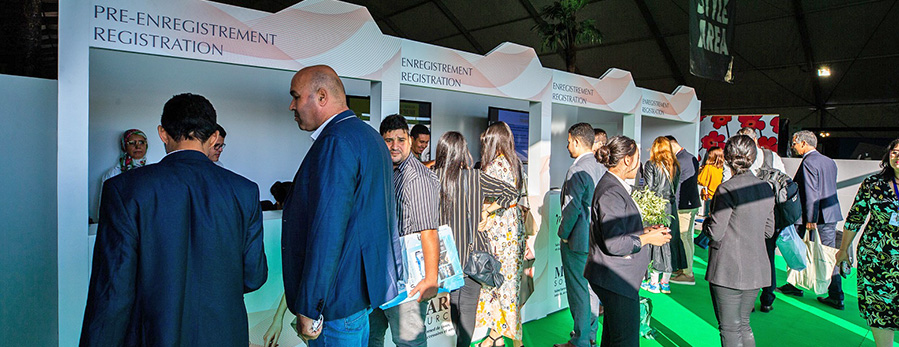
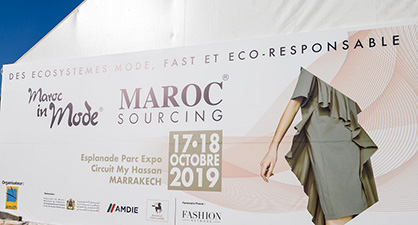
With 140 Moroccan and international exhibitors, an even larger number of production specialists presented themselves at this year's Maroc in Mode - Maroc Sourcing to over 1,000 trade visitors at the Moulay Hassan racetrack in Marrakech.
  • Larger exhibitor offer at the Maroc in Mode &Maroc Sourcing 2019
  • Fast fashion and sustainability: Top topics at the fair
  • Further internationalization: Partnership agreement signed with France
  • Morocco's textile industry: development into an all-round solution provider
  • AMITH: new federation structures drive innovation

Visitors from 16 countries, such as Spain, France, Portugal, Italy, UK, Germany, etc., including high- profile companies and vertical top providers, used the show as a platform to expand their production portfolio, intensify existing contacts and finalize production projects. In total, more than 700 came from Morocco, over 300 from European countries (Spain, France, Portugal, Italy, Germany, UK) and further countries like Japan. Visitors were particularly interested in the current topics of fast fashion and sustainability.
(c) 2019 MAROC IN MODE


The 17th edition of Maroc in Mode - Maroc Sourcing became more international: producers from 6 countries presented their extensive production offer in the fields of fast fashion, denim, knitwear, tailoring and corporate fashion, among them exhibitors from Morocco, China, Pakistan, Portugal flagged with more than 20 companies in the area of Maroc Sourcing, Turkey was represented here by 19 specialists in fabrics, ingredients, accessories and services. The expansion into further markets is to be continued.

Fast fashion and sustainability are top themes

In line with visitor interest, the fair focused on sustainable aspects and fast fashion. Increasingly more exhibitors are sustainably certified, i.a. from Oekotex, BSCI, GOTS, ISO, through individual customer audits, etc. Exhibitors and visitors unanimously confirmed that sustainable production is the textile future: "There is a growing demand for sustainable production. We assume that from 2020 almost every company will demand sustainable production. That's why we're investing in new machines and changing all our processes from chemical use to laser technology," said Hind Raki, Commercial Manager of Crossing.

Against this background, sustainable production is strongly promoted. Investments are made not only in the denim sector with the application of new technologies such as ozone, eFlow, laser but through out the industry. There are plans for projects that will establish a comprehensive ecosystem of circulation in Morocco.

The comprehensive seminar program on both days of the fair gathered experts from the fashion industry and reflected here also the developments of the market, ia. with a view to the fundamentals of Oekotex certification, the opportunities and challenges of sustainable fashion for the sector, energy efficiency and circular economy in the textile and clothing sector, as well as the different conditions in the European and American fashion markets.

Another focus was on digitalization and how to further enhance the added value of Moroccan textiles and clothing, e.g. with expert lectures on the change from CMT to FOB and new technologies from Lectra, etc.

Moroccan textile industry has weight

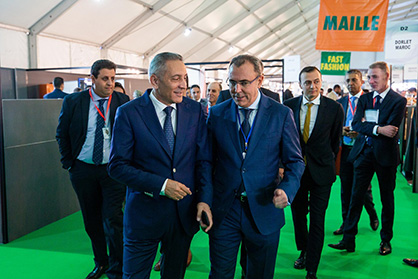
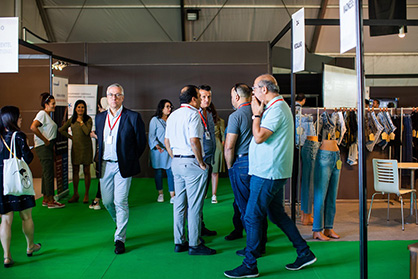
The visit of the MoroccanMinister of Industry Moulay Hafid Elalamy on the second day of the fair underlines the importance attached to the textile sector by the state. The minister was shown the fair and had talks with organizers and exhibitors. After renaming, the Ministry of Industry, Trade, Green and Digital Economy now officially bears sustainability in its name.

(c) 2019 MAROC IN MODE


The textile and clothing industry is one of the country's most strategic sectors. With more than 185,000 employees, it is the largest industrial employer in Morocco. The textile industry accounts for a quarter of national exports, and in 2018 Morocco exported goods worth € 3.6 billion. Among the Mediterranean countries, it is the number two in terms of exports to the EU, ranks seventh over all among the major suppliers of textiles and clothing to the EU. The more than 1,600 companies have an annual production capacity of 1 billion parts.

The political and social stability in the country, the favorable geostrategic and proximity to Europe, the developed infrastructure and a minimum wage that is well below those in other producing countries, such as Turkey and China, form a positive economic environment, including foreign investment from e.g. Spain, Turkey, Portugal and China.

Morocco develops into an "all-round solution provider"

Since 2015, AMITH and the Ministry of Industry have been pursuing a common, ambitious strategy to increase the value of the sector with the Acceleration Plan. The advancement of enterprises, which work after CMT model, to FOB offer is driven forward. Morocco is thus developing from pure sewing room to professional solution provider. For this purpose, significant investments in i.a. technology and sustainability. The new focus is to strengthen the upstream value chain in order to boost the competitiveness of Moroccan producers and further expand their ability to respond to the market quickly.

Internationalization and innovation determine the strategic development

Strategically, the fair is even more international. At the fair, AMITH solemnly signed two partnership agreements with UIT - Union of Industries Textiles and UFIMH - Union Franc?aise Mode & Habillement on the first day of the fair. The aim is to further consolidate cooperation between the Moroccan and French textile and clothing industries. Already in 2017, the partnership with the Portuguese association ATP was sealed. While Spain and France are traditionally strong partners, in future the focus will increasingly be on new markets, especially Northern Europe. Scandinavia and Germany are seen as strategic markets in which the activity is to be increased significantly, measures are intensified.

New association structure drives innovation

The project gets further impetus with the recently implemented new association structure. With Mohammed Boubouh as the newly elected President of AMITH and Fatima Zohra Alaoui as the new Managing Director, the sector will be strategically innovated and further adapted to the challenges of the modern textile industry. An extensive program of transformation measures is intended to further boost Morocco's competitiveness. As a first step, the digital platform www.gosourcing-morocco.com was launched during the show, which provides detailed information on producers, provides transparency and enables direct networking. Also current company news are published here.
(c) 2019 MAROC IN MODE


More News from TEXDATA International

#ITM 2026

ITM 2026: The new geography of textile production

New production hubs are emerging across North Africa and Central Asia, while Türkiye is accelerating its transformation toward higher-value, technology-driven and more sustainable textile manufacturing.

#Research & Development

“Production is a product”

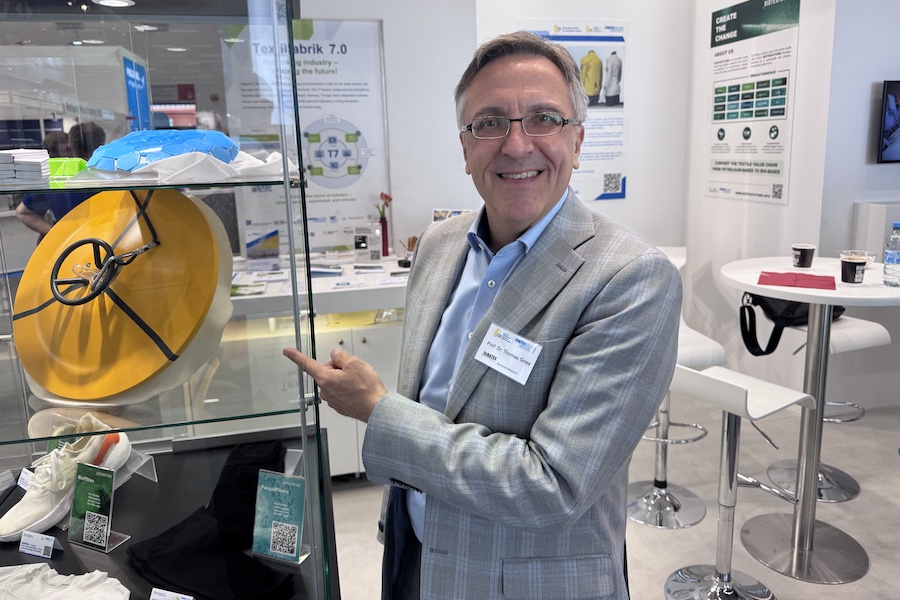
From technical textiles and AI-driven robotics to the limitations of textile circularity: Professor Dr Thomas Gries looks back on more than two decades of development at ITA Aachen. In the interview, he explains why production technology remains a decisive success factor, discusses international collaborations and innovation ecosystems, and shares his views on the transformation of production landscapes and the challenges facing an increasingly regulated industry.

#Knitting & Hosiery

“We need to move away from the price trap and return to a value-driven mindset.”

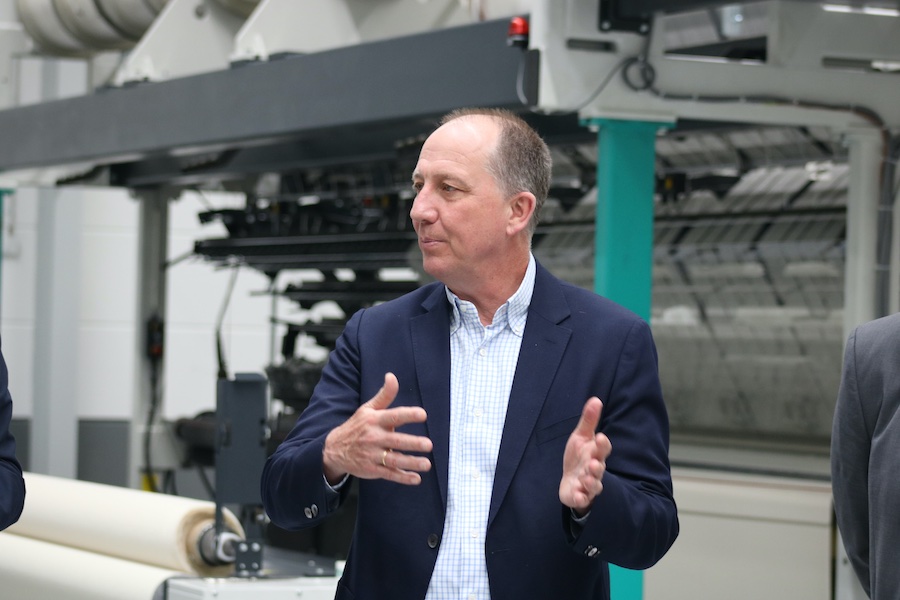
With its new Textile Innovation Center, KARL MAYER is sending a strong signal for innovation, collaboration, and the future of textile applications. In this interview, Karl Josef Mayer discusses new opportunities in warp knitting, the processing of staple fibres, recycling, the changing role of machinery manufacturers, and why the textile industry must once again focus more strongly on the value of textiles. by Oliver Schmidt

#Associations

“Innovation, resilience and international experience remain the great strengths of the Swiss textile machinery industry”

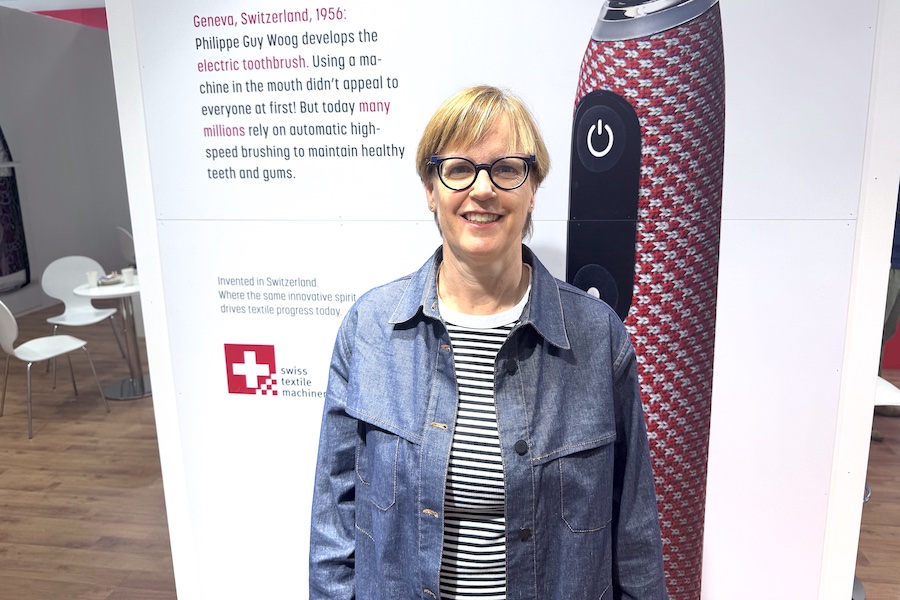
Geopolitical uncertainty, growing competitive pressure from China, new free trade agreements and the shift towards a circular economy are currently reshaping the global textile industry. In this interview, Cornelia Buchwalder discusses the current mood within the Swiss textile machinery sector, the industry’s distinctive innovative strength, new market opportunities in India and Asia, and the technological trends that could shape the upcoming trade fair cycle leading up to ITMA 2027.

More News on Textiles & Apparel / Garment

#Associations

German textile industry and retailers form alliance to shape textile EPR system

Germany’s textile and fashion industry and retail sector have joined forces to establish the “Alliance for Textile Circularity” (Allianz für textile Kreisläufe). Initiated by the German Textile and Fashion Industry Association (Gesamtverband textil+mode) and the German Retail Federation (HDE), the alliance aims to contribute industry expertise to the development of Germany’s future Extended Producer Responsibility (EPR) system for textiles and footwear.

#Textiles & Apparel / Garment

Intertextile Apparel concludes with strong global engagement and future-focused sourcing momentum

Textile innovation in the form of widely applicable, scalable solutions was on show as Intertextile Shanghai Apparel Fabrics – Autumn Edition 2026 concluded on 27 August. The show brought together over 3,500 exhibitors from 30 countries and regions across 240,000 sqm at the National Exhibition and Convention Center (Shanghai), and welcomed over 100,000 visitors. Across three days, the fair served as a platform for sourcing, product discovery and industry exchange, reflecting demand for materials and solutions that balance creativity, functionality, responsibility and efficiency.

#Sustainability

Jeanologia Sustainability Report highlights environmental impact of textile technologies

Jeanologia has published its Sustainability Report 2025, reporting a 13.64% reduction in its own carbon footprint and quantifying the environmental impact associated with the use of its technologies across the global textile industry. According to the company’s calculations, their use avoided the pollution of 21.52 million m³ of water and emissions of approximately 103,530 tonnes of CO₂ compared with conventional textile finishing processes.

#Fabrics

Texhibition Istanbul strengthens international sourcing profile with innovation and technical textiles

Texhibition Istanbul Fabric and Textile Accessories Fair concluded its 10th edition from 9–11 September 2026 at Istanbul Expo Center. Around 500 exhibitors presented their latest collections and developments across five halls and 42,850 sqm, covering knitted and woven fabrics, prints, artificial leather, denim, yarns, embroidery, lace, textile accessories as well as innovative, sustainable and technical textile solutions.

Latest News

#Knitting & Hosiery

KARL MAYER invites the Global Textile Industry to celebrate its 90th anniversary at its German Headquarters in 2027

KARL MAYER is turning its anniversary year 2027 into a milestone for the textile sector. To mark its 90th anniversary, the industry leader is inviting customers, partners, and experts from around the world to a unique event series in September aimed at pushing boundaries, unlocking new opportunities, and jointly setting the course for a new era in textiles – just as KARL MAYER has done throughout its history. The company’s headquarters in Obertshausen, near Frankfurt, is the place to be.

#Associations

ITMF names three winners of the Sustainability & Innovation Award 2026

Three projects from the UK, Korea and China have been selected as winners of the ITMF Sustainability & Innovation Award 2026. The projects address textile-to-textile recycling, chemical recycling for automotive textiles and a regenerative approach combining silk production with ecological restoration.

#Recycling / Circular Economy

nova-Institute launches groundbreaking Advanced Recycling Database for strategic market insight

The new Advanced Recycling Database reduces complexity by providing industry stakeholders with up-to-date expert-reviewed intelligence on companies, technologies, plants, capacities, locations, products and partnerships across the global advanced recycling landscape.

#Yarns

Durak Maxibalance thread supports users’ movement and balance comfort

Durak Tekstil, a leading brand in its industry, has developed Durak Maxibalance, a new product engineered with bio-ceramic and FAR IR technology. Ushering in a new era for sportswear, activewear, and medical textiles, this technology offers features designed to support balance and movement comfort by reflecting the energy absorbed from the body back into it.

TOP