[pageLogInLogOut]

#Textiles & Apparel / Garment

Green and technical products drive growth

A look back at Première Vision Paris show and the results of the Fabrics exhibitors. According to the findings of the survey of fabrics’ exhibitors, fashion is responding to economic downturns and international uncertainties with openness and commitment. Weavers face a broad spectrum of insecurity. The slowdown in Chinese growth, the slowdown in demand in Europe and protectionist tensions have undeniable consequences on the business climate.” But amidst the gloom, bright factors are perceived. Brands “are committed” to sustainable fashion.

Results of the Fabrics exhibitors

A tidal wave of green is impacting all sectors. Topping the list of mobilized countries: France, then Germany and Scandinavia, according to reports from several stands including Italy’s Omniapiega. This pleat specialist struck an immediate chord with a certified biodegradable recycled polyester. At Italy’s Achille Pinto and Lisa, as well as France’s Philea, the talk is now of the “purchasing reality” of recycled and sustainable materials. “Visitors are informed and determined,” adds Sara Canobbio. The company’s coordinator is presenting an exclusive collection of viscose fabrics labelled Fsc and Ecovero, polyester stamped GRS and REPREVE, and GOTS or BCI guaranteed cotton, and noted that: “The interest felt during the launch was clearly reflected at the show in the high-end French and Italian markets.” For Portugal’s Sampaïo, the shift is clear: “Some 30% to 40% of the requests we received are for environmentally friendly products. It’s a real groundswell,” says José António Silva from the company’s sales department.

(c) 2019 Premierevision


Sports specialists are also catching the green wave and riding it. In the fast-growing Sport & Tech sector, newcomers were delighted with the welcome given to new products. “The results are exceeding our expectations,” says Giorgio Gallino, sales manager at Spain’s Sportwear Argentona. Its interlock knit in recycled polyester and Lycra headed up their orders. “Very positive”, said Italy’s Pontetorto Sportsystem, whose Biopile process (which doesn’t emit plastic micro-particles) was very popular. The same enthusiasm was expressed at Miti: “The meetings are very constructive and the attention given to our recycled nylon, polyester and elastane interlock is very gratifying!” said Laura Gambarini, Marketing Director. Overall, recycled high-activity knits are in high demand: whether bi-stretch (Fieratex), fast drying (Tianhai, Miti) or made from water-repellent nylon (Hitop & Zentex).

Comfort, elegance and sustainability now go hand in hand. And there’ s no turning back.

Discover more on the Première Vision Marketplace:

https://marketplace.premierevision.com/en/?___from_store=fr


Review of the last show by the design and knit studios

The pattern specialists chose to present a rich and creative offer to help reassure fashion professionals in doubt. “From Liberty-style flowers to African prints with textured backgrounds, we have a very diverse collection. This way, each brand can find what it wants. This is important at a time when brands are looking to find their way,” says Ben Short, studio head at Amanda Kelly.


This rich diversity can be found everywhere, but strong trends are nevertheless emerging for next season. In designs targeting prints, a “hand-painted” spirit in soft and feminine colours garnered interest (Abby Lichtman Design), while tie-dyes (Cocobloom) and a number of paisleys (Robert Vernet) also caught the attention of brands. Another area of demand focused on abstract motifs, inspired by minerals such as marble (The Colorfield). Besides the designs, print grounds also made a difference. “Our sector is really competitive and you have to offer something surprising,” says Lisa Berridge, Cocobloom’s artistic director, pointing to a print on a burnt-out voile that met with a lot of success. Designer Abby Lichtman noted an opportunity for her business to expand into accessories. “Our designs are increasingly being selected for backpacks and fabric bum-bags,” she says. These specialists also noted the lack of seasonality in their artworks. “Now you find tie-dyes and tropical colours broken down in autumnal hues,” pointed out Adam Read, director of The Colorfield. And many stands in fact are offering these kinds of designs, such as Amanda Kelly, with African wax-style motifs combined with flowers in dark shades.

Yet whatever the preference, as they said at Antoinette and Freddy’s stand, “A good design is a good design.”

For knitwear specialists, the technical side is key, especially blends of yarns with different weights and aspects. “There has to be texture, and some of our proposals are very well suited to sports-type clothing items, thanks to a blend of stitches that create 3D effects,” said Stéphane Nahon, who works alongside Sophie Steller. In their more ready-to-wear offer, he also saw a demand for fairly classic jacquard patterns, “but revisited in new and unusual colours”. At Bobble, plays on colours, both strong and soft, also helped to differentiate their knits. “Brands need something exciting because it’s a tough market out there,” pointed out Helen Jenkins, sales manager at the English studio. 

(c) 2019 Premierevision


As for Gopesh Beriwal, head of marketing at Nascent Studio, he’s convinced that his core business, embroidery, is due for an imminent comeback after several seasons dominated by prints. “Brands are looking for something different, and eventually they’ll tire of prints,” he reasoned. Only next season will tell.

Find the complet list of Design exhibitors here:

https://e-catalog.premierevision.com/en/exposant/?fwp_manifestation=ipa-fr
More News from TEXDATA International

#ITM 2026

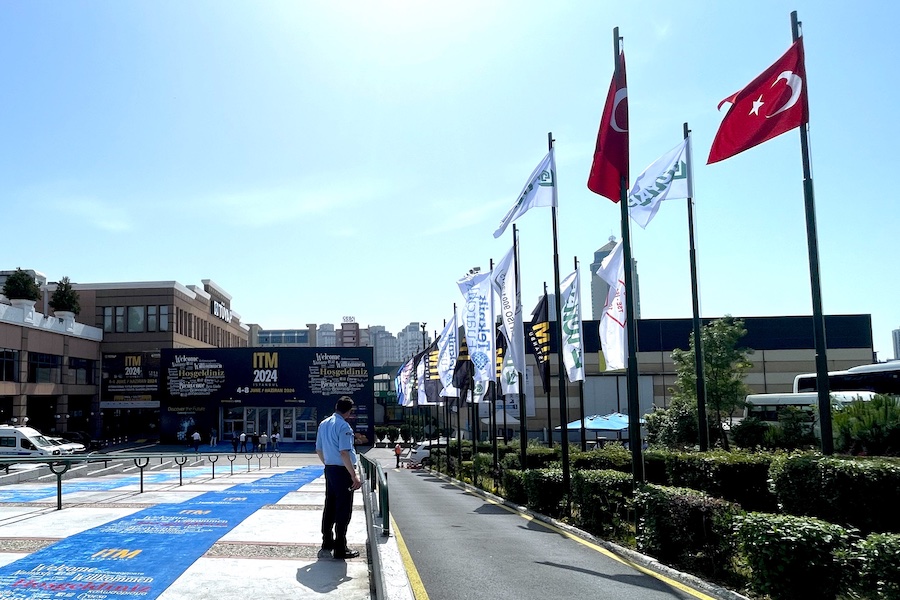
ITM 2026: The new geography of textile production

New production hubs are emerging across North Africa and Central Asia, while Türkiye is accelerating its transformation toward higher-value, technology-driven and more sustainable textile manufacturing.

#Research & Development

“Production is a product”

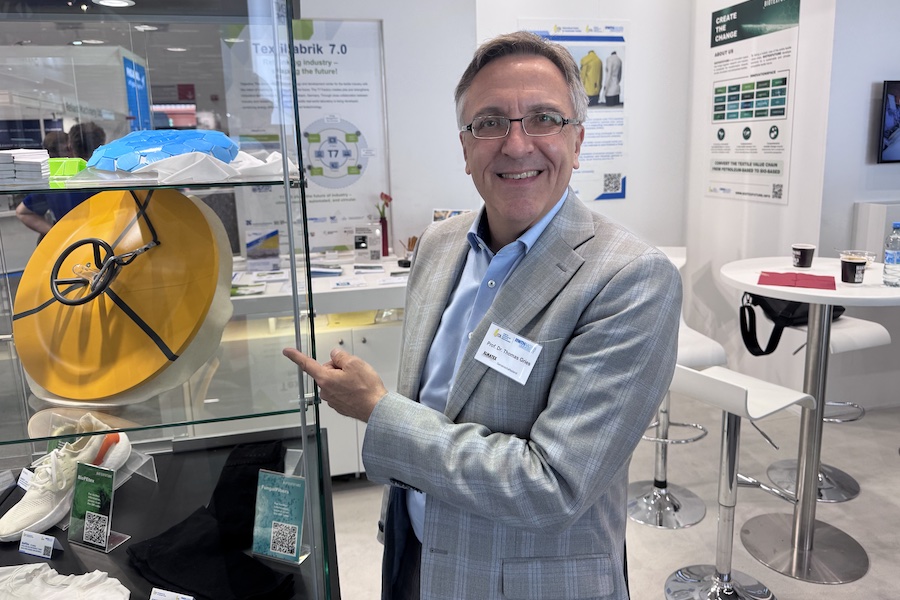
From technical textiles and AI-driven robotics to the limitations of textile circularity: Professor Dr Thomas Gries looks back on more than two decades of development at ITA Aachen. In the interview, he explains why production technology remains a decisive success factor, discusses international collaborations and innovation ecosystems, and shares his views on the transformation of production landscapes and the challenges facing an increasingly regulated industry.

#Knitting & Hosiery

“We need to move away from the price trap and return to a value-driven mindset.”

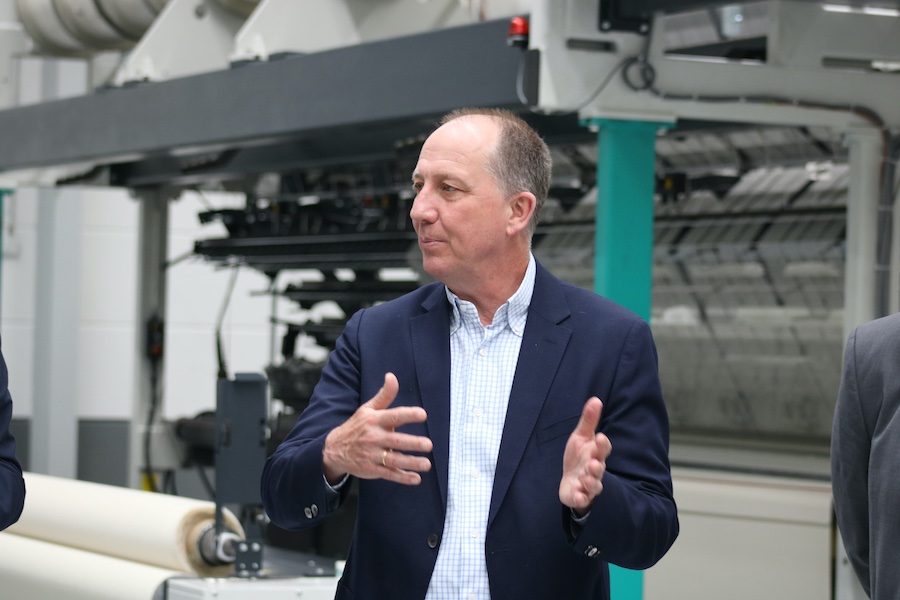
With its new Textile Innovation Center, KARL MAYER is sending a strong signal for innovation, collaboration, and the future of textile applications. In this interview, Karl Josef Mayer discusses new opportunities in warp knitting, the processing of staple fibres, recycling, the changing role of machinery manufacturers, and why the textile industry must once again focus more strongly on the value of textiles. by Oliver Schmidt

#Associations

“Innovation, resilience and international experience remain the great strengths of the Swiss textile machinery industry”

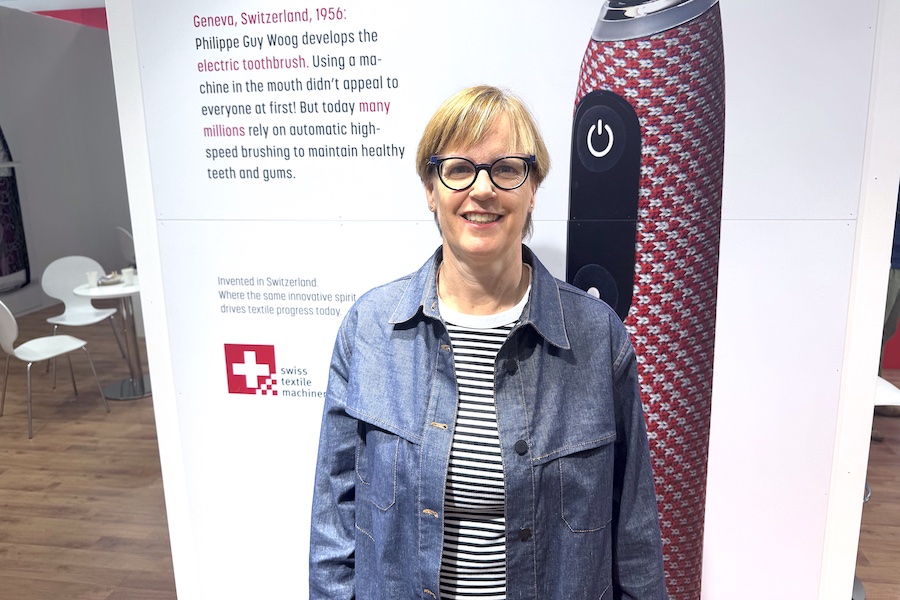
Geopolitical uncertainty, growing competitive pressure from China, new free trade agreements and the shift towards a circular economy are currently reshaping the global textile industry. In this interview, Cornelia Buchwalder discusses the current mood within the Swiss textile machinery sector, the industry’s distinctive innovative strength, new market opportunities in India and Asia, and the technological trends that could shape the upcoming trade fair cycle leading up to ITMA 2027.

More News on Textiles & Apparel / Garment

#Denim

Inside the Making connects denim and sportswear supply chains at Ecomondo 2026

Six European companies are joining forces at Ecomondo 2026 in Rimini to demonstrate how different stages of denim and sportswear production are interconnected. The new initiative, Inside the Making, highlights the importance of cooperation across the textile supply chain in addressing sustainability challenges, from reducing resource consumption to improving transparency and the reliability of environmental claims.

#Textiles & Apparel / Garment

MarediModa highlights transparency and traceability with InsideOut by C.L.A.S.S.

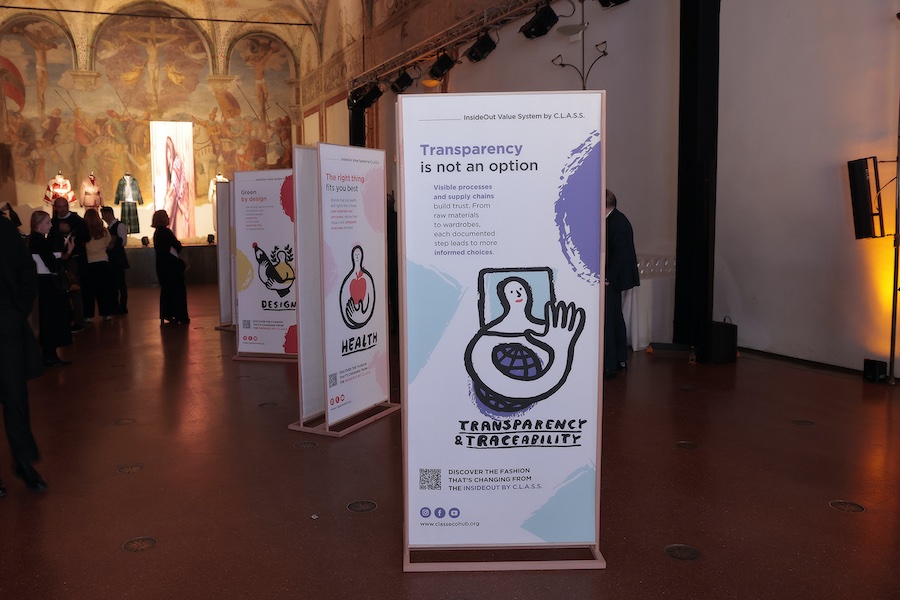
The InsideOut by C.L.A.S.S. exhibition at MarediModa 2026 in Cannes focused on transparency, traceability and the measurable values behind fashion products. Its Decalogue of Values aims to make environmental, social and production-related information more accessible throughout the textile supply chain.

#Denim

Catalyst Club connects fashion industry leaders and emerging talent at Kingpins Amsterdam

Following its debut in Florence, Catalyst Club hosted its second networking event during the Kingpins Show in Amsterdam, bringing together international fashion and denim industry representatives to exchange ideas, share experiences and explore new opportunities for collaboration.

#Sustainability

Textile Exchange 2026: From sustainability commitments to industry-wide action

More than 1,300 participants and over 90 speakers gathered in Vancouver to discuss how the textile and apparel industry can move from planning to implementation, with a focus on resilient supply chains, circularity, regenerative agriculture and collaboration.

Latest News

#Spinning

Georg Stausberg, a veteran of the textile machinery industry, takes over as Rieter Group CEO

Georg Stausberg, one of the most experienced executives in the international textile machinery industry, has been appointed Chief Executive Officer of the Rieter Group with immediate effect from 4 November 2026. With more than three decades of industry experience and a long-standing leadership career at Barmag, Stausberg brings extensive technological expertise, international market knowledge and an established network across the global textile industry to his new position.

#Industry 4.0 / Digitalization

Jeanologia and BCome connect factory data with Life Cycle Assessment and Digital Product Passports

A new white paper by EIM by Jeanologia and BCome demonstrates how primary environmental data from denim finishing processes can be integrated into a garment's Life Cycle Assessment (LCA) and prepared for use in a Digital Product Passport (DPP). A comparative case study highlights significant improvements at the production stage while also showing how these translate into the environmental performance of the finished garment.

#Nonwovens

EDANA welcomes definitive EU anti-dumping measures on Chinese PET spunbond

EDANA, the international association serving the nonwovens and related industries, has welcomed the European Commission's decision to impose definitive anti-dumping duties on imports of PET spunbond originating in China. The association considers the measures an important step towards restoring fair competition and safeguarding European industrial capacity.

#Nonwovens

EU imposes definitive anti-dumping duties on Chinese PET spunbond imports

The European Commission has introduced definitive anti-dumping duties ranging from 39.8% to 48.1% on imports of PET spunbond from China. The measures, which entered into force on 31 October 2026, will remain in place for five years and are intended to address unfairly priced imports that have caused injury to European manufacturers. The EU market for these nonwoven materials is valued at approximately €200 million.

TOP