[pageLogInLogOut]

#Textile processing

Avalution measures German soldiers in 3D
© 2022 Avalution
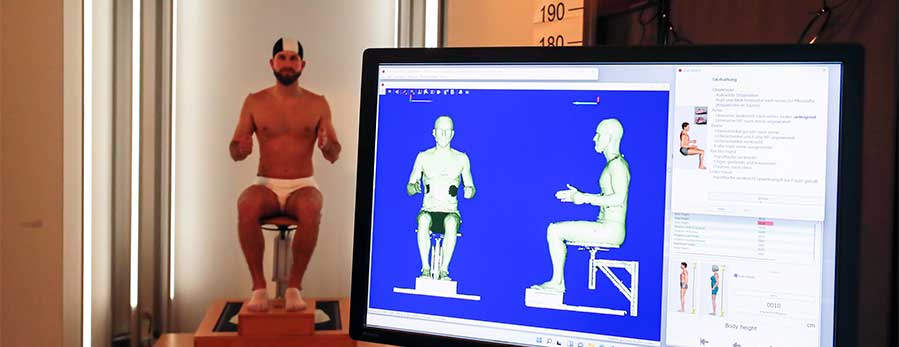
A customer-specific 3D anthropometric survey project using 3D body scanners has been underway at the German Armed Forces since January. The project aims to record the body measurements and body shapes of around 2,500 members of the Bundeswehr, ensuring even better-fitting clothing and equipment in the future. The project is scheduled to run until 2024.

The next few years will see around 2,500 soldiers of the Navy, Air Force, Army, Joint Support, Enabling Service and Medical Service measured at six locations throughout Germany. This project will establish a valid, comprehensive and up-to-date database of body measurements and shapes that will enable the development of target group-specific clothing and personal equipment that fits even better and the procurement of the items in the required quantities. The data collected from the customer-specific 3D anthropometric survey project is also used to create digital test persons (avatars). These can be incorporated into ergonomic analyses of vehicle interiors to adapt the vehicles as accurately as possible to the specific requirements of the armed forces. All personnel, whether short, tall, broad or slim, must be able to optimally work or be transported with their equipment in these vehicles.

The need for up-to-date data stems from people changing over the decades, with an average statistic growth of one centimeter per decade. For example, there is no up-to-date data on the body measurements and body shapes of Bundeswehr soldiers – data that could create accurate size tables for clothing and personal equipment. The current 3D anthropometric survey project is aimed at changing this situation. “For special target groups such as the Bundeswehr, up-to-date data is necessary because it can be used to address soldiers’ clothing and equipment requirements in the best possible way during product development, ensuring that the correct sizes are available for the soldiers. If their clothing and equipment does not fit properly, this can become a safety risk in an emergency,” says Michael Stöhr, Managing Director of Avalution.

“The 3D anthropometric survey is an essential element in the varied activities within the Bundeswehr scope of clothing management digitalization. “We can only provide the soldiers with the precisely-fitting clothing and personal equipment they need, punctually and in the correct quantities, if we have up-to-date and accurate data on body measurements and body shapes”, says Dr. Carsten Zimmermann, a scientist at the Bundeswehr Research Institute for Materials, Fuels and Lubricants (WIWeB) and project manager for the 3D anthropometric survey.

Soldiers from all branches of the armed forces (i.e., Navy, Air Force, Army) will be measured with a 3D body scanner at six locations over two years. This will ensure that the data is as representative as possible for all members of the Bundeswehr. More than 340 soldiers of the German Navy have already been measured at the Naval Technical School in Parow near Stralsund, the first site of the measurement campaign. The next site will be the Jürgen Schumann Kaserne, the Noncommissioned Officer Academy of the German Air Force, in Appen near Hamburg, where the project will continue from the end of April 2022. The fall of 2022 will see more surveys at the German Army HQ in Munster, and additional survey locations in 2023 will be Cologne/Bonn, Koblenz and Berlin.


The soldiers will be recorded and digitalized in four postures by a non-contact, 3D body scanner at each survey site. A digital questionnaire will also record socio-demographic data, including family background, position within the armed forces, sporting activities and clothing preferences. The entire process takes less than half an hour for each participant.

The 3D anthropometric survey of the Bundeswehr will continue until the end of 2023, after which the results will be evaluated, processed in a database and finally handed over to the Bundeswehr for further use in 2024.


More News from Human Solutions Group

More News on Textile processing

#Textile processing

Jeanologia showcases the future of product development

Jeanologia is showcasing how software is transforming product development in the fashion industry at PI Apparel Europe: The Fashion Technology Show, taking place on March 30–31 in London.

#Techtextil 2026

Groz-Beckert showcases cross-segment innovations for technical textiles in Frankfurt

From April 21 to 24, 2026, Groz-Beckert will present its latest innovations and solutions across the product areas of knitting, weaving, nonwovens and sewing at Techtextil 2026 in Frankfurt (Hall 12, Booth B90).

#Textile processing

Major expansion for ACG Kinna follows record year

In response to growing demand for its full textile and finished product line automation services, ACG Kinna – a member of TMAS, the Swedish textile machinery association – has inaugurated a 1,000-square-metre expansion at its headquarters in Skene, Sweden.

#Texprocess 2026

Texprocess 2026: Automation, digitalisation and AI reshape textile processing

Investment decisions in textile processing have become increasingly complex. Rising energy prices, labour shortages and geopolitical uncertainties are forcing companies to prioritise technologies that deliver measurable improvements in efficiency and process stability. This applies not only to apparel production, but also to the processing of technical textiles and high-performance materials. Modernisation projects are therefore being evaluated more selectively – but the pressure to upgrade production systems continues to grow. Texprocess 2026 reflects this tension between cautious investment behaviour and increasing technological demand.

Latest News

#Techtextil 2026

Modernizing Needling – DiloGroup at Techtextil & INDEX 2026

With the theme “Modernizing Needling”, the DiloGroup presents a comprehensively enhanced portfolio for needling technology. The objective is to further increase the performance and application range of needlefelt production lines in terms of productivity, flexibility, and the development of new products, thereby meeting the growing demands of modern technical textiles.

#Advertorial

New Gravimax MMX-R X-ray sensor platform opens up new application fields

The demands placed on quality control in web-based production processes are increasing: materials are becoming more complex, basis weights are varying more widely, and at the same time, pressure is growing to make processes more efficient and transparent. Precise measurement data across the entire web width has therefore become a key factor in ensuring stable production processes. With its new Gravimax MMX-R sensor platform, Mahlo introduces a radiometric measurement solution designed to set new standards in determining basis weight and material composition. The platform combines advanced X-ray technology with newly developed signal processing, enabling measurement tasks that previously often required multiple sensor technologies.

#Recycling / Circular Economy

Carbios confirms Longlaville plant in France following financing progress

Carbios has reaffirmed its plans to build its Longlaville plant in France within a project financing framework, targeting the start of production in the first half of 2028. The company also reports a solid cash position of around €60 million at the end of 2025 and has appointed Benoît Grenot as Deputy Chief Executive Officer to support the execution of its strategic projects.

#Composites

KARL MAYER strengthens partnerships in the composites industry at JEC World 2026

KARL MAYER further strengthened its role as a reliable and competent partner to the composites industry at JEC World 2026. The global market leader in textile machinery manufacturing used the trade show to meet key customers, establish numerous new contacts, and engage in in-depth technical discussions.

TOP