[pageLogInLogOut]

#Textile chemistry

Sparxell raises $3.2m to advance development of sustainable pigments

Sparxell, the UK-based developer of high-performance, sustainable, plant-based pigments, has completed a $3.2m funding round (comprising seed investments, grants, and awards) to accelerate development and commercialisation of products which will eliminate synthetic chemicals from colourants in multi-billion dollar markets including in cosmetics, fashion, paint, and packaging.

The Circular Innovation Fund, a global venture capital fund jointly managed by Demeter and Cycle Capital with L’Oréal as an anchor investor, participated in the seed funding alongside others including SpaceX-backer Futre Communities Capital, PDS Ventures, Katapult, Joyance Partners and SNØCAP VC.

Sparxell was founded in 2022 by Cambridge scientists, led by Dr Benjamin Droguet and Professor Silvia Vignolini, who discovered ways to replicate vibrant colours in nature using fully plant-based cellulose, a renewable, biodegradable resource that can be extracted from waste streams. Sparxell’s pigments use the same material that many plants and animals use to produce vivid, durable, and fade-resistant colourants. The products are toxin-free and fully biodegradable with a colour intensity that lasts longer than traditional colourants and pigments on the market.

“Traditional chemical colourants are causing major environmental harm through every stage of their lifecycle, from manufacture to degradation. Over 10,000 fossil-based chemicals are used in current colouration processes. The textile industry is a well-known emitter of dyes and microplastics, with over 1.5m tonnes entering the environment every year, while paint has recently been recognised as the largest source of microplastics in the ocean,” said Dr Benjamin Droguet, Sparxell Founder & CEO.

“Our plant-based materials can be grown and sourced locally in a complete rethink of how colours are currently being manufactured while reducing transport emissions,” added Dr Droguet.

The colourants market is worth an estimated $38 billion and is expected to grow to over $100 billion by 2030*. Sparxell is targeting specific markets including but not limited to beauty (colour cosmetics, personal care, creams, sunscreens, glitter make-up), fashion (textile colouring, embellishments, sequins), packaging (bulk colouring, films, foils), and paint (automotive, building).

Sparxell has already engaged in product innovation partnerships with blue-chip companies across different industries including leading car manufacturers, world-leading high-end fashion brands, and cosmetic goods manufacturers.

The company expects to launch a Series A funding round in the coming months to upscale production capacity and accelerate commercialisation.
More News from TEXDATA International

#ITM 2026

ITM 2026: The new geography of textile production

New production hubs are emerging across North Africa and Central Asia, while Türkiye is accelerating its transformation toward higher-value, technology-driven and more sustainable textile manufacturing.

#Research & Development

“Production is a product”

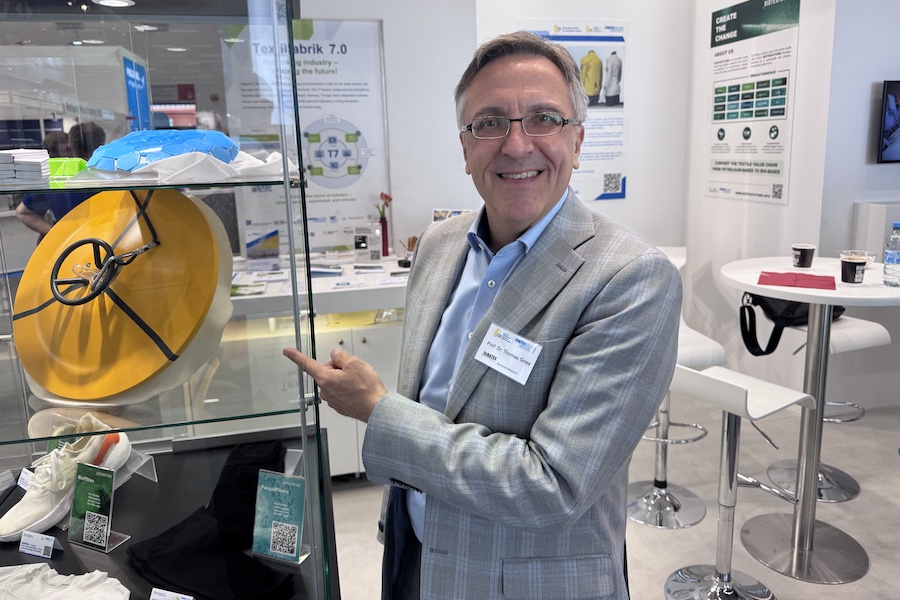
From technical textiles and AI-driven robotics to the limitations of textile circularity: Professor Dr Thomas Gries looks back on more than two decades of development at ITA Aachen. In the interview, he explains why production technology remains a decisive success factor, discusses international collaborations and innovation ecosystems, and shares his views on the transformation of production landscapes and the challenges facing an increasingly regulated industry.

#Knitting & Hosiery

“We need to move away from the price trap and return to a value-driven mindset.”

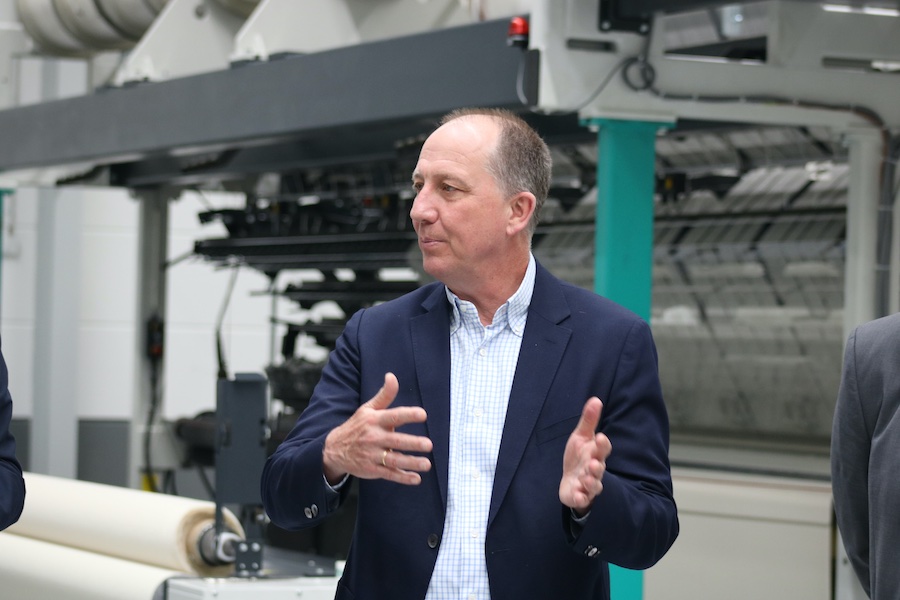
With its new Textile Innovation Center, KARL MAYER is sending a strong signal for innovation, collaboration, and the future of textile applications. In this interview, Karl Josef Mayer discusses new opportunities in warp knitting, the processing of staple fibres, recycling, the changing role of machinery manufacturers, and why the textile industry must once again focus more strongly on the value of textiles. by Oliver Schmidt

#Associations

“Innovation, resilience and international experience remain the great strengths of the Swiss textile machinery industry”

Geopolitical uncertainty, growing competitive pressure from China, new free trade agreements and the shift towards a circular economy are currently reshaping the global textile industry. In this interview, Cornelia Buchwalder discusses the current mood within the Swiss textile machinery sector, the industry’s distinctive innovative strength, new market opportunities in India and Asia, and the technological trends that could shape the upcoming trade fair cycle leading up to ITMA 2027.

More News on Textile chemistry

Latest News

#Recycling / Circular Economy

Reju opens its first R&D Center in the U.S. in Conshohocken, Pennsylvania

Reju, the company specializing in textile regeneration, today announced the opening of a Research and Development (R&D) Center in Conshohocken, Pennsylvania, the company's first proprietary research center in North America. Located within Technip Energies' existing Advanced Materials and Catalysts research center, the lab will allow Reju to accelerate the rollout of its recycling technologies and develop its next-generation circular solutions.

#Weaving

Itema reaffirms its commitment to the Syrian textile industry at NasTex 2026

From July 18th to 21st, Itema will exhibit at NasTex at the Damascus Fairground (Hall 11 – Stand C02), marking its return to one of the Middle East’s historically significant textile markets. Itema will showcase advanced weaving technology designed to support the competitiveness and technological evolution of Syrian manufacturers and announces a new partnership with Growfast Agency as the sole agent of Itema in Syria.

#Knitting & Hosiery

KARL MAYER's HKS 2-SE Expands Possibilities for Premium Stretch WARP KNITS

Warp knitted fabrics with a woven look are more in demand than ever in the fashion and apparel industries. Stretch WARP KNITS, in particular, impress with their freedom of movement, breathability, and virtually wrinkle-free wear – thereby opening up new style worlds such as smart casual or business casual. When it comes to the highly efficient production of premium-quality stretch WARP KNITS, the HKS 2-SE has long been the machine of choice. KARL MAYER’s best-selling tricot machine produces standard elastic fabrics characterized by high gauges, smooth, delicate surfaces, and a soft hand feel.

#Textiles & Apparel / Garment

Catalyst Club launches in Florence: Where conversations become catalysts for change

The first chapter of Catalyst Club debuted in Florence, bringing together creative directors, entrepreneurs, manufacturers, journalists and innovators from across the fashion and textile industry for an evening of dialogue, exchange and connection.

TOP