[pageLogInLogOut]

#Textile chemistry

Devan’s natural allergen control technology effective against pollen as well
© 2021 Devan Chemicals
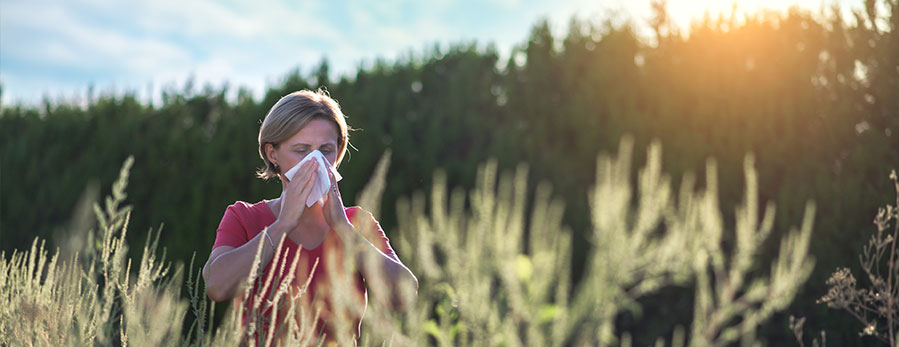
Devan’s allergen control technology, known as Purissimo™, has been found effective against allergens from pollen. The technology had already been proven to significantly reduce the amount of allergens from house dust mites and pets (cats & dogs).

With the pollen season starting, new independent test results by the German external laboratory BMA-Labor have shown Purissimo’s™ effectiveness against pollen, making it an all-in-one solution for reducing allergens.

“Allergens are small protein molecules, which can cause allergic reactions and asthma. All allergy sufferers are different when it comes to their sensitivity to allergens”, says Sofie Depluverez, PhD researcher at Devan. “However, few people are only allergic to a single allergen – and the effects of multiple allergens can add up. The key to reducing and even eliminating symptoms is to reduce your exposure to the allergens themselves.”

Allergy threshold

When people move into a house or bring in a new dog, the number of allergens starts to rise. In the beginning there are little to none, so the allergy threshold causing symptoms is far from being reached. Nobody is suffering any reaction at this stage.

“As time goes by, the various allergens start to build up inside the house, certainly when ventilation is limited”, Depluverez continues. “As the allergen concentration increases (especially in combination with seasonal allergens such as pollen), the allergy threshold may be reached if no allergen reduction measures are in place.”

Purissimo™

Purissimo™ is a natural allergen control technology that significantly reduces allergens from pet dander, dust mites and pollen in textiles throughout the home. The technology is based on encapsulated probiotics, which are naturally occurring microorganisms similar in kind to those you can find in probiotic yogurt, tempeh, kombucha, …


Inactive probiotics (spores) are encapsulated and integrated onto the textiles. Friction opens the microcapsules and releases the spores. The spores absorb humidity and self-activate. They are transformed into probiotic bacteria that start to consume the allergens.

“As the probiotics consume the allergens, exposure is gradually reduced to below threshold levels”, Depluverez adds. “Therefore, individuals with respiratory allergies will be exposed to fewer ‘attacks’ and perceive a better well-being.”

© 2021 Devan Chemicals


Interested to learn more? On Tuesday, March 23 at 3 p.m., Devan will elaborate on this technology in a webinar titled ‘Functionalizing textiles for post-vaccination consumers: Hygiene, sustainability & a natural approach’ during Home Textiles Week (a virtual NY Home Fashions Market).

More News from Devan Chemicals

More News on Textile chemistry

#Textile chemistry

Archroma and Lameirinho partner in pioneering deployment of InOneGO single-step dyeing

Archroma, a global leader in specialty chemicals, and Lameirinho, a leading home textiles manufacturer based in Portugal, are collaborating to bring InOneGO by Archroma, a new single-step dyeing process, into commercial production. Lameirinho’s first InOneGo bedlinens collection is now available worldwide.

#Textile chemistry

Archroma wins ICIS Innovation Award for sulfur dye breakthrough

Archroma, a global leader in specialty chemicals, has won a coveted 2026 ICIS Innovation Award for Best Product Innovation from a Large Company for FiberColors®. These high-performance sulfur dyes are synthesized from pre-consumer wool waste, reducing industry reliance on petroleum-based inputs while contributing to the circular economy by upcycling unwanted wool that farmers would otherwise pay to dispose of.

#Textile chemistry

ZymoChem secures $4 million in renewed federal funding to advance U.S. biomanufacturing of critical materials and their supply chains

ZymoChem, the specialty chemicals company dedicated to bringing decarbonization, sustainability, and supply chain resiliency to the chemical industry through innovative biological manufacturing, today announced the resumption and expansion of its federal research portfolio. The company has been notified that previously paused work under a $5 million U.S. Department of Energy (DOE) program is officially back on, to be joined by continuing collaborations with three of the nation's premier national laboratories.

#Textile chemistry

bluesign updates chemical reference lists with stronger PFAS restrictions

bluesign has published the 2026 editions of its three core chemical reference lists, introducing updated substance limits and testing requirements in line with the latest scientific findings and regulatory developments.

Latest News

#Industry 4.0 / Digitalization

Coats Digital launches AI-powered GSD RealMotion for motion analysis

Coats Digital has launched GSD RealMotion, an AI-powered solution designed to provide apparel manufacturers with greater visibility into factory-floor operations. By analysing shop-floor video and applying Coats Digital’s GSD methodology, the solution turns video recordings into structured, motion-by-motion method studies.

#Knitting & Hosiery

KARL MAYER launches extra-wide HKS 3-M EL for increased productivity

KARL MAYER has launched a new extra-wide version of its HKS 3-M EL tricot machine, designed to increase productivity particularly in the manufacture of textiles for sports, activewear and athleisure applications.

#Research & Development

Reducing development times for technical textiles by accelerated thermo-oxidative aging in a high-pressure autoclave

Synthetic polymers used in technical textiles can be effectively protected against degradation caused by heat, oxygen, and water through the use of stabilizer systems. This enables service lives of several decades, extending to more than 50 years. As the use of durable technical textiles continues to grow, so does the demand for reliable methods to predict their service life within economically feasible testing periods. For the first time the German Institutes of Textile and Fiber Research Denkendorf (DITF) developed methods for robust service life prediction for textiles in an IGF research project.

#Research & Development

ITA has developed a washable digital smart jacket with real-time feedback and an AI-powered app for rehabilitation

As part of the PhysioTaix research project, the Institut für Textiltechnik (ITA) of RWTH Aachen University is developing a digital smart jacket with integrated sensors. The jacket is washable and reusable; it tracks movements during rehabilitation exercises in real time and transmits the data to an app.

TOP