[pageLogInLogOut]

#Textile chemistry

Artificial intelligence to make chemical industry faster and smarter

Covestro is driving forward the use of artificial intelligence (AI) in the company as well as throughout the entire chemical industry. As part of these efforts, the Leverkusen-based materials manufacturer is conducting several pilot projects across different divisions to investigate how digital technologies can make processes more efficient and sustainable.
  • Data-based technologies for more sustainability and efficiency
  • Pilot projects in various divisions
  • Important findings for the entire chemical industry

“With the help of artificial intelligence, we will be able to find digital solutions across departmental boundaries in the future that were not possible before. This opens up completely new possibilities to achieve greater sustainability with improved resource utilization and thus to serve the needs of our customers even more precisely,” says Sucheta Govil, Chief Commercial Officer of Covestro.
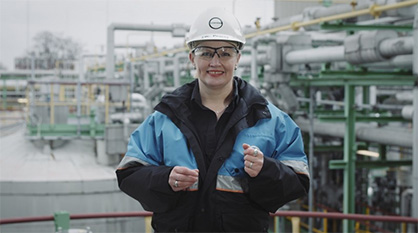
Saving energy with data: Dr. Sabine Pegel at Covestro  © 2020 Covestro
Saving energy with data: Dr. Sabine Pegel at Covestro © 2020 Covestro


Pilot projects put the use of AI to the test

At its Dormagen production site, Covestro is testing how the manufacturing process for polyesters can be optimized. Polyesters are needed for the production of polyurethanes. The use of artificial intelligence in the processing of the company’s comprehensive process data is intended to create free production capacities and minimize energy consumption. Digital technologies are also used in Dormagen and at the Leverkusen and Krefeld-Uerdingen sites to predict the peak steam consumption of production plants. In this way, energy consumption and costs can be reduced in the long term.


Pilot projects put the use of AI to the test

At its Dormagen production site, Covestro is testing how the manufacturing process for polyesters can be optimized. Polyesters are needed for the production of polyurethanes. The use of artificial intelligence in the processing of the company’s comprehensive process data is intended to create free production capacities and minimize energy consumption. Digital technologies are also used in Dormagen and at the Leverkusen and Krefeld-Uerdingen sites to predict the peak steam consumption of production plants. In this way, energy consumption and costs can be reduced in the long term.

Another project deals with the digital customer experience. Machine learning is used to help to identify potential customers for Covestro at all digital touch points on the Internet and social media. The aim is to win them over as customers in the long term through consultation and information. Artificial intelligence will also be used in Covestro’s purchasing department in the future. Faulty invoices can then be identified with less effort, making the invoicing acknowledgement process much more efficient.

Utilizing data science for more intelligent production

“AI is a fascinating opportunity for Covestro worldwide. The ongoing projects show that data and its proper use not only make the entire industry smarter and faster, but can also contribute to the bottom line,” says Nils Janus, Head of Advanced Analytics at Covestro. To make optimum use of data-based findings in the future, the materials manufacturer has developed the Covestro Analytics Platform (CAP), a platform for data scientists. It collects raw data from production plants, research results, and business processes and supplements it with external databases to perform analyses and train machine learning models. In this way, Covestro is taking another important step towards digitalization and data-driven business management. 
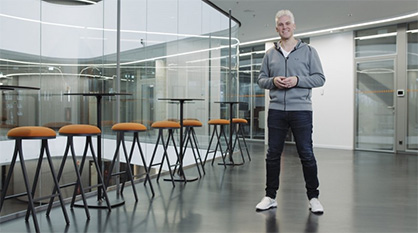
Dormagen production site and Nils Janus of Covestro  © 2020 Covestro
Dormagen production site and Nils Janus of Covestro © 2020 Covestro


More News from Covestro AG

#Smart Textiles

Covestro, FILK Freiberg, and OUT e.V. develop flexible, conductive polymer smart textile system

As the smart textiles market continues to grow across healthcare, personal protection, sportswear, and automotive applications, developers are seeking new ways to integrate electronic functionality directly into textiles, without the rigidity and complexity of conventional wiring. To address this challenge, FILK Freiberg Institute, an independent research institution with expertise in polymer coatings for textile applications, collaborated with Optotransmitter-Umweltschutz-Technologie (OUT) e.V. The joint project, funded under the German Industrielle Gemeinschaftsforschung (IGF) program of the Bundesministerium für Wirtschaft und Energie (BMWE), focused on developing flexible, conductive polymer surfaces for next-generation smart textiles.

#Techtextil 2026

Covestro to exhibit solutions for a more sustainable and productive textile industry at Techtextil 2026

Covestro will present a broad portfolio of material innovations for textile coatings, adhesive films and thermoplastic polyurethanes (TPUs) at Techtextil 2026 (Hall 11.0, Booth C79). The exhibits will demonstrate how advanced solutions can enhance durability, recyclability and manufacturing efficiency across applications such as automotive, infrastructure, protective apparel and sportswear. A particular focus will be on more sustainable coating technologies, including antimicrobial systems based on INSQIN® in combination with AGXX from Heraeus Precious Metals, as well as the integration of Pontacol® thermoplastic adhesive films into Covestro’s offering.

#Technical Textiles

Covestro showcases monomaterial concept in autonomous SUE People Mover

UE | STUDIOS has unveiled the fully autonomous electric minibus “Self-driving Urban E-Shuttle” (SUE), placing strong emphasis on sustainable material design. Developed within a project funded by the Federal Ministry for Economic Affairs and Energy (BMWE) and the European Union, the vehicle will begin public road testing this year. At the core of the concept is the consistent use of recyclable monomaterials to improve circularity at end of life.

#Textile chemistry

Covestro and Heraeus Precious Metals collaborate to enable safer, more sustainable antimicrobial textile coatings

Laboratory tests reveal that AGXX antimicrobial surface technology from Heraeus Precious Metals is fully compatible with Impranil® PU dispersions which are part of the waterborne INSQIN® textile coating technology from Covestro, paving the way for more sustainable antimicrobial textile coatings. This discovery comes at a key moment for the textile coatings industry. As the sharing economy continues to grow, more people are coming into regular contact with high-use surfaces, creating ideal conditions for bacteria, viruses, and other microorganisms to thrive.

More News on Textile chemistry

#Sustainability

bluesign technologies introduces bluepass

bluesign technologies ag (www.bluesign.com) today announces the launch of bluepass, a new certification mark and product labeling system created to deliver clear, substantiated, and verifiable sustainability claims at scale.

#Textile chemistry

Officina39 expands in South Asia with dual trade show presence and new low-impact dyeing innovation

Officina39 reinforces its strategic expansion in South Asia by announcing its participation in two key textile industry events in Bangladesh and India, alongside the launch of a new solution designed to reduce the environmental impact of reactive dyeing.

#Techtextil 2026

Speed and connectivity: Techtextil and Texprocess provided market-ready solutions for industries under pressure

With more than 36,000 visitors and 1,700 exhibitors from a total of 112 countries, Techtextil and Texprocess 2026 demonstrated how innovation comes into industrial use. The convergence of research, industry and application proved to be a breeding ground for new material solutions, manufacturing and processing technologies. Natural fibres, performance apparel, connected systems and AI-driven processing technologies emerged as key growth and future markets.

#Techtextil 2026

RUDOLF is pioneering the future of technical textiles by developing innovative, functional solutions

At Techtextil 2026, RUDOLF presents its latest innovations for textile auxiliaries, textile care and construction chemicals. Based in Geretsried, Bavaria, the company draws on more than 100 years of experience and continues to position itself as a global technology partner focused on quality, innovation and sustainability.

Latest News

#Nonwovens

Temafa Maschinenfabrik GmbH supplies a complete decortication plant for processing hemp straw to Hanffaser Geiseltal eG

Temafa Maschinenfabrik GmbH, a leading supplier of machinery and plants for fibre processing, has successfully secured an order to supply a complete plant for processing hemp straw to Hanffaser Geiseltal eG, based in Mücheln.

#Techtextil 2026

FET’s revolutionary gel spinning system wins Techtextil Innovation Award

FET has received the prestigious Techtextil Innovation Award 2026 in the New Production Technology category. The Techtextil Innovation Award honours outstanding ideas in textile technology, sustainability, AI and the creation of technical textiles, selected by an international jury of experts. Ranging from new materials to new production technologies, this award recognises progressive ideas that are driving forces for numerous industries, such as automotive, medical and construction.

#ITM 2026

Savio Macchine Tessili will exhibit at ITM Istanbul 2026 presenting its flagship technologies

Savio Macchine Tessili will participate in ITM Istanbul 2026 in a corporate booth of Vandewiele Group, showcasing a selection of its most advanced winding and spinning solutions designed to support textile mills in achieving higher efficiency, flexibility and yarn quality. The company will bring to the show three flagship solutions: Proxima Smartconer®, Lybra Smartspinner® and the Phoenix Assembly Winder.

#ITM 2026

Rieter at ITM 2026: Spinning Redefined with Automation and Intelligence

Spinning mills need solutions that deliver stability, efficiency and future-proof performance. Rieter has put together a powerful portfolio for ITM 2026 in Istanbul, Türkiye. These innovations give customers the tools to enhance cost efficiency, improve responsiveness and actively develop their competitive edge. Step-by-step, Rieter is moving closer to its Vision 2027 – the fully automated spinning mill. With each new technology, Rieter enables spinning mills worldwide to operate with greater precision and reliability, ensuring they remain at the forefront of an increasingly demanding global market.

TOP