[pageLogInLogOut]

#Textile chemistry

Toray unveils latest version of its breathable, disposable protective wear LIVMOA®
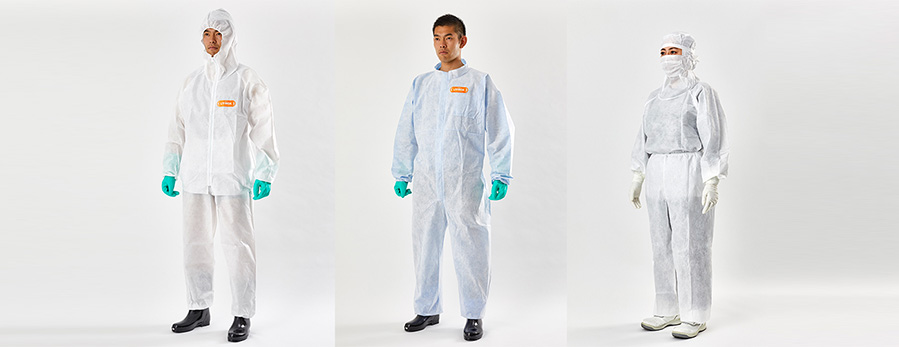
LIVMOA® (c) 2019 Toray
Toray Industries, Inc. (Toray) announced that it has successfully developed a sterilized type of clothing for use in cleanrooms called LIVMOA®CL, the latest iteration of its LIVMOA® series of disposable protective wear, with cooperation from the Research & Development Center for Cell Therapy at the Foundation for Biomedical Research and Innovation at Kobe (FBRI).

Toray is seeking to enhance the comfort of workers who are active in the field of regenerative medicine, which shows high growth potential, as well as in pharmaceutical manufacturing and other areas which require work to be performed in cleanrooms. Marketing in Japan for LIVMOA®CL is scheduled to begin in July 2019. In the future, Toray will also work to expand sales of this breathable and disposable cleanroom wear beyond Japan, with a focus on bringing it to Europe and the US.

Cell processing environments or pharmaceutical manufacturing environments require the use of disposable, nonwoven dust-free clothing that is well sealed and sterilized to prevent dust and bacteria of human origin from being brought into cleanrooms. The protective wear currently available on the market mainly consists of coverall-type garments produced overseas, but preventing dirt or other stains from adhering to conventional dustless clothing requires putting the garment on without letting it touch one’s hands or the floor, which is difficult and time-consuming. In addition, although such work is done in environments with strict temperature and humidity control, sweat can cause workers’ goggles to fog up, and such problems make it desirable to take effective measures against heat. Toray has therefore been working in collaboration with FBRI, which is home to a cell processing center, to develop a comfortable protective wear for use in cleanrooms.

LIVMOA®CL is distinguished by (1) the sterilization processing it undergoes and (2) its design consisting of upper and lower halves which can be put on easily. This sterilization processing—a first in the LIVMOA series—involves sterilizing the material using ethylene oxide gas. One characteristic of ethylene oxide gas sterilization is its ability to sterilize materials at lower temperatures than can be done with other sterilization methods, meaning that it is less likely to impair the properties of the fabric.


LIVMOA®CL features a three-layer structure, with our Toraymicron® material—a non-woven fabric made of ultra-fine polypropylene fibers imbued with electret (electromagnetic) properties—interposed between layers of polypropylene spun-bond fabric. This construction ensures that dust adheres to the inside of the clothing without escaping, while the fabric itself emits very little dust, resulting in the world’s first easily-worn protective clothing design made of separate upper and lower halves. Moreover, it delivers increased wearability by incorporating a packing method that allows the wearer to put it on without directly touching the outer surface. Although the highly breathable Toraymicron material is already effective in reducing dampness and dealing with other heat issues, in order to better meet the needs of workers in cleanroom environments, wear trials were conducted repeatedly at FBRI, and a series of testing and improvement cycles were run to develop this material.

As part of our core strategy for our Medium-term Management Program “Project AP-G 2019”, Toray is promoting business expansion in the Life Innovation field to contribute to easing the burden of workers in the medical profession. With the development of LIVMOA®CL, which is intended for improving the safety and comfortability of work environments, Toray is determined to further enhance both workability and physical comfort for medical practitioners.
More News from Toray Industries, Inc.

More News on Textile chemistry

#Textile chemistry

DyStar Group announces Board transition to drive innovation

DyStar, a leading specialty chemical company with a heritage of more than a century in product development and innovation, announced today the appointment of Ruan Cunfan to its Board of Directors, effective 20 February 2026.

#Textile chemistry

Jeanologia urges industry to accelerate PP Spray phase-out following ZDHC Watchlist update

Potassium permanganate has officially entered the Chemical Watchlist of the ZDHC Foundation, signaling increased scrutiny and potential phase-out of one of the most hazardous chemicals still used in denim finishing. The inclusion confirms an industry shift that Jeanologia anticipated more than a decade ago.

#Textile chemistry

RUDOLF gets the exclusive global distribution rights for Sanitized® textile technologies

With effect from today, RUDOLF officially assumes exclusive global distribution rights for Sanitized® textile technologies from SANITIZED AG. This is the next milestone in the strategic collaboration announced in 2025, with the partnership between the two companies now fully implemented and expanded worldwide.

#Denim

organIQ seek: smart alternative to potassium permanganate

CHT Group announces new technical findings within its organIQ seek platform that significantly advance the transition toward permanganate-free denim bleaching. Through extensive industrial testing and application research, CHT confirms that organIQ seek can now be used with remarkable effectiveness as a substitute for potassium permanganate in spray bleach, while remaining aligned with sustainability expectations and cost realities in the European market. At the COLOMBIATEX in Medellín as well as at the Exintex in Puebla and the Kingpins Show in Amsterdam the CHT Group will present organIQ seek as an alternative to potassium permanganate.

Latest News

#Yarns

Yarn Expo Spring 2026 concludes, connecting buyers with innovative selection of sustainable yarns and fibres

Yarn Expo Spring 2026 wrapped up successfully on 13 March, as a record-high of over 600 exhibitors from 12 countries and regions welcomed more than 25,000 visitors from 113 countries and regions. Held across 27,000 sqm in Hall 8.2 of the National Exhibition and Convention Center (Shanghai), the fair highlighted the textile industry’s accelerating shift toward a lower-impact, more functional future. Exhibitors presented eco-friendly organic, regenerated and recycled yarns and fibres, alongside innovative options such as sweat-resistant and high-performance materials. A comprehensive fringe programme further enriched the event, offering practical market insights and new networking opportunities.

#Techtextil 2026

ANDRITZ at Techtextil 2026: Sustainability and advanced technologies

International technology Group ANDRITZ will be presenting its innovative nonwovens production and textile solutions at Techtextil in Frankfurt, Germany, from April 21 to 24, 2026 (Hall 12, B95). ANDRITZ will focus on technologies for durable and technical nonwovens, sustainable fiber processes, textile recycling, and life-cycle services.

#Textile processing

Major expansion for ACG Kinna follows record year

In response to growing demand for its full textile and finished product line automation services, ACG Kinna – a member of TMAS, the Swedish textile machinery association – has inaugurated a 1,000-square-metre expansion at its headquarters in Skene, Sweden.

#Textiles & Apparel / Garment

YKK launches “YZiP® Light” aluminum alloy zipper for cotton pants

YKK Corporation (Headquarters: Chiyoda-ku, Tokyo; President: Koichi Matsushima; hereafter, YKK) has launched YZiP® Light, a lightweight aluminum alloy zipper for cotton pants, with sales beginning in late March. The introduction of YZiP® Light expands YKK’s zipper portfolio—led by the flagship YZiP® copper alloy zipper—providing customers with greater flexibility to meet diverse garment needs.

TOP