[pageLogInLogOut]

#Texprocess 2019

Assyst wins a Texprocess Innovation Award 2019

3D right from the outset, across all process steps – that is the vision of Assyst GmbH, which will be presenting its 3D innovation process at the Texprocess 2019. For the first time, 3D will be used throughout the entire creation and sales process of a garment. The advantages of digitalization are more tangible than ever before – and this also convinced the jury of the Texprocess Innovation Award.

Assyst, a Human Solutions Group company, has won a Texprocess Innovation Award for its 3D innovation process in the “New Process” category. The company’s end-to-end use of 3D throughout the entire creation and sales process of clothing convinced the Texprocess Innovation Award jury. Brand new – Assyst’s solution for the digitalization of the order, which contains a Digital Showroom, making existing analog processes completely redesignable.

Assyst presents a 3D process for ordering

“Although 3D has been successfully introduced in recent years for product development and also in the first stores, the ordering process today often takes place only with physical samples,” says Dr. Andreas Seidl, CEO of the Human Solutions Group of companies one of which is Assyst GmbH. “This means lots of travel for personnel, the time-consuming transport of the samples, and very often the lack of a comprehensive and realistic overview of the entire collection.” Assyst shows the possibilities digitalization through 3D opens up for the ordering process, setting new standards in this field through the use of the latest augmented reality (AR) technologies.

Assyst’s 3D innovation process is digitalization live. It enables companies to make the right decisions faster and to obtain the customer’s decisive purchasing opinion at an early stage.
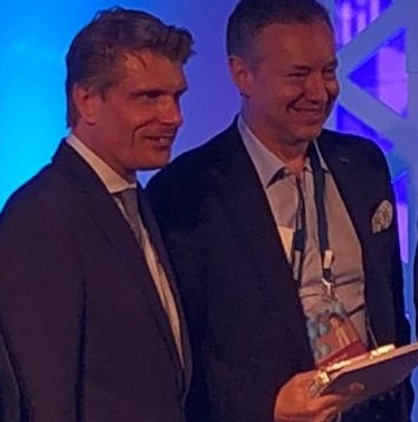


The Texprocess Award ceremony giving the prize to Dr. Seidl (c) 2019 Assyst


More News from Human Solutions Group

More News on Texprocess 2019

Latest News

#Composites

KARL MAYER strengthens partnerships in the composites industry at JEC World 2026

KARL MAYER further strengthened its role as a reliable and competent partner to the composites industry at JEC World 2026. The global market leader in textile machinery manufacturing used the trade show to meet key customers, establish numerous new contacts, and engage in in-depth technical discussions.

#Recycling / Circular Economy

ABB and Syre partner to explore technologies for industrial-scale textile recycling

ABB has signed a Memorandum of Understanding (MoU) with Swedish textile impact company Syre to jointly explore technologies to support the development of Syre’s first textile-to-textile recycling plant in Vietnam. The agreement establishes a framework for collaboration to investigate how ABB’s automation, electrification and digital technologies could contribute to safe, efficient and scalable operations. It will also explore how these capabilities could further optimize process and quality control performance as Syre advances its ambition to produce circular polyester at industrial scale.

#Techtextil 2026

From Nature Performance to Circular Economy: Techtextil 2026 focuses on the future market for technical textiles

Alternative materials and recycling technologies are one of the most important future segments and drivers of innovation in technical textiles. Sustainability goals and regulatory requirements increase their relevance, while advances in performance and economic viability enhance their market competitiveness. Taking place from 21 to 24 April 2026, Techtextil reflects this key industry trend with a growing number of specialised exhibitors. With the new “Nature Performance” label, the leading global trade fair bundles relevant market offerings and facilitates access to new solutions – from natural fibres and yarns to bio-based materials and circular approaches.

#Research & Development

Textile cascade filter for removing microplastics from wastewater

Microplastics are now found almost everywhere, even in remote regions of Antarctica. They enter the human body through the food chain. Studies indicate that microplastics may have negative effects on the human health.

TOP

