[pageLogInLogOut]

#Techtextil 2024

Circular economy, sustainable and regional: Gebr. Otto has answers to the topics of Techtextil 2024
Techtextil, the most important trade fair of the year for Dietenheim-based yarn spinning mill Gebr Otto, came to an end last Friday, April 26. The company presented its products and reported on its latest developments at the BW-i joint stand: These include a concept for sustainable period underwear developed together with Kelheim Fibres, a yarn blend of cotton and native hemp and the collaboration with the recycling studio at ITA Augsburg. The Gebr. Otto trade fair team can draw a positive conclusion: numerous visitors on all days of the fair as well as orders for samples and new project inquiries to take home.
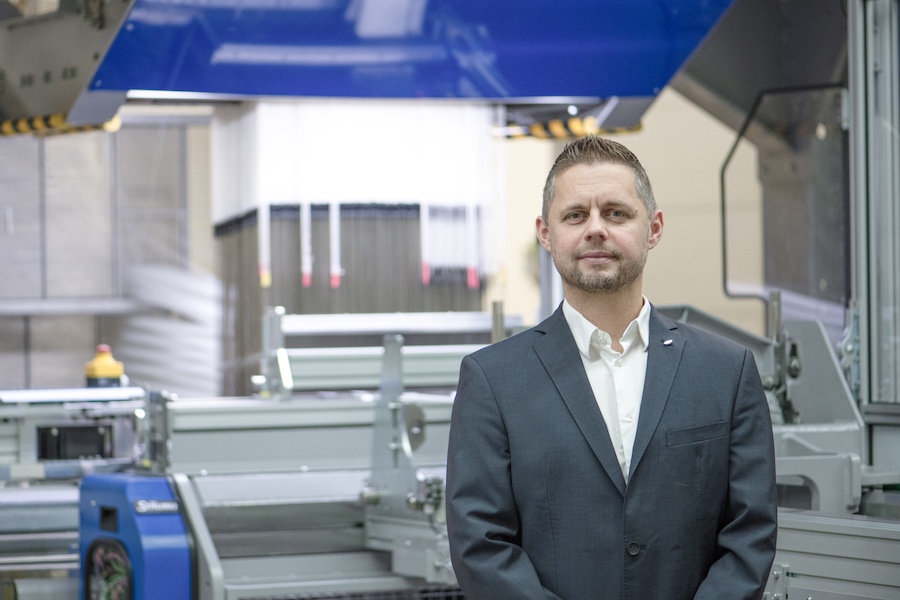
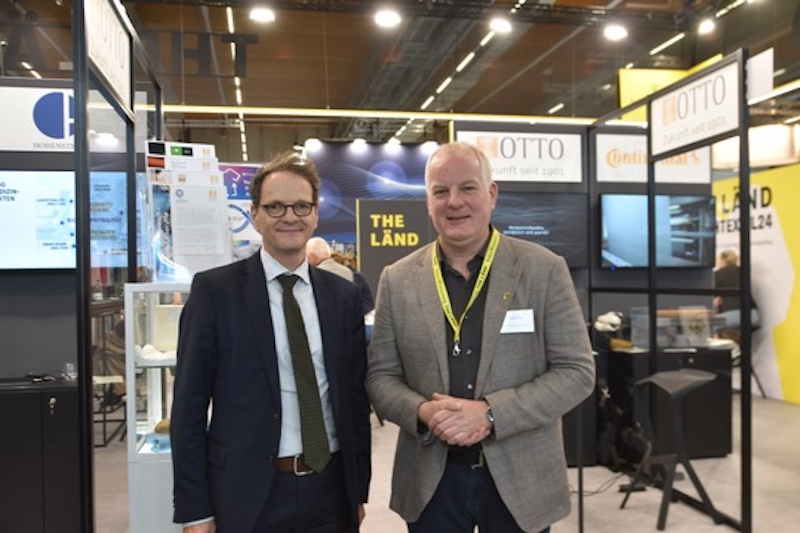
Ministerial Director Michael Kleiner from the Baden-Württemberg Ministry of Economic Affairs had Managing Director Andreas Merkel present the highlights of the Otto portfolio to him © 2024 Gebr. Otto


Circular economy as a central topic

“The circular economy was the subject of most of the discussions,” says Andreas Merkel, Managing Director of Gebr. Otto “We are focusing on this topic in particular in collaboration with the recycling studio ITA Augsburg. In one project, we are working on the development of a cotton yarn that consists of 50 percent post-consumer recycled cotton, or PCR cotton for short.” 

The ecological benefits of such a development are absolutely convincing: Compared to a kilo of new cotton, a ring yarn with 50 percent PCR content only requires around a fraction of the water and energy that would be needed for new raw material. 

However, the processing of recycled fibers is not entirely simple, as they have completely different properties to virgin cotton. In particular, recycled fibers are significantly shorter. They have a different surface structure and therefore different adhesive and gliding properties. One challenge is to give the roving yarn the right twist so that no false distortions occur in the ring spinning mill. 

“We are currently working on the technical implementation for the spinning mill and spinning preparation,” explains Andreas Merkel. “We have already achieved pleasingly good results for two yarn counts.” 

Inherently sustainable

Gebr. Otto has been committed to recycling for a long time - but so far only in the area of pre-consumer waste. The Otto yarn innovation recot2 consists of 25 percent recycled cotton and 75 percent GOTS-certified virgin organic cotton. This saves around 5,000 liters of (virtual) water per kilogram of recot2 textiles. The recycled material used in recot2 is, for example, selvedges and spool remnants. Gebr. Otto launched this yarn on the market 15 years ago. “However, the recycled yarn has only been in active demand on the market for a few years,” says Andreas Merkel. It is now used by well-known underwear and clothing manufacturers and, according to customers, behaves no differently to cotton yarn made from new fibers. 
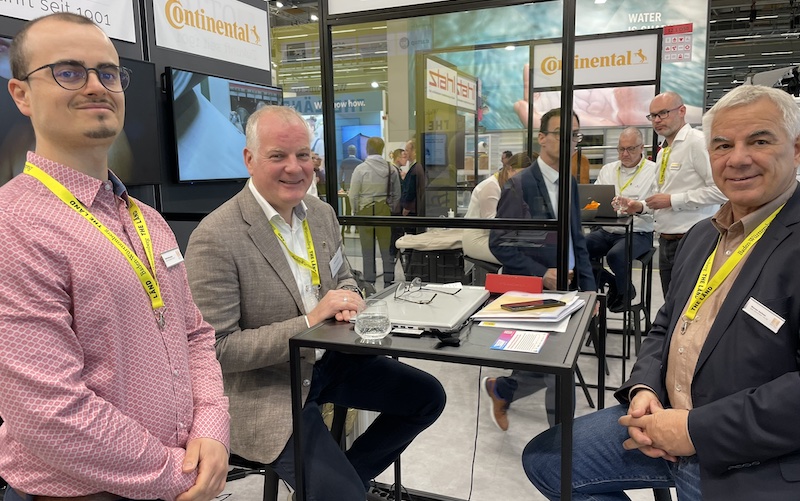
A shared smile for the photographer: rarely possible, as the Otto trade fair team with Robin Baumann, Managing Director Andreas Merkel and Sales Manager Werner Jochum (from left) welcomed many visitors © 2024 Gebr. Otto


Regionality is key, part 1: Innovation partnership with Kelheim

Together with the Bavarian fiber specialist Kelheim Fibres, Gebr. Otto has developed a concept for sustainable and high-performance period underwear. It uses bio-based materials that are characterized by outstanding performance values. The various special viscose fibers used come from Kelheim. They are spun in the appropriate composition by Gebr. Otto. “We develop our yarn blends based on the requirements and test results that Kelheim has determined for the various layers of the panty,” explains Andreas Merkel, Managing Director of Gebr. Otto. “We can supply the desired yarns at short notice, even for special requests from underwear brands, i.e. the users.” 

Regionality is key, part 2: cotton-hemp blend

One innovation that Gebr. Otto is working on is a blend of organic cotton and native hemp from Germany. “Hemp fibers have been around for a long time,” explains Andreas Merkel. “The fiber is somewhat coarser and more ‘stubborn’ than cotton.” With a new pulping process - carried out by a regional partner - Otto can now spin the hemp with long-staple organic cotton. “We were able to achieve good yarn values and received various requests for samples at Techtextil.” The new hemp-cotton blend is used for knitted fabrics as well as woven fabrics and socks. 

Positive in difficult times

“We had a very high number of visitors to our stand over all days of the trade fair,” says Andreas Merkel. “We were able to close some deals directly on site. We also took home orders for samples and inquiries for projects,” summarizes Merkel. “However, this should not obscure the difficult market situation: We are experiencing a period of high purchasing restraint and are seeing insolvencies among market companions and partners. We at Gebr. Otto are also experiencing a decline in sales and volumes compared to the previous year. However, we started at a very high level, which means that we can still operate profitably today.”
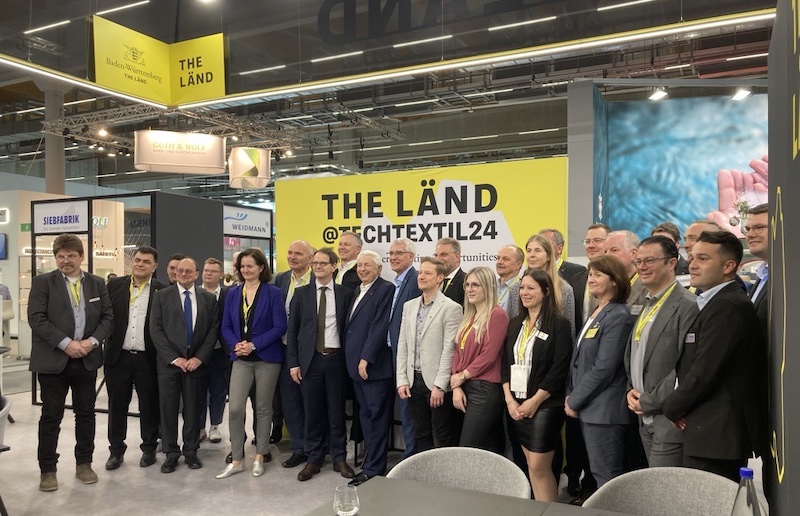
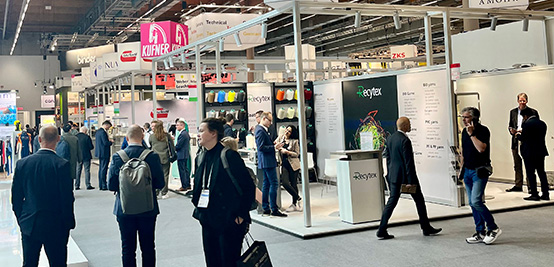
Concentrated textile expertise at the BW-i stand © 2024 Gebr. Otto


More News from TEXDATA International

#Digital Printing

From a bedroom startup to 3,000 designs: How Lonely Kids Club built its business with DTG printing

Founded in Sydney in 2011, independent clothing label Lonely Kids Club has grown from a bedroom startup into a business offering around 3,000 graphic T-shirt designs. With its own production studio, direct-to-garment printing and a demand-driven manufacturing model, the company demonstrates how smaller apparel brands can combine creative independence with flexible production – while navigating the everyday challenges of quality control, workflow efficiency and sustainability.

#India ITME 2026

India’s textile industry: Current position, growth targets and industrial development

With ambitious export targets, major investments in manufacturing infrastructure and new international trade agreements, India is pursuing a comprehensive development strategy for its textile and apparel industry. An overview of the industry’s current position, government initiatives, progress achieved and challenges ahead.

#Weaving

“A complex design is only useful if the machine can reproduce it consistently”

Andreas Schnabel, Head of R&D for Technical Weaving Systems at Stäubli, discusses how 3D weaving can create textile reinforcements tailored to the loads within a composite component, where near-net-shape weaving can reduce processing steps and material waste, and what it takes to produce complex structures reliably and economically. He also explains how manufacturers can adapt Stäubli’s modular TF weaving platforms to new applications and how the company’s centre of excellence in Bayreuth supports the transition from research to industrial production.

#India ITME 2026

India ITME 2026: Textile technology meets India's investment ambitions

With ambitious growth targets, government incentive programmes and industrial development initiatives already underway, India is preparing for the next stage of its textile transformation. Against this backdrop, the 12th India ITME, taking place in Greater Noida from 4 to 9 December 2026, arrives at a particularly important moment for machinery manufacturers and textile producers alike.

More News on Techtextil 2024

Latest News

#ITMA Asia + CITME 2026

ITMA ASIA + CITME 2026 opens in Shanghai, showcasing intelligent and sustainable textile manufacturing

ITMA ASIA + CITME 2026 opened today at the National Exhibition and Convention Center in Shanghai, bringing the global textile machinery industry together from 20 to 24 November.

#Associations

Christoph René Holler to succeed Uwe Mazura as managing director of textil+mode

Christoph René Holler will take over as managing director of textil+mode, the German textile and fashion industry confederation, on 1 January 2027. He succeeds Uwe Mazura, who has led the association for 13 years and will remain in charge of collective bargaining policy through the next round of negotiations before retiring.

#Heimtextil 2027

Heimtextil and The Florentin showcase the role of textiles in hotel design

Heimtextil has partnered with Frankfurt hotel The Florentin by Althoff Collection for its new Interior.Architecture.Hospitality campaign. The collaboration will give architects, interior designers and other contract-sector professionals a closer look at how textiles were used in the hotel. The two studios behind the project will discuss their work at Heimtextil on 14 January 2027 in Hall 4.1.

#EU Textile Strategy

EU Commission proposes advanced materials agenda with targets for 2035

The European Commission has proposed an Advanced Materials for Europe agenda to accelerate the development, production and adoption of safer and more sustainable advanced materials. The proposal sets three benchmarks for 2035 and calls for closer coordination among EU member states to help move new materials from the laboratory into industrial production.

TOP