[pageLogInLogOut]

#Techtextil 2022

Trützschler Nonwovens, Trützschler Card Clothing and Trützschler Man-Made Fibers present various new and proven solutions for the nonwoven, card clothing and man-made fiber sectors
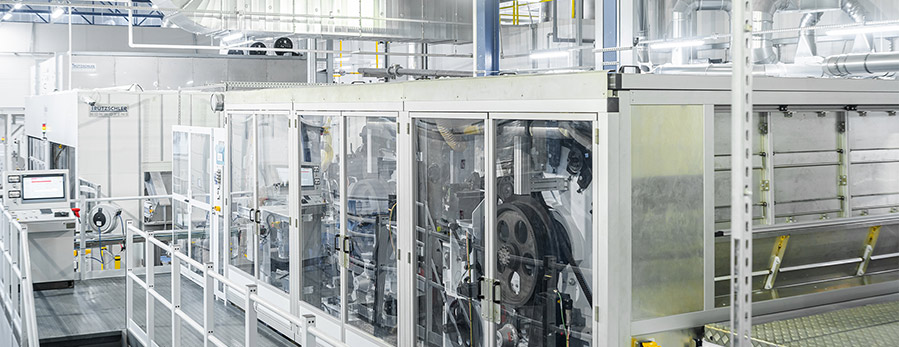
Trützschler Nonwovens card TWF-NCT for man-made and even cotton fibers. © 2022 Trützschler
Trützschler Nonwovens (Hall 12.0 / Booth D80) invites to talk sustainable fibers such as hemp or linen and out-of-the-box fibers such as nettle and pineapple fibers. The solutions for manufacturing innovative nonwoven products include machinery and complete production lines for paper grade pulp, re-generated cellulose fibers, cotton and various other natural fibers.

What happens when sustainable meets digital? Trützschler Nonwovens and software partner Proptium introduce T-ONE, the new digital working environment for both fiber- and polymer-based nonwoven producers. T-ONE supports routine tasks such as quality control and recipe management but also enables systematic line monitoring and data collection for T-ONE’s line optimizations.
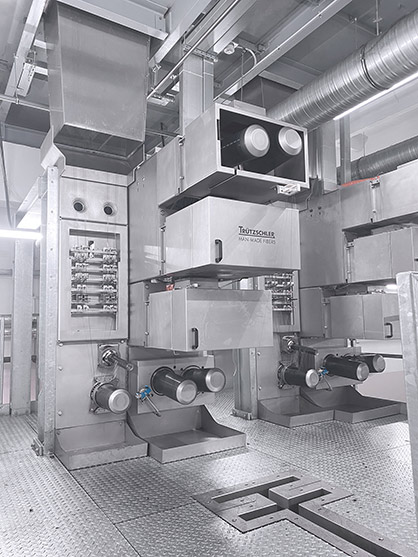
Trützschler Man-Made Fibers new TEC-O40 system for industrial yarn © 2022 Trützschler


Another focus is on durable nonwovens for automotive applications or end-uses in filtration, building and construction. Trützschler Nonwovens presents modern solutions for high-productivity, high-efficiency and low maintenance production lines.


Trützschler cards are inevitably linked with tailor-made wires by Trützschler Card Clothing. Visitors can expect excellent innovations and reliable solutions that boost productivity in needling, high-speed spunlacing, thermo- and chemical bonding lines.

Trützschler Man-Made Fibers introduces the OPTIMA-based, versatile TEC-O40 and TEC-O80 systems for extruding and spinning industrial yarns (IDY). The modular OPTIMA platform is highly flexible and adaptable to manufacturing a broad spectrum of (semi-)industrial yarns from polyamide, polypropylene or polyester.


More News from Truetzschler Card Clothing GmbH

More News on Techtextil 2022

Latest News

#Techtextil 2026

AI, Start-ups, Research: Techtextil and Texprocess bring together players in the textile industry

From start-ups to universities and research institutes: at Techtextil and Texprocess, the world’s leading innovation trade fairs in Frankfurt am Main, exhibitors present future-oriented concepts for the global textile industry. With the international Campus & Research area, a strong participation from start-ups and the latest AI applications for textile processing, both trade fairs showcase current developments in the textile industry. By bringing together innovation, research and application, they enable new partnerships across the textile value chain.

#Techtextil 2026

IVGT joint stand brings innovation and networking to Techtextil 2026

At Techtextil 2026 and the parallel Texprocess 2026, key transformation topics such as artificial intelligence, digitalisation, sustainability, recycling and the circular economy will be reflected across the show. Against this backdrop, the IVGT, together with 16 member companies, will present its joint stand in Hall 12.1 (Stand D62) as a platform for exchange and networking.

#Man-Made Fibers

Indorama Ventures supports Southeast Asia’s textile customers with reliable regional supply and global innovative portfolio

Indorama Ventures, one of the leading global polyester fiber and filament yarn suppliers globally, will participate in Indo Intertex 2026 in Jakarta this April, making its diverse global portfolio available to apparel, home textile, and hygiene customers across Southeast Asia.

#Raw Materials

New study shows low environmental impact by Cotton made in Africa Organic Cotton from Tanzania

Today, the Aid by Trade Foundation (AbTF) is announcing the results of a comprehensive life-cycle analysis (LCA) for cotton produced in Tanzania under the Cotton made in Africa Organic (CmiA Organic) standard. The study emphasises the small ecological footprint of CmiA Organic verified cotton. This can largely be traced back to the absence of synthetic pesticides, artificial fertilisers, and artificial irrigation. Consequently, CmiA Organic cotton can help the textile industry meet regulatory requirements as well as science-based targets. The results also show that the consequences of climate change threaten the livelihoods of these cotton farmers, even though the type of agriculture they practise barely contributes to climate change.

TOP

