[pageLogInLogOut]

#Techtextil 2019

Textile coating of furniture

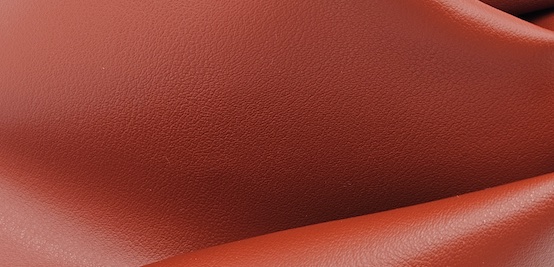
The INSQIN® technology from Covestro is a water-based textile coating that does not use any solvents. At the Techtextil trade fair from May 14–17, Covestro will demonstrate that it can open the way to new consumer worlds, using the example of a refrigerator that is protected by a water-based polyurethane textile coating.

Create lasting value with the water-based INSQIN® technology

“It is an unusual eye catcher, that shows what is possible with INSQIN®, and it should inspire the industry to develop new concepts,” says Thomas Michaelis, head of Textile Coatings for the Europe, Middle East, Africa and Latin America (EMEA/LA) region. 

At the same time, the textile-coated refrigerator fits perfectly with a current trend: The border between the kitchen and the living room is becoming increasingly blurred, creating integrated living spaces. “Accordingly, more consumers are asking for customized household appliances and furniture that are elegant and appear valuable,” says Thomas Michaelis.


Demand for high-value look and feel

It goes without saying that household appliances are still almost always coated in white or have a stainless steel look. Why shouldn’t these and other home furnishings also be equipped with cozy and high-quality materials, as long as they are robust and environmentally friendly? The global warming potential of textile coatings made using the INSQIN® technology is 45 percent lower than that of solvent-based systems. In terms of chemical and mechanical resistance, the more environmentally compatible products achieve the same excellent level as solvent-based systems.

The INSQIN® technology stems from Covestro’s conviction that innovation and sustainability go hand in hand. Accordingly, Covestro’s motto at Techtextil 2019 in Frankfurt am Main, hall 3.0, stand D 22, will be: “Material Solutions inspired by Sustainnovation.”


More News from Covestro AG

#Technical Textiles

Covestro showcases monomaterial concept in autonomous SUE People Mover

UE | STUDIOS has unveiled the fully autonomous electric minibus “Self-driving Urban E-Shuttle” (SUE), placing strong emphasis on sustainable material design. Developed within a project funded by the Federal Ministry for Economic Affairs and Energy (BMWE) and the European Union, the vehicle will begin public road testing this year. At the core of the concept is the consistent use of recyclable monomaterials to improve circularity at end of life.

#Textile chemistry

Covestro and Heraeus Precious Metals collaborate to enable safer, more sustainable antimicrobial textile coatings

Laboratory tests reveal that AGXX antimicrobial surface technology from Heraeus Precious Metals is fully compatible with Impranil® PU dispersions which are part of the waterborne INSQIN® textile coating technology from Covestro, paving the way for more sustainable antimicrobial textile coatings. This discovery comes at a key moment for the textile coatings industry. As the sharing economy continues to grow, more people are coming into regular contact with high-use surfaces, creating ideal conditions for bacteria, viruses, and other microorganisms to thrive.

#Textile chemistry

Covestro celebrates decade of innovation and sustainable growth

Covestro celebrates its 10-year anniversary today. Since its carve-out from Bayer in 2015, the company has developed into a global leader in high-performance polymer materials and a pioneer in circular economy solutions. With a strong focus on innovation and sustainability, Covestro’s materials are now embedded in countless applications worldwide – from mobility and construction to electronics, healthcare, and consumer goods.

#Textile chemistry

Covestro extends contract with CTO Dr. Thorsten Dreier ahead of schedule until 2031

Dr. Thorsten Dreier will remain Chief Technology Officer of Covestro for a further five years. The Supervisory Board has extended his contract, which runs until June 2026, ahead of schedule from July 1, 2026 to June 30, 2031.

More News on Techtextil 2019

Latest News

#Techtextil 2026

Smart sensors, smart savings - Reducing energy and cost in textile finishing

As energy prices, sustainability requirements and quality expectations continue to rise, manufacturers of technical textiles face increasing pressure to optimize efficiency while ensuring process reliability. At the same time, skilled labor shortages require production systems that are intuitive, automated and easy to manage. PLEVA addresses these challenges with robust, maintenance-friendly sensor technologies combined with intelligent process control.

#Techtextil 2026

From preparation to 3D weaving: Stäubli’s solutions at Techtextil 2026

Stäubli, a global leader in high performance weaving technologies, is pleased to announce its participation at Techtextil 2026 in Frankfurt, Germany, the leading international trade fair for technical textiles and nonwovens. As technical textiles continue their rapid expansion across demanding markets such as defense, mobility, aerospace, construction, energy… Stäubli will showcase innovative solutions designed to empower mills to produce the next generation of advanced fabrics. Stäubli will exhibit its trend-setting technologies at the Swiss Pavilion Booth B01.6 in Hall 12.0.

#Associations

Azerbaijan Textile Association (ATA) becomes member of ITMF

The Azerbaijan Textile Association (ATA) has officially become a Member Association of the International Textile Manufacturers Federation (ITMF), further strengthening Azerbaijan’s integration into the global textile value chain.

#Techtextil 2026

DIENES at Techtextil 2026: Flexible pilot lines for bio-based fiber development

The growing relevance of bio-based materials in technical textiles is accompanied by increasing demands for reproducibility, high-quality data, and scalable process routes. Especially when working with cellulose and its derivatives, chitosan, lignin-based approaches, or bio-based PAN as a carbon-fiber precursor, R&D teams face variable feedstock quality, tighter process windows, and the need for reliable comparability across trials. This calls for flexible, data-driven experimental setups that can be reconfigured efficiently when recipes, solvents, and raw-material batches change.

TOP