[pageLogInLogOut]

#Techtextil 2019

DORNIER will present latest solutions inspired by “The Green Machine” sustainability approach
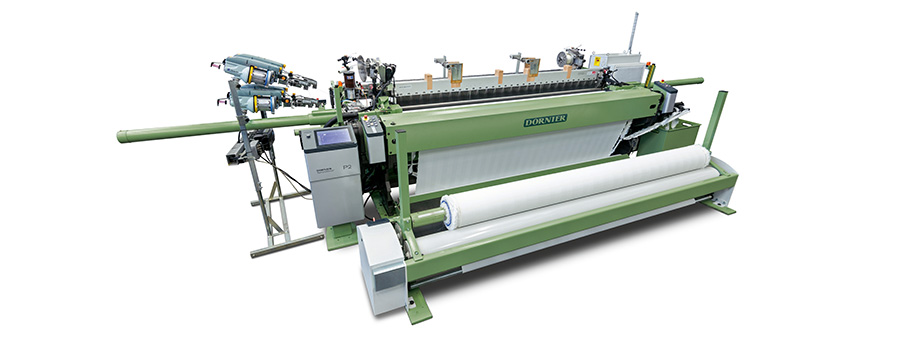
DORNIER P2 (c) 2019 Lindauer DORNIER GmbH
When the conversation turns to sustainability, many are of the opinion that business should lead from the front; machine builder DORNIER has applied this guiding principle rigorously for more than 65 years. At the upcoming Techtextil exhibition, the family-owned company will present comprehensive solutions in sustainable technologies for the manufacture of clothing, home textiles and technical fabrics.

“Our machines are not just green on the outside”, declares Wolfgang Schöffl, head of the Weaving Machines product line at DORNIER. He is referring to the trademark green color of the machines from Lake Constance, which also serves as the visual equivalent of the company’s philosophy of sustainability, “The Green Machine”. In this way, DORNIER pursues a total approach which is applied systematically to all technological aspects from the machine to the woven fabric up to and including the finished product.” With regard to filtration, for example: The “Green Machines” are used to make ultrafine precision fabrics which are implemented in the service of environmental protection all over the world in filters for cleaning or preserving the cleanliness of air, water and exhaust gases. “We are constantly refining our equipment so that our customers can manufacture still more closely woven fabrics”, says Scho?ffl. Consequently, the last few years have seen a steady im- provement in filter quality: With the latest generation of P2 machines, a reed impact force of up to 50 kN and particularly the shed geometry optimized for technical fabrics are combined to produce wide air and water filter fabrics of very high density.

Conserving fuel with ease

The machines from DORNIER also weave with fuel economy in mind: For example, between 1990 and 2017 German airlines reduced the amount of fuel consumed for carrying passengers 100 kilometers by almost half. This impressive achievement is due in large part to the material favored by all engineers who wish to make their machines lightweight yet durable: carbon- fiber reinforced plastic (CFRP). Airbus and Boeing both began testing installing the first CFRP components in the early 1970s. These days, CFRP accounts for over half of the construction of the modern aircraft types such as the A350 XWB and the Dreamliner. But what hardly anyone outside the close community of the initiated knows: Weaving machines by DORNIER have represented the standard for working high-performance fibers such as carbon, glass and aramid for more than 50 years. And as environmental requirements become inexorably more stringent and every last gram is scrutinized intensely, these days even lightweight, ultra-strong primary structures such as turbine blades are produced on modern 3D Weaving Machines from DORNIER. Apart from aviation and space travel, the use of fiber composite plastics is also becoming more widespread in the construction industry (based primarily on the idea of replacing steel with carbon) and automobile construction. Incidentally, on the subject of cars: Two out of three airbags and three-quarters of all motor vehicle tires with textile reinforcement are made on weaving machines from DORNIER.
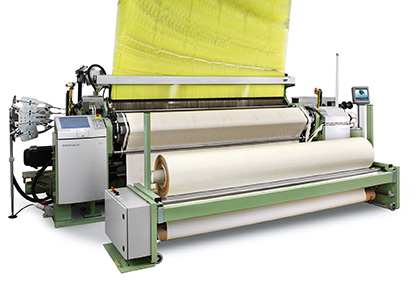

DORNIER A1 (c) 2019 Lindauer DORNIER


Constant development with sustainability in mind

But “The Green Machine” is not limited to just the “green effect” of the fabrics it produces. These “Made in Germany” systems enjoy an average service life of several decades, so they are exceptionally long-lasting, the opposite of disposable products. They represent the culmination of decades of experience in the design and manufacture of (rigid) rapier weaving machines and more than 25 years of expertise in the development of air-jet weaving systems. “It is our intention to remain constantly at the forefront of technical advance through innovation and to serve as a constant source of visions for sustain- ability with new machine concepts”, says Scho?ffl. Both air-jet and rapier machine are undergoing constant further develop- ment for the purpose of optimizing sustainability, he adds. Thus for example, the platform strategy, modular concept and global support network have made trusted, (energy-)efficient workhorses out of “Green Machines” as much as 30 years old for the modern weaver, more and more of whom are seeking opportunities in the growing market for technical textiles in addition to domestic and clothing fabrics. The following statement is intended to show that this philosophy of sustainability is not a mere passing trend at DORNIER, but rather the foundation of a long-term company strategy: “We strive to design and manufacture our products so that they are as safe and environmentally compatible as possible.” Is this an excerpt from the latest corporate brochure? Hardly. It is one of the seven guiding principles for the company – formulated almost 35 years ago by company’s founder Peter Dornier.
More News from Lindauer DORNIER GmbH

#Weaving

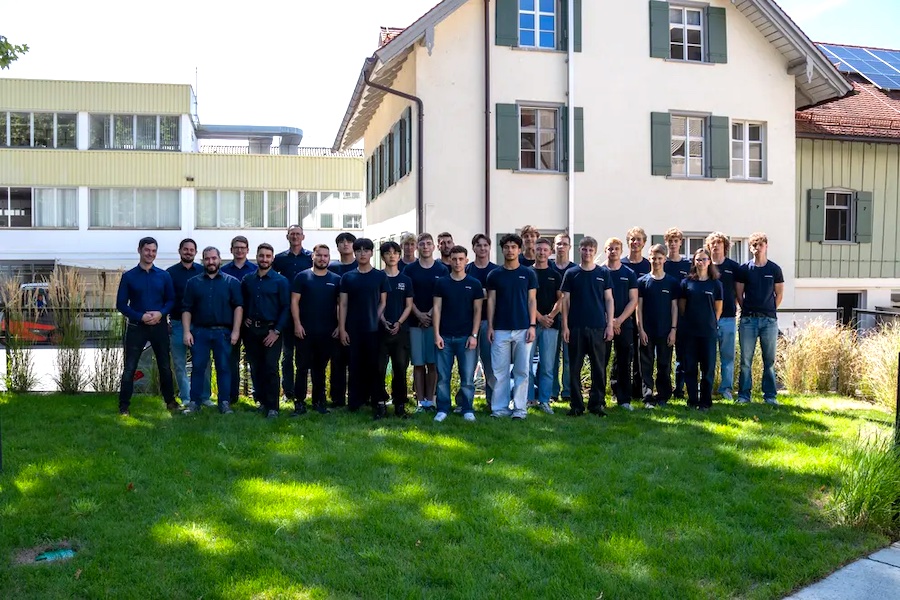
Lindauer DORNIER GmbH welcomes new apprentices and dual-study students

For 22 new “DORNIER Talents”, these days mark the beginning of a new chapter at Lindauer DORNIER. For the family-owned company, in-house training is a key pillar in developing skilled professionals and retaining them within the company for the long term.

#Weaving

"Dynamic markets do not only create uncertainty – they also create opportunities."

Volatile markets, increasingly complex materials and growing demands for flexibility are changing the weaving industry. At the same time, new opportunities are emerging in technical textiles, filtration, composites and many other specialised applications. Since taking over as Head of DORNIER's Weaving Machines Product Line at the beginning of 2026, Yvonne Schuberth has been helping to shape this development. In this interview with TexData, she explains why process stability and customer proximity remain the foundation of innovation, how digitalisation is transforming weaving mills, and why she believes the future belongs to technologically demanding applications.

#Composites

Fewer pores, greater impact tolerance: Peter Dornier Foundation Prize 2026 honours material research on fibre-reinforced composite components for aerospace industry

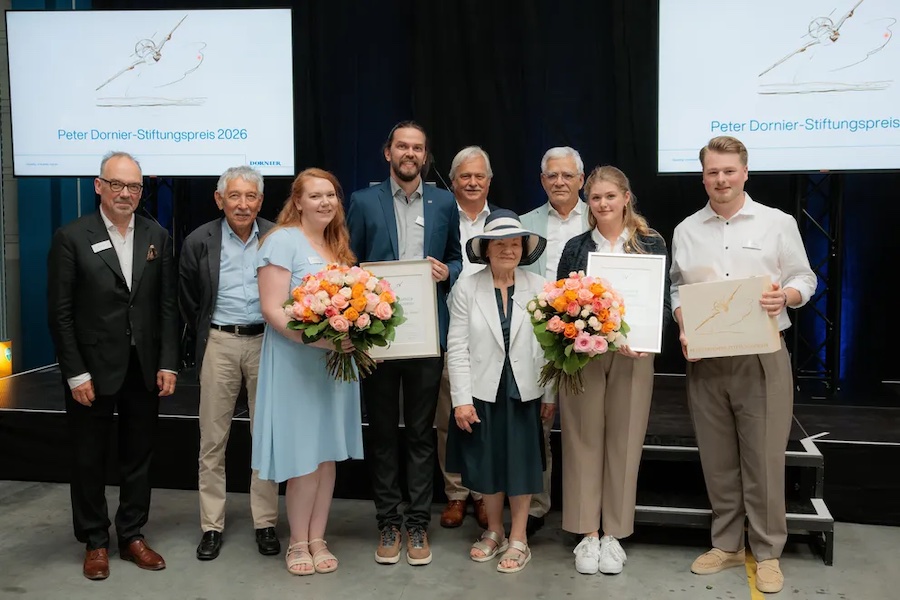
Microscopically small pores that form during manufacture, or barely visible impact damage, can severely impair the load-bearing capacity and service life of fibre-reinforced composite components. Two young researchers have presented groundbreaking work in this field and will both be awarded the 2026 Peter Dornier Foundation Prize: Dr.-Ing. Benedikt Neitzel from the Technical University of Ilmenau for his doctoral thesis on pore minimisation in the RTM process, and Johanna Buschmann, M.Sc., for her master’s thesis, completed at the German Aerospace Centre, on the improved impact tolerance of 3D fabrics compared to 2D laminates.

#Techtextil 2026

From carbon to canvas: DORNIER presents flexible and reliable weaving technologies for 3D weaving and dynamic markets at Techtextil

At Techtextil from 21 to 24 April 2026 in Frankfurt am Main (Hall 12.0, Stand D95), Lindauer DORNIER will be showcasing reliable and flexible weaving technologies for ever-changing market requirements. The machine and plant manufacturer will present retrofits for existing machines, the new TRITOS® FLEX 3D weaving technology, intuitive automation concepts and software solutions for data-sovereign networking of the weaving machine fleet.

More News on Techtextil 2019

Latest News

#Nonwovens

25 years in the room: EDANA’s OUTLOOK™ returns to Cascais to shape a changing industry

The market does not wait, and it does not grant easy answers. Across the absorbent hygiene, personal care, and wipes sectors, business is undergoing a period of intense, necessary adjustment. New European rules on packaging, single-use items, product safety, and end-of-life are forcing companies to drop old assumptions about materials and performance. At the same time, producers must keep their goods safe, reliable, and affordable for the babies and aging adults, who rely on them every day.

#Recycling / Circular Economy

Recover™ names Enes Adak and Fehmi Yüksel as Co-CEOs to accelerate its next growth phase

Recover™, a leading materials science company and global producer of consistent high-quality, recycled cotton fibers and circular material solutions at scale, today announced the appointment of Enes Adak and Fehmi Yüksel as Co-Chief Executive Officers. This leadership transition marks an important step in Recover’s evolution as the company enters its next stage of development.

#Research & Development

ADD-ITC 2026 highlights strong industry participation

The Aachen-Dresden-Denkendorf International Textile Conference (ADD-ITC) 2026 will place a strong focus on the exchange between textile research and industry when it takes place on November 26–27, 2026, at the International Congress Center Dresden. According to the preliminary conference program, more than two-thirds of all presentations will be contributed by companies or jointly presented by industry and research institutions.

#Recycling / Circular Economy

Arc'teryx introduces System 0™, a new framework for the future of product design and circularity

Arc'teryx Equipment, the global design company specializing in technical high-performance apparel and equipment, today introduced System 0™, a new framework that reimagines how products can be designed, manufactured, used, repaired, and ultimately regenerated. System 0 represents the next evolution for sustainability in the outdoor industry, as it embeds circular thinking across an entire product lifecycle while maintaining the uncompromising performance standards that define the Arc’teryx brand.

TOP