[pageLogInLogOut]

#Technical Textiles

DuPont introduces Tyvek® APX™ 400 protective coverall, setting a new benchmark for extreme breathability

New coverall benefits from groundbreaking materials technology that offers extreme breathability without sacrificing performance or durability
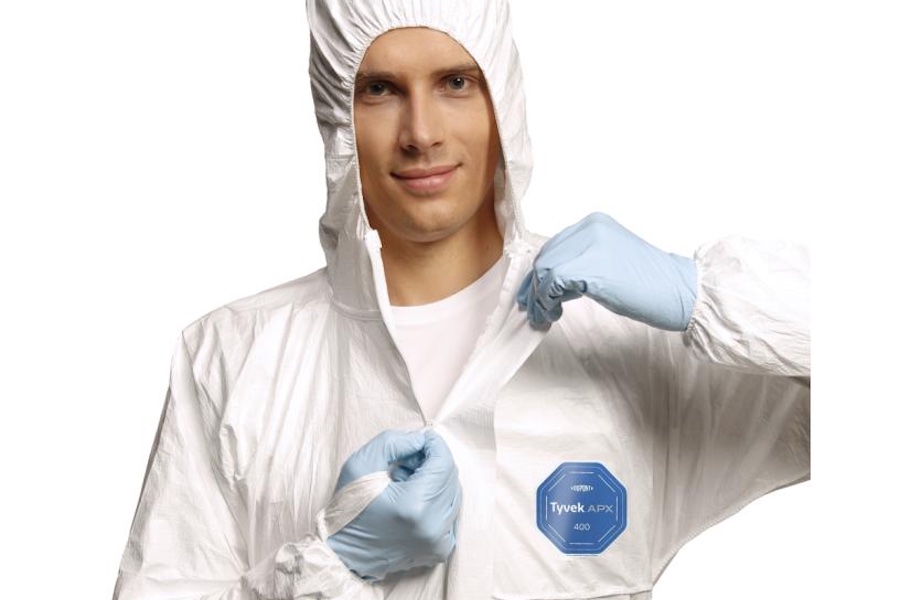
New from DuPont: Tyvek® APX™ 400 protective coverall is the first in a new generation of extremely breathable disposable chemical protection garments. © 2026 DuPont
DuPont (NYSE:DD) announced the launch of the Tyvek® APX™ 400 protective coverall, the first in a new generation of extremely breathable disposable chemical protection garments. Manufactured using DuPont™ Tyvek® APX™ groundbreaking fabric, the new garment combines 360° protection and durability with extreme breathability, taking worker comfort and safety to a whole new level.

Comfort as a science

Balancing comfort and safety in protective garments has always been a compromise, particularly in high temperature, high humidity applications. Through continued innovation, DuPont has made Tyvek® garments more breathable while preserving their exceptional performance and durability. Tyvek® APX™ fabric is the result. It offers an outstanding combination of protection and comfort, helping workers to perform at their best, especially in physically demanding environments.

The fabric’s enhanced performance was validated through collaboration with experts who applied scientific methods to assess breathability and worker well-being. Empa, the Swiss Federal Laboratories for Materials Science and Technology, conducted human thermoregulation modeling and biometric monitoring under controlled conditions. The research assessed thermal strain, sweat rate, skin temperature, and overall comfort perception. Human trials with biometric monitoring then confirmed the simulation data. The research evaluated the breathability of Tyvek® APX™ protective clothing under real-world working conditions. These included high ambient temperatures, controlled humidity, and medium to high activity levels.

Empa’s thermoregulation model showed that Tyvek® APX™ fabric allows a slower rise in core body and skin temperature than traditional garment options, including standard clothing. This helps reduce heat strain and perceived thermal stress. It also shortens recovery time during high temperatures and strenuous activity. Additional customer wear trials involving almost 300 users worldwide confirmed a clear preference for garments made with the new material. Some compared the sensation to wearing casual clothing rather than PPE.

“Since we unveiled Tyvek® APX™ fabric less than six months ago, the response from our customers and industry partners has been overwhelmingly positive,” said Chloé Caux-Wetherell, EMEA Marketing Manager at DuPont. “It’s a game-changer for health and safety professionals, giving them the ability to enhance worker well-being and reduce the risk of them suffering from heat build-up when wearing essential protective garments. With the launch of Tyvek® APX™ 400, we are providing the benefits of comfort and safety to as many people as possible, as quickly as possible.”

A new era of chemical protection

The Tyvek® APX™ 400 protective coverall offers full body protection and unrivalled wearer comfort. It is the first protective coverall in the Tyvek® APX™ range and can be specified for any application requiring Category III, Type 5-B and 6-B chemical protection.

Thanks to the new material technology, the Tyvek® APX™ 400 disposable chemical garment combines extreme breathability with proven design features, including a three-piece hood for optimal wearer visibility and movement, an integral Tyvek® thumb loop to keep sleeves in place during overhead movement, and a Tyvek® zipper and flap for ease of donning and doffing. These are complemented by an elasticated waist for flexibility of movement, plus elasticated wrists, ankles, and face to minimize chemical ingress. 
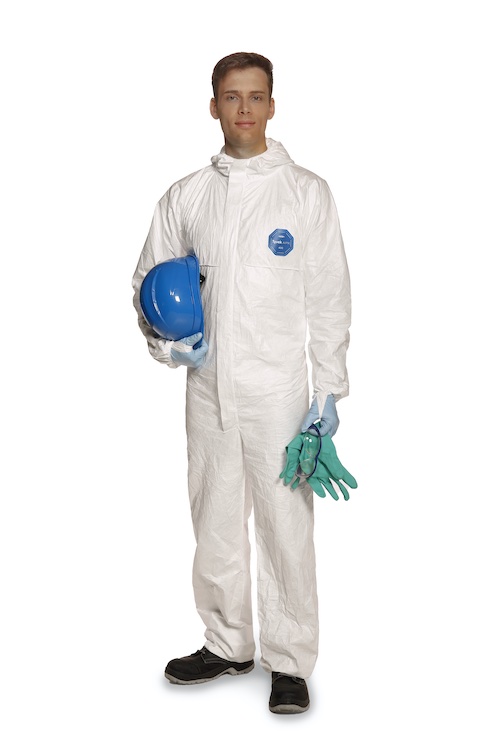
Tyvek® APX™ fabric offers an outstanding combination of protection and comfort, especially in physically demanding environments © 2026 DuPont


Sustainable choice

Because the single-use Tyvek® APX™ 400 coverall is made from a mono-material (HDPE), it is readily recyclable if no contamination has occurred*. In addition, the coverall is available in boxes of 25, dramatically reducing the amount of plastic packaging waste.

The Tyvek® APX™ 400 protective coverall is available commercially from March 2026.

For more details about Tyvek® APX™ 400, please visit:

safespec.dupont.co.uk

Information about Tyvek® APX™ fabric and wear trials can be found here:

tyvek.co.uk/apx

*Tyvek® is made of HDPE, and products made of 100% Tyvek® material can be recycled at facilities that recycle flexible HDPE materials. Please check recycling facilities in your area to ensure they can recycle Tyvek®.


More News from Dupont

More News on Technical Textiles

#Man-Made Fibers

Dornbirn GFC 2026 expands conference program with new thematic sessions

For 65 years, Dornbirn GFC has stood for innovation and is one of the world’s leading conferences in the fiber industry. From September 16 to 18, 2026, the international fiber community will meet in Dornbirn, Austria, to discuss current trends, technological developments, and forward-looking solutions. More than 600 experts from industry and academia from over 30 countries are expected to attend. With around 100 presentations by renowned speakers, a 2,5-day conference program, and three parallel presentation rooms with moderated sessions, Dornbirn GFC provides a first-class platform for knowledge exchange, networking, and international collaboration. Together, participants will generate ideas and impulses that will sustainably shape the future of the global fiber industry.

#Functional Fabrics

PERFORMANCE DAYS announces new focus topic & forums for October 2026

With its upcoming October 13–14, 2026 edition, PERFORMANCE DAYS is placing the spotlight on one of the textile industry’s most important transformations: “Bio-Based Materials – From Fiber to Fabric”, a two-part Focus Topic exploring the future of bio-based innovation across the textile value chain. Part 1, presented in October 2026, will focus on fibers and next-generation material developments, while Part 2 at the March 2027 edition will shift the perspective toward dyeing, finishing, additives, and processing technologies.

#Knitting & Hosiery

The new RJ 4/2 EL revolutionizes body mapping and expands creative possibilities – from smart lingerie to sporty athleisure designs

With the addition of another member to its successful RASCHELTRONIC® family, KARL MAYER is opening up new possibilities for creative product development for warp knitting mills and brands. The RJ 4/2 EL offers with two stitch-forming Jacquard bars entirely new design options for functional sportswear and bi-elastic lingerie. Available in gauges E 28 and E 32, this new model helps manufacturers set their collections apart from the competition. The fine E-32 gauges, in particular, impress with their clean surface, a pleasantly soft feel, and an exceptionally elegant look.

#Technical Textiles

AUDI E5 earns Whole-Cabin OEKO-TEX® STANDARD 100 certification, reinforcing a new benchmark for healthier vehicle interiors

Following the successful certification of the AUDI E7X, the AUDI E5 has now achieved OEKO-TEX® STANDARD 100 certification for its entire vehicle cabin, making it the world's second vehicle to receive whole-cabin certification. With this latest achievement, AUDI remains the only automotive manufacturer whose complete model portfolio has obtained OEKO-TEX® STANDARD 100 certification for whole-cabin interiors.

Latest News

#Weaving

More patterns, less effort: the MULTI-MATIC® at Rohleder

Rohleder is one of Europe’s most modern weaving mills. For over 80 years, the family-owned company has been developing and manufacturing premium fabrics for brands, retailers and private customers – 100% Made in Germany. This success is made possible by a consistent focus on design, quality, and functionality, as well as by continuous investment in state-of-the-art production facilities. Rohleder also relies on innovative technologies in warp preparation and has been collaborating with KARL MAYER for many years. As recently as 2023, a MULTI-MATIC® was delivered to the company’s headquarters in Konradsreuth.

#Nonwovens

BASF opens global diaper and superabsorbents performance lab in Mumbai

BASF has officially inaugurated its new Performance Lab for diapers and superabsorbents (SAP) in Mumbai on August 18, 2026, which will provide technical and application services to superabsorbent customers globally. The new lab of BASF’s Hygiene Solutions business has been established in less than a year and is part of BASF’s Innovation Campus Asia Pacific in Mumbai, BASF’s second largest R&D site in Asia Pacific established in 2017 under BASF Chemicals India Private Limited.

#Recycled Fibers

Naia™ from Eastman strengthens western hemisphere textile connections at Apparel Sourcing Show Guatemala

As brands and retailers explore more diversified and responsive sourcing networks, the Naia™ brand from Eastman is strengthening its engagement with the textile and apparel value chain across the western hemisphere. From August 18–20, the company will participate for the first time in Apparel Sourcing Show Guatemala, a regional meeting point for apparel sourcing, manufacturing and nearshoring.

#Research & Development

Europe is committed to recycling end-of-life wind turbine blades

Starting in 2026, Europe’s wind energy industry has committed itself to ensuring that wind turbine blades do not end up in landfills once they reach the end of their service life. The EU-funded research project REWIND is exploring ways to reuse this composite waste. The German Institutes of Textile and Fiber Research Denkendorf (DITF) are one of 13 project partners from seven countries.

TOP