[pageLogInLogOut]

#Sustainability

Textile Exchange releases "The Future of Synthetics" report

In a new report released by Textile Exchange, titled "The Future of Synthetics," the fashion, apparel, and textile industry are called upon to swiftly transition away from new fossil fuel extraction for synthetic materials. The report provides essential guidance for brands seeking to make this critical shift.

Recognizing the urgent need to curb greenhouse gas emissions associated with synthetic fibers, Textile Exchange's "The Future of Synthetics" stresses the necessity for the industry to halt the introduction of new virgin fossil fuel-derived materials into the supply chain. This strategic move is deemed indispensable to meeting climate targets and mitigating environmental impact.

"At the heart of this report is the advocacy for accelerated interest and investment in technologies facilitating the rapid substitution of fossil fuel-derived synthetics," remarked a spokesperson for Textile Exchange on its website. "By making viable alternatives readily available, the industry can realistically divest, thereby unlocking significant emissions reduction potential."

"With this report, we are advocating for increased interest and investment into the technologies that will facilitate the rapid substitution of fossil fuel-derived synthetics," a spokesperson for Textile Exchange remarked on its website. "A core recognition is that having viable alternatives available will enable the industry to realistically divest, unlocking this critical emissions reduction opportunity."

The report delves into various technologies and infrastructure pivotal to this transition, including textile-to-textile recycling, biosynthetics, and carbon capture. It highlights the dominance of synthetic materials in global fiber production, with polyester alone contributing a staggering amount of greenhouse gas emissions.

While emphasizing the importance of transitioning towards sustainable alternatives, the report also acknowledges the need to balance this shift with considerations for natural ecosystems. It advocates for a dual approach: investing in alternative methods of creating synthetic materials while simultaneously reducing the overall volume of new materials produced.

Mechanical recycling of PET plastic bottles currently stands as the most prevalent alternative to virgin polyester. However, the industry is urged to prioritize scaling textile-to-textile recycling technologies to establish a truly closed-loop system. Additionally, the report explores emerging opportunities in biosynthetics and carbon capture technologies, underscoring their potential to facilitate divestment from fossil fuel extraction.

For access to the full report and key takeaways, please visit :

http://textileexchange.org/app/uploads/2024/04/The-Future-of-Synthetics.pdf


More News from Textile Exchange

More News on Sustainability

#Nonwovens

EDANA wraps up its Sustainability & Policy Forum 2025: Uniting the industry and EU policymakers to navigate the future of nonwovens

Against a backdrop of rapidly evolving environmental legislation, the EDANA Sustainability & Policy Forum 2025 concluded the past week in Brussels, marking a step forward in the dialogue between the nonwovens industry and European policymakers. Held from 9-10 December at the historic Residence Palace, the two-day event successfully brought together business leaders, sustainability experts, and EU officials to address the dual challenges of circularity and industrial competitiveness.

#Sustainability

YKK recognized with Top ‘A’ rating by CDP for climate change leadership for third consecutive year

YKK Corporation announced its achievement of the highest “A List” rating in the 2025 Climate Change survey conducted by the global environmental disclosure nonprofit, CDP . This marks the third consecutive year YKK has received this prestigious recognition.

#Weaving

Itema announces strategic partnership with Ivy Decarb to accelerate decarbonization in weaving process

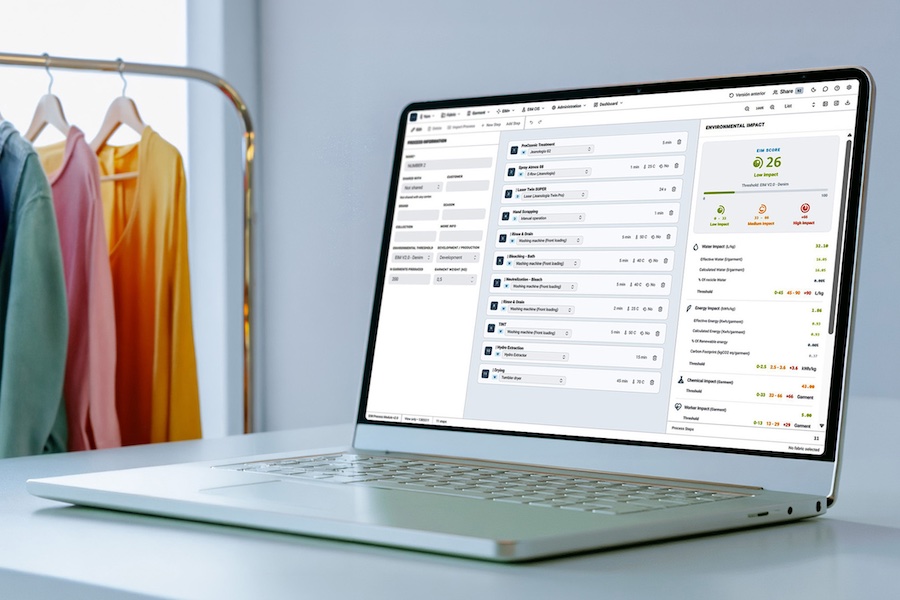
Itema is pleased to announce the strategic partnership with Ivy Decarb, the digital platform helping textile companies measure and reduce their carbon footprint.

#Man-Made Fibers

Teijin Carbon Europe receives EcoVadis Silver status – ranked among the top 15% of evaluated companies

Teijin Carbon Europe (TCE) has been recognized for its sustainability performance and has been awarded the EcoVadis Silver Medal in the latest assessment. In its first-ever EcoVadis evaluation, the company achieved a notable 72 out of 100 points, ranking among the top 15% of all companies evaluated worldwide, within the “Manufacture of Man-Made Fibres” category.

Latest News

#People

Happy Holidays!

Dear reader, the year 2025 is drawing to a close. We are entering what we hope will be a peaceful holiday season, spending time with our families and taking a moment to pause and reflect. We hope we have been able to support you once again this year with relevant news and articles, and we look forward to surprising you with many innovations in the coming year. Enjoy the festive season, stay healthy, and we wish you a happy and joyful holiday season.

#Weaving

Lindauer Dornier announces leadership transition in weaving machine business

After more than ten successful years at Lindauer DORNIER GmbH, Mr Wolfgang Schöffl will leave the family-owned company at the end of the year to enter well-deserved retirement.

#Heimtextil 2026

Texpertise Focus AI: Messe Frankfurt puts Artificial Intelligence centre stage at its international textile and apparel trade fairs

Under the banner 'Texpertise Focus AI, Messe Frankfurt will place a strong emphasis on Artificial Intelligence (AI) across its international textile and apparel trade fairs from 2026 onwards, setting a future-shaping signal for the industry. The initiative highlights the responsible use of AI along the entire textile value chain, from fibre production to the point of sale. The programme will launch at Heimtextil in Frankfurt in January 2026.

#Technical Textiles

Autoneum and Polestar set new benchmarks for passenger experience and sustainability

As the global market leader in sustainable acoustic and thermal management, Autoneum is a key supplier of interior and exterior components for the highly anticipated Polestar 5 model. The successful collaboration between Autoneum and Polestar marks a significant milestone in sustainable automotive engineering: the electric grand tourer sports car features several innovations in lightweight, fully recyclable polyester-based components that ensure a superior driving experience. Polestar 5 was revealed at the IAA Mobility 2025 in Munich and is available in 24 markets.

TOP