[pageLogInLogOut]

#Sustainability

Lenzing recognized for the second year in a row as global sustainable leader with triple “A” score by CDP
© 2022 Lenzing
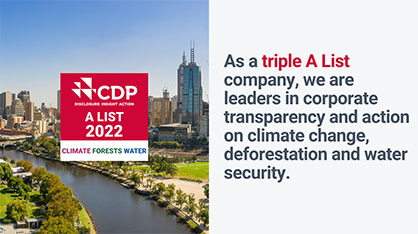
The Lenzing Group, the world’s leading supplier of sustainably produced specialty fibers, has been recognized for leadership in corporate transparency and performance on climate change, forests and water security by global environmental non-profit CDP, securing a place on its annual ”A List”.
  • Lenzing one of only 12 companies worldwide that were recognized with an outstanding triple ”A”
  • Environmental leadership in climate change, water security and forests
  • CDP as the gold standard of environmental reporting


Through significant demonstrable action on reducing climate impacts, water security risks and deforestation, Lenzing is leading on corporate environmental ambition, action and transparency worldwide. The world’s economy looks to CDP as the gold standard of environmental reporting with the richest and most comprehensive dataset on corporate and city action. In 2022, over 680 investors with over USD 130 trillion in assets and 280 major purchasers with USD 6.4 trillion in procurement spend requested companies to disclose data on environmental impacts, risks and opportunities through CDP’s platform. A record-breaking 18,700 companies responded.

”We are very proud that we have now been awarded a triple ’A‘ rating by CDP for the second time in a row. The rating shows that we are already on a very good path with our sustainability strategy and that the steps we are taking as the Lenzing Group to continuously improve and find solutions to the most pressing problems of our time are being seen and honored,” says Stephan Sielaff, CEO of the Lenzing Group. ”We are working hard to make our industries even more sustainable and to drive the transformation of the textile business model from linear to circular. Further efforts from the entire industry are needed for this transformation to take place“, Sielaff said.

“CDP saw nearly 20,000 companies disclose environmental data this year, including 70 per cent of European companies by market value. COP27 showed the need for transformational change is more critical than ever if we are to limit warming to 1.5 °C. I’m therefore delighted that European companies make up nearly half of all ’A List‘ companies around the world, including 15 with two A scores and eight with triple ’A‘ scores for climate change, forests, and water security leadership. We must cut emissions by half and eliminate deforestation by 2030, alongside achieving water security on the same timescale – there is no route to 1.5°C without nature.


With the EU’s ground-breaking new reporting regulation, the CSRD, now agreed, CDP ’A List‘ companies are showing they are ahead of the game – taking clear action to reduce emissions and to address environmental impacts throughout their value chains. This is the type of environmental transparency and action we need economy-wide to prevent ecological collapse’’, says Maxfield Weiss, Executive Director CDP Europe.

Efficient use of resources

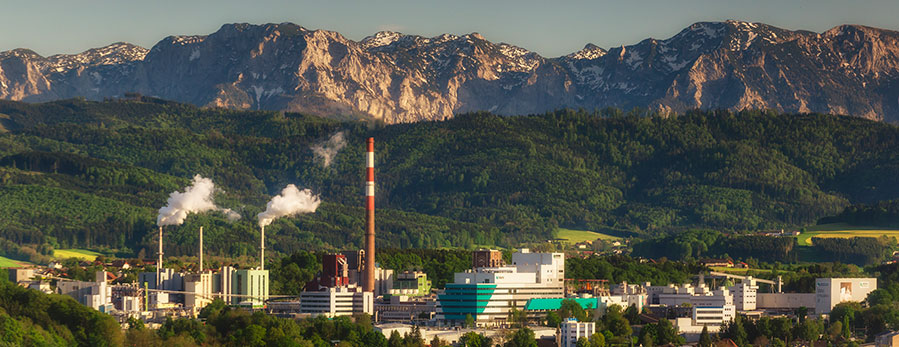
Wood, the pulp derived from it and water are some of the most important raw materials for the sustainable production of cellulosic fibers from Lenzing and also part of the most important focus areas of the Lenzing Group’s sustainability strategy. Lenzing assumes responsibility by striving for sustainable procurement based on environmental certificates and responsible and efficient use of these valuable resources. Lenzing sources wood and dissolving pulp from sustainably managed forests and plantations and not from ancient, protected or endangered forests. Lenzing’s biorefinery process ensures that 100 percent of wood constituents are used: to produce dissolving wood pulp for fiber production, biorefinery products, and bioenergy.
© 2022 CDP
© 2022 CDP


With its REFIBRA™ and Eco Cycle technologies, Lenzing offers solutions for transforming the textile and nonwovens industries towards a circular economy. In line with its vision for the circular economy, “We give waste a new life. Every day.” Lenzing is driving the industry toward a full circular economy by striving to give waste a new life in all aspects of its core business and developing circular solutions together with potential partners inside and outside the current value chain.

Transparency and traceability of supply chains

Transparency forms the basis for credible sustainability performance and also creates trust among customers and consumers. That is why Lenzing is committed to promoting digital solutions throughout the supply chain and improving transparency and traceability in the textile and nonwovens industry. This is crucial as only an honest engagement with the industry can ensure traceability that verifies the origin of Lenzing fibers throughout the supply chain, all the way to the finished garment. Lenzing’s fiber identification system and e-branding service form the basis of the overall approach to transparency, while the TextileGenesis™ blockchain project leverages data to enable maximum traceability. This demonstrates Lenzing’s leadership in a very opaque industry and offers products with better sustainability credentials. A more comprehensive understanding of Lenzing’s suppliers as well as downstream customers is equally critical to minimizing the Lenzing Group’s overall environmental impact, leading the company on the right path to achieve a low-emission and CO2 neutral footprint by 2050. Close digital connections throughout the network help to close loops in an efficient and holistic way and facilitate the transition from a linear to a circular supply chain.

More News from Lenzing

#Man-Made Fibers

Lenzing shareholders approve €300 million capital increase

Shareholders of Lenzing AG have approved a capital increase of approximately €300 million, providing financial support for the company's recently announced "Grow Nonwovens, Reset Textiles" strategy.

#Man-Made Fibers

Lenzing reports improved half-year results and advances strategic transformation

Despite a persistently challenging market environment in the first half of 2026, characterized by volatile energy and raw material prices, subdued global consumer demand and intensified competition from Asia, the Lenzing Group significantly improved its financial performance. Net result after tax more than doubled to EUR 35.6 million, compared with EUR 15.2 million in the first half of 2025. Free cash flow increased to EUR 45.8 million, while EBITDA amounted to EUR 239.2 million. Revenue totaled EUR 1.27 billion, compared with EUR 1.34 billion in the previous year.

#Nonwovens

Lenzing Group highlights scalable, bio-based nonwovens solutions at leading global industry fairs

From CIDPEX in China to Techtextil in Frankfurt and INDEX in Geneva, the Lenzing Group showcases ready-for-market, bio-based nonwoven solutions and receives industry recognition for LENZING™ Nonwoven Technology.

#Yarn & Fiber

Lenzing AG appoints Georg Kasperkovitz as Chief Executive Officer

The Supervisory Board of Lenzing AG has appointed Georg Kasperkovitz, Member of the Management Board and Chief Operations Officer, as Chief Executive Officer (CEO) of Lenzing AG with effect from June 1, 2026.

More News on Sustainability

#Sustainability

Execs help steer Cascale’s consumer goods agenda in Athens

The 2026 Cascale Annual Meeting, taking place September 15–17 in Athens, Greece, will convene leaders from across the global consumer goods value chain to tackle one of the industry’s defining questions: how to accelerate meaningful, system-wide transformation. Guiding those conversations as this year’s co-chairs are Sean Cady, vice president, global sustainability, responsibility, trade, and government affairs at VF Corporation, and Dr. Delman Lee, vice chair at TAL Apparel Limited.

#Textiles & Apparel / Garment

SAITEX reports efficiency gains and greater transparency in 2025 Impact Report

Vietnam-based denim manufacturer SAITEX has published its 2025 Impact Report, documenting progress in resource efficiency, chemical management, digital traceability and knowledge sharing across its manufacturing operations in Vietnam and the United States. Rather than focusing on sustainability ambitions, the report presents operational data, manufacturing developments and lessons learned from the past year.

#Raw Materials

Aid by Trade Foundation presents annual report for 2025: Market position and impact of sustainably verified natural fibres strengthened

Despite global supply chain challenges, the Aid by Trade Foundation (AbTF) was able to further expand its international role in promoting sustainably verified natural fibres in 2025. In doing so, the foundation remains true to its fundamental approach of leveraging market forces. Last year, it generated total revenues of EUR 7.8 million; this included EUR 6.7 million collected through the successful marketing of four standards: Cotton made in Africa (CmiA), CmiA Organic, The Good Cashmere Standard (GCS), and the Regenerative Cotton Standard (RCS). AbTF invested the resulting income in projects aiming to protect biodiversity, support women, increase transparency in the textile supply chain, and implement its verification system.

#Sustainability

Textile Exchange reports growth in certifications and industry engagement

Textile Exchange has published its 2025 Annual Report, highlighting continued growth in certified sites, industry participation and the development of its standards and membership structure. According to the report, more than 100,000 sites worldwide are now certified to Textile Exchange standards, more than three times the number recorded in 2020. Preliminary figures also indicate 12% year-on-year growth across the organization's current standards, including the Global Recycled Standard (GRS), Recycled Claim Standard (RCS) and the Responsible Animal Fiber standards.

Latest News

#Raw Materials

Brazil sets new cotton export record and consolidates global leadership

Brazil ended the 2025/26 commercial year with a new record, consolidating its position as the world’s largest cotton exporter. Between August 2025 and July 2026, the country shipped 3,373,941 tonnes of the fiber, 19% more than in the previous cycle, and reached record revenue of US$5.3 billion. The result represents a milestone in Brazil’s expansion in the international market and reinforces the country’s role as a strategic supplier to the global textile industry.

#Raw Materials

Better Cotton Initiative partners with Avalo in AI plant breeding for climate-resilient cotton

The Better Cotton Initiative (BCI) has partnered with agriculture solutions company Avalo, whose platform accelerates the speed at which plants with key resiliency traits may be developed.

#Man-Made Fibers

The LYCRA Company expands its co-creation vision through an immersive Lifestyle District at Intertextile Shanghai.

The LYCRA Company, a global leader in fiber and technology solutions for the apparel industry, is reimagining the trade show experience at Intertextile Shanghai Apparel Fabrics Autumn Edition, which opened today in China. Building on the success of last year's ALL IN concept, the company has expanded its co-creation vision into a 356-square-meter Lifestyle District featuring partners Jingzili New Material, JYT Textile, Lianxingfa Knitting, and Trend Textile. The district is part of a larger 895-square-meter pavilion showcasing a total of 19 co-exhibitors. Together, they demonstrate how innovations in fiber, fabric, and garments can be combined to create compelling solutions for both work and play.

#Natural Fibers

Plastic-free stretch technologies drive new direction for denim innovation

As the denim industry looks for ways to reduce its reliance on synthetic fibres, plastic-free stretch technologies are gaining momentum. Developments based on mechanical fabric construction and natural rubber are demonstrating that comfort and stretch can be achieved without conventional elastane, supporting both recyclability and circular product design.

TOP