[pageLogInLogOut]

#Sustainability

Shoes with that certain something

The LOWA model LADY LIGHT GTX has been awarded the OEKO-TEX® LEATHER STANDARD certificate. © LOWA
LOWA, one of the leading outdoor shoe specialists, and the testing service provider Hohenstein are entering new territory together: the LOWA model LADY LIGHT GTX has been awarded the OEKO-TEX® LEATHER STANDARD certificate.

Pilot project LOWA and Hohenstein: First certification of footwear according to OEKO-TEX® LEATHER STANDARD

"The successful certification is a milestone for us: testing for harmful substances in textiles has long been common practice, but testing for harmful substances in footwear still has a lot of room to grow," notes Ivonne Schramm, Head of OEKO-TEX® at Hohenstein, "Yet they make a lot of sense, because leather shoes are often worn for long periods of time and, unlike textiles, they cannot be washed despite their long service life." This makes it all the more important that shoes made of leather do not contain any harmful substances - especially since they consist of many different components. Each individual component from different production stages, such as tanning or dyeing, represents a possible source of input for harmful substances. Reason enough for LOWA to take action here: "We are very pleased about the certification, which stands for the core values of our brand - highest quality, perfect fit and innovation," says Alexander Nicolai, Managing Director of LOWA Sportschuhe GmbH, "Our customers can expect products of the highest standard from us - in the future, this will also include the reliable safety of a LEATHER STANDARD certification."


The successfully completed pilot project creates a Win-Win situation for everyone: In the future, LOWA plans to have further shoe lines certified by Hohenstein according to the OEKO-TEX® LEATHER STANDARD step by step in the interests of consumer protection. In return, Hohenstein has succeeded in significantly expanding its expertise beyond purely textile concerns by certifying footwear according to the OEKO-TEX® LEATHER STANDARD.
The OEKO-TEX® LEATHER STANDARD certificate for footwear is only issued if all components comply with the required criteria of the LEATHER STANDARD RSL (Restricted Substances List) without exception. © Hohenstein


Detailed information about the OEKO-TEX® LEATHER STANDARD specifically for footwear can be found here:

http://www.hohenstein.com/leather-standard-for-footwear


More News from Hohenstein Institute

#Research & Development

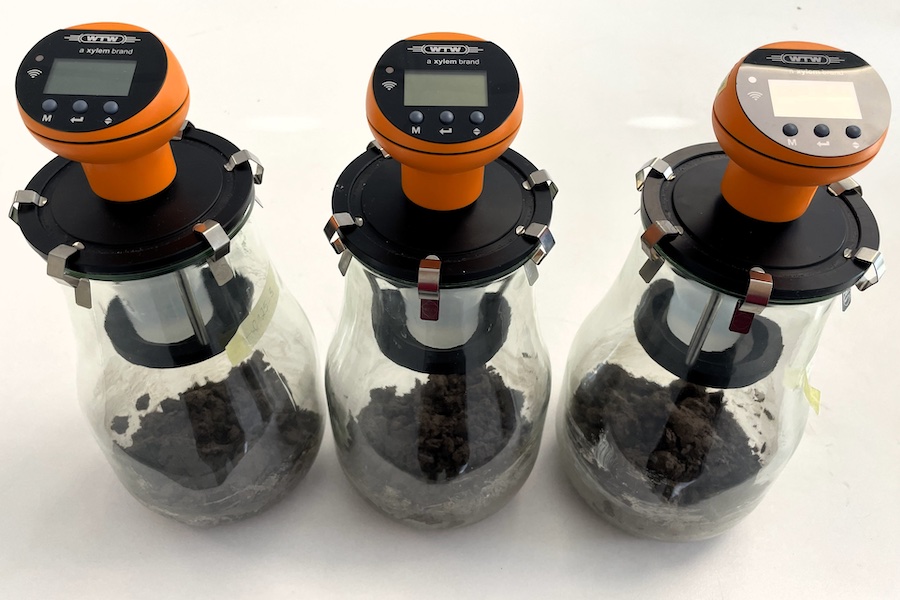
New DIN SPEC assesses environmental impact of textile fragments in soil

Textile products made from synthetic fibres, finished fabrics or dyed materials release fibre fragments into the environment at every stage of their life cycle. With the new DIN SPEC 19296, Hohenstein has developed a standardised testing method to analyse how these fragments behave in soil under natural conditions. Until now, little was known about their environmental behaviour or potential ecological effects once released.

#Research & Development

Testing and research laboratory ensures safe and more sustainable products worldwide

For 80 years, Hohenstein has stood for independent testing, scientific expertise and practical solutions. Today, the testing and research service provider supports manufacturers and brands worldwide in making textiles, hardlines and medical devices safe, more sustainable and market-ready – thereby building trust among consumers. With an international presence and interdisciplinary expertise, Hohenstein supports its customers from production through to market launch, helping them navigate an environment of growing regulatory and societal demands.

#Research & Development

A smarter way to verified Chemical Compliance

Hohenstein and GoBlu Drive Innovation in Sustainable Supply Chain Management As regulatory demands, customer expectations, and sustainability goals continue to grow, the ability to manage chemical compliance and data across complex supply chains has become critical. Hohenstein and The BHive® by GoBlu are initiating a strategic partnership to enhance chemical management in the textile sector. The collaboration delivers more than just a service – it provides an integrated, future-ready solution for brands, manufacturers and suppliers seeking trusted chemical management and credible sustainability.

#Research & Development

Hohenstein achieves GLP Certification for Medical Device Testing

Since the middle of July, the testing service provider Hohenstein has been certified to conduct medical device testing in accordance with the internationally recognised Good Laboratory Practice (GLP) standard. This certification comprehensively covers chemical, physical and biological safety testing of medical devices.

More News on Sustainability

#Natural Fibers

Global Standard gGmbH launches second public consultation for GRTS Draft 2 for the textile industry (1–30 April 2026)

Global Standard gGmbH is pleased to announce the release of Draft 2 of the Global Responsible Textile Standard (GRTS) for its second public consultation. The consultation will be open from 1 April 2026 to 30 April 2026, inviting stakeholders across the textile and apparel value chain to provide input and contribute to the further development of this new Standard.

#Sustainability

Practical toolkit to drive coordinated climate action launched

An open-access workshop toolkit enables brands, suppliers, policymakers and investors across the textile industry to apply the System Map in their own work, identifying leverage points to halve emissions and enable a just transition.

#Raw Materials

Textile Exchange publishes cotton Life Cycle Assessment study to strengthen impact data

Textile Exchange has published the first in a series of seven Life Cycle Assessment (LCA) studies designed to improve the quality and robustness of environmental impact data for raw material production across the fashion, textile, and apparel industry. The first LCA study focuses on cotton and addresses critical data gaps and methodology variability through new high-quality data across key producing countries. The study includes organic, regenerative, recycled, and country averages for conventional cotton production systems, providing a clearer picture of the associated environmental impact.

#Sustainability

Experts publish APAC policy priorities

Cascale today announced the publication of its APAC Policy Priorities Paper, developed by the Asia-Pacific (APAC) Policy Member Expert Team (MET) to identify key regional sustainability challenges and provide practical, aligned recommendations for policymakers and industry stakeholders across Asia-Pacific.

Latest News

#Techtextil 2026

IVGT joint stand brings innovation and networking to Techtextil 2026

At Techtextil 2026 and the parallel Texprocess 2026, key transformation topics such as artificial intelligence, digitalisation, sustainability, recycling and the circular economy will be reflected across the show. Against this backdrop, the IVGT, together with 16 member companies, will present its joint stand in Hall 12.1 (Stand D62) as a platform for exchange and networking.

#Man-Made Fibers

Indorama Ventures supports Southeast Asia’s textile customers with reliable regional supply and global innovative portfolio

Indorama Ventures, one of the leading global polyester fiber and filament yarn suppliers globally, will participate in Indo Intertex 2026 in Jakarta this April, making its diverse global portfolio available to apparel, home textile, and hygiene customers across Southeast Asia.

#Raw Materials

New study shows low environmental impact by Cotton made in Africa Organic Cotton from Tanzania

Today, the Aid by Trade Foundation (AbTF) is announcing the results of a comprehensive life-cycle analysis (LCA) for cotton produced in Tanzania under the Cotton made in Africa Organic (CmiA Organic) standard. The study emphasises the small ecological footprint of CmiA Organic verified cotton. This can largely be traced back to the absence of synthetic pesticides, artificial fertilisers, and artificial irrigation. Consequently, CmiA Organic cotton can help the textile industry meet regulatory requirements as well as science-based targets. The results also show that the consequences of climate change threaten the livelihoods of these cotton farmers, even though the type of agriculture they practise barely contributes to climate change.

#Raw Materials

Better Cotton Initiative strengthens regenerative focus in standard update

The Better Cotton Initiative (BCI) has strengthened the regenerative focus of its field-level standard with the launch of a new version of its Principles & Criteria (P&C), which marks the next step in the organisation’s journey to becoming a regenerative standards system.

TOP