[pageLogInLogOut]

#Sustainability

H&M Group further invests in the decarbonisation of its value chain

The 27th United Nations Climate Change conference (COP27) is the annual milestone for the most influential leaders in climate action from governments, business and the climate community. Working towards its ambition to achieve net-zero by 2040, H&M Group joined the international forum in Sharm El Sheikh, Egypt to build momentum for collaborative action and share about the company’s progress and challenges.

"We have been engaged in climate mitigation for years and continuously push ourselves to demonstrate climate leadership within our industry. Our recently strengthened climate goals are verified by the Science Based Targets initiative. We are dedicated to contributing to the limitation of the global temperature increase to 1.5 °C and keeping our climate strategy aligned with the latest science-based target setting frameworks is crucial for us to create impact beyond our own organisation and value chain.”

Leyla Ertur, Head of Sustainability H&M Group


H&M Group set the ambitious goal to reduce the group’s absolute scope 1 and 2 emissions and its scope 3* emissions by 56% respectively by 2030 (from a 2019 baseline). To work towards this goal and to financially support projects to reduce its emissions throughout the whole value chain, H&M Group implemented an annual budget of around SEK 3 billion. The budget will be used for investments to phase out coal and increase the share of more sustainable materials, amongst others.


"Instead of measuring the success of these initiatives by financial gain, we measure effective emission reductions. To turn our company growth, profit and greenhouse gas reduction into equal KPIs is a very ambitious decision that underlines the importance and value of our sustainability work for our business.”

Leyla Ertur, Head of Sustainability H&M Group


H&M Group focuses on investments that further strengthen the availability and usage of renewable energy and fund the innovation and distribution of technology that will allow the group to fully decarbonize its production and logistic operations.


Some of H&M Group’s recent initiatives include:

Green Fashion Initiative

The Green Fashion Initiative will support the company in reducing greenhouse gas emissions across its supply chain, by making funding available to supplying factories to invest in the technologies and processes needed to reduce energy demand and replace fossil fuels across the fashion industry.

Fashion Climate Fund by Apparel Impact Institute

H&M Group is a lead funder of the Fashion Climate Fund, which is designed to drive collective action to tackle fashion’s supply chain emissions. The Fund will help execute foundational supply chain improvements, including transitioning to renewable electricity, improving energy efficiency, eliminating coal in manufacturing, scaling sustainable materials and practices, and accelerating next-gen materials.

Sustainable Supplier Facility

Many suppliers in the apparel sector are struggling with decarbonization due to a lack of funding and adequate technology implementation support. In order to reach beyond our own influence, H&M Group and Guidehouse have initiated a Sustainable Supplier Facility where other brands and investors will be able to co-invest to share the financial responsibility of a project and give further alternatives to support suppliers in their decarbonization journey.

Internal carbon price

A consisting tool within the H&M Group to drive behavioral change within its buying, design and merchandising teams as well as in production and logistics, that steers toward the purchase of low-carbon materials for our products and the selection of low-emission production units.

Energy expert team

The implementation of its own Energy expert team gives H&M Group’s suppliers access to free data, information and training on energy efficiency and renewable energies. The Energy experts perform audits and support to identify potential energy efficiency measures.

But the work doesn’t stop there. Knowing that even after the greatest possible reduction of global emissions, there remains a certain percentage of unavoidable fossil fuel emissions, H&M Group also invests in carbon removal solutions:

Carbon dioxide removal agreement with Climeworks

Climeworks empowers people and companies to fight global warming by offering carbon dioxide removal as a service via direct air capture technology. H&M Group signed a multi-year carbon removal agreement with Climeworks in 2022, which covers the removal of 10,000 tons of CO2. This enables H&M Group to access capacity and establish long-term relations in the sector already today, while contributing guaranteed demand towards Climeworks’ capacity scale-up. Scaling the carbon dioxide removal market starting now is essential to enable both H&M Group and the global economy to achieve net-zero in the coming decades.




More News from TEXDATA International

#ITM 2026

ITM 2026: The new geography of textile production

New production hubs are emerging across North Africa and Central Asia, while Türkiye is accelerating its transformation toward higher-value, technology-driven and more sustainable textile manufacturing.

#Research & Development

“Production is a product”

From technical textiles and AI-driven robotics to the limitations of textile circularity: Professor Dr Thomas Gries looks back on more than two decades of development at ITA Aachen. In the interview, he explains why production technology remains a decisive success factor, discusses international collaborations and innovation ecosystems, and shares his views on the transformation of production landscapes and the challenges facing an increasingly regulated industry.

#Knitting & Hosiery

“We need to move away from the price trap and return to a value-driven mindset.”

With its new Textile Innovation Center, KARL MAYER is sending a strong signal for innovation, collaboration, and the future of textile applications. In this interview, Karl Josef Mayer discusses new opportunities in warp knitting, the processing of staple fibres, recycling, the changing role of machinery manufacturers, and why the textile industry must once again focus more strongly on the value of textiles. by Oliver Schmidt

#Associations

“Innovation, resilience and international experience remain the great strengths of the Swiss textile machinery industry”

Geopolitical uncertainty, growing competitive pressure from China, new free trade agreements and the shift towards a circular economy are currently reshaping the global textile industry. In this interview, Cornelia Buchwalder discusses the current mood within the Swiss textile machinery sector, the industry’s distinctive innovative strength, new market opportunities in India and Asia, and the technological trends that could shape the upcoming trade fair cycle leading up to ITMA 2027.

More News on Sustainability

#Research & Development

180 years of TESTEX: From Zurich silk testing to global certification

For 180 years, TESTEX has developed alongside the textile industry while maintaining the same underlying purpose: creating trust through independent and reliable measurement. Founded in Zurich in 1846 as the Zurich Silk Conditioning Institute, TESTEX has grown from a local institution serving the silk trade into an international Swiss testing and certification institute for textiles and leather.

#Sustainability

Cascale launches member-led process to shape 2030 strategy

Cascale has launched a member-led process to define the industry alliance’s strategic direction for the next decade. At the Cascale Annual Meeting 2026 in Athens, CEO Ying McGuire announced that members will contribute to an industry system map that will inform Cascale’s 10-year vision, its 2030 strategy and priorities for 2027. The new strategy is scheduled to be finalized in December.

#Sustainability

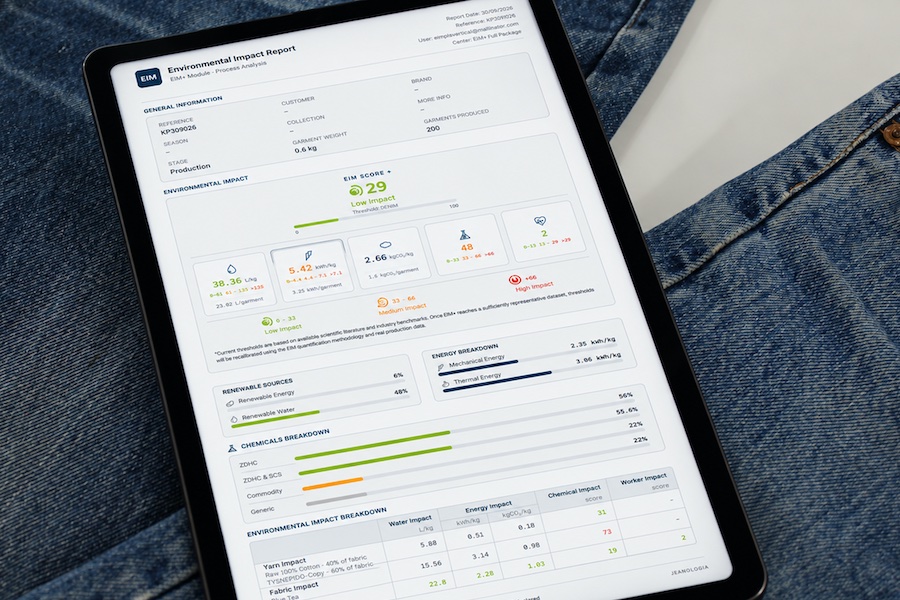
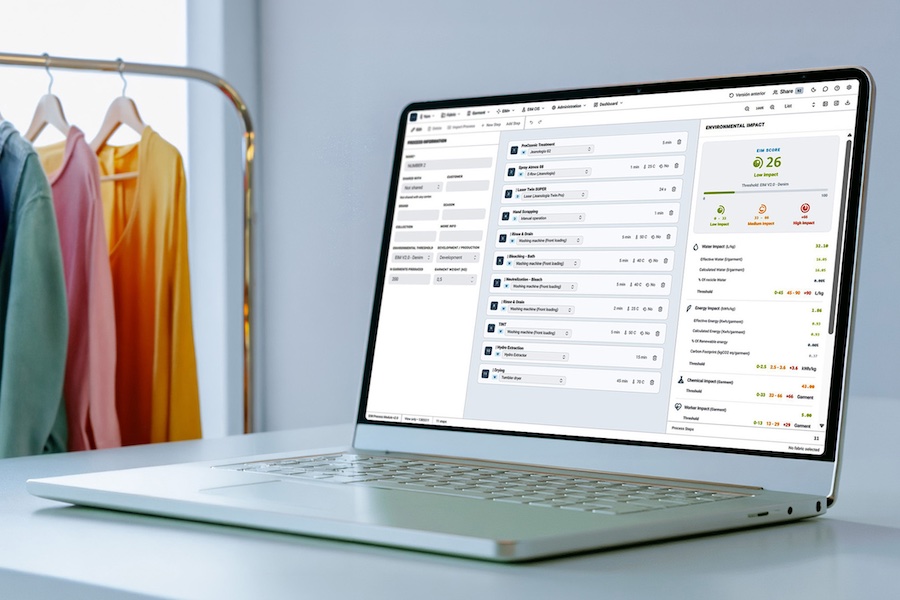
Jeanologia Sustainability Report highlights environmental impact of textile technologies

Jeanologia has published its Sustainability Report 2025, reporting a 13.64% reduction in its own carbon footprint and quantifying the environmental impact associated with the use of its technologies across the global textile industry. According to the company’s calculations, their use avoided the pollution of 21.52 million m³ of water and emissions of approximately 103,530 tonnes of CO₂ compared with conventional textile finishing processes.

#Sustainability

Global Standards announce launch of a new textile processing standard

The 14th September 2026 marks the public launch of the Global Responsible Textile Standard (GRTS), a new standard for the processing of textiles made from fibres certified to third-party standards recognised by GRTS and covering a broad range of plant, animal, synthetic, man-made cellulosic and recycled fibres.

Latest News

#Recycling / Circular Economy

Moving Advanced Recycling from Innovation to Implementation

The Advanced Recycling Conference 2026 explores technologies, markets, financing and scale-up of innovative recycling solutions for waste streams including mixed plastic waste, textiles and PVC. Europe’s chemical and materials sector faces growing pressure to close carbon loops, strengthen raw-material safety and resilience and meet increasingly ambitious EU recycling targets. Against this backdrop, the Advanced Recycling Conference (ARC) will bring together industry leaders, technology providers, researchers, innovators and policy-makers on 17–18 November 2026 in Cologne, Germany.

#Associations

German textile industry and retailers form alliance to shape textile EPR system

Germany’s textile and fashion industry and retail sector have joined forces to establish the “Alliance for Textile Circularity” (Allianz für textile Kreisläufe). Initiated by the German Textile and Fashion Industry Association (Gesamtverband textil+mode) and the German Retail Federation (HDE), the alliance aims to contribute industry expertise to the development of Germany’s future Extended Producer Responsibility (EPR) system for textiles and footwear.

#Functional Fabrics

PERFORMANCE DAYS introduces Digital Design Journey with CLO and VIZOO

PERFORMANCE DAYS will introduce a new Digital Design Journey at its upcoming edition in Munich, connecting physical fabric sourcing with 3D product development. Supported by CLO and VIZOO, the installation will demonstrate how real performance fabrics can be digitized and incorporated into virtual garment development workflows.

#Nonwovens

INDA hires Ben Muller as executive director

INDA, the Association of the Nonwoven Fabrics Industry, announced that Ben Muller has joined the association as executive director. Muller brings more than 20 years of leadership experience spanning nonprofit organizations, corporations and trade associations.

TOP