[pageLogInLogOut]

#Sustainability

OEKO-TEX® rebranding

In its 30th year of dedication to safer textiles and leather, OEKO-TEX® has created a new brand identity. The global certifier of textile and leather products and production worked with branding agency Schwitzke ID to build the clear and unified OEKO-TEX® World.

OEKO-TEX® aims to create trust within the textile and leather industry and for their customers. The new brand identity will not change that. "Our values remain," says OEKO-TEX® General Secretary Georg Dieners. "In fact, they inspired our brand refresh."

Based on scientific principles, OEKO-TEX® has been promoting transparency in the textile and leather industry for three decades. Transparency is essential for enabling companies and consumers to make responsible decisions. “The new branding reflects the active, solution-oriented and positive approach. With our independent test institutes, we certify to clear, globally uniform criteria, which we communicate openly," says Inga Bleyer, Global Head of Marketing. "Our new look is clear, consistent and transparent."

The most visible change is the new OEKO-TEX® logo, based on a geometric square and an organic circle, which reflect the scientific approach of OEKO-TEX® and the nature it aims to protect. The logo typo is supported by a stylized, organic form reminiscent of natural structures, such as leaves, drops or textile loops. The reduced colour palette highlights the umbrella brand with a new OEKO-TEX® Green plus black and white. A related colour palette supplements communication about OEKO-TEX® products. The product logos are subordinate to the umbrella brand, creating a unified hierarchy. This will make communication easier for OEKO-TEX®-certified companies and foster end consumer recognition.


The lengthy transition period through 2024 considers sustainability. Customers should start the conversion now and may use any existing labels through the end of 2024. OEKO-TEX® customers have access to a label editor with new, more flexible layouts and a labelling guide on the OEKO-TEX® website.

© 2022 OEKO-TEX®
© 2022 OEKO-TEX®


https://www.oeko-tex.com/fileadmin/user_upload/OEKO-TEX_Labelling_Guide.pdf


More News from Oeko-Tex® Association

#Sustainability

OEKO-TEX® chooses TextileGenesis to advance digital traceability for organic cotton

OEKO-TEX® today announced a full collaboration with TextileGenesis, a Lectra company, to digitally trace and authenticate organic cotton, strengthening fraud prevention across the supply chain. This announcement follows a successful pilot and brings together OEKO-TEX®’s certification expertise and closed testing system with TextileGenesis’ digital traceability platform to deliver a secure, end-to-end solution for managing certified organic cotton flows.

#Sustainability

OEKO-TEX® - New regulations 2025

Fostering trust within the textile and leather industry remains the mission of OEKO-TEX®. Since trust relies on consistently high standards, the OEKO-TEX® Association has released the updated testing criteria, limit values and guidelines for its certifications, based on the latest scientific research and legal developments.

#Sustainability

OEKO-TEX® Annual Report 2023/2024 mentions 50,000+ valid certifications

The international OEKO-TEX® association has continued to demonstrate positive business growth, highlighting the critical role of close collaboration and shared commitment in accelerating sustainable change. More than 35,000 textile and leather companies depend on the certificates and product labels issued by OEKO-TEX®’s independent testing institutes. OEKO-TEX® issued more than 50,000 certificates and labels between July 1, 2023, and June 30, 2024 – an increase of 22% over the previous financial year.

More News on Sustainability

#Research & Development

180 years of TESTEX: From Zurich silk testing to global certification

For 180 years, TESTEX has developed alongside the textile industry while maintaining the same underlying purpose: creating trust through independent and reliable measurement. Founded in Zurich in 1846 as the Zurich Silk Conditioning Institute, TESTEX has grown from a local institution serving the silk trade into an international Swiss testing and certification institute for textiles and leather.

#Sustainability

Cascale launches member-led process to shape 2030 strategy

Cascale has launched a member-led process to define the industry alliance’s strategic direction for the next decade. At the Cascale Annual Meeting 2026 in Athens, CEO Ying McGuire announced that members will contribute to an industry system map that will inform Cascale’s 10-year vision, its 2030 strategy and priorities for 2027. The new strategy is scheduled to be finalized in December.

#Sustainability

Jeanologia Sustainability Report highlights environmental impact of textile technologies

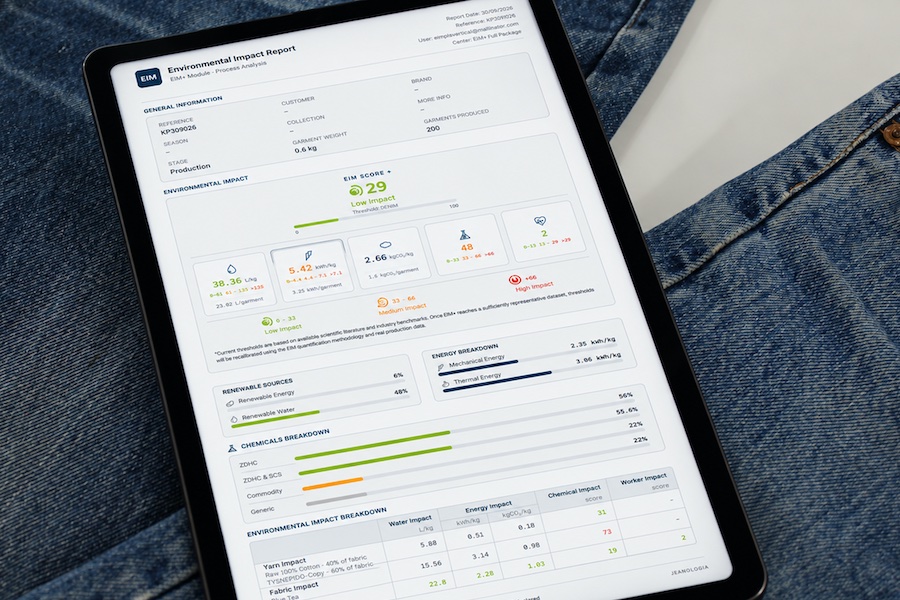
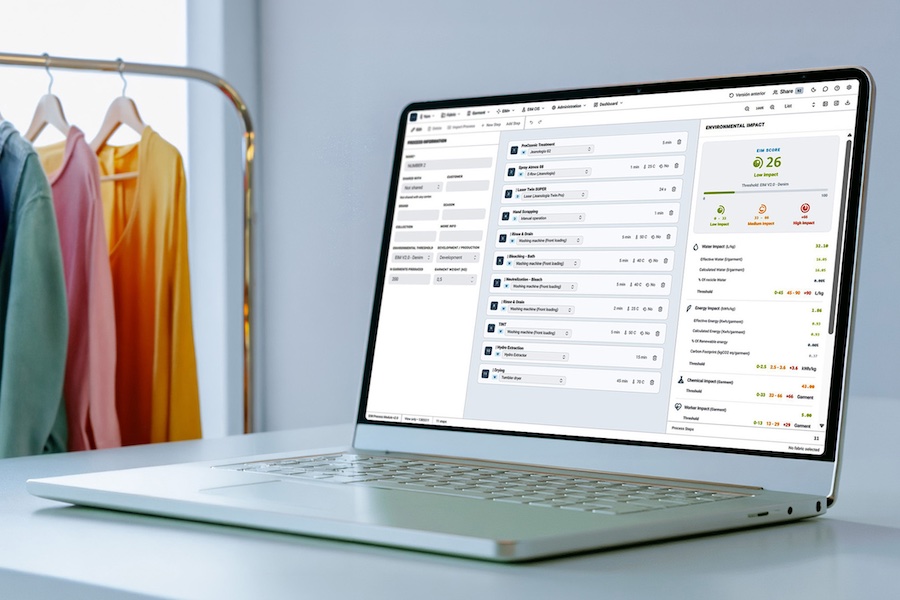
Jeanologia has published its Sustainability Report 2025, reporting a 13.64% reduction in its own carbon footprint and quantifying the environmental impact associated with the use of its technologies across the global textile industry. According to the company’s calculations, their use avoided the pollution of 21.52 million m³ of water and emissions of approximately 103,530 tonnes of CO₂ compared with conventional textile finishing processes.

#Sustainability

Global Standards announce launch of a new textile processing standard

The 14th September 2026 marks the public launch of the Global Responsible Textile Standard (GRTS), a new standard for the processing of textiles made from fibres certified to third-party standards recognised by GRTS and covering a broad range of plant, animal, synthetic, man-made cellulosic and recycled fibres.

Latest News

#Recycling / Circular Economy

Moving Advanced Recycling from Innovation to Implementation

The Advanced Recycling Conference 2026 explores technologies, markets, financing and scale-up of innovative recycling solutions for waste streams including mixed plastic waste, textiles and PVC. Europe’s chemical and materials sector faces growing pressure to close carbon loops, strengthen raw-material safety and resilience and meet increasingly ambitious EU recycling targets. Against this backdrop, the Advanced Recycling Conference (ARC) will bring together industry leaders, technology providers, researchers, innovators and policy-makers on 17–18 November 2026 in Cologne, Germany.

#Associations

German textile industry and retailers form alliance to shape textile EPR system

Germany’s textile and fashion industry and retail sector have joined forces to establish the “Alliance for Textile Circularity” (Allianz für textile Kreisläufe). Initiated by the German Textile and Fashion Industry Association (Gesamtverband textil+mode) and the German Retail Federation (HDE), the alliance aims to contribute industry expertise to the development of Germany’s future Extended Producer Responsibility (EPR) system for textiles and footwear.

#Functional Fabrics

PERFORMANCE DAYS introduces Digital Design Journey with CLO and VIZOO

PERFORMANCE DAYS will introduce a new Digital Design Journey at its upcoming edition in Munich, connecting physical fabric sourcing with 3D product development. Supported by CLO and VIZOO, the installation will demonstrate how real performance fabrics can be digitized and incorporated into virtual garment development workflows.

#Nonwovens

INDA hires Ben Muller as executive director

INDA, the Association of the Nonwoven Fabrics Industry, announced that Ben Muller has joined the association as executive director. Muller brings more than 20 years of leadership experience spanning nonprofit organizations, corporations and trade associations.

TOP