[pageLogInLogOut]

#Sustainability

Lenzing also switches to green electricity at its Chinese site
© 2022 Lenzing
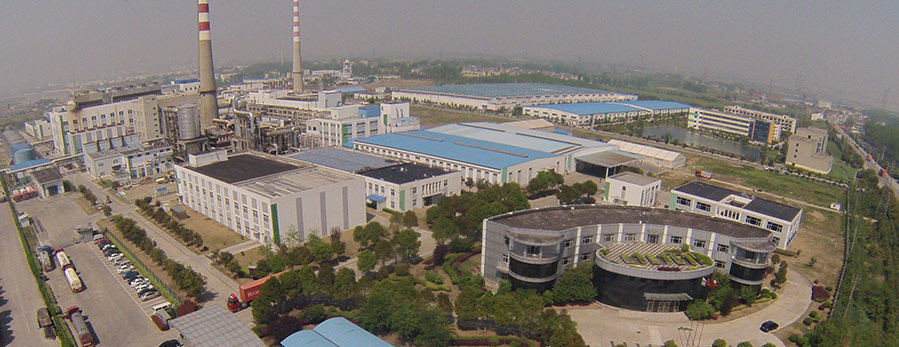
The Lenzing Group, a world-leading provider of wood-based specialty fibers, is continuing to expand its global clean electricity portfolio by gradually transitioning to green energy at its production site in Nanjing. This will enable its Chinese subsidiary Lenzing Nanjing Fibers to use electricity derived solely from renewable sources from 2023 onwards and reduce the site’s carbon emissions by 100,000 tonnes annually. Lenzing only recently announced the transition to green electricity at its Indonesian production facility.
  • Gradual transition to green electricity will significantly reduce annual carbon emissions
  • Milestone in the transformation of production capacities to TENCEL™ branded modal fibers

In 2019, Lenzing became the first fiber producer to set a target of halving its carbon emissions by 2030 and becoming climate neutral by 2050. This carbon reduction target has been recognized by the Science Based Targets Initiative. In Nanjing, Lenzing is currently investing in cutting its carbon emissions and converting a standard viscose production line to 35,000 tonnes of TENCEL™ branded modal fibers. Thanks to this move, the Chinese site will exclusively produce eco-friendly specialty fibers.

“Demand for our wood-based, biodegradable specialty fibers is constantly rising. We see enormous growth potential, especially in Asia. Thanks to our investments in China and other Lenzing sites around the world, we will be better positioned to meet this growing demand in future. At the same time, we are continuing to make considerable progress towards achieving a carbon-free future and becoming a champion of circularity,” comments Robert van de Kerkhof, Chief Commercial Officer for Fiber at Lenzing.


Boosting growth in specialty fibers

Man-made climate change is one of the most pressing problems of our time. The fashion industry has an extremely negative impact on the environment due to its fast fashion business model and the growing consumption of fossil resources in textile production. Lenzing’s sustainably produced specialty fibers under the TENCEL™ brand help its customers, especially brands and retailers, to reduce their global footprint immensely.

Specialty fibers are Lenzing’s key strength. The company aims to generate more than 75 percent of its fiber revenue from the wood-based, biodegradable specialty fibers business under the TENCEL™, LENZING™, ECOVERO™ and VEOCEL™ brands by 2024. With the launch of the lyocell plant in Thailand in March 2022 and the investments in existing production sites in China and Indonesia, the share of specialty fibers in Lenzing’s fiber revenue is set to exceed the 75 percent target by a significant margin as early as 2023.

More News from Lenzing

#Man-Made Fibers

Lenzing advances its transformation: Higher EBITDA, stronger free cash flow and more than EUR 200 million in cost savings

The business performance of the Lenzing Group in 2025 was affected particularly in the second half of the year by external factors such as international tariff measures, subdued demand and declining market prices. As a result, revenue decreased slightly by 2.3 percent to EUR 2.6 billion, primarily due to lower fiber sales volumes and lower prices for fibers and pulp, which were further negatively impacted by currency developments. Nevertheless, thanks to the comprehensive Performance Program, Lenzing was able to improve its operating performance and key financial indicators compared with the previous year.

#Man-Made Fibers

“Lead Transformation – Generate Impact”: Lenzing presents its 2025 Annual and Sustainability Report

The Lenzing Group has published its 2025 Annual and Sustainability Report, entitled LEAD TRANSFORMATION – GENERATE IMPACT. The report shows how Lenzing is actively shaping change in the industry and making a lasting impact: economically, ecologically, and socially. Lenzing is consistently focused on the future: with targeted investments in premiumization, excellence, innovation, and sustainability, the company is strengthening its position as a leading provider of sustainable, cellulose-based premium fibers. The combined report is available in digital format.

#Raw Materials

Lenzing Group positions bio‑based materials as a strategic asset for Europe’s economic security

The Lenzing Group, a leading supplier of regenerated cellulose fibers for the textile and nonwovens industries, hosted a high‑level roundtable in Brussels to discuss how bio‑based materials can strengthen Europe’s economic security and support the shift toward a fossil‑free future. Organized in cooperation with Euractiv, the event brought together representatives of the European Commission, the UK Mission to the EU, academia, civil society, and industry.

#Man-Made Fibers

Lenzing AG to become majority owner of TreeToTextile AB and accelerates industrialization of new fibers

The Lenzing Group is taking another strategic milestone by acquiring a controlling majority in the Swedish innovation company TreeToTextile AB. This step strengthens Lenzing’s position as a leading provider of sustainable, wood‑based specialty fibers and expands its innovation pipeline with a highly scalable, patent‑protected technology platform. The transaction is executed through the issuance of new shares.

More News on Sustainability

#Sustainability

Experts publish APAC policy priorities

Cascale today announced the publication of its APAC Policy Priorities Paper, developed by the Asia-Pacific (APAC) Policy Member Expert Team (MET) to identify key regional sustainability challenges and provide practical, aligned recommendations for policymakers and industry stakeholders across Asia-Pacific.

#Sustainability

GOTS version 8.0 released: advanced supply chain accountability, from fibre to finished product

Global Standard is pleased to announce the release of GOTS Version 8.0, the latest update to the world's leading processing standard for organic textiles. The updated Standard strengthens requirements for air emissions and waste management, as well as criteria for product safety. It introduces new provisions on circularity, microfibre management and updates in residue testing. Version 8.0 also elevates due diligence obligations and formalises governance requirements, including ESG disclosure, anti-corruption policies and conflict-of-interest safeguards, to support credible, responsible business conduct.

#Sustainability

The nova-Institute establishes new Renewable Feedstock Department to lay the groundwork for industrial defossilisation

The transition from fossil-based to renewable carbon – sourced from biomass, CO₂ utilisation and recycling – is the cornerstone of a climate-neutral chemical industry. The nova-Institute’s new department is dedicated to providing the essential data, analyses and strategic roadmaps required to secure a reliable future feedstock supply and make this transition a commercial and ecological reality.

#Sustainability

Textile Exchange unveils commitment-based pathway for members to accelerate responsible raw material production

Textile Exchange has unveiled further details about its new membership structure, designed to guide the fashion, textile, and apparel industry in a collective course of action toward preferred production systems for raw materials and fibers.

Latest News

#Europe

Commission presents proposal for EU Inc. - unlocking the full potential of the Single Market for Europe's entrepreneurs

Today, the European Commission presented its proposal for EU Inc., a new single set of corporate rules, building the cornerstone and starting point for the EU's 28th regime. EU Inc. is an optional, digital-by-default European corporate framework. It will make it easier for businesses to start, operate and grow across the EU – incentivising them to stay in Europe, and encourage those who once looked elsewhere to return.

#Man-Made Fibers

OnceMore® from Södra brings end-to-end traceability for circular Man-made Cellulosic Fibers (MMCF) using TextileGenesis

OnceMore® from Södra, the world’s first large-scale process for recycling blended fabrics into high‐quality dissolving pulp, will begin using TextileGenesis, a Lectra company, to strengthen traceability from raw material to retail across the value chain. OnceMore® produces dissolving pulp made from blended textile waste and wood sourced from responsibly managed Swedish forests. By integrating TextileGenesis, OnceMore® supports the growing need for verified data and secure, transparent tracking throughout increasingly complex supply chain.

#Spinning

Temco launches a new DTY all-in-one solution

Temco introduces the DTY All-in-One Solution – a fully harmonized set of components engineered to give customers a highly stable, low maintenance and reproducible process environment. The solution reduces interruptions, extends component lifetimes and supports consistent yarn quality across all machine positions. All-in-One Solution – a fully harmonized set of components engineered to provide maintenance and reproducible process environment.

#Knitting & Hosiery

SHIMA SEIKI announces partnership with CLO Virtual Fashion

Leading computerized flat knitting innovator SHIMA SEIKI MFG., LTD. of Wakayama, Japan is partnering with digital garment solutions provider CLO Virtual Fashion of Seoul, South Korea for the integration of technology in garment design and simulation.

TOP