[pageLogInLogOut]

#Sustainability

BASF and Sulzer Chemtech sign Memorandum of Understanding to collaborate in sustainable technologies

© 2022 BASF
BASF and Sulzer Chemtech (GTC Technology) have signed a Memorandum of Understanding (MoU) with the goal of advancing technologies for renewable fuels and chemically recycled plastics that will further expand the partners’ portfolio of sustainable solutions. The companies agreed to enter a strategic partnership to reduce the carbon intensity of renewable diesel and aviation fuel.

They will also drive the development of innovative, cost-effective chemical processing solutions to improve the conversion of plastic waste into new plastics. The collaboration combines complementary areas of expertise, integrating Sulzer Chemtech’s capabilities in licensed processing technologies and mass transfer equipment with BASF’s cutting-edge high-performance adsorbents and catalysts.

Sulzer Chemtech, an established licensor for process technologies for renewable fuels and chemical recycling of plastics, is leading efforts to harness resources that can help global producers achieve their net-zero ambitions. BASF Process Catalysts is driving multiple initiatives aimed at turning plastic waste into a secondary raw material, for example with its newly developed PuriCycle® portfolio, as well as providing adsorbent and catalytic materials to produce clean and renewable fuels.

“Global plastic pollution and mobility are challenges that we can help to solve by joining forces with partners”, said Detlef Ruff, Senior Vice President, Process Catalysts at BASF. “This is why we at BASF are involved in key strategic collaborations aimed at protecting our planet's resources and transforming the way we do business. We are excited to work with Sulzer Chemtech and use our combined strengths to address plastic pollution and drive the adoption of more sustainable fuels.”


Torsten Wintergerste, President at Sulzer Chemtech, concludes: “Our process technology development team is continuously looking at new ways to support more sustainable, circular practices. The MoU with BASF allows us to broaden the scope of our portfolio and will lead to improved value offerings in both renewable fuels and the plastics recycling value chain. We look forward to working together to deliver advanced technologies that help our customers accelerate their path to net zero carbon emissions.”

More News from BASF Aktiengesellschaft
Performance Chemicals for Textiles Europe

#Textile chemistry

A flagship for chemical production: BASF inaugurates world-scale Verbund site in China

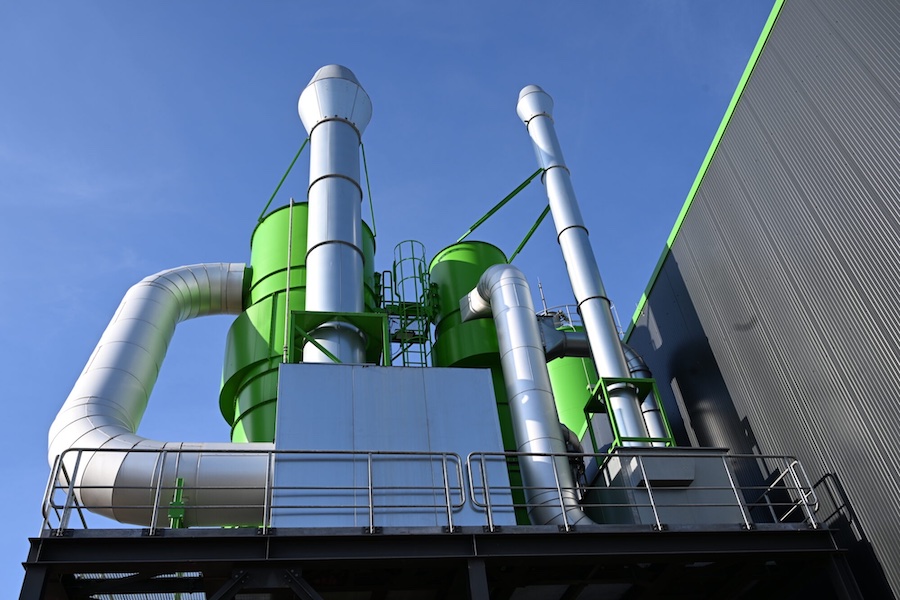
BASF today (March 26, 2026) celebrated the official inauguration of its newly built, world-scale Verbund site in Zhanjiang, Guangdong Province in southern China. Covering an area of around four square kilometers, it is more than a major BASF project in the chemical growth market of China. “Zhanjiang shows what the future of chemistry looks like: efficient, digital and sustainable by design. The site showcases a smart integrated Verbund structure on an industrial scale,” said Dr. Markus Kamieth, CEO of BASF, at the ceremony attended by representatives from government, customers, business partners and employees.

#Recycling / Circular Economy

trinamiX with new management

BASF is examining strategic options for its subsidiary trinamiX GmbH. trinamiX specializes in biometric imaging and mobile material analysis. These activities are not part of BASF’s core business, on which the company is focusing as part of the implementation of its new strategy.

#Research & Development

How innovations drive BASF’s success

“Innovation has always been part of BASF’s DNA. Especially in these volatile times, it is crucial to leverage our innovative strength to develop competitive solutions that differentiate us as a company in our markets and give us a competitive edge,” said Dr. Stephan Kothrade, Member of the Board of Executive Directors of BASF and Chief Technology Officer, at the company’s Research Press Briefing held today. To achieve this, BASF implemented its “Winning Ways” strategy about a year ago with the clear goal of becoming the preferred chemical company to enable its customers’ green transformation.

#Nonwovens

Turning diaper waste into new value: BASF, Essity and TU Wien pioneer circular solutions

BASF, one of the world’s leading chemical companies and manufacturer of superabsorbent polymers (SAP), and Essity, a global leading hygiene and health company, joined forces together with the Technical University of Wien to revolutionize recycling of absorbent hygiene products (AHP).

More News on Sustainability

#Sustainability

Practical toolkit to drive coordinated climate action launched

An open-access workshop toolkit enables brands, suppliers, policymakers and investors across the textile industry to apply the System Map in their own work, identifying leverage points to halve emissions and enable a just transition.

#Raw Materials

Textile Exchange publishes cotton Life Cycle Assessment study to strengthen impact data

Textile Exchange has published the first in a series of seven Life Cycle Assessment (LCA) studies designed to improve the quality and robustness of environmental impact data for raw material production across the fashion, textile, and apparel industry. The first LCA study focuses on cotton and addresses critical data gaps and methodology variability through new high-quality data across key producing countries. The study includes organic, regenerative, recycled, and country averages for conventional cotton production systems, providing a clearer picture of the associated environmental impact.

#Sustainability

Experts publish APAC policy priorities

Cascale today announced the publication of its APAC Policy Priorities Paper, developed by the Asia-Pacific (APAC) Policy Member Expert Team (MET) to identify key regional sustainability challenges and provide practical, aligned recommendations for policymakers and industry stakeholders across Asia-Pacific.

#Sustainability

GOTS version 8.0 released: advanced supply chain accountability, from fibre to finished product

Global Standard is pleased to announce the release of GOTS Version 8.0, the latest update to the world's leading processing standard for organic textiles. The updated Standard strengthens requirements for air emissions and waste management, as well as criteria for product safety. It introduces new provisions on circularity, microfibre management and updates in residue testing. Version 8.0 also elevates due diligence obligations and formalises governance requirements, including ESG disclosure, anti-corruption policies and conflict-of-interest safeguards, to support credible, responsible business conduct.

Latest News

#Research & Development

Textile cascade filter for removing microplastics from wastewater

Microplastics are now found almost everywhere, even in remote regions of Antarctica. They enter the human body through the food chain. Studies indicate that microplastics may have negative effects on the human health.

#Textile processing

Jeanologia showcases the future of product development

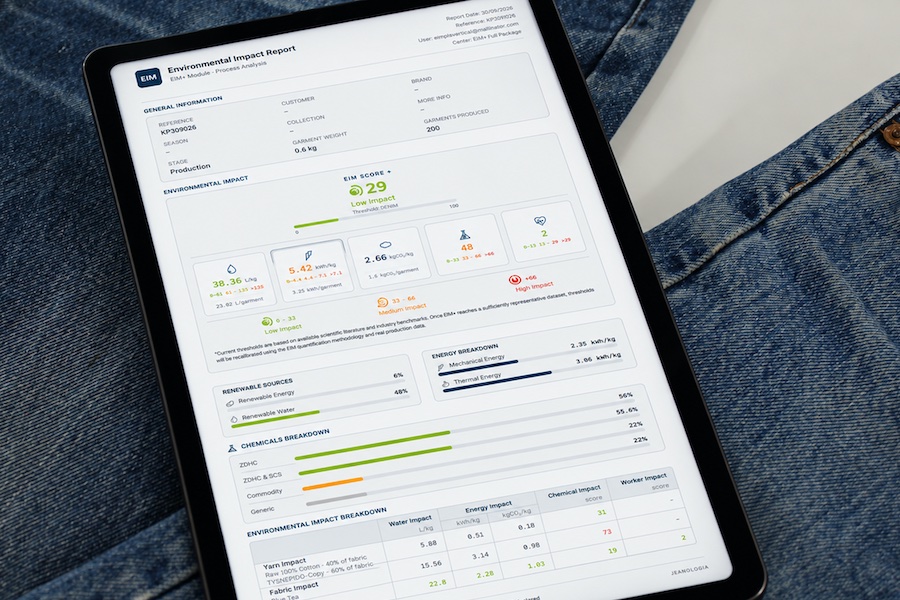
Jeanologia is showcasing how software is transforming product development in the fashion industry at PI Apparel Europe: The Fashion Technology Show, taking place on March 30–31 in London.

#Techtextil 2026

Groz-Beckert showcases cross-segment innovations for technical textiles in Frankfurt

From April 21 to 24, 2026, Groz-Beckert will present its latest innovations and solutions across the product areas of knitting, weaving, nonwovens and sewing at Techtextil 2026 in Frankfurt (Hall 12, Booth B90).

#Techtextil 2026

VANDEWIELE Group at Techtextil 2026 – Textile innovations together

The VANDEWIELEGroup will showcase its latest technologies for technical textiles at Techtextil 2026 in Frankfurt from April 21–24 (Hall 12.0, Stand C21). As a global leader in textile machinery, the group brings together specialised brands to support the evolving demands of high-performance textile applications. Visitors will discover solutions in laboratory testing, yarn joining, yarn feeding and thread tension monitoring, designed to create measurable value across the textile value chain.

TOP