[pageLogInLogOut]

#Sustainability

Discover bio circular Fibre shaping sustainable living with Beaulieu Fibres International at Techtextil 22

Beaulieu Fibres International, the largest and most differentiated European staple fibre producer, turns the spotlight on future-focused solutions for nonwovens & engineered fabrics at Techtextil 22, this June 21st – 24th (Booth C43). A key priority is innovation in polyolefin fibres and bicomponent polyester/polyolefin fibres, to advance sustainable design, end-of-life recyclability, and resource and carbon footprint reduction for industrial and hygiene applications.
  • Visit Booth C43 for a complete fibre portfolio for geotextiles, hygiene & wipes, floor coverings, automotive, upholstery, filtration, composites and construction
  • Discover our new Bio Circular Fibre
  • Increase nonwoven & engineered fabric performance with new fibres that reduce carbon footprints & support design for recycling
  • Partner with our dedicated R&D team to explore new possibilities for collaboration using BFI’s expertise, pilot line and equipment

“We offer fibres that build futures: we are proud to support customers with our complete product portfolio and versatility in finding solutions to shape the future developments of our world,” comments Maria Teresa Tomaselli, General Manager, Beaulieu Fibres International.

Visit Booth C43 to discover our new sustainability roadmap - Route 2030 which outlines how we are targeting the reduction of our environmental footprint to zero, taking care of our people and those around us, and doing business in a transparent, ethical way. Sustainability is key to Beaulieu Fibre International’s long-term strategy, and the company is heavily focused on defining its green portfolio to support evolution in diverse market applications and to work towards a circular economy with the whole supply chain.

Target reduction in fossil carbon

Beaulieu Fibres International will offer ISCC Plus (International Sustainability and Carbon Certification Plus) certified bio circular MONO-PP and BICO PP/PE fibres in 1,3-8,9 dtex, available with all the main available finish classes. These drop-in solutions, with no loss in quality, will support customers reduce reliance on virgin fossil carbon in their nonwoven and engineered fibre applications, contributing to the transition towards a circular economy.

“The ISCC Plus Certification Program enables traceable supply chains for mass-balanced solutions of sustainable raw materials. Our first certified production site is Terni, Italy, replacing fossil resources with bio-circular ones and the technology will be extended to the company’s other fibre division plants as a path forward to becoming carbon neutral by 2030,” added Tomaselli.

Achieve material savings

For customers in industrial segments like geotextiles, high-tenacity HT8 staple fibres enable customers to achieve nonwovens for construction projects with high mechanical performance but with reduced weight. The durability of the fibres means that customers can use less raw material for a longer service lifetime, supporting more sustainable design in addition to resource reduction.


For hygiene nonwovens, the Meralux fibres provide significant sustainable design advantages. Meralux fibres deliver around 55% savings in raw materials, with equivalent carbon emission savings. These emission savings are thanks to weight reduction in nonwovens with the same coverage level.

With today’s rush towards greener mobility, the automotive industry is under continuous pressure to increase performance and reduce emissions. Beaulieu Fibres International’s PP fibres for thermoplastic lightweight composites offer the most optimal cost-to-performance ratio in needle punched, compression-moulded composite materials: they improve mechanical, thermal and functional properties of the composite while reducing weight, ultimately reducing fuel consumption on traditional vehicles or increasing autonomy for e-vehicles.

Target more eco-friendly product design

Design for recycling

Discover UltraBond innovative bonding staple fibres that replace the need for chemical binders. They open up a path to create 100% polypropylene (PP) needlepunched fabrics which meet the same performance requirements as traditional constructions, while reducing the end-of-life environmental impact. The 100% polyolefin-based needlepunched fabrics are fully recyclable, reducing waste generation and creating high value PP recycled products as new materials. Furthermore, the sustainable fabrics are produced with an improved Total Cost of Ownership and with a significant ecological footprint reduction.

Focus on improving health and comfort by improving efficiency in the filtration industry

Beaulieu Fibres International continues to support and develop the fast growing air and liquid filtration industry in rolling out its full range of MONO and BICO fine-medium count fibres, compliant with FDA and European food contact regulations. In parallel, Beaulieu is investing a lot of R&D efforts in promoting and improving PP fibres in the field of tribo-electric charged air filter media. Our R&D team is ready to support the industry in further pushing the limits of efficiency, improving quality and comfort of daily life.

More News from Beaulieu International Group

#Man-Made Fibers

Alujain Corporation and Beaulieu International Group announce strategic Joint Venture to locally produce synthetic fibres and non-wovens in Saudi Arabia

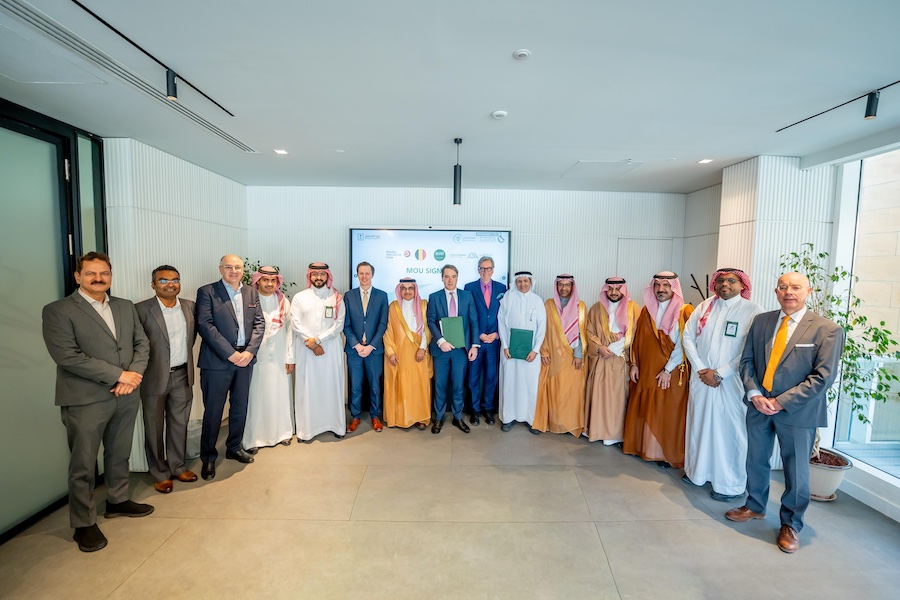
Alujain Corporation and Beaulieu International Group are pleased to announce the signing of a Memorandum of Understanding for an envisaged strategic joint venture in the Kingdom of Saudi Arabia. This represents a significant milestone in the Kingdom of Saudi Arabia’s industrial development agenda. The partnership, subject to approval by authorities, brings together Alujain Corporation’s established regional manufacturing platform with state-of-the-art polymers and Beaulieu’s globally recognized expertise in synthetic fibres and non-wovens.

#Man-Made Fibers

Beaulieu International Group announces acquisition of fibre company

Beaulieu International Group (B.I.G.) today announces it has signed a share purchase agreement to acquire all shares of IFG Asota GMBH, an Austria-based fibre company and a key player in the global synthetic staple fibres market. This strategic acquisition strengthens Beaulieu’s Fibres Division (BFI) and marks an important step in its ambition to become the world’s most trusted partner for sustainable nonwoven solutions.

#Yarns

B.I.G. Yarns achieves EcoVadis Platinum Rating, ranking among top 1% of companies worldwide

B.I.G. Yarns, the carpet yarn brand of B.I.G. and a leading manufacturer of polyamide (PA), polypropylene (PP) and polyester (PET) yarns for contract, automotive, and high-end residential applications, has been awarded the EcoVadis Platinum Medal, placing the company among the top 1% of more than 130.000 companies assessed globally.

#Home Textiles

Beaulieu International Group announces the sale of its upholstery business to GH Private Equity

Beaulieu International Group (B.I.G.) has signed a Share Purchase Agreement with GH Private Equity to sell all shares of its upholstery activities, known under the brand name Tessutica. The closing was officially finalized on Thursday 27 November 2025.

More News on Sustainability

#Sustainability

Closing the Footwear Loop reveals challenges and opportunities for circular footwear

The footwear industry faces one of the most complex circularity challenges in the fashion sector. A new Phase 1 report from the Fashion for Good initiative Closing the Footwear Loop, developed together with Circle Economy, provides new insights into the composition, condition and recycling potential of post-consumer footwear waste.

#Man-Made Fibers

The updated poster on biodegradable Polymers in various environments has been released

As part of the PerPlacsBio project, nova-Institute has updated its popular poster on the biodegradability of polymers in different environments. The updated version reflects current standards, certifications and the latest scientific findings. The poster can be used to assess biodegradable alternatives for use in agriculture and forestry, and it is now available in German for the first time.

#Sustainability

A new standard to combat plastic waste in forests

With DIN SPEC 35808 “Tree Shelter for Forestry Applications,” the testing and research service provider Hohenstein, in collaboration with Rottenburg University of Forestry, as well as forestry authorities and industry partners, has established a clear framework for bio-based and fully biodegradable tree shelters. The pre-standard defines requirements and practical testing methods designed to reduce plastic waste in forests and strengthen the long-term protection of soil and the environment.

#Denim

Denim moves towards sustainability

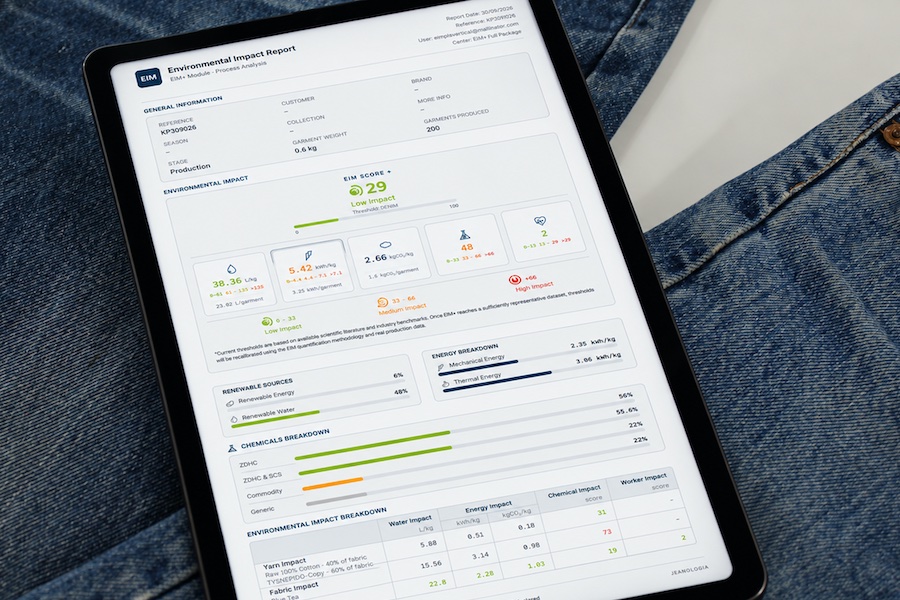
EIM (Environmental Impact Measurement), the global reference platform for measuring the environmental impact of garment finishing, presents the second edition of its annual report Denim Industry Progress & Insights 2025. The study analyses over 100,000 real denim finishing processes, providing an accurate and up-to-date view of the industry’s evolution towards more sustainable models.

Latest News

#Research & Development

“Production is a product”

From technical textiles and AI-driven robotics to the limitations of textile circularity: Professor Dr Thomas Gries looks back on more than two decades of development at ITA Aachen. In the interview, he explains why production technology remains a decisive success factor, discusses international collaborations and innovation ecosystems, and shares his views on the transformation of production landscapes and the challenges facing an increasingly regulated industry.

#Knitting & Hosiery

“We need to move away from the price trap and return to a value-driven mindset.”

With its new Textile Innovation Center, KARL MAYER is sending a strong signal for innovation, collaboration, and the future of textile applications. In this interview, Karl Josef Mayer discusses new opportunities in warp knitting, the processing of staple fibres, recycling, the changing role of machinery manufacturers, and why the textile industry must once again focus more strongly on the value of textiles. by Oliver Schmidt

#Associations

“Innovation, resilience and international experience remain the great strengths of the Swiss textile machinery industry”

Geopolitical uncertainty, growing competitive pressure from China, new free trade agreements and the shift towards a circular economy are currently reshaping the global textile industry. In this interview, Cornelia Buchwalder discusses the current mood within the Swiss textile machinery sector, the industry’s distinctive innovative strength, new market opportunities in India and Asia, and the technological trends that could shape the upcoming trade fair cycle leading up to ITMA 2027.

#Textile processing

YKK invests USD 150 million in new manufacturing facility in India

YKK Corporation has announced plans to construct a new manufacturing facility in India, reinforcing its long-term commitment to one of the world's fastest-growing textile and apparel production hubs. The new factory will be built at Origins by Mahindra in Chennai, Tamil Nadu, and will become the third manufacturing site of YKK India Private Limited. The facility is expected to be completed by February 2028 and represents an investment of approximately USD 150 million, covering land, buildings, machinery and equipment.

TOP