[pageLogInLogOut]

#Sustainability

Fashionsustain in Frankfurt delivers insights and inspiration for the industry transformation

© 2022 Messe Frankfurt
With its Frankfurt City Edition 2022, Neonyt’s Fashionsustain conference took place in hybrid form on 19 January: whether live from Frankfurt with limited participant numbers and in line with strict hygiene and safety regulations, or following the live stream, guests enjoyed inspiring insights, panel discussions and fashion deep dives on the status quo of the fashion and textiles sector. Participants included the Green Button, Fond Of, the German Design Council and Tchibo.

Under the motto ‘Change the set-up’, Fashionsustain – the international and multidisciplinary conference format of Neonyt, which took place on 19 January 2022 as part of Frankfurt Fashion Week – showed how the textile and fashion industry can face the ongoing transformation process head-on and prepare itself for future challenges. The spotlight was on the topics of consumer behaviour, due diligence obligations from a company perspective and sustainability at the point of sale.

“Just how agile we all need to be these days was more than apparent in the dynamic situation we faced during the preparations for this current edition of Fashionsustain,” says Bettina Bär, Show Director of Neonyt. “Constantly having to adapt to new circumstances will also be a key skill of our industry in the future. Inspiration as to how that can be achieved was provided at our international and multidisciplinary conference format by the speakers and their fascinating insights into their specialist subjects.”

Change the mindset – Changing consumption patterns

Starting the ball rolling at the hybrid City Edition at Danzig am Platz was neuroscientist Professor Maren Urner, with her keynote speech entitled Change the Mindset. The focus was on the attitude-behaviour gap and how we can overcome it: Prof. Urner advises having a positive mindset and quoted American psychotherapist Steve de Shazer: “Talking about problems creates problems. Talking about solutions creates solutions.”

In the subsequent deep dive with Karin Ziegler from Blutsgeschwister and Lutz Dietzold from the German Design Council, she reflected on why people act differently than they intend to and how our own attitude, and therefore the attitude of the entire industry, can reflect our behaviour even more in the future. In answer to the question of whether real change should come from the individual or the system, Prof. Urner said: “We need both: an individual change and a systemic one. But the systemic change can only succeed if we all make a start individually. Because, at the end of the day, the system is made up of us as people.”


Change responsibilities – Supply chains of the future

“Many companies are reporting that measures like the UN key principles are helping them to position themselves sustainably – when it comes to risk analysis and monitoring, for example,” said Christine Moser-Priewich from the Green Button in the certification’s own panel discussion on due diligence obligations from a company perspective with Axel Schröder from Tchibo GmbH and Hannes Weber from Fond Of. Axel Schröder added: “For us, the Green Button was a good learning journey to prepare for Germany’s upcoming Supply Chain Act.”

Change the system – Retail revolution

“Consumers who want to be sustainable don’t have it easy right now,” said Christian Salewski from research start-up Flip. “They are often unable to tell the difference between green marketing campaigns and honest intentions.” In his Insight Talk, he explained how Flip is supporting consumers to navigate their way around the often ambiguous sustainability market on their mission to ensure more transparency. As an example, he gave the audience a glimpse behind the scenes of Sneakerjagd, one of the industry’s most hotly discussed videos last year, in which Flip – together with NDR, Die Zeit and well-known celebrities – exposed the truth behind sneaker recycling and showed that they aren’t always recycled how the brands say they are. “From politicians and consumer protection groups, we have received the feedback that our research was an important boost to jump-starting the circular economy legislation.”

The Fashionsustain City Edition was rounded off with a panel discussion about sustainability at the point of sale. Tanja Kliewe-Meyer from Like a Bird, Marco Schütte from the EK Service Group and Frederik Gottschling from the Handelsverband Hessen, the trade association for the state of Hesse, discussed how the retail sector can contribute to raising awareness among consumers and what that could mean for the rejuvenation of city centres. “It is important,” according to Tanja Kliewe-Meyer, “to create worlds of experience that bring sustainability to the cities. The times of mono-stores that make every city centre look the same are over.”

Change the perspective – Online and offline

Participants were able to follow Neonyt’s international conference format both live in Frankfurt and digitally. Attending in person in Frankfurt were representatives from Condé Nast Germany, publishing house Deutscher Fachverlag, German newspaper FAZ, the Hohenstein Institute and the German Design Council. And the live stream was followed by international fashion institutes, company representatives from C&A, Closed, Gerry Weber and Givenchy/LVMH, as well as the editorial teams from German TV channel RTL and TextilWirtschaft magazine.
More News from Messe Frankfurt (HK) Ltd.

#Textiles & Apparel / Garment

Design, innovation and sustainability propel VIATT 2026’s expanding role in ASEAN textile sourcing

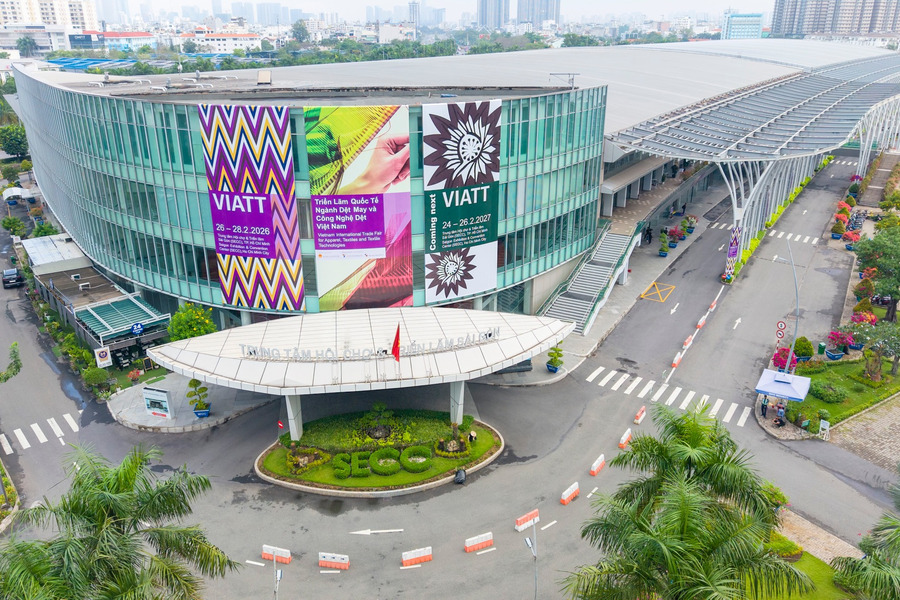
At its third edition, the Vietnam International Trade Fair for Apparel, Textiles, and Textile Technologies (VIATT) further reinforced its role as a key sourcing and business platform for ASEAN’s textile industry. The three-day fair welcomed over 17,000 visits from 54 countries and regions, and featured over 460 exhibitors from 21 countries and regions across 18,000 sqm. The 2026 edition was marked by the introduction of new international pavilions and zones, broadening the fair’s sourcing scope across new geographies and product categories. The fringe programme, headlined by the debut Trend Forum, further distinguished VIATT as the region’s most integrated textile trade platform – uniquely spanning the entire value chain.

#Home Textiles

Intertextile Shanghai Home Textiles – Spring Edition opens next week to spotlight smart textiles, sleep trends and sustainable sourcing

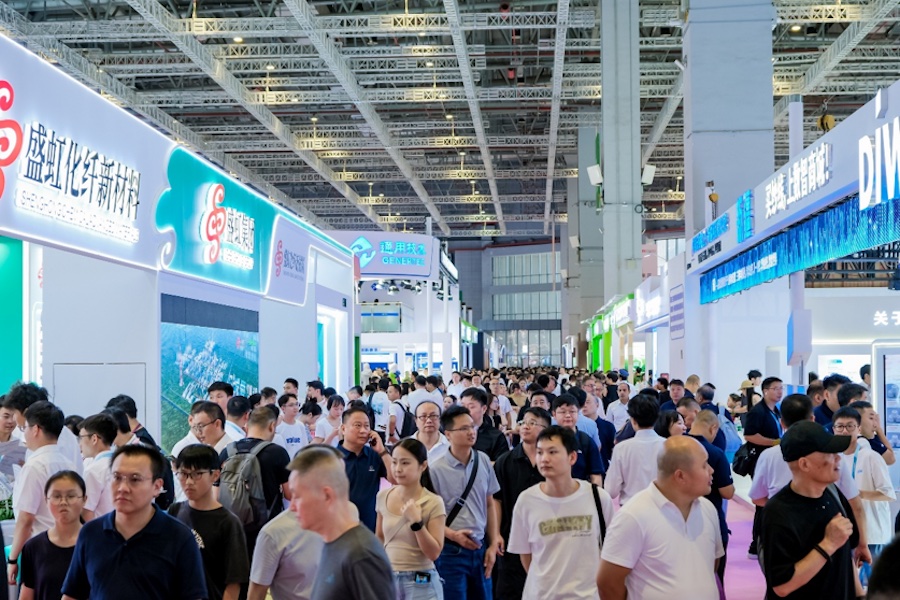
The home textiles industry is ready to gather in Shanghai next week as Intertextile Shanghai Home Textiles – Spring Edition 2026 prepares to open at the National Exhibition and Convention Center from 11 – 13 March. Bringing together more than 360 exhibitors from six countries and regions, the fair will showcase an extensive array of home textiles, including bedding, towelling, carpets, home textile technologies, textile design and more, serving as a forward‑thinking hub where design, sustainability and smart living converge.

#Home Textiles

Intertextile Shanghai Home Textiles returns in August as global sourcing hub and trend barometer for home textiles industry

Following the conclusion of Heimtextil last month, the flagship fair in Messe Frankfurt’s global home and contract textiles portfolio, Intertextile Shanghai Home Textiles – Autumn Edition will return 18 – 20 August 2026 at the National Exhibition and Convention Center (Shanghai). Building on the momentum generated in Frankfurt, the Shanghai fair will reinforce its position as the foremost home and contract textile platform in Asia – successfully bridging the gap between East and West, and connecting global product trends, supply-chain shifts, and buyer demand in one marketplace.

#Textiles & Apparel / Garment

VIATT 2026 to debut German Pavilion, strengthening European participation alongside key Asian textile hubs

Vietnam’s textile and garment sector continues to be a major contributor to the country’s economic growth, with export revenues expected to reach USD 46 billion in 2025, a 5.6% increase from 2024 . From 26 – 28 February, the Vietnam International Trade Fair for Apparel, Textiles and Textile Technologies (VIATT) is set to contribute to economic growth opportunities by accelerating digital transformation and green transition across the entire textile value chain. The upcoming edition will respond to the rising demand for advanced technologies and sustainable materials with the introduction of the German Pavilion, alongside strong exhibitor participation from key Asian sectors, as well as several high-profile fringe events.

More News on Sustainability

#Sustainability

GOTS version 8.0 released: advanced supply chain accountability, from fibre to finished product

Global Standard is pleased to announce the release of GOTS Version 8.0, the latest update to the world's leading processing standard for organic textiles. The updated Standard strengthens requirements for air emissions and waste management, as well as criteria for product safety. It introduces new provisions on circularity, microfibre management and updates in residue testing. Version 8.0 also elevates due diligence obligations and formalises governance requirements, including ESG disclosure, anti-corruption policies and conflict-of-interest safeguards, to support credible, responsible business conduct.

#Sustainability

The nova-Institute establishes new Renewable Feedstock Department to lay the groundwork for industrial defossilisation

The transition from fossil-based to renewable carbon – sourced from biomass, CO₂ utilisation and recycling – is the cornerstone of a climate-neutral chemical industry. The nova-Institute’s new department is dedicated to providing the essential data, analyses and strategic roadmaps required to secure a reliable future feedstock supply and make this transition a commercial and ecological reality.

#Sustainability

Textile Exchange unveils commitment-based pathway for members to accelerate responsible raw material production

Textile Exchange has unveiled further details about its new membership structure, designed to guide the fashion, textile, and apparel industry in a collective course of action toward preferred production systems for raw materials and fibers.

#Textile chemistry

Jeanologia urges industry to accelerate PP Spray phase-out following ZDHC Watchlist update

Potassium permanganate has officially entered the Chemical Watchlist of the ZDHC Foundation, signaling increased scrutiny and potential phase-out of one of the most hazardous chemicals still used in denim finishing. The inclusion confirms an industry shift that Jeanologia anticipated more than a decade ago.

Latest News

#Raw Materials

Lenzing Group positions bio‑based materials as a strategic asset for Europe’s economic security

The Lenzing Group, a leading supplier of regenerated cellulose fibers for the textile and nonwovens industries, hosted a high‑level roundtable in Brussels to discuss how bio‑based materials can strengthen Europe’s economic security and support the shift toward a fossil‑free future. Organized in cooperation with Euractiv, the event brought together representatives of the European Commission, the UK Mission to the EU, academia, civil society, and industry.

#Natural Fibers

Beyond Cotton: Natural Fibres in the Spotlight at the Bremen Cotton Conference - Branded by DNFI

Climate targets, fragile supply chains, and rising regulatory requirements are fundamentally changing the perspective of the textile industry - the focus is increasingly shifting toward the base material. Not only cotton, but natural fibres are gaining significant importance: they stand out not only because of their outstanding functional properties, but also because they make a valuable contribution to the bioeconomy and responsible product development.

#Textiles & Apparel / Garment

Coats to showcase innovative reinforcement and filler materials for leather goods and accessories at APLF 2026

Coats, a world-class Tier 2 manufacturer and trusted partner for the apparel and footwear industries, will be promoting four advanced materials from its ‘Lifestyle Solutions’ portfolio at APLF 2026 in Hong Kong in March. Each innovation has been specifically engineered to help luxury and premium brands elevate the craft, durability, sustainability and creative expression required in the manufacturing of handbags, purses, and other high-end designer accessories.

#Nonwovens

Sandler turns financial stability into a catalyst for shaping the future

The Sandler Group has presented its financial figures for the past fiscal year (01/01/2025-12/31/2025). Like previous years, the year 2025 was also marked by industry-wide structural challenges and geopolitical uncertainties. Turnover was virtually stable at EUR 321 million (2024: EUR 326 million). High energy costs continue to weigh heavily on profitability. The number of employees was 975 (2024: 980). The family-owned company, which was founded in 1879 and has been run by the fifth generation since August 2025, continues to invest millions in its Schwarzenbach site despite the high production costs in Germany. As part of the long-term corporate strategy, the management team is focusing on strict cost management, further development of the product portfolio, and greater efficiency in production and administrative processes. The company does not expect a market recovery in 2026 and 2027.

TOP