[pageLogInLogOut]

#Sustainability

NILIT® unveils “Making Nylon Sustainable,” the Company’s Corporate Sustainability Report

NILIT, the global leader in high-quality Nylon 6.6 for apparel, and owner of the SENSIL® sustainable brand, is proud to announce the publication of its sustainability report covering the period 2017-2020. The document, entitled “Making Nylon Sustainable,” details the company’s significant achievements to improve its environmental footprint as well as its plans to positively influence the textile and apparel industry to choose more sustainable products and use them in more responsible ways.

“Sustainability is a core value at NILIT,” says Ilan Melamed, General Manager. “We are dedicated to providing the most consumer-relevant, highest quality, and most sustainable premium Nylon 6.6 products to the apparel market. To attain this goal, we continually invest in operations and product development, leveraging our partnerships throughout the supply chain. ‘Making Nylon Sustainable’ captures our vision and our commitment to environmental and social responsibility, and we are very pleased to make this public statement.”

“Making Nylon Sustainable” shares NILIT’s accomplishments as well as the company’s ongoing plans to continuously improve the ecological and social influence of its operations and practices in the market and in the communities where the company operates. Through collaboration with brands, retailers, customers, employees, and vendors, NILIT has developed the largest portfolio of sustainable premium Nylon 6.6 products under its SENSIL® consumer brand. The SENSIL® portfolio includes performance products that directly address the apparel industry’s most pressing environmental issues, such as water and energy consumption, waste reduction, use of recycled inputs, and impact to ecosystems.

Also, NILIT has been applauded for its many sustainability achievements in its facilities around the world, especially its innovations in clean energy cogeneration that reduced CO2 by 40% and eliminated emissions of toxic gases.


In addition, the NILIT Total Product Sustainability program ensures that all NILIT products meet stringent criteria for responsible production. The company also introduced QR Codes in all SENSIL® hangtags. Produced with FSC paper and distributed on certified garments from brands worldwide, these hangtags guarantee authenticity and provide more information to consumers about the technologies and benefits of premium Nylon.

“Our industry’s journey toward sustainability relies on creativity, commitment, and partnership,” continues Melamed. “Our vision is to be the world’s most innovative and sustainable Nylon producer, creating solutions that transform businesses as well as lives. By publishing this report, we openly share this idea with all our stakeholders and invite our industry colleagues to join us in this crucial endeavor.”

Learn more about NILIT’s commitment to a more sustainable apparel industry by downloading “Making Nylon Sustainable” at:

http://www.nilit.com/sustainability/#sustainability-policy.



More News from TEXDATA International

#ITM 2026

ITM 2026: The new geography of textile production

New production hubs are emerging across North Africa and Central Asia, while Türkiye is accelerating its transformation toward higher-value, technology-driven and more sustainable textile manufacturing.

#Research & Development

“Production is a product”

From technical textiles and AI-driven robotics to the limitations of textile circularity: Professor Dr Thomas Gries looks back on more than two decades of development at ITA Aachen. In the interview, he explains why production technology remains a decisive success factor, discusses international collaborations and innovation ecosystems, and shares his views on the transformation of production landscapes and the challenges facing an increasingly regulated industry.

#Knitting & Hosiery

“We need to move away from the price trap and return to a value-driven mindset.”

With its new Textile Innovation Center, KARL MAYER is sending a strong signal for innovation, collaboration, and the future of textile applications. In this interview, Karl Josef Mayer discusses new opportunities in warp knitting, the processing of staple fibres, recycling, the changing role of machinery manufacturers, and why the textile industry must once again focus more strongly on the value of textiles. by Oliver Schmidt

#Associations

“Innovation, resilience and international experience remain the great strengths of the Swiss textile machinery industry”

Geopolitical uncertainty, growing competitive pressure from China, new free trade agreements and the shift towards a circular economy are currently reshaping the global textile industry. In this interview, Cornelia Buchwalder discusses the current mood within the Swiss textile machinery sector, the industry’s distinctive innovative strength, new market opportunities in India and Asia, and the technological trends that could shape the upcoming trade fair cycle leading up to ITMA 2027.

More News on Sustainability

#Research & Development

180 years of TESTEX: From Zurich silk testing to global certification

For 180 years, TESTEX has developed alongside the textile industry while maintaining the same underlying purpose: creating trust through independent and reliable measurement. Founded in Zurich in 1846 as the Zurich Silk Conditioning Institute, TESTEX has grown from a local institution serving the silk trade into an international Swiss testing and certification institute for textiles and leather.

#Sustainability

Cascale launches member-led process to shape 2030 strategy

Cascale has launched a member-led process to define the industry alliance’s strategic direction for the next decade. At the Cascale Annual Meeting 2026 in Athens, CEO Ying McGuire announced that members will contribute to an industry system map that will inform Cascale’s 10-year vision, its 2030 strategy and priorities for 2027. The new strategy is scheduled to be finalized in December.

#Sustainability

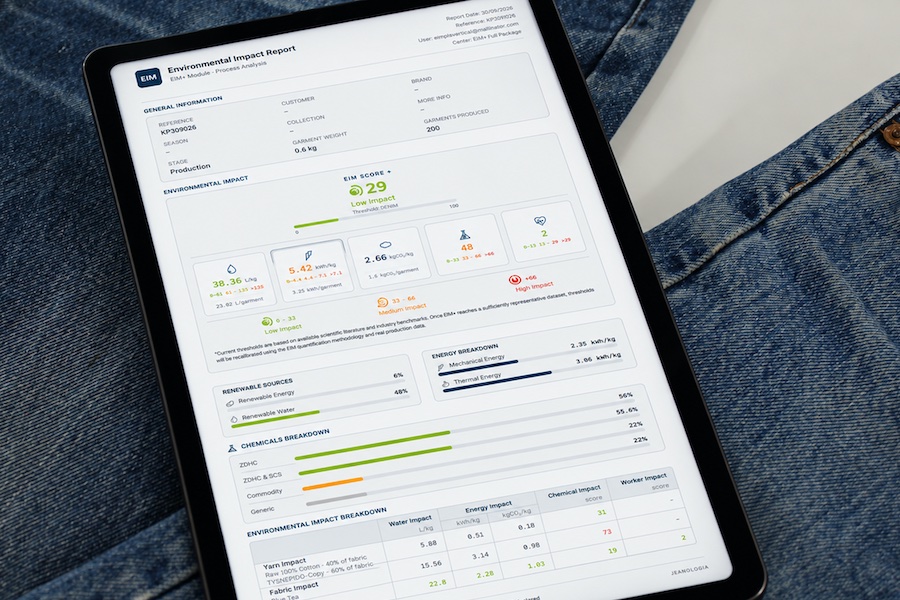
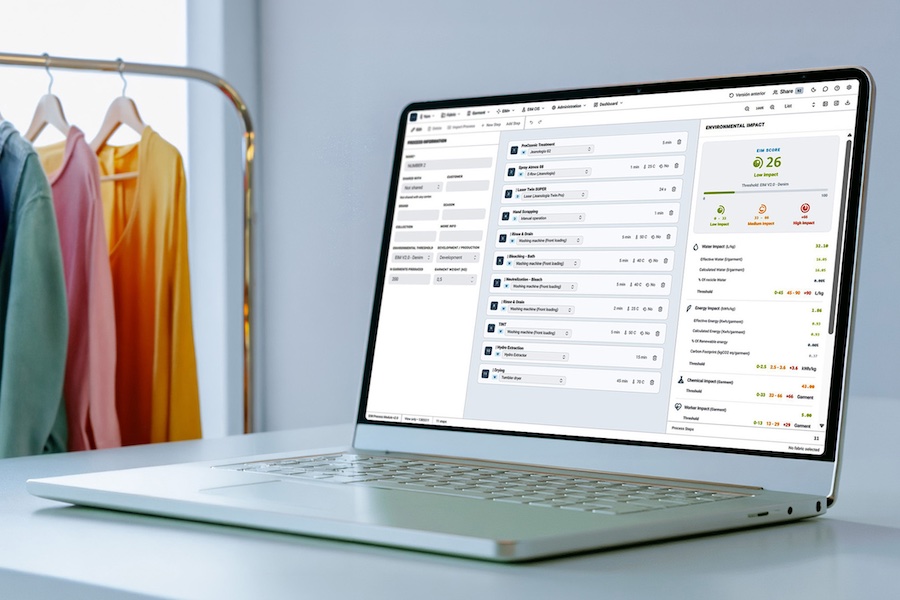
Jeanologia Sustainability Report highlights environmental impact of textile technologies

Jeanologia has published its Sustainability Report 2025, reporting a 13.64% reduction in its own carbon footprint and quantifying the environmental impact associated with the use of its technologies across the global textile industry. According to the company’s calculations, their use avoided the pollution of 21.52 million m³ of water and emissions of approximately 103,530 tonnes of CO₂ compared with conventional textile finishing processes.

#Sustainability

Global Standards announce launch of a new textile processing standard

The 14th September 2026 marks the public launch of the Global Responsible Textile Standard (GRTS), a new standard for the processing of textiles made from fibres certified to third-party standards recognised by GRTS and covering a broad range of plant, animal, synthetic, man-made cellulosic and recycled fibres.

Latest News

#ITMA 2027

20 Start-Ups selected for CEMATEX Start-Up Grant at ITMA 2027

CEMATEX has selected 20 emerging start-ups from nine countries to receive the CEMATEX Start-Up Grant and showcase their innovations at Start-Up Valley during ITMA 2027 in Hanover. Their participation will be fully funded by CEMATEX, giving promising early-stage companies access to the world’s leading textile and garment technology platform.

#Spinning

Barmag’s automated maintenance processes for quality, safety, and efficiency in spinning plants

Maintenance and service processes in chemical fiber spinning plants have a significant impact on product quality, equipment availability, and workplace safety. With three new retrofittable solutions, Barmag helps Producers make manual work processes more efficient, safer, and more reproducible.

#Digital Printing

Leading UK garment decorator expands short-run apparel production and print-on-demand fulfillment with Kornit Digital

Kornit Digital (NASDAQ: KRNT), a global pioneer in sustainable, on-demand digital fashion and textile production technologies, announced that leading UK garment decorator Fifth Column has expanded its apparel decoration capabilities with the installation of a Kornit Atlas MAX PLUS system. Based in the United Kingdom, Fifth Column specializes in garment decoration, including screen printing, embroidery, digital printing, garment finishing, and print-on-demand production. Its customer base spans breweries, music merchandise companies, workwear providers, designer brands, and retail businesses.

#Heimtextil 2027

Therapeutic patterns and mythology as design inspiration: New Talent Area curated by Trendease at Heimtextil grows

Even more young design talent and creative ideas: at the upcoming Heimtextil, the New Talent Area returns for its second edition with stronger presence. From 12 to 15 January 2027, the curated area welcomes more than 30 participants, many of whom are presenting on the international stage for the first time. In Frankfurt, they showcase exciting textile designs, surprising materials and market-ready products.

TOP