[pageLogInLogOut]

#Sustainability

Borealis to gain International Sustainability & Carbon Certification (ISCC PLUS) for all its European polyolefin production sites
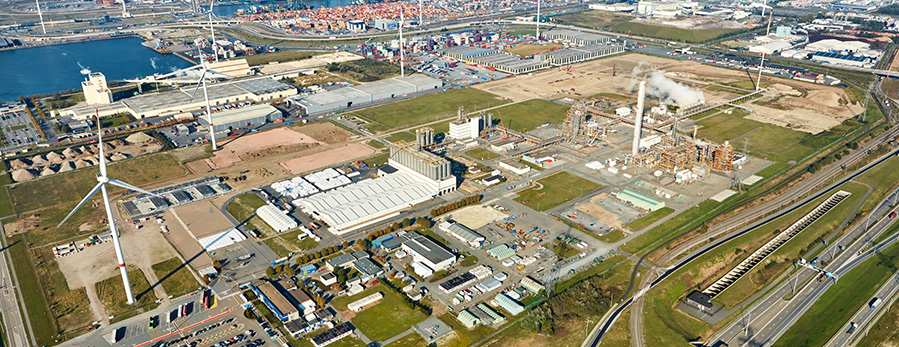
Aerial view of the ISCC PLUS certified Borealis location in Kallo, Belgium / photo: © Borealis
Borealis has gained for its Porvoo (Finland), Schwechat (Austria), polyolefin (PO) production sites, and is aiming to have its sites at Stenungsund (Sweden) and Burghausen (Germany) certified by the first quarter of 2021. Borealis’ Porvoo location, which recently , is the latest site to gain this certification. A certification audit was completed at Stenungsund this October, and there is one planned for certification at Burghausen later this year.
  • Four of Borealis polyolefin production locations in Europe are currently ISCC PLUS certified, with the remaining two to be certified by the first quarter of 2021
  • ISCC PLUS certification enables mass balance production of renewable and chemically recycled feedstock
  • Sustainable hydrocarbons such as ethylene, propylene and phenol, as well as renewable polyolefins, can then be produced and taken to market

A global standard for recycled and bio-based materials, ISCC PLUS provides traceability along the supply chain, verifying companies to meet specific environmental and social standards, creating a chain of custody. This enables Borealis to certify its mass balanced production of renewable feedstock, as well as chemically recycled feedstock, with a mass balance approach crucial to transitioning towards a more circular economy of the chemical industry. It is a development that puts into practice the aims of Borealis’ platform, which is committed to moving from a linear to circular economy through innovation and collaboration.

ISCC PLUS certification also enables Borealis to produce and offer renewable PO – range of circular products – and renewable hydrocarbons, such as ethylene, propylene, C4s, and acetone, to the market for the first time. And as a result of certifying each of its production sites, Borealis can progress with its large pipeline of projects to drive the transition to a circular economy: supplier contracts can be finalised, and customer contracts for feedstock explored. This is another step in implementing the pledges Borealis made to stakeholders that by 2025 100% of the consumer products and solutions shall be made of recyclable, reusable or with renewable content.


To accelerate the transition towards a circular economy, it is essential that customers, brand owners, and other parts of the supply chain, also look to adopt ISCC PLUS certification. The chain of custody it enables is the best way to provide the market with sustainable products, and the potential of this approach is dependent on industry-wide collaboration. To gain certification, Borealis set up a dedicated team to ensure the necessary processes and procedures were implemented at site locations and at group level.

“By gaining ISCC PLUS certification across all our PO production sites in Europe, we are making great strides towards implementing our sustainability strategy and transitioning towards a more circular economy.” says Lucrèce Foufopoulos, Executive Vice President Polyolefins, Circular Economy Solutions and Innovation & Technology. “Life demands progress. As the leading scheme to secure sustainability throughout the value chain, supporting the mass balance approach, ISCC PLUS certification is essential in enabling this transition. It’s the latest way in which Borealis is reinventing for more sustainable living.”

<br />
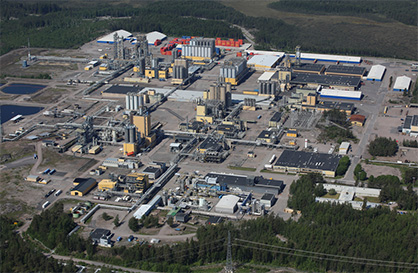
Aerial view of the ISCC PLUS certified Borealis location in Porvoo, Finland photo: © Röni Kuva Oy<br />
Aerial view of the ISCC PLUS certified Borealis location in Porvoo, Finland photo: © Röni Kuva Oy


More News from TEXDATA International

#Recycling / Circular Economy

textile.4U publishes special edition “Top 100 Textile Recycling Companies 2025”

With a comprehensive 176-page special edition, textile.4U is dedicating its latest issue entirely to one of the most dynamic and influential topics in today’s textile industry: textile recycling. The new issue, published exclusively in high-quality print, presents the Top 100 textile recycling companies researched and selected by TexData – organizations that already play a key role in the transition to circular textiles or are expected to have a significant impact in the near future.

#Recycling / Circular Economy

Responsible Textile Recovery Act of 2024 signed by Governor

Senator Josh Newman (D-Fullerton) is proud to announce that Senate Bill 707 (SB 707), the Responsible Textile Recovery Act of 2024, has been signed into law by the Governor of California, Gavin Newsom. This groundbreaking legislation establishes the country’s first Extended Producer Responsibility (EPR) textile recycling program, marking a significant step forward in the state’s efforts to combat waste and promote sustainability.

#Textiles & Apparel / Garment

Modtissimo promotes sustainability with 28 coordinates in the Green Circle

Modtissimo is proving more and more to be a textile and clothing show that delivers the latest innovations in the area of sustainability, with the iTechStyle Green Circle being the main showcase for companies' creations. In this 60+4 edition, taking place on 12 and 13 September, 28 coordinates will be exhibited in a section organised by CITEVE and curated by Paulo Gomes.

#Europe

The EU and Egypt team up to mobilise private sector investments at Investment Conference and sign a Memorandum of Understanding underpinning €1 billion in macro-financial assistance for Egypt

At the EU-Egypt Investment Conference, co-organised by the EU and the Government of Egypt on 29-30 June, the EU and Egypt are teaming up to intensify private sector investments in Egypt. They are also signing a Memorandum of Understanding (MoU) for the disbursement to Egypt of up to €1 billion in Macro-Financial Assistance.

More News on Sustainability

#Sustainability

Ying McGuire becomes new CEO of Cascale

Cascale today announced the appointment of Ying McGuire as Chief Executive Officer, effective June 1, 2026.

#Sustainability

VAUDE eliminates PFAS from all products

PFAS (per- and polyfluoroalkyl substances) are now detectable worldwide – in drinking water, soil and the human body. These so-called “forever chemicals” are considered hazardous to health and potentially carcinogenic, as they do not break down and remain in the environment permanently. Despite these risks, PFAS are still used in a wide range of products. More than 15 years ago, VAUDE made a strategic decision to gradually eliminate PFAS from all product categories.

#Sustainability

OEKO-TEX® chooses TextileGenesis to advance digital traceability for organic cotton

OEKO-TEX® today announced a full collaboration with TextileGenesis, a Lectra company, to digitally trace and authenticate organic cotton, strengthening fraud prevention across the supply chain. This announcement follows a successful pilot and brings together OEKO-TEX®’s certification expertise and closed testing system with TextileGenesis’ digital traceability platform to deliver a secure, end-to-end solution for managing certified organic cotton flows.

#Europe

ICAC to support European Commission on pending PEF legislation

The International Cotton Advisory Committee (ICAC) is proud to announce that it has been included as a member of the European Commission’s Technical Advisory Board (TAB) on the Product Environmental Footprint methodology. The Commission developed the Product Environmental Footprint (PEF) to assess and communicate the life cycle environmental performance of products and organizations.

Latest News

#Recycling / Circular Economy

Circulose restarts commercial-scale production at Ortviken plant in Sundsvall

Circulose today announced the restart of its commercial-scale production plant at Ortviken in Sundsvall, Sweden, marking a significant step in scaling next-generation materials for the global fashion industry. The company plans to resume production of CIRCULOSE®, a recycled pulp made entirely from discarded cotton textiles, in the fourth quarter of 2026.

#Textiles & Apparel / Garment

VIATT 2026 to debut German Pavilion, strengthening European participation alongside key Asian textile hubs

Vietnam’s textile and garment sector continues to be a major contributor to the country’s economic growth, with export revenues expected to reach USD 46 billion in 2025, a 5.6% increase from 2024 . From 26 – 28 February, the Vietnam International Trade Fair for Apparel, Textiles and Textile Technologies (VIATT) is set to contribute to economic growth opportunities by accelerating digital transformation and green transition across the entire textile value chain. The upcoming edition will respond to the rising demand for advanced technologies and sustainable materials with the introduction of the German Pavilion, alongside strong exhibitor participation from key Asian sectors, as well as several high-profile fringe events.

#Technical Textiles

Sustainable, lightweight, and sound absorbing: Polyester-based front trunk solution for BEVs

As car manufacturers look to further reduce their carbon footprint, Autoneum has developed an innovative front trunk solution for battery electric vehicles (BEVs), made entirely from polyester-based textile. The Ultra-Silent Frunk offers significant weight reduction, improved acoustic and thermal insulation, and uses up to 70 percent recycled material, supporting sustainable and efficient vehicle design. Autoneum, global technology leader in acoustic and thermal management for vehicles, has already received orders for the new frunk from three major OEMs in Asia and Europe to be built in three BEV models. Series production for two BEVs has been underway in China and Germany since last year.

#Raw Materials

Modern testing methods for raw cotton

The 38th International Cotton Conference Bremen will take place from 25 to 27 March 2026 at the Bremen Parliament. This conference has traditionally stood for in-depth expertise and international exchange. The program will focus on technical innovations, market trends, and regulatory frameworks across the entire value chain – from agriculture to the circular economy. With high-profile speakers, the conference is regarded as the key meeting point for the global cotton industry. Today’s focus: Cotton quality and testing methods.

TOP