[pageLogInLogOut]

#Sustainability

Report launch: Fashion innovation landscape in India

In a first of its kind report, Fashion for Good together with Circular Apparel Innovation Factory provide a comprehensive overview of the “State of Circular Innovation in the Indian Fashion and Textile Industries”, outlining the opportunities and solutions across the Indian supply chains that are enabling the industry to leap towards sustainability. India is a global leader in manufacturing and one of the largest consumer markets for fashion.

The ongoing search for circular innovations to address the critical environmental challenges unique to the industry requires context to factor in the nuances and uniqueness of the local landscape. This report, mapping the entire landscape, showcases the opportunities driving the industry in India forward.
© 2020 Fashionforgood


“This report is not only an in-depth look into the Indian innovation landscape, but an invaluable tool for anyone looking to make a positive impact in the region. With action and all industry actors coming together to capitalise on these innovations, India is positioned to transform the fashion industry towards circularity.” Katrin Ley, Managing Director, Fashion for Good

Fashion for Good together with regional partner Circular Apparel Innovation Factory (CAIF) have combined their knowledge of India’s sustainable fashion sector, identifying both the opportunities and challenges. Several key innovators were consulted to include their insights, knowledge and expertise in this space, to give further context and nuance to this ever-evolving landscape. 

“Innovators and their innovations have been the bed-rock of human progress and evolution from the very early civilisations. This truly collaborative effort, which maps and surfaces the amazing work already happening, helps reframe our mindset from ‘what’s not working?’ to one that asks ‘what’s working despite the odds?’. The challenges plaguing the industry have been well documented, discussed and debated. Perhaps it’s time to shift the narrative to solutions. This work does just that.“Venkat Kotamaraju, Director, Circular Apparel Innovation Factory (CAIF)


First Innovation Landscape in India

This is the first time an overview has been compiled for the Indian innovation landscape, mapping the innovations that exist in India and the state of innovation across the supply chain, from raw materials through to end-of-use. The report highlights the exciting developments and momentum with which the region is accelerating towards circularity. Areas for additional attention and investment are also identified, providing an indispensable resource for stakeholders and investors wanting to better understand the sector and take the appropriate steps to maximise positive impact. 

“We see great momentum for sustainable materials and production technologies over the last five years. We have adopted many such technologies in our manufacturing facilities and are committed to creating a circular production system.”Abhishek Bansal, Head of Sustainability at Arvind Limited

The report will be made publicly available during a live session “India’s Future in Textile Manufacturing” hosted by CAIF on the 15th of October.  The session features experts from Fashion for Good, CAIF, Arvind Limited and Aditya Birla Fashion Retail Limited (ABFRL), India’s largest manufacturing and retail branded-fashion apparel company. The discussion will cover report findings as well as tangible examples of innovation with innovators KB Cols and Textile Genesis providing insights into their solutions and journey towards widespread adoption. 

“We hope that this research feeds into the growing global movement towards sustainability and circularity. Given India’s importance in the fashion industry, this report mapping innovations and actions the industry can take to enable that circular economy is critical and we hope that it shapes the industry’s transition.”Lakshmi Poti, Senior Programme Manager, Materials, Laudes Foundation

Download:

tinyurl.com/y3x4rw8u
More News from TEXDATA International

#ITM 2026

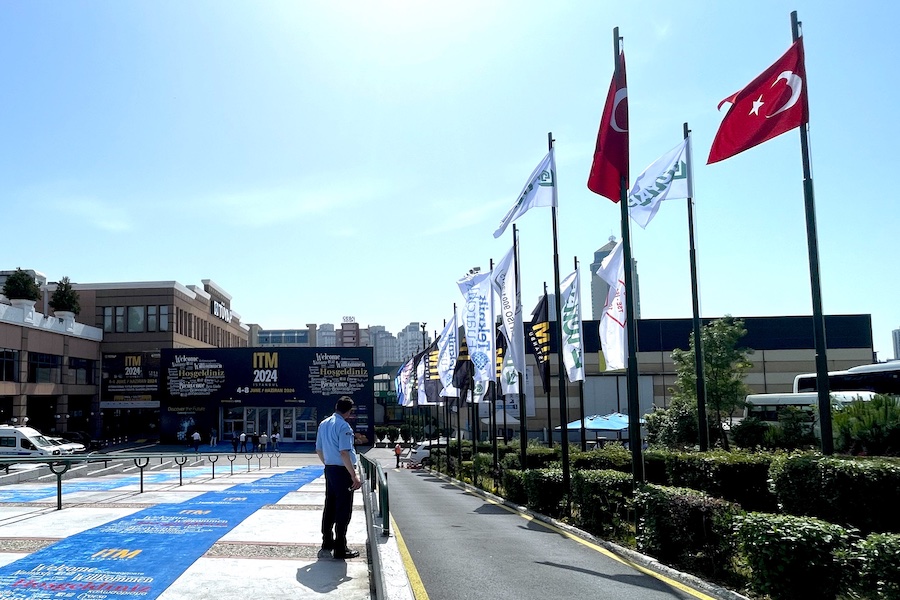
ITM 2026: The new geography of textile production

New production hubs are emerging across North Africa and Central Asia, while Türkiye is accelerating its transformation toward higher-value, technology-driven and more sustainable textile manufacturing.

#Research & Development

“Production is a product”

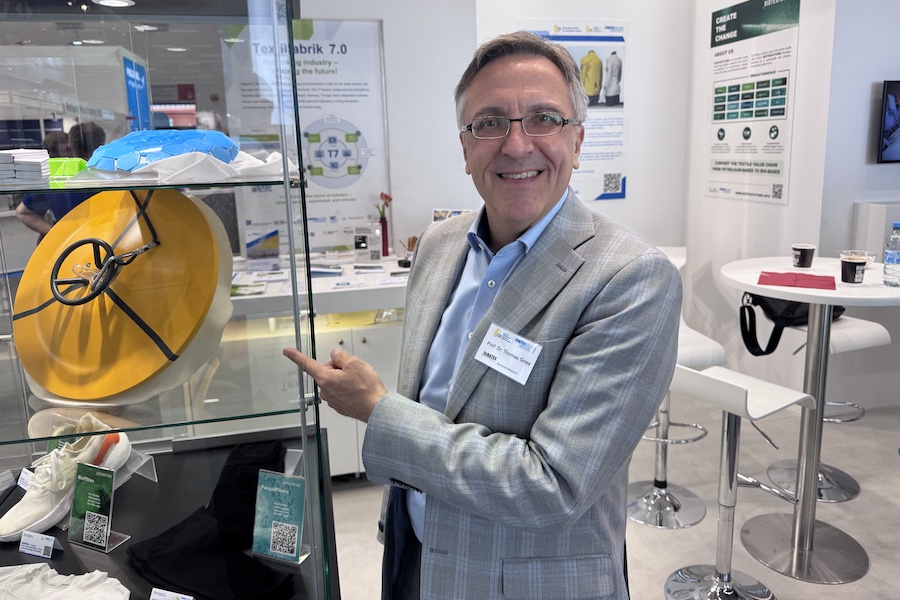
From technical textiles and AI-driven robotics to the limitations of textile circularity: Professor Dr Thomas Gries looks back on more than two decades of development at ITA Aachen. In the interview, he explains why production technology remains a decisive success factor, discusses international collaborations and innovation ecosystems, and shares his views on the transformation of production landscapes and the challenges facing an increasingly regulated industry.

#Knitting & Hosiery

“We need to move away from the price trap and return to a value-driven mindset.”

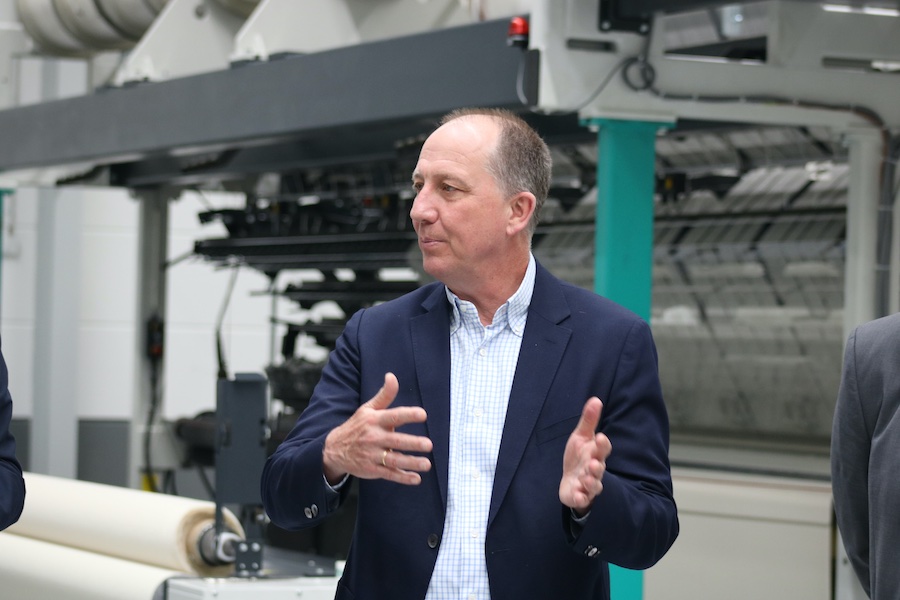
With its new Textile Innovation Center, KARL MAYER is sending a strong signal for innovation, collaboration, and the future of textile applications. In this interview, Karl Josef Mayer discusses new opportunities in warp knitting, the processing of staple fibres, recycling, the changing role of machinery manufacturers, and why the textile industry must once again focus more strongly on the value of textiles. by Oliver Schmidt

#Associations

“Innovation, resilience and international experience remain the great strengths of the Swiss textile machinery industry”

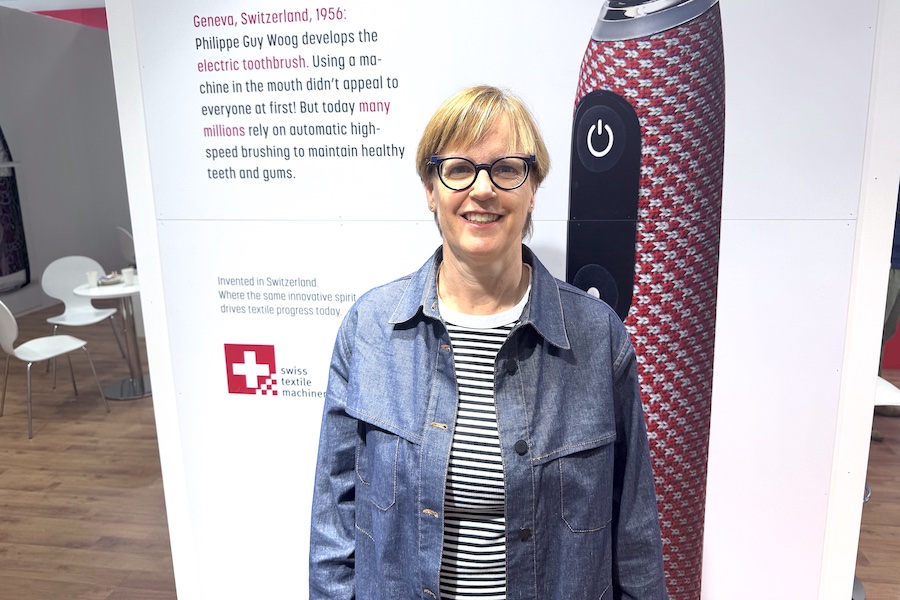
Geopolitical uncertainty, growing competitive pressure from China, new free trade agreements and the shift towards a circular economy are currently reshaping the global textile industry. In this interview, Cornelia Buchwalder discusses the current mood within the Swiss textile machinery sector, the industry’s distinctive innovative strength, new market opportunities in India and Asia, and the technological trends that could shape the upcoming trade fair cycle leading up to ITMA 2027.

More News on Sustainability

#Sustainability

Execs help steer Cascale’s consumer goods agenda in Athens

The 2026 Cascale Annual Meeting, taking place September 15–17 in Athens, Greece, will convene leaders from across the global consumer goods value chain to tackle one of the industry’s defining questions: how to accelerate meaningful, system-wide transformation. Guiding those conversations as this year’s co-chairs are Sean Cady, vice president, global sustainability, responsibility, trade, and government affairs at VF Corporation, and Dr. Delman Lee, vice chair at TAL Apparel Limited.

#Textiles & Apparel / Garment

SAITEX reports efficiency gains and greater transparency in 2025 Impact Report

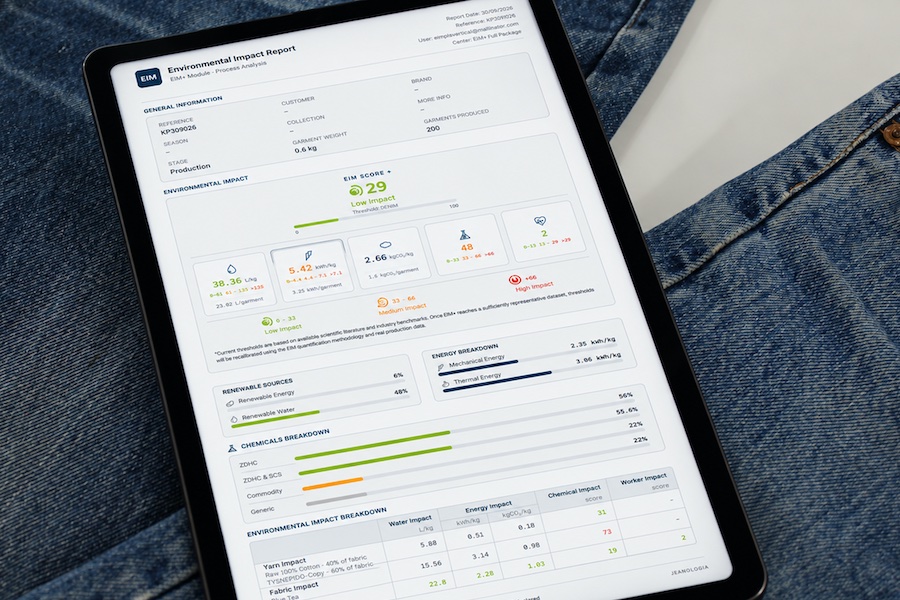
Vietnam-based denim manufacturer SAITEX has published its 2025 Impact Report, documenting progress in resource efficiency, chemical management, digital traceability and knowledge sharing across its manufacturing operations in Vietnam and the United States. Rather than focusing on sustainability ambitions, the report presents operational data, manufacturing developments and lessons learned from the past year.

#Raw Materials

Aid by Trade Foundation presents annual report for 2025: Market position and impact of sustainably verified natural fibres strengthened

Despite global supply chain challenges, the Aid by Trade Foundation (AbTF) was able to further expand its international role in promoting sustainably verified natural fibres in 2025. In doing so, the foundation remains true to its fundamental approach of leveraging market forces. Last year, it generated total revenues of EUR 7.8 million; this included EUR 6.7 million collected through the successful marketing of four standards: Cotton made in Africa (CmiA), CmiA Organic, The Good Cashmere Standard (GCS), and the Regenerative Cotton Standard (RCS). AbTF invested the resulting income in projects aiming to protect biodiversity, support women, increase transparency in the textile supply chain, and implement its verification system.

#Sustainability

Textile Exchange reports growth in certifications and industry engagement

Textile Exchange has published its 2025 Annual Report, highlighting continued growth in certified sites, industry participation and the development of its standards and membership structure. According to the report, more than 100,000 sites worldwide are now certified to Textile Exchange standards, more than three times the number recorded in 2020. Preliminary figures also indicate 12% year-on-year growth across the organization's current standards, including the Global Recycled Standard (GRS), Recycled Claim Standard (RCS) and the Responsible Animal Fiber standards.

Latest News

#Raw Materials

Brazil sets new cotton export record and consolidates global leadership

Brazil ended the 2025/26 commercial year with a new record, consolidating its position as the world’s largest cotton exporter. Between August 2025 and July 2026, the country shipped 3,373,941 tonnes of the fiber, 19% more than in the previous cycle, and reached record revenue of US$5.3 billion. The result represents a milestone in Brazil’s expansion in the international market and reinforces the country’s role as a strategic supplier to the global textile industry.

#Raw Materials

Better Cotton Initiative partners with Avalo in AI plant breeding for climate-resilient cotton

The Better Cotton Initiative (BCI) has partnered with agriculture solutions company Avalo, whose platform accelerates the speed at which plants with key resiliency traits may be developed.

#Man-Made Fibers

The LYCRA Company expands its co-creation vision through an immersive Lifestyle District at Intertextile Shanghai.

The LYCRA Company, a global leader in fiber and technology solutions for the apparel industry, is reimagining the trade show experience at Intertextile Shanghai Apparel Fabrics Autumn Edition, which opened today in China. Building on the success of last year's ALL IN concept, the company has expanded its co-creation vision into a 356-square-meter Lifestyle District featuring partners Jingzili New Material, JYT Textile, Lianxingfa Knitting, and Trend Textile. The district is part of a larger 895-square-meter pavilion showcasing a total of 19 co-exhibitors. Together, they demonstrate how innovations in fiber, fabric, and garments can be combined to create compelling solutions for both work and play.

#Natural Fibers

Plastic-free stretch technologies drive new direction for denim innovation

As the denim industry looks for ways to reduce its reliance on synthetic fibres, plastic-free stretch technologies are gaining momentum. Developments based on mechanical fabric construction and natural rubber are demonstrating that comfort and stretch can be achieved without conventional elastane, supporting both recyclability and circular product design.

TOP