[pageLogInLogOut]

#Sustainability

Borealis producing certified renewable Polypropylene at own facilities in Belgium

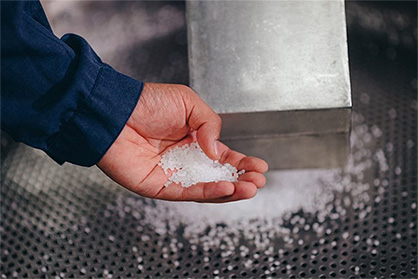
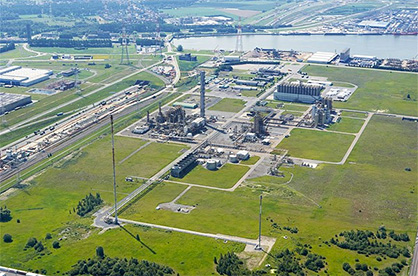
Borealis has started to produce polypropylene (PP) based on Neste-produced renewable feedstock in its production facilities in Kallo and Beringen, Belgium. This marks the first time that Borealis has replaced fossil fuel-based feedstock in its large-scale commercial production of PP.
  • EverMinds™ in practice: Another milestone reached in Borealis’ efforts to advance the circular economy
  • Kallo and Beringen production sites receive ISCC Plus certification
  • Collaboration with upstream and downstream value chain partners such as Neste and Henkel

The Belgian plants were recently awarded by the International Sustainability and Carbon Certification (ISCC) organization with ISCC Plus certification for its renewable PP. Taking its commitment to the next level for advancing the circular economy, Borealis once again furthers its EverMinds™ ambitions. This path breaking venture in sustainable production is being driven in close collaboration with upstream and downstream value chain partners such as Neste and Henkel. It also aligns with the Borealis aim to ensure that 100% of its consumer products are recyclable, reusable, or produced from renewable sources by 2025.

Value chain collaboration under the flag of greater circularity

Borealis and its upstream partner Neste are moving the industry closer to a circular economy of plastics thanks to the production start in December 2019 of renewable PP.

After producing renewable propane using its proprietary NEXBTL™ technology, Neste sells the renewable propane to the Borealis propane dehydrogenation plant in Kallo. Here it is converted to renewable propylene, then subsequently to renewable PP at Kallo and Beringen plants.

The recently finalised audits carried out by an independent third party have resulted in an ISCC Plus certification for the renewable PP produced at both Kallo and Beringen plants. This certification encompasses the entire value chain scope and verifies that the renewable feedstock used is certified as being 100% renewable and sustainably produced, including traceability to point of origin.
(c) 2020 Borealis
(c) 2020 Borealis


Downstream partners from a variety of industries such as consumer packaging, automotive, healthcare, and appliance industries can now commercialize their end-use products with a lower carbon footprint based on renewable propylene and PP produced at Borealis’ Belgian plants. In response to increasing demand, Borealis is working with value chain partners to expand availability.

Henkel, a global market leader in the adhesives sector and known for its strong brands in Laundry & Home Care and Beauty Care, has already embraced the values of the circular economy. Having made the use of sustainable materials a key pillar in its packaging strategy, Henkel is committed to work with its value chain partners to drive sustainable packaging solutions. Including renewable PP content in the packaging of a major Henkel brand over the course of the year marks another step in its efforts to reduce its use of fossil fuel-based virgin plastics by 50 percent by 2025.

“Producing renewable PP based on renewable feedstock for the first time in history is another concrete step towards a more sustainable carbon future,” says Lucrèce Foufopoulos, Borealis Executive Vice President Polyolefins, Innovation and Circular Economy Solutions. “Working closely with partners like Neste and Henkel, who share our EverMinds™ mind-set, is key to shaping a better tomorrow. Thinking circular means capitalising on growth opportunities that accelerate the transformation to a circular economy.”

“It is great to see, for the first time in history, a propane dehydrogenation facility using renewable propane to replace fossil feedstock, enabling Borealis to produce mass balance certified renewable polypropylene for sustainability-focused brands like Henkel. This is an exceptional example of collaboration across the value chain making a positive sustainability impact in the polymers sector,'' says Mercedes Alonso, Executive Vice President, Renewable Polymers and Chemicals, Neste.

(c) 2020 Borealis
(c) 2020 Borealis


More News from TEXDATA International

#Techtextil 2026

Textile Chemicals & Dyes: Innovation in Textile Chemistry moves into focus at Techtextil 2026

From PFAS-free finishes and water-saving dyeing technologies to advanced coatings and recycling-compatible formulations, innovation in textile chemistry is accelerating across the industry. Reflecting this development, Techtextil 2026 introduces Textile Chemicals & Dyes as a dedicated product segment, highlighting the growing role of chemical solutions in shaping the next generation of technical textiles.

#Recycling / Circular Economy

textile.4U publishes special edition “Top 100 Textile Recycling Companies 2025”

With a comprehensive 176-page special edition, textile.4U is dedicating its latest issue entirely to one of the most dynamic and influential topics in today’s textile industry: textile recycling. The new issue, published exclusively in high-quality print, presents the Top 100 textile recycling companies researched and selected by TexData – organizations that already play a key role in the transition to circular textiles or are expected to have a significant impact in the near future.

#Recycling / Circular Economy

Responsible Textile Recovery Act of 2024 signed by Governor

Senator Josh Newman (D-Fullerton) is proud to announce that Senate Bill 707 (SB 707), the Responsible Textile Recovery Act of 2024, has been signed into law by the Governor of California, Gavin Newsom. This groundbreaking legislation establishes the country’s first Extended Producer Responsibility (EPR) textile recycling program, marking a significant step forward in the state’s efforts to combat waste and promote sustainability.

#Textiles & Apparel / Garment

Modtissimo promotes sustainability with 28 coordinates in the Green Circle

Modtissimo is proving more and more to be a textile and clothing show that delivers the latest innovations in the area of sustainability, with the iTechStyle Green Circle being the main showcase for companies' creations. In this 60+4 edition, taking place on 12 and 13 September, 28 coordinates will be exhibited in a section organised by CITEVE and curated by Paulo Gomes.

More News on Sustainability

#Sustainability

GOTS version 8.0 released: advanced supply chain accountability, from fibre to finished product

Global Standard is pleased to announce the release of GOTS Version 8.0, the latest update to the world's leading processing standard for organic textiles. The updated Standard strengthens requirements for air emissions and waste management, as well as criteria for product safety. It introduces new provisions on circularity, microfibre management and updates in residue testing. Version 8.0 also elevates due diligence obligations and formalises governance requirements, including ESG disclosure, anti-corruption policies and conflict-of-interest safeguards, to support credible, responsible business conduct.

#Sustainability

The nova-Institute establishes new Renewable Feedstock Department to lay the groundwork for industrial defossilisation

The transition from fossil-based to renewable carbon – sourced from biomass, CO₂ utilisation and recycling – is the cornerstone of a climate-neutral chemical industry. The nova-Institute’s new department is dedicated to providing the essential data, analyses and strategic roadmaps required to secure a reliable future feedstock supply and make this transition a commercial and ecological reality.

#Sustainability

Textile Exchange unveils commitment-based pathway for members to accelerate responsible raw material production

Textile Exchange has unveiled further details about its new membership structure, designed to guide the fashion, textile, and apparel industry in a collective course of action toward preferred production systems for raw materials and fibers.

#Textile chemistry

Jeanologia urges industry to accelerate PP Spray phase-out following ZDHC Watchlist update

Potassium permanganate has officially entered the Chemical Watchlist of the ZDHC Foundation, signaling increased scrutiny and potential phase-out of one of the most hazardous chemicals still used in denim finishing. The inclusion confirms an industry shift that Jeanologia anticipated more than a decade ago.

Latest News

#Techtextil 2026

DIENES at Techtextil 2026: Flexible pilot lines for bio-based fiber development

The growing relevance of bio-based materials in technical textiles is accompanied by increasing demands for reproducibility, high-quality data, and scalable process routes. Especially when working with cellulose and its derivatives, chitosan, lignin-based approaches, or bio-based PAN as a carbon-fiber precursor, R&D teams face variable feedstock quality, tighter process windows, and the need for reliable comparability across trials. This calls for flexible, data-driven experimental setups that can be reconfigured efficiently when recipes, solvents, and raw-material batches change.

#Texprocess 2026

Gunold showcases embroidery product range and services at Texprocess

At Texprocess 2026, GUNOLD will present numerous hands-on examples related to embroidery in Hall 8, Booth E20. The focus is on creative embroidery designs as well as the extensive product range of threads, nonwovens, and accessories for embroidery and embellishment. “Trade visitors can once again look forward to many new and creative embroidery designs. Of course, we will also showcase the matching products required to bring these ideas to life,” announces Marketing Manager Stephan Gunold.

#Nonwovens

EDANA and more than 70 industry organisations call for consistent exemptions in EU packaging regulation

EDANA, together with more than 70 industry associations and organisations, has issued a joint statement commenting on the European Commission’s Delegated Act under Article 29 of the Packaging and Packaging Waste Regulation (PPWR).

#Raw Materials

A Powerful Opening: Global thought leaders launch the International Cotton Conference Bremen

The International Cotton Conference Bremen will open on 25 March 2026 in the Parliament building of the Free Hanseatic City of Bremen with a keynote session of exceptional calibre. Distinguished international experts will set the stage for the conference by offering incisive perspectives on the most pressing challenges and the defining trends shaping the future of the global cotton trade. Their insights will span a broad spectrum — from geopolitically driven disruptions affecting global supply chains to the opportunities emerging from innovation-led agriculture capable of supporting a growing world population. Together, these opening keynotes will frame the dialogue of the conference, highlighting both the complexity of today’s market environment and the pathways toward a resilient and forward-looking cotton sector.

TOP