[pageLogInLogOut]

#Sustainability

Toray and MIDORI ANZEN launching Japan’s first uniforms certified by MADE IN GREEN by OEKO-TEX®

MIDORI ANZEN Co., Ltd., and Toray Industries, Inc., today announced that their jointly developed work uniforms have become the first in Japan to be qualified a MADE IN GREEN by OEKO-TEX®, a traceable product label that guarantees that a textile product has been manufactured using sustainable processes under environmentally friendly and socially responsible working conditions. OEKO-TEX® certification is a key benchmark for safety and customer confidence in more than 100 countries. MIDORI ANZEN will launch the new uniforms in January this year.

In Japan, the Nissenken Quality Evaluation Center (see note below) conducts OEKO-TEX® certification tests. These which encompass everything from the chemicals used in textile products to wastewater and gas emissions in manufacturing processes and working environments. 
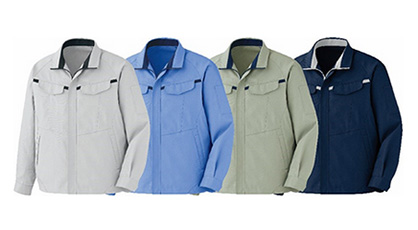
Certified uniforms from MIDORI ANZEN (c) 2020 Toray


To qualify for MADE IN GREEN by OEKO-TEX®, it is necessary in advance to secure two other certifications. One is STANDARD 100 by OEKO-TEX®, which covers more than 300 hazardous chemicals. The other is STeP by OEKO-TEX®. This focuses on the environmental impacts of manufacturing sites, working environments, and other aspects of safety, health, and social responsibility. 
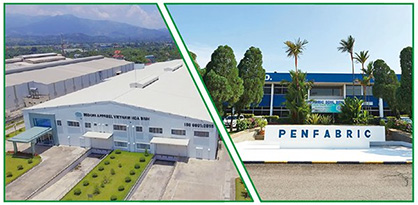
MIDORI Apparel Vietnam Hoa Binh Co., Ltd. (left), Penfabric Sdn. Berhad (right) (c) 2020 Toray


Products carrying the MADE IN GREEN by OEKO-TEX® label thus employ safe materials, having passed the world's most strict analytical tests for hazardous substances, and are made at facilities that are sustainable in terms of the environment and working conditions. Such products also contribute to attaining several of the United Nations' Sustainable Development Goals.


The materials producer covered by this MADE IN GREEN by OEKO-TEX® label is Penfabric Sdn. Berhad, a Toray Group unit in Malaysia that has received both STANDARD 100 by OEKO-TEX® and STeP by OEKO-TEX®. The uniform Sewing Factory with STeP by OEKO-TEX® Certification is Midori Apparel Vietnam Hoa Binh Co., Ltd., a subsidiary of MIDORI ANZEN.

In the years ahead, MIDORI ANZEN and Toray will together broaden the lineup of uniforms carrying the MADE IN GREEN by OEKO-TEX® label.
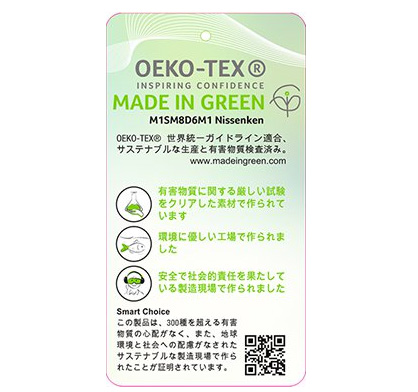
Sample garment tag (c) 2020 Toray


More News from Toray Engineering Co. Ltd.

#Man-Made Fibers

Toray develops AURLIST™ polyester filament fiber with luxurious luster and ultra-fine structure

Toray Industries has developed AURLIST™, a new polyester filament fiber designed to combine luxurious luster, soft loft and a subtle fibrillated surface texture. The company primarily targets applications in women’s apparel such as tops, bottoms and dresses.

#Recycling / Circular Economy

Toray develops recycling technology that retains carbon fiber strength and surface quality

Toray Industries, Inc., announced today that it has developed a recycling technology that can decompose diverse carbon fiber reinforced plastics (CFRP) made from thermosetting resins while retaining the strength and surface quality of those fibers. The company drew on this technology to create a nonwoven fabric employing recycled carbon fibers.

#Composites

HEAD launches more sustainable(1) BOOM RAW racquet on Earth Day by using Toray’s bio-circular carbon fibers

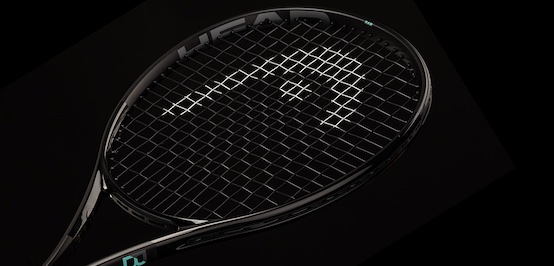
HEAD continues to innovate with the launch of the BOOM RAW tennis racquet, an encouraging development in the search for a more sustainable future for racquet sports. All of the carbon fibers are bio-circular carbon fibers in the limited-edition and highly innovative BOOM RAW racquet, which offers the same explosive power - along with the same fun, feel and easy playability - as the regular, in-line BOOM racquet. The bio-circular carbon fibers are manufactured by Toray and its subsidiary Toray Carbon Fibers Europe.

#Recycling / Circular Economy

Companies in Japan initiate demonstration to expand the automotive recycling process

DENSO CORPORATION and other partners have been chosen by an industry-government-academia collaborative project aiming to expand the recycle content for automobile in the fiscal year 2023 supported by Ministry of the Environment, Japan.

More News on Sustainability

#Sustainability

Experts publish APAC policy priorities

Cascale today announced the publication of its APAC Policy Priorities Paper, developed by the Asia-Pacific (APAC) Policy Member Expert Team (MET) to identify key regional sustainability challenges and provide practical, aligned recommendations for policymakers and industry stakeholders across Asia-Pacific.

#Sustainability

GOTS version 8.0 released: advanced supply chain accountability, from fibre to finished product

Global Standard is pleased to announce the release of GOTS Version 8.0, the latest update to the world's leading processing standard for organic textiles. The updated Standard strengthens requirements for air emissions and waste management, as well as criteria for product safety. It introduces new provisions on circularity, microfibre management and updates in residue testing. Version 8.0 also elevates due diligence obligations and formalises governance requirements, including ESG disclosure, anti-corruption policies and conflict-of-interest safeguards, to support credible, responsible business conduct.

#Sustainability

The nova-Institute establishes new Renewable Feedstock Department to lay the groundwork for industrial defossilisation

The transition from fossil-based to renewable carbon – sourced from biomass, CO₂ utilisation and recycling – is the cornerstone of a climate-neutral chemical industry. The nova-Institute’s new department is dedicated to providing the essential data, analyses and strategic roadmaps required to secure a reliable future feedstock supply and make this transition a commercial and ecological reality.

#Sustainability

Textile Exchange unveils commitment-based pathway for members to accelerate responsible raw material production

Textile Exchange has unveiled further details about its new membership structure, designed to guide the fashion, textile, and apparel industry in a collective course of action toward preferred production systems for raw materials and fibers.

Latest News

#Textile chemistry

A flagship for chemical production: BASF inaugurates world-scale Verbund site in China

BASF today (March 26, 2026) celebrated the official inauguration of its newly built, world-scale Verbund site in Zhanjiang, Guangdong Province in southern China. Covering an area of around four square kilometers, it is more than a major BASF project in the chemical growth market of China. “Zhanjiang shows what the future of chemistry looks like: efficient, digital and sustainable by design. The site showcases a smart integrated Verbund structure on an industrial scale,” said Dr. Markus Kamieth, CEO of BASF, at the ceremony attended by representatives from government, customers, business partners and employees.

#Nonwovens

VEOCEL™ Lyocell production expands to Asia – Launching a new chapter for nonwovens in the region

VEOCEL™, Lenzing's flagship specialty nonwovens brand, expands production at its Thai plant in Prachinburi. This is the first-ever production of its nonwoven-grade lyocell fibers in Asia. Built in 2022 with a 100,000-ton annual production capacity, the facility - previously focused on fibers for textile applications - now can directly meet the demand for VEOCEL™’s biodegradable¹, wood-based lyocell fibers for nonwovens products. These fibers are an essential ingredient for high-quality nonwovens products, ranging from baby wipes to facial sheet masks and everyday personal hygiene items.

#Research & Development

Hof University develops sustainable textile coating for the fashion of tomorrow from mushrooms

Clothing is often treated as disposable: T-shirts for events, general merchandise, or short-term campaigns frequently end up in the trash after only a few uses. This is particularly problematic given that their production still largely relies on fossil-based materials. This is precisely where a new research project at Hof University of Applied Sciences comes in.

#Raw Materials

Fashion for Good mobilises industry to adopt mass balance attribution and accelerate decarbonisation

Fashion for Good launches today the Mass Balance Demonstrator project, a collaborative industry initiative to implement and scale the mass balance attribution (MBA) chain-of-custody model for biomass-attributed PET in textile applications. The project represents a concrete step toward accelerating brand-driven decarbonisation across the apparel value chain.

TOP