[pageLogInLogOut]

#Textiles & Apparel / Garment

Gore manufacturing plant for fabrics products in Putzbrunn achieved ISO14001 certification
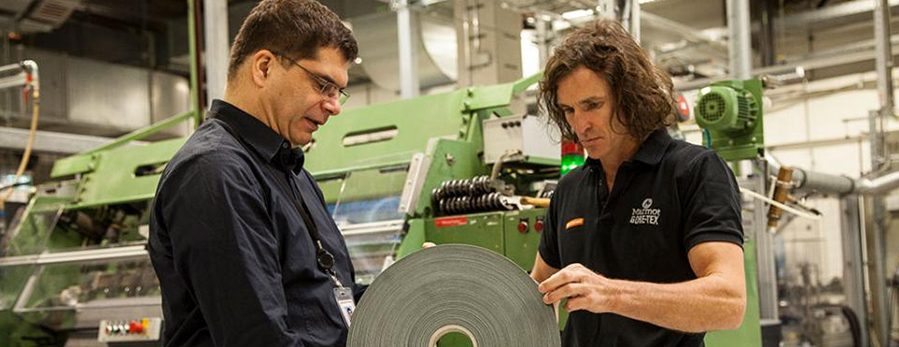
(c) 2020 Gore
W. L. Gore & Associates GmbH (Gore) announced today that its fabrics manufacturing plant in Putzbrunn, Bavaria, has been certified according to the environmental and quality management standard ISO 14001.

Now all fabrics manufacturing plants of Gore are certified according to ISO 14001

"With this certification, all three Gore-owned plants around the world that manufacture fabrics products are compliant with this globally accepted standard for environmental management systems. All our plants comply with equally high standards – for a smaller environmental footprint and safe working conditions. This ISO 14001 certification emphasizes our commitment to comply with the same high standards, partly going beyond legal requirement, in all plants of our Fabrics Division worldwide – for a smaller environmental footprint and safe working conditions.”

Environmental protection, together with social aspects, play a key role in the sustainability strategy of Gore Fabrics’ division. Worldwide accepted standards of environmental management, such as ISO 14001, help establish internationally consistent processes at the plants in order to identify potential improvements within Gore´s environmental management system and support its implementation.

Daniel Eckardt, Regional Quality Leader Europe for Gore fabrics products and in charge of the ISO 14001 introduction in Putzbrunn, says: “I am glad that we received this important certification. Our team did an excellent job, and I am proud of the fact that our manufacturing plant in Putzbrunn completed the range of ISO 14001 certified fabrics manufacturing plants of Gore around the world.”

ISO 14001 was presented by the International Organization for Standardization (ISO) in 1996. It specifies worldwide accepted requirements for environmental management systems that enable organizations, to improve its environmental footprint, comply with legal and other duties, and achieve its environmental goals. This international standard focusses on the concept of “continuous improvement”, based on the “plan-do-check-act” process cycle.

In 2010, Gore began establishing management systems at their manufacturing plants for fabrics products inspired by the ISO standard.


In order to obtain ISO 14001 certification, the plant in Putzbrunn was asked to fulfill a range of specific tasks and requirements similar to the Gore manufacturing plants for its fabrics products in Elk Mills, US and Shenzhen, China:

  • Identify significant environmental impacts such as gas or electrical energy usage and the waste from plants;
  • Monitor energy usage to achieve sustained energy reductions;
  • Measure environmental impact through greenhouse gas emissions;
  • Track projects to show progress;
  • Comply with all legal requirements relating to the environmental performance of Gore´s people, processes, plant and products (4Ps); an example would be, meeting the requirements of Gore´s environmental permit;
  • Follow operational controls, meaning that Gore follows proper procedures for handling and storage of chemicals, and has trained Associates for emergencies in place.

Daniel Eckardt shares the team´s high motivation to work hard on preparing for the audit and certification in Putzbrunn, and also knows about its reasons: “Ensuring that our impact on the environment becomes transparent was one of the most important steps to make all Gore Associates understand and accept the true value of our activities for improving our environmental footprint.”

Gore revolutionized the outerwear industry with waterproof, breathable GORE-TEX Fabric more than 40 years ago and remains a leading innovator of performance apparel. Gore fabrics products provide comfort and protection in challenging environments and in everyday life, enabling wearers to safely and confidently achieve and experience more. From hiking in downpours to defense operations and fighting fires, Gore’s deep understanding of consumer and industry needs drives development of products with meaningful performance advantages.?gore-tex.com and gore-workwear.com





More News from TEXDATA International

#ITM 2026

ITM 2026: The new geography of textile production

New production hubs are emerging across North Africa and Central Asia, while Türkiye is accelerating its transformation toward higher-value, technology-driven and more sustainable textile manufacturing.

#Research & Development

“Production is a product”

From technical textiles and AI-driven robotics to the limitations of textile circularity: Professor Dr Thomas Gries looks back on more than two decades of development at ITA Aachen. In the interview, he explains why production technology remains a decisive success factor, discusses international collaborations and innovation ecosystems, and shares his views on the transformation of production landscapes and the challenges facing an increasingly regulated industry.

#Knitting & Hosiery

“We need to move away from the price trap and return to a value-driven mindset.”

With its new Textile Innovation Center, KARL MAYER is sending a strong signal for innovation, collaboration, and the future of textile applications. In this interview, Karl Josef Mayer discusses new opportunities in warp knitting, the processing of staple fibres, recycling, the changing role of machinery manufacturers, and why the textile industry must once again focus more strongly on the value of textiles. by Oliver Schmidt

#Associations

“Innovation, resilience and international experience remain the great strengths of the Swiss textile machinery industry”

Geopolitical uncertainty, growing competitive pressure from China, new free trade agreements and the shift towards a circular economy are currently reshaping the global textile industry. In this interview, Cornelia Buchwalder discusses the current mood within the Swiss textile machinery sector, the industry’s distinctive innovative strength, new market opportunities in India and Asia, and the technological trends that could shape the upcoming trade fair cycle leading up to ITMA 2027.

More News on Textiles & Apparel / Garment

#Associations

Mario Jorge Machado re-elected President of EURATEX

The EURATEX General Assembly has re-elected Mario Jorge Machado as President of EURATEX, renewing its confidence in his leadership at a crucial moment for the European textile and clothing industry. The sector is facing rising costs, global competitive pressure and an increasingly challenging transition towards sustainability and digitalisation.

#Textiles & Apparel / Garment

Autopsy, the new trend book by Texworld Apparel Sourcing Paris, deciphers the fractures of our time through 12 creative signals

Presented during Texworld Apparel Sourcing Paris, from August 31 to September 2, 2026, at the Paris-Le Bourget Exhibition Center, Autopsy offers a reinterpretation of the contours of fashion in a world undergoing profound transformation, balancing radical introspection and sensitive renewal.

#Yarn & Fiber

Next week’s focus: Intertextile Shenzhen & Yarn Expo Shenzhen fuse textile tradition with sustainable, digital trends

Fashion will not be left behind in one of the world’s undisputed tech and manufacturing capitals. Which is why next week, at Intertextile Shenzhen Apparel Fabrics and Yarn Expo Shenzhen 2026, the organisers have made special efforts to integrate textile topics such as materials innovation, holistic sustainability, digitalisation and AI. Yet, from 9 – 11 June at the Shenzhen Convention and Exhibition Center, the platform also includes timeless tradition and heritage-inspired evolution in equal measure. Across both shows, over 600 exhibitors from 11 countries and regions are set to showcase everything from Peruvian alpaca wool fabrics to tea-derived fibres, while their fringe programmes will explore diverse solutions along the entire value chain.

#Textiles & Apparel / Garment

Global size study for brands and retailers to optimize fit and market coverage

Hohenstein Apparel Fit Solutions, a global leader in apparel fit, sizing, and product development, today announces the launch of its Global Size Study, a new initiative designed to equip brands to better understand and serve their target consumers through more accurate, market-relevant sizing.

Latest News

#Research & Development

GenuTrace client advisory: Is your cotton supply chain UFLPA ready?

U.S. Customs and Border Protection has released updated operational guidance (CBP Publication No. 5560-0526) expanding its forced labor enforcement framework. The guidance supersedes the original 2022 UFLPA Operational Guidance and now covers all forced labor enforcement authorities — UFLPA, CAATSA, and WROs/Findings — in a single unified document. For cotton importers, the enforcement posture has not softened. It has become more structured, more documented, and more demanding. Learn more about UFLPA.

#Carpets

DOMOTEX Hannover 2028 off to a strong start with expanded portfolio

Preparations for DOMOTEX 2028 are already gaining strong momentum. Following its successful repositioning as the Home of Flooring & Interior Finishing, around 100 international manufacturers have already secured their place during the initial registration phase.

#Knitting & Hosiery

STOLL: Agreement signed for the divestiture of selected assets

In early 2025, KARL MAYER announced its strategic decision to focus on its core business areas of WARP KNITTING, WARP PREPARATION, and TECHNICAL TEXTILES. As part of this move, the flat knitting machine business under the STOLL brand was discontinued and the production site in Reutlingen was closed in October 2025.

#Research & Development

TERNAfil wins first place at PitchMiUp Night 2026 in Minden

The RWTH spin-off TERNAfil has developed MAXCarbon, a new high-performance hybrid fibre that combines the mechanical performance of carbon with the temperature and corrosion resistance of ceramic materials. For this development, TERNAfil was awarded first prize at the PitchMiUp Night in Minden on 21 May 2026.

TOP