[pageLogInLogOut]

#Sustainability

BASF is founding member of “value balancing alliance e.V.”

Which values do companies create for society – in environmental, human, social, and financial terms? And how can these contributions be measured and compared? Together with seven international companies of the recently founded “value balancing alliance e.V.”, based in Frankfurt am Main, Germany, BASF strives to create a standard that makes this holistic value creation transparent in monetary terms.

The alliance is supported by the accounting firms Deloitte, EY, KPMG, PwC and by the OECD amongst others. Founding members of the nonprofit organization are, next to BASF, the companies Bosch, Deutsche Bank, LafargeHolcim, Novartis, Philip Morris International, SAP, and SK.

“It is about changing the perspective on how companies create value,” said Saori Dubourg, Member of the Board of Executive Directors of BASF SE. “With a holistic view on values, we want to take into account our impacts on the environment, society and businesses. Creating long-term values is the foundation for sustainable business success.”

The target of the value balancing alliance is to create and pilot a model for the calculation of the multidimensional value contribution and to further develop the disclosing and reporting obligations accordingly within the next three years. “In the alliance, we want to standardize the different approaches that are currently used by the companies to make the results comparable. In this way, we can make the real value creation to the society by companies transparent,” explains Christian Heller, CEO of the value balancing alliance e.V.
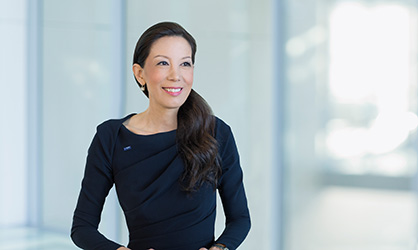
Saori Dubourg, Member of the Board of Executive Directors of BASF SE (c) 2019 BASF


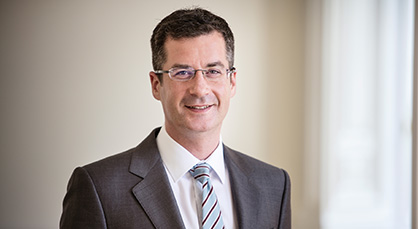
Christian Heller, CEO of the recently founded “value balancing alliance e.V.” (c) 2019 BASF


BASF for example has measured its multidimensional value creation along the value chain with its “Value-to-Society” program since 2013. Together with external experts, BASF has developed this approach to perform a monetary assessment of the economic, ecological, and social impacts of its business activities along the value chain. BASF shares its experiences in networks and initiatives such as the World Business Council for Sustainable Development (WBCSD), the Natural Capital Coalition, the Impact Valuation Roundtable or the Embankment Project for Inclusive Capitalism. BASF is also involved in the corresponding standardization processes within the International Organization for Standardization (ISO).

For more information about the value balancing alliance, visit: https://www.value-balancing.com/ . 

Further information on BASF’s "Value-to-Society" approach can be found here:

https://www.basf.com/global/en/who-we-are/sustainability/management-and-instruments/quantifying-sustainability/we-create-value.html
More News from BASF Aktiengesellschaft
Performance Chemicals for Textiles Europe

#Recycling / Circular Economy

trinamiX with new management

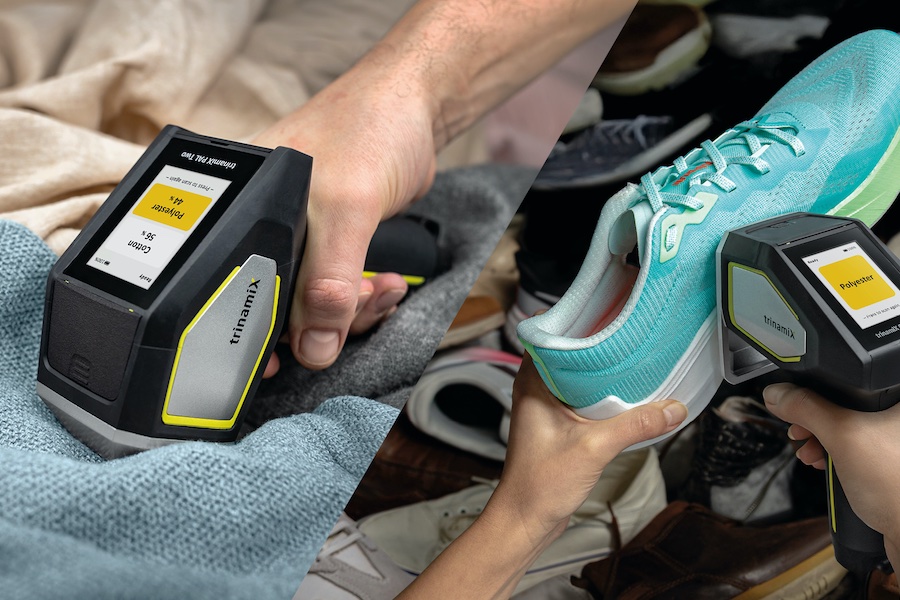
BASF is examining strategic options for its subsidiary trinamiX GmbH. trinamiX specializes in biometric imaging and mobile material analysis. These activities are not part of BASF’s core business, on which the company is focusing as part of the implementation of its new strategy.

#Research & Development

How innovations drive BASF’s success

“Innovation has always been part of BASF’s DNA. Especially in these volatile times, it is crucial to leverage our innovative strength to develop competitive solutions that differentiate us as a company in our markets and give us a competitive edge,” said Dr. Stephan Kothrade, Member of the Board of Executive Directors of BASF and Chief Technology Officer, at the company’s Research Press Briefing held today. To achieve this, BASF implemented its “Winning Ways” strategy about a year ago with the clear goal of becoming the preferred chemical company to enable its customers’ green transformation.

#Nonwovens

Turning diaper waste into new value: BASF, Essity and TU Wien pioneer circular solutions

BASF, one of the world’s leading chemical companies and manufacturer of superabsorbent polymers (SAP), and Essity, a global leading hygiene and health company, joined forces together with the Technical University of Wien to revolutionize recycling of absorbent hygiene products (AHP).

#Textiles & Apparel / Garment

BASF at SIMAC 2025: Recycling meets Performance – PU solutions for the future of footwear

BASF is presenting new materials, concepts and recycling methods for polyurethanes in footwear at SIMAC Tanning Tech. The leading international trade fair will take place from September 23-25 in Milan, Italy. We will showcase our unique and integrated toolbox of Elastopan® (PU) and thermoplastic polyurethanes Elastollan® and Infinergy®. Together with our partners and customers we bring innovative products to the market offering utmost lightness paired with mechanical performance and automated processing.

More News on Sustainability

#Sustainability

Ying McGuire becomes new CEO of Cascale

Cascale today announced the appointment of Ying McGuire as Chief Executive Officer, effective June 1, 2026.

#Sustainability

VAUDE eliminates PFAS from all products

PFAS (per- and polyfluoroalkyl substances) are now detectable worldwide – in drinking water, soil and the human body. These so-called “forever chemicals” are considered hazardous to health and potentially carcinogenic, as they do not break down and remain in the environment permanently. Despite these risks, PFAS are still used in a wide range of products. More than 15 years ago, VAUDE made a strategic decision to gradually eliminate PFAS from all product categories.

#Sustainability

OEKO-TEX® chooses TextileGenesis to advance digital traceability for organic cotton

OEKO-TEX® today announced a full collaboration with TextileGenesis, a Lectra company, to digitally trace and authenticate organic cotton, strengthening fraud prevention across the supply chain. This announcement follows a successful pilot and brings together OEKO-TEX®’s certification expertise and closed testing system with TextileGenesis’ digital traceability platform to deliver a secure, end-to-end solution for managing certified organic cotton flows.

#Europe

ICAC to support European Commission on pending PEF legislation

The International Cotton Advisory Committee (ICAC) is proud to announce that it has been included as a member of the European Commission’s Technical Advisory Board (TAB) on the Product Environmental Footprint methodology. The Commission developed the Product Environmental Footprint (PEF) to assess and communicate the life cycle environmental performance of products and organizations.

Latest News

#Technical Textiles

Sustainable, lightweight, and sound absorbing: Polyester-based front trunk solution for BEVs

As car manufacturers look to further reduce their carbon footprint, Autoneum has developed an innovative front trunk solution for battery electric vehicles (BEVs), made entirely from polyester-based textile. The Ultra-Silent Frunk offers significant weight reduction, improved acoustic and thermal insulation, and uses up to 70 percent recycled material, supporting sustainable and efficient vehicle design. Autoneum, global technology leader in acoustic and thermal management for vehicles, has already received orders for the new frunk from three major OEMs in Asia and Europe to be built in three BEV models. Series production for two BEVs has been underway in China and Germany since last year.

#Raw Materials

Modern testing methods for raw cotton

The 38th International Cotton Conference Bremen will take place from 25 to 27 March 2026 at the Bremen Parliament. This conference has traditionally stood for in-depth expertise and international exchange. The program will focus on technical innovations, market trends, and regulatory frameworks across the entire value chain – from agriculture to the circular economy. With high-profile speakers, the conference is regarded as the key meeting point for the global cotton industry. Today’s focus: Cotton quality and testing methods.

#Spinning

Rieter responds to higher raw material prices

Global political and economic developments have been leading to rising raw material and energy costs for some time. The textile machinery industry is also affected by this trend. Rieter machines and components consist to a large extent of steel, copper, aluminum and electronics. These materials in particular have seen higher demand and higher prices in recent months.

#Weaving

Stäubli demonstrates how innovation translates into real benefits for weaving mills at SITEX 2026

One of India’s most prominent textile industry events, SITEX 2026, is held from February 21 to 23 in Surat. Committed to empowering Indian weaving mills with state‑of‑the‑art solutions tailored to regional needs, Stäubli will present a selection of solutions designed for performance, reliability, and power efficiency. Through its weaving preparation, cam and dobby shedding solutions and Jacquard technologies, Stäubli highlights its global expertise tailored to the specific needs of the local market.

TOP