#Spinning
Oerlikon Neumag BCF solutions offer maximum flexibility and efficiency
From 14 to 17 January 2017, Oerlikon Neumag will be exhibiting state-of-the-art system concepts for BCF carpet yarn production in hall 5 on stand A31 at Domotex in Hannover, the world's biggest fair for carpets and floor coverings.
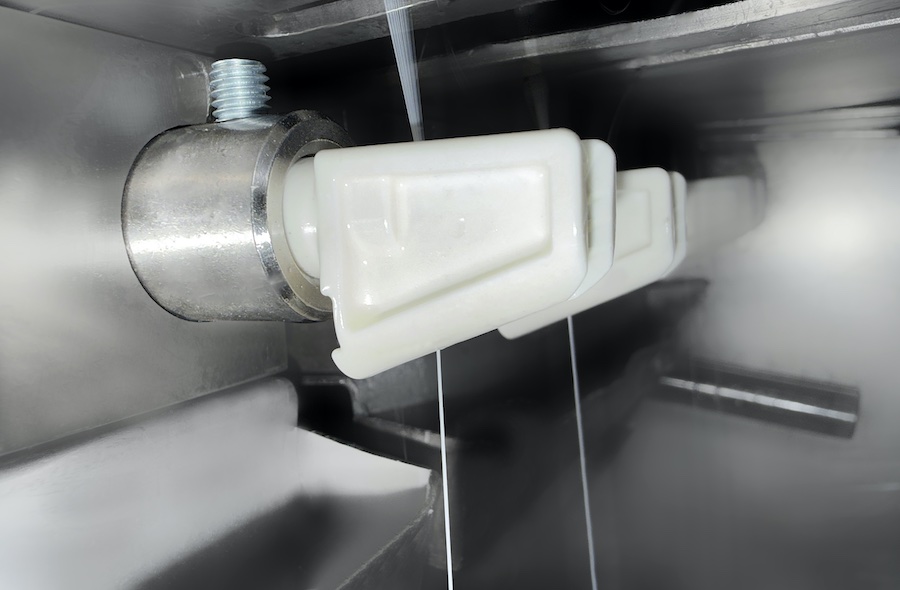
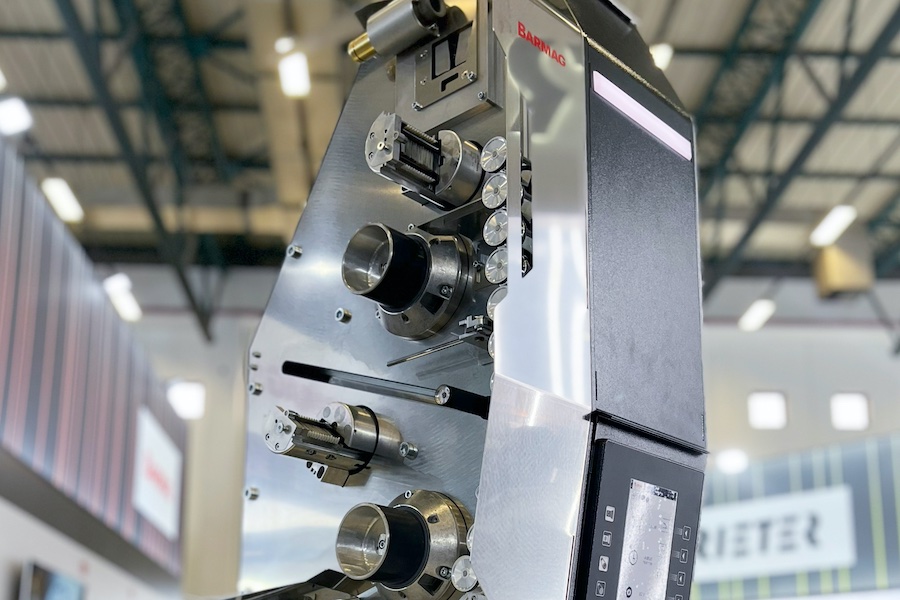
New Industrie 4.0 solutions from Oerlikon's Manmade Fibers segment will also be deployed for the first time. With the presentation of the new "IPC 4.0" (Intelligent Plant Control) customer services, Oerlikon will also set new standards in the future in the production of BCF yarns. The system portfolio of the market leader from Neumünster, Germany, almost completely covers the requirements of carpet yarn manufacturers. This is evident from the strong demand for the BCF systems S+ and Sytec One across the entire polymer and titre spectrum. With over 1000 positions installed worldwide, Oerlikon Neumag facilities produce over 1.6 million tonnes of BCF carpet yarn. Since their market launches in 2007 (Sytec One) and 2010 (S+), the systems have been optimised continuously. Ongoing further development of components and the process increases the user-friendliness and effi- ciency of BCF spinning mill solutions. Highly efficient tricolour yarn production with Variomelt, CPC and RoTac The demand for multicoloured carpets has grown significantly, with the market seeking a wide spectrum of colour separations in tricolour yarns. Oerlikon Neumag's S+ system concept offers the opportunity to produce the most diverse colour separations, from melange to strongly separated colours. Variomelt – maximum flexibility for the production of mono- and tricolour yarns The Variomelt concept is synonymous with the highly flexible production of large and small batches of mono- and tricolour yarns: the unit can be modified from tricolour to monocolour production with three single colours in less than 45 minutes. Long batch runtimes per monocolour extruder ensure particularly efficient raw material utilisation. As usual, the diphyl-heated Variomelt spinning mill provides a constant, optimal spinning temperature. Color Pop Compacting With the CPC (Color Pop Compacting) unit from Oerlikon Neumag, strongly separated yarns can be manufactured efficiently. The individual threads are provided with yarn cohesion in the CPC unit before texturing so that they are no longer able to become so intermingled in downstream process stages, giving rise to a strongly colour-separated yarn. Produce tricolour efficiently with RoTac Tricolour carpets must have a very uniform appearance, and an optimal tangle result in the BCF spinning mill is crucial for this. These tangle knots are produced in defined spacings and thicknesses using RoTac. Thanks to this tangling option, uniform tricolour results that cannot be produced in conventional tangling units are achieved even at high speeds.