[pageLogInLogOut]

#Spinning

Pre-Cleaner CL-X: Proven in cotton cleaning – creating value beyond the spinning mill
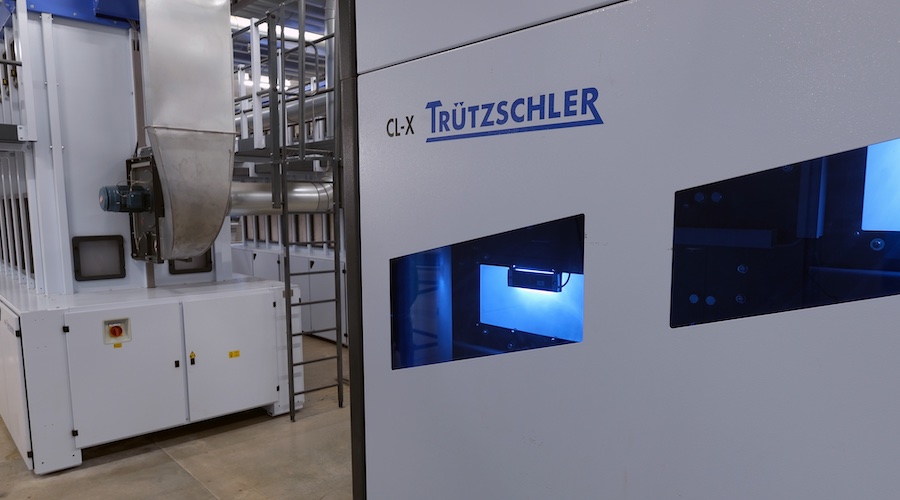
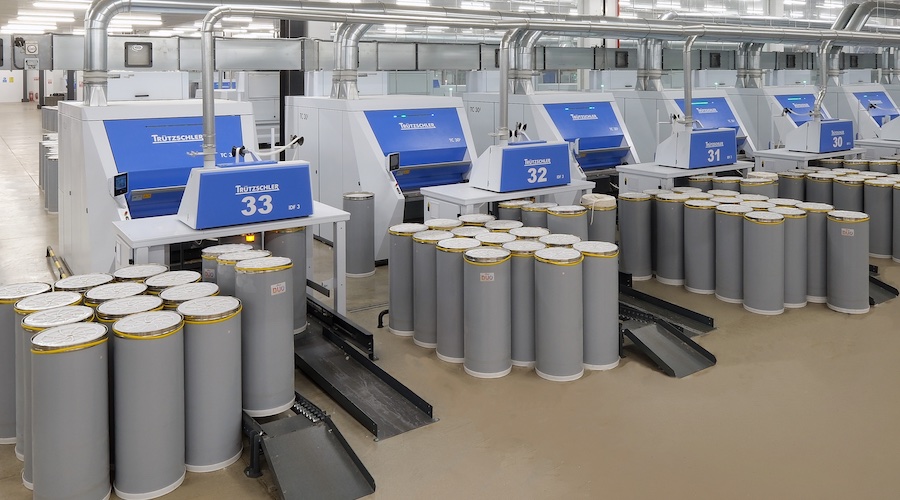
The CL-X enables significantly more effective fiber recovery. © 2026 Trützschler
Since its market launch, the CL-X has firmly established itself in blowroom lines worldwide. Hundreds of installations confirm its ability to deliver superior cleaning efficiency, lower waste, higher productivity and significant energy savings. Now, new customer applications show that the CL-X not only continues to excel in spinning preparation – it is also entering a completely new field of application: ginning.

Opening up new potential in ginning

Cotton gins perform the very first industrial processing step of cotton. Seed cotton arrives directly from the field and must be dried, cleaned and separated into three components: cotton fibers, cotton seeds and waste. While the fibers are pressed into bales for spinning mills, the waste fraction is sold separately – often still containing a considerable share of usable fibers.

In conventional ginning processes, this waste can contain up to around 0,8% good cotton fibers. These fibers still have value, but they are transported and sold in mixtures with trash, resulting in lower prices and unnecessary logistics costs. This is where the CL-X comes into play.

Installed directly downstream of the ginning machine, the CL-X enables significantly more effective fiber recovery. Thanks to its precise cleaning action, usable fibers are separated more efficiently from trash before shipment. The result: higher fiber yield, less waste volume – and greater economic value from the same amount of raw cotton.

Success story from Brazil

A Brazilian customer has now successfully implemented this concept. In a ginning operation processing around 500,000 tons of cotton per year, approximately 65% – or 65,000 tons – is typically separated as cotton seeds and waste during the cleaning process. Within this portion, approximately 4,000 metric tons (or 0.8%) of the waste consists, among other things, of high-quality fibers that should be separated, as they would otherwise be lost at this stage of the process.

By integrating the CL-X into the ginning process, the customer was able to further separate the ginning waste, splitting it into real waste and usable fibers that can be recovered at this early stage. This resulted in a significantly higher share of high-quality, marketable fibers, which in turn reduced the amount of waste

that needed to be transported. In addition to lower logistics costs, the customer benefits from substantially better prices for the recovered fibers.

Convinced by the results, the Brazilian ginnery has already placed follow-up orders for four additional CL-X machines for its ginning operations – a strong endorsement of the concept’s economic and technological potential. This application clearly demonstrates how CL-X performance can create added value well beyond the spinning mill.

Confirmed excellence in spinning preparation

While the ginning application highlights the CL-X’s versatility, new results from spinning mills further confirm its leadership in established use cases.

In Vietnam, a customer compared the CL-X with the previous pre-cleaning solution under identical production conditions. The CL-X reduced waste by approximately 0.5% to 0.8% in total while simultaneously improving yarn quality. These improvements led to enhanced efficiency on the customer’s rotor spinning operations, reduced material loss and a more consistent yarn output. At the same time, power consumption dropped by around 40%, resulting in substantial energy savings, lower operating costs and a clear sustainability benefit. The customer reports high satisfaction, particularly with the machine’s operational stability and output quality.

Equally impressive results were achieved at a Turkish spinning mill processing 100% cotton at 1,100 kg/h. Replacing a competitor machine with the CL-X led to 80% less waste, around 30% lower energy consumption and noticeably higher yarn quality downstream. In addition, the blowroom operation became more stable and efficient. Where two machines had previously been required, one CL-X now handles the cleaning task alone, setting a new benchmark for both productivity and simplicity. Encouraged by these results, the customer has already decided to upgrade its blowroom line with further CL-X machines.
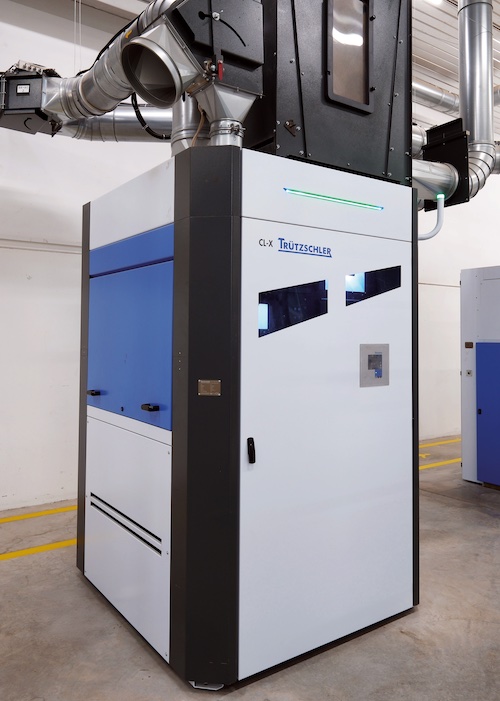
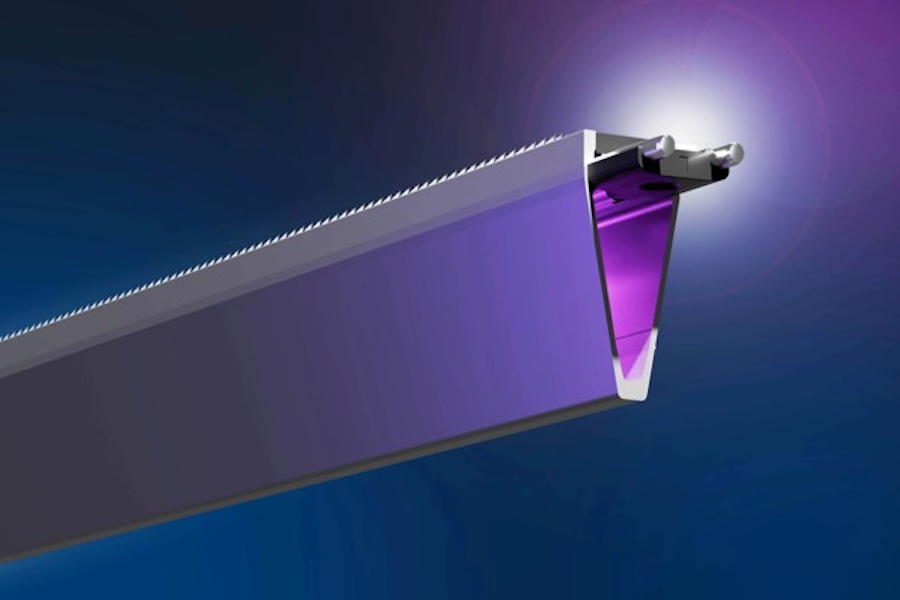
The CL-X creates value beyond the spinning mill. © 2026 Trützschler


Smart technology, strong cleaning performance

The technological foundation for these results in spinning preparation and ginning is the CL-X’s advanced cleaning concept. At its core is the proven WASTECONTROL system, which continuously monitors trash content and raw material quality by using real-time data. When too many good fibers are detected in the waste, the system automatically suggests an optimized setting to minimize fiber loss – ensuring consistently high cleaning performance and maximum fiber yield across varying conditions.

One machine, multiple opportunities

From spinning preparation to ginning, the CL-X once again proves why it has become a benchmark in cotton cleaning. Its ability to deliver measurable economic, quality and sustainability benefits – even in entirely new applications – demonstrates the strength of its underlying concept and how smart pre-cleaning technology continues to unlock new potential along the entire cotton value chain.
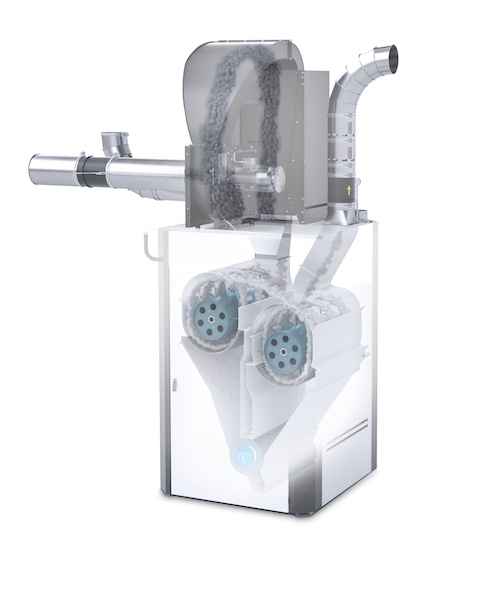
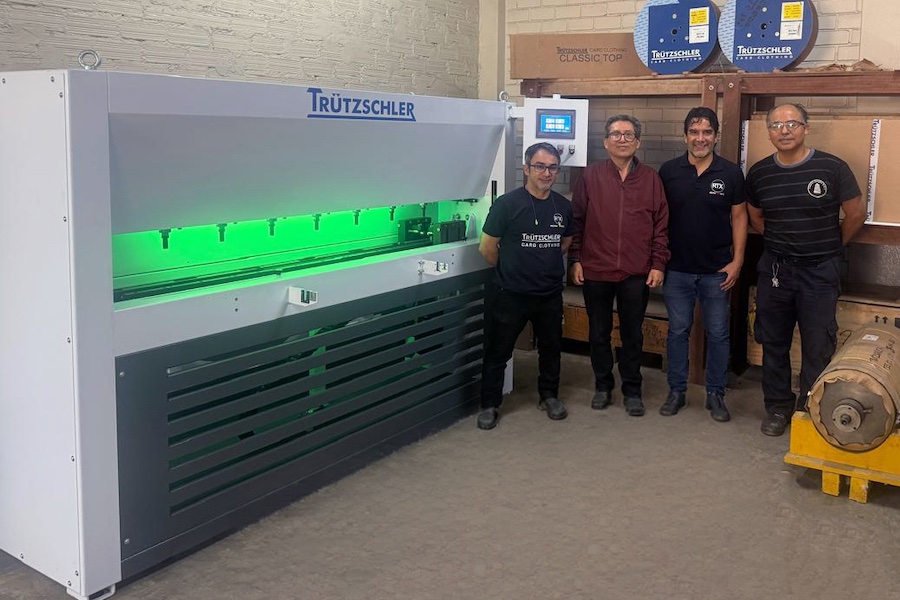
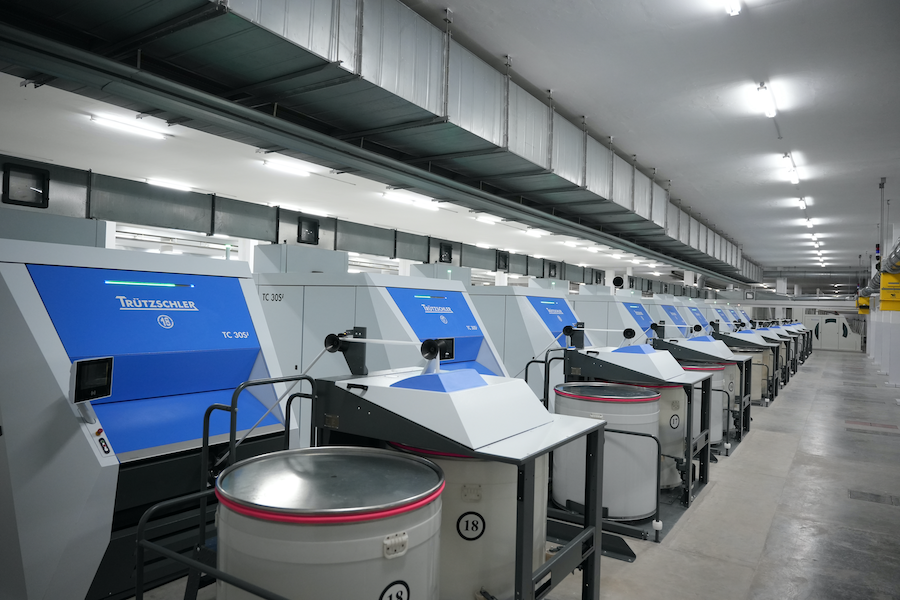
Pre-Cleaner CL-X: Delivering outstanding cleaning efficiency across diverse applications. © 2026 Trützschler


More News from Truetzschler GmbH & Co. KG

#Spinning

Trützschler’s latest spinning and card clothing innovations at CAITME 2026

From September 8 to 10, 2026, Trützschler will present its latest innovations in spinning and card clothing for state-of-the-art fiber processing at CAITME in Tashkent, Uzbekistan. Visitors are invited to meet the experts at Pavilion 2, Booth D50 and explore solutions designed to increase productivity, streamline processes, and ensure consistently high yarn quality. Key topics include the next-generation card TC 30i, the integrated draw frame IDF 3, the high-performance comber TCO 21XL as well as Trützschler Card Clothing’s new flat top series STEELTOP®.

#Spinning

STEELTOP®: A new benchmark in flat tops for spinning preparation

Modern carding generations achieve higher production performance, placing significantly greater stress on flat tops. Higher cylinder speeds and increased fiber density, combined with tighter carding gaps, create more demanding operating conditions. At the same time, poorer raw material quality and the increased use of recycled materials further intensify these challenges. With STEELTOP®, Trützschler introduces a new full steel flat top series developed for these demanding modern carding processes.

#Spinning

Ibrahim Fibres and Trützschler: A strong partnership enters its next phase with the TC 30Si

For more than two decades, Ibrahim Fibres and Trützschler have grown side by side, driven by a shared ambition to continuously improve spinning performance, strengthen technology leadership and set new benchmarks in the textile industry. Today, Ibrahim Fibres is a leading yarn and polyester staple fiber manufacturer in Pakistan. The company operates the largest number of Trützschler cards in the country, with more than 200 machines running across its mills in Faisalabad, and plays an important role in one of Asia’s largest textile industries.

#ITM 2026

Trützschler’s Integrated Draw Frame IDF 3: Unlocking the full potential of short fiber processing

Spinning mills worldwide are looking for solutions that combine higher productivity, stable quality and shorter processes, especially when processing short fibers. Trützschler’s integrated draw frame IDF 3 has proven to be a powerful answer to these requirements. Evaluations from several customer trials in Türkiye under real production conditions highlight the strong performance of the IDF 3, particularly when combined with the next-generation card TC 30i.

More News on Spinning

#Spinning

BICO BCF yarn delivers impressive performance in field testing

In a joint development project with other partners, Barmag and Object Carpet have successfully tested BICO BCF yarn in the carpet manufacturing process. The results show that this innovative yarn technology offers significant performance advantages and opens up new possibilities for recycling-oriented carpet constructions.

#Spinning

Barmag expands its portfolio for PA6/PA6.6 applications — also available as a retrofit solution

With the new type 6020 ceramic oiler, Barmag is introducing a powerful addition to its product portfolio for processing PA6 and PA6.6 yarns. The solution is specifically designed for low-titer applications in the range of 5 to 100 denier.

#Recycling / Circular Economy

Rieter and partners launch Recycling Powerhouse for industrial-scale textile recycling

Recycling Powerhouse Ltd. was established in July 2026 to industrialize, standardize and scale textile recycling. Based in Switzerland, the venture will operate a franchise-driven business model that enables the production of high-quality, certified recycled yarns. The project is supported by the following partners: Rieter Group, the world’s leading system supplier for natural and man-made fibers, Säntis Textiles, a Swiss textile engineering company, and Valvan, a Belgian sorting technology company. The first blueprint franchise operation is scheduled to launch early 2027 in partnership with Suhail Industrial Holding Group in Qatar.

#Spinning

Rieter sees Barmag integration on track as orders and sales rise

The first half of 2026 was shaped by the successful completion of the largest acquisition in Rieter’s history. The Man-Made Fiber Division enables entry into the growth segment of man-made fibers and sustainably strengthens Rieter’s market position in the Asia region. The expanded Group is now the world’s leading system supplier for the processing of natural and man-made fibers. In the first half of the year, initial cost savings in material costs and operating expenses have already been realized. The targeted synergies are expected to amount to at least CHF 20 million by the end of the 2028 financial year. Due to the completion of the acquisition on February 2, 2026, the first half of the year for the Man-Made Fiber Division only amounts to five months.

Latest News

#Knitting & Hosiery

SHIMA SEIKI brings new flat knitting technologies to FEBRATEX 2026

Leading flat knitting solutions provider SHIMA SEIKI MFG., LTD. of Wakayama, Japan, together with its Brazilian representative BRASTEMA TECNOLOGIA TEXTIL LTDA., will exhibit at the Brazilian Textile Industry Fair (FEBRATEX 2026) this month. On display will be a roundup of SHIMA SEIKI computerized flat knitting technology, represented by WHOLEGARMENT® knitting machines, computerized flat knitting machines featuring a brand-new model with high productivity and excellent cost performance, a glove knitting machine and the latest digital solutions.

#Man-Made Fibers

Lenzing reports improved half-year results and advances strategic transformation

Despite a persistently challenging market environment in the first half of 2026, characterized by volatile energy and raw material prices, subdued global consumer demand and intensified competition from Asia, the Lenzing Group significantly improved its financial performance. Net result after tax more than doubled to EUR 35.6 million, compared with EUR 15.2 million in the first half of 2025. Free cash flow increased to EUR 45.8 million, while EBITDA amounted to EUR 239.2 million. Revenue totaled EUR 1.27 billion, compared with EUR 1.34 billion in the previous year.

#Recycling / Circular Economy

German 'ZOLL' turns end-of-life uniforms into valuable raw materials

Together with CWS Workwear, the German Customs Administration is extending the life cycle of service uniforms through reuse, recycling and material recovery, demonstrating how circular economy principles can be successfully implemented in the public sector while delivering significant savings.

#Textile chemistry

Fashion for Good launches DW(O)R-X to navigate the emerging landscape of PFAS-free finishes

Fashion for Good announced the launch of Project DW(O)R-X, a collaborative initiative designed to benchmark PFAS alternative durable water- and oil-repellent (DW(O)R) chemistries. Responding to growing market demand for alternatives to PFAS‑based finishes, the project aims to generate reliable, comparable data that can support informed sourcing decisions and the assessment of emerging chemistries.

TOP