[pageLogInLogOut]

#Spinning

From waste to value: State-of-the-art TRUECYCLED installations in India

Demand for recycled yarn is growing. And the number of TRUECYCLED installations in India is growing too! More and more future-facing companies are driving progress toward a more sustainable textiles industry by producing high-quality yarn from waste – through specialized equipment and process know-how from Trützschler.


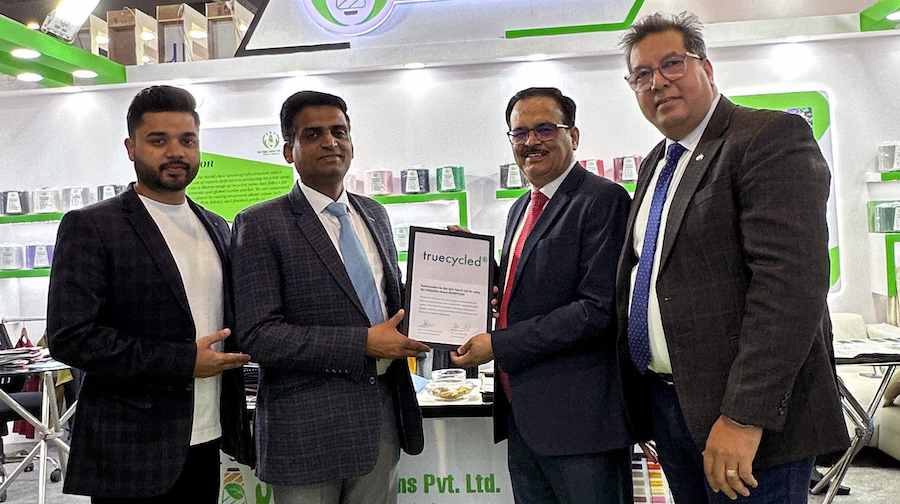
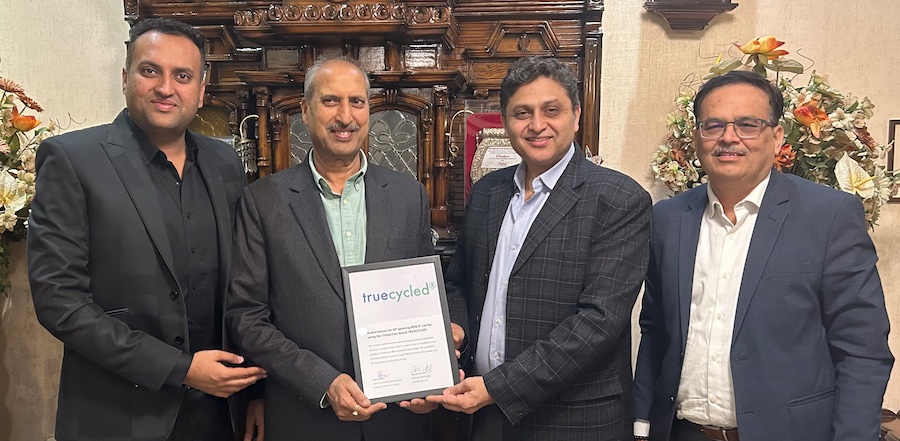
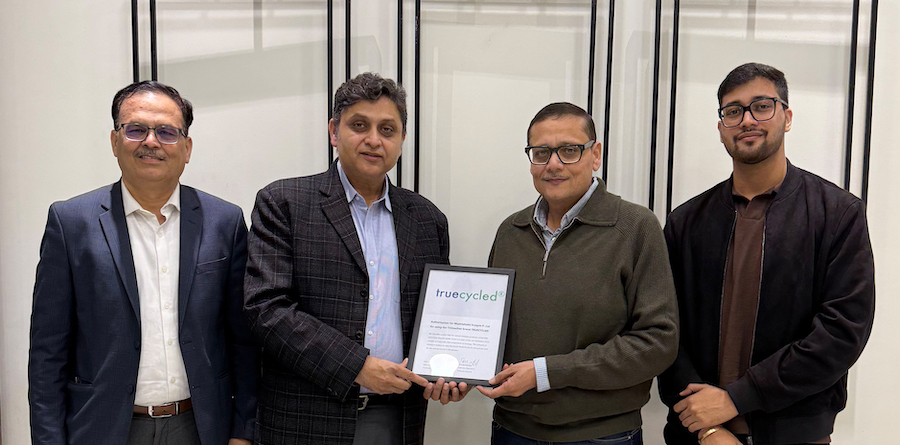
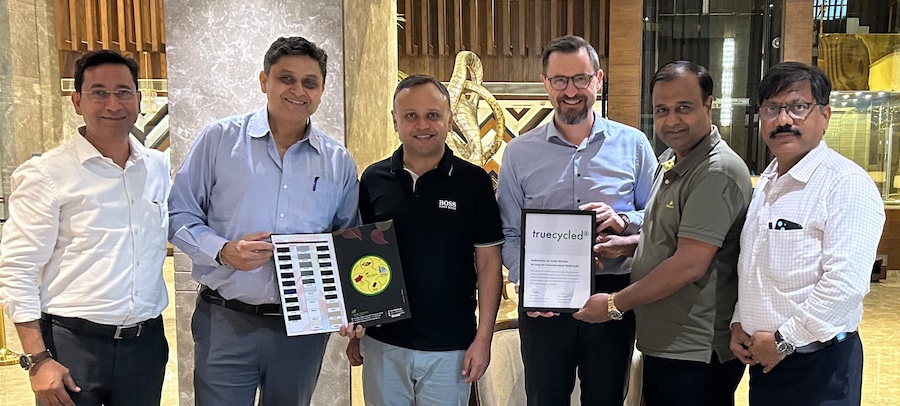
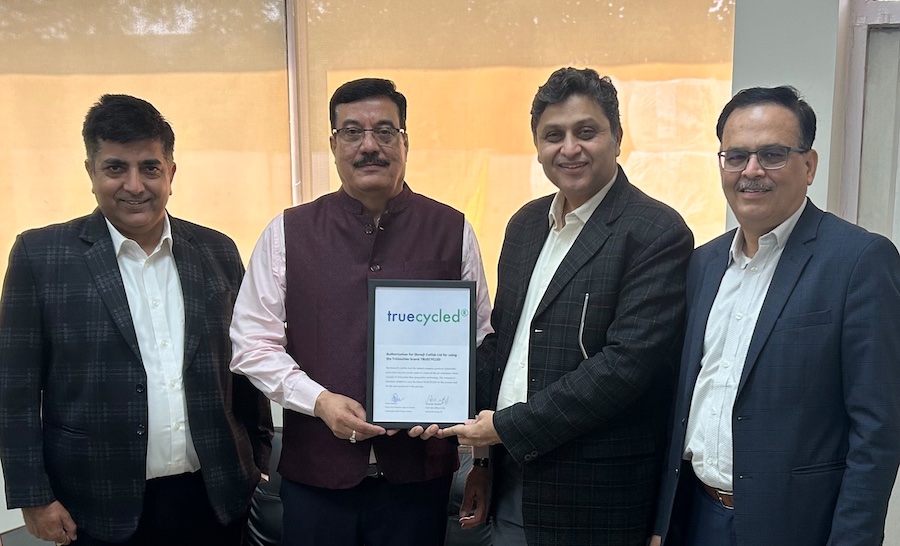
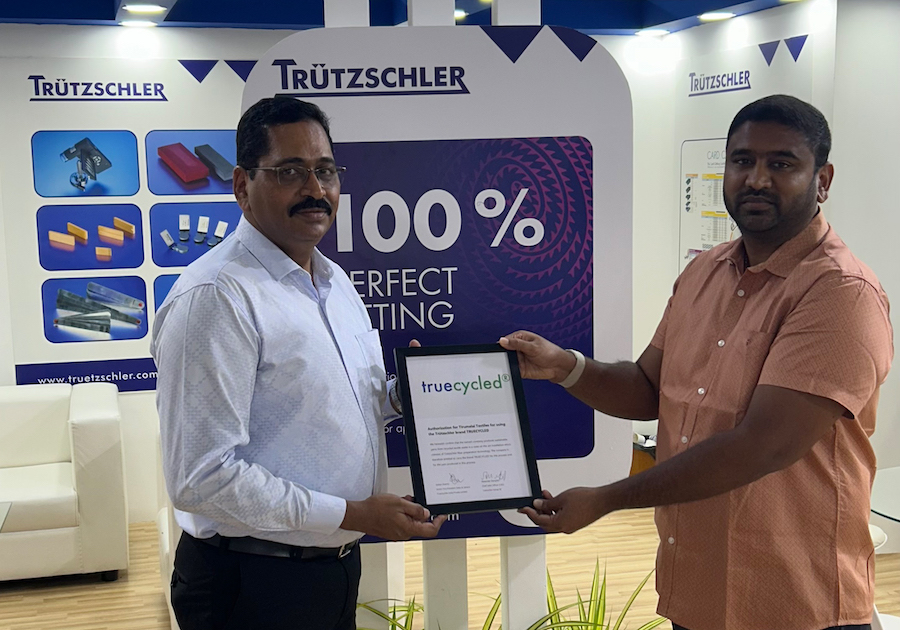
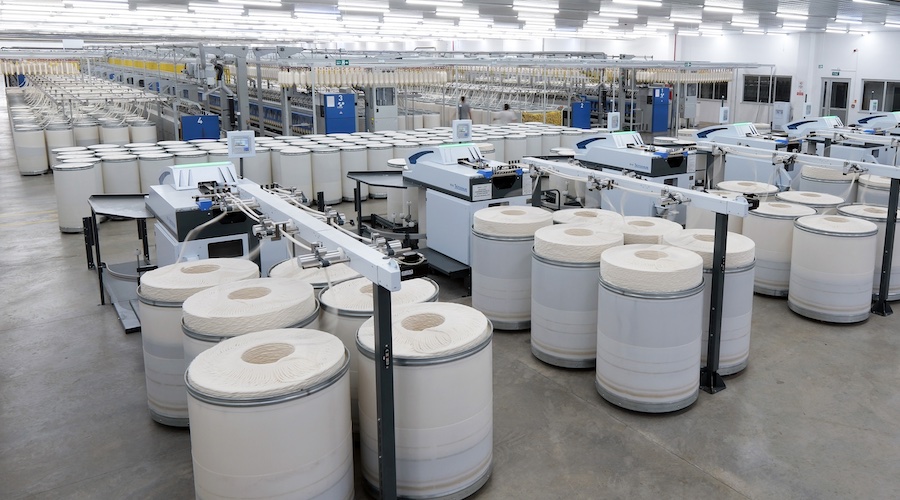
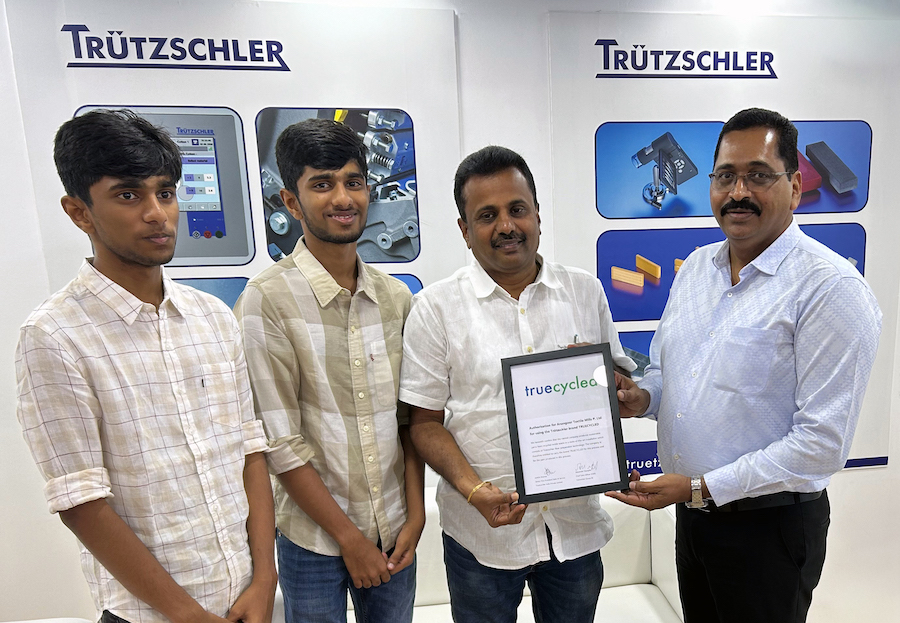
TRUECYCLED is Trützschler’s complete solution for state-of-the-art recycling of pre-consumer and post-consumer textile waste. It encompasses all process steps – from cutting and tearing textile waste through to carding and drawing secondary fibers. Last but not least, Trützschler’s technological expertise enables partner companies to produce recycled yarns with the best possible quality from hard textile waste. In India, USHA YARN was awarded as the first TRUECYCLED reference customer in 2023. Now we celebrated ten more reference customers. This big milestone demonstrates that TRUECYCLED is gaining traction in India, where demand for recycled yarn is growing rapidly.

A community of committed companies

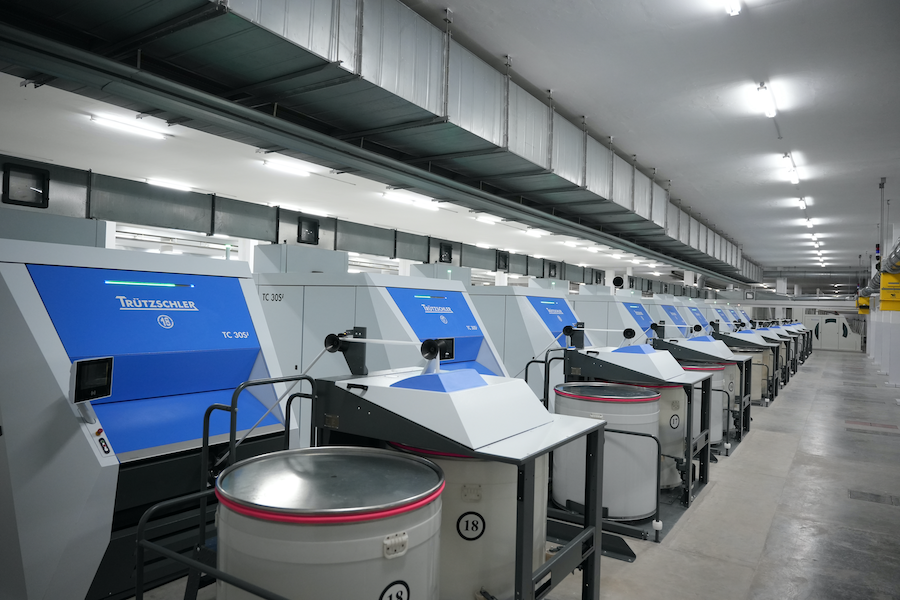
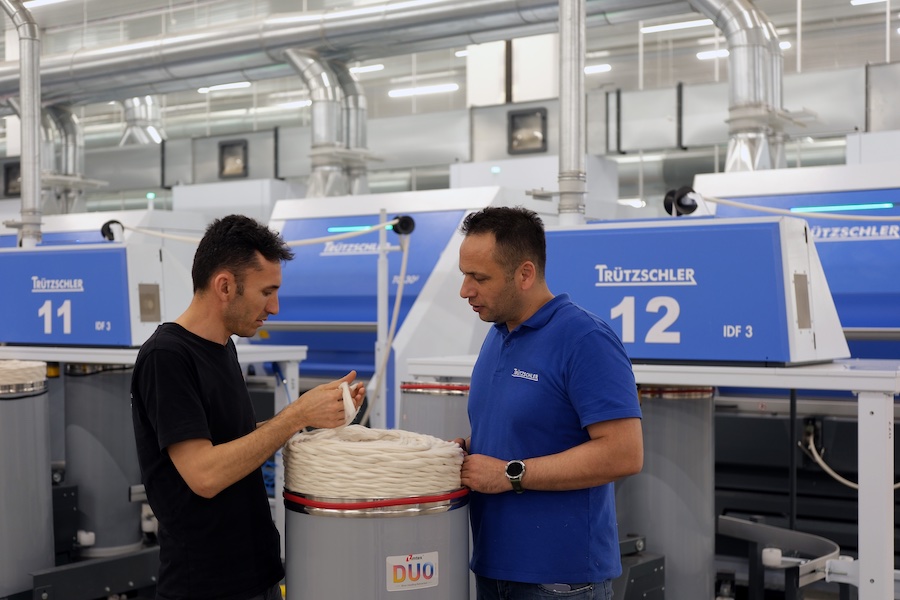
Our TRUECYCLED pioneers in India are taking action to promote more sustainable, circular value chains in the textile industry. Their yarns contain a substantial amount of textile hard waste, manufactured in a line of Trützschler machinery configured specifically for recycling. For example, all use the T-BLEND blow room line and Trützschler carding machines. This setup is the prerequisite for their market success. Aravind Prabhu, Joint Managing Director of Sri Velayudhaswami Spinning Mills, says: “By using Trützschler’s innovative T-Blend system for recycling, we are able to meet high expectations for export quality.”

Anangoor Textile Mills (based in Kangayam): Produces 30 tons of blended open-end yarn (Ne 20 to Ne 40) per day, using more than 50 percent raw materials from pre-consumer waste © 2025 Trützschler


Eco spin yarn (based in Derabassi): Specialized in 100 percent cotton and poly-cotton blended yarn. This company produces 18 tons of recycled yarn (Ne 10 to Ne 40) per day. It mainly uses 100 percent pre-consumer waste for cotton and up to 20 percent rPET fibers for poly-cotton blends © 2025 Trützschler


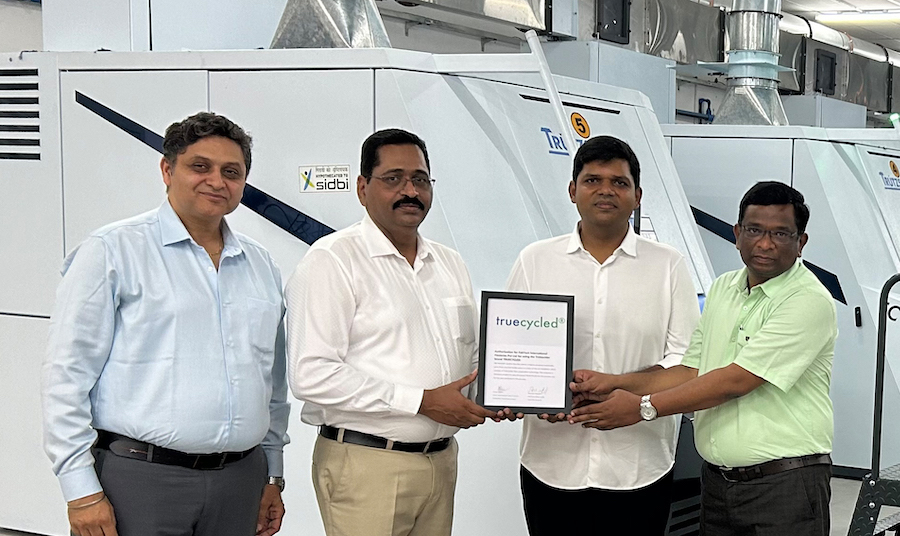
Fabtech International Hosieries (based in Tirupur): Manufactures 8 tons of blended open-end yarn (Ne 20 to Ne 40) per day, using more than 50 percent raw materials from pre-consumer waste © 2025 Trützschler


KS Spinning Mills (based in Panipat): Specializing in cotton and poly-cotton blended yarns with a capacity of 36 tons per day, this company produces a wide range of recycled open-end yarns from Ne 1 to Ne 40. For cotton yarn, the company uses 100 percent raw materials from pre-consumer waste. Poly-cotton blended yarns are produced with a blend of up to 20 percent recycled polyester and up to 80 percent pre-consumer waste © 2025 Trützschler


Maatrishakti Cotspin (based in Panipat): An open-end yarn expert, manufacturing 18 tons of cotton and poly-cotton blends per day (Ne 10 to Ne 40), using 70 to 80 percent raw materials from pre-consumer waste © 2025 Trützschler


Oasis Textiles (based in Derabassi): Each day, this producer makes 36 tons of recycled yarn – using more than 70 percent raw material from pre-consumer waste (Ne 10 to Ne 40) © 2025 Trützschler


Shreeji Cotfab (based in Neemarana): Produces 18 tons per day of open-end yarn made from cotton and poly-cotton blends (Ne 10 to Ne 30), primarily using more than 70 percent of recycled materials © 2025 Trützschler


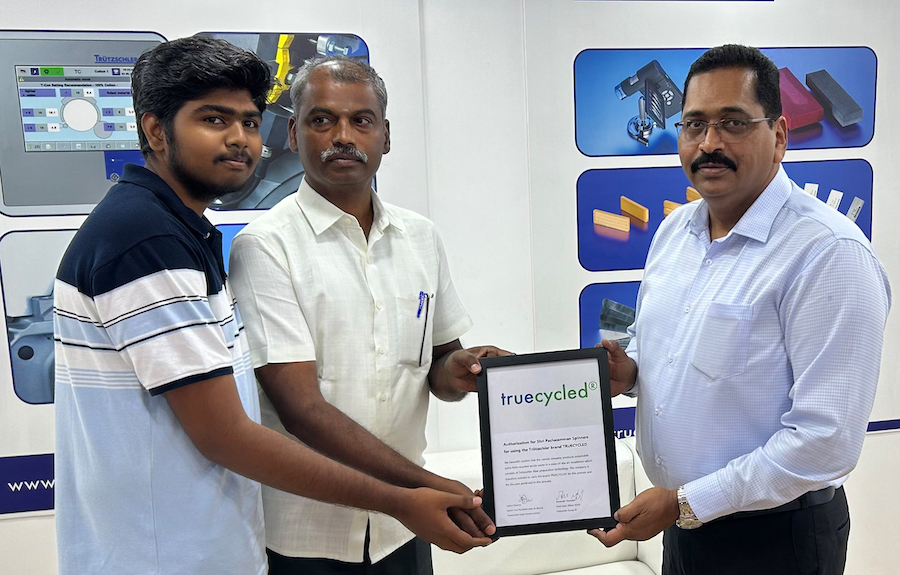
Shri Pachaiamman Spinners (based in Coimbatore): Turns more than 50 percent pre-consumer waste into hosiery yarn (Ne 10 to 30), producing 13 tons per day and using 100 percent recycled materials © 2025 Trützschler


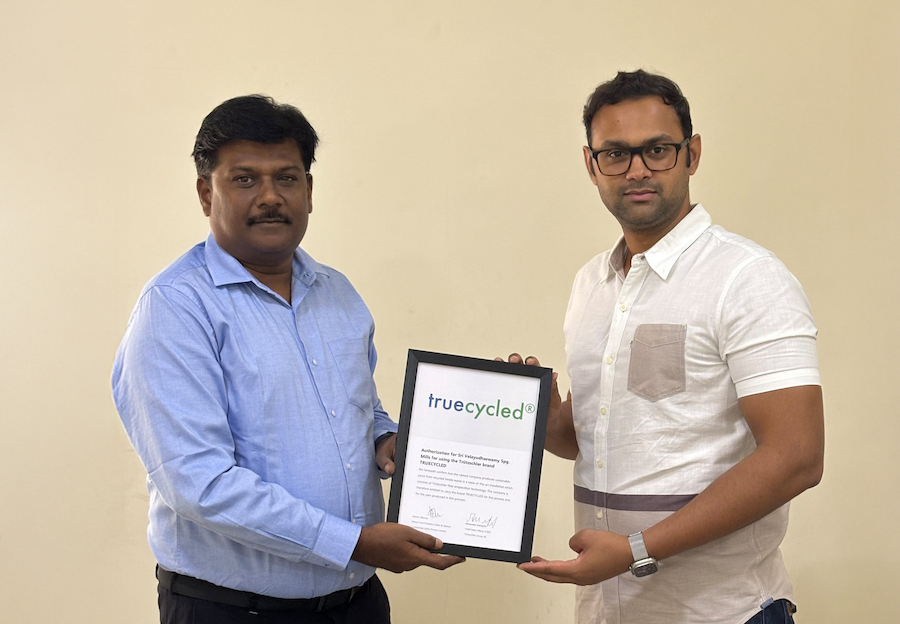
Sri Velayudhaswamy Spinning Mills (based in Dindigul): This customer produces 14 tons of recycled yarn (Ne 20 to Ne 40) per day from a blend of recycled cotton and polyester, using more than 50 percent pre-consumer waste © 2025 Trützschler


Tirumalai Textiles (based in Coimbatore): Using more than 50 percent of pre-consumer waste, this manufacturer produces 17.5 tons of open-end yarn (Ne 10 to Ne 30) per day for weaving and hosiery applications © 2025 Trützschler


Expanding worldwide

The TRUECYCLED installations in India join a growing group of companies around the globe that is recognizing the advantage of Trützschler solutions for textile recycling. This includes Trützschler customers in Türkiye as well as across Europe. Looking ahead, experts at Trützschler are striving to further expand the number of TRUECYCLED reference customers worldwide. Together, we can unlock maximum value from textile waste by leveraging the power of state-of-the-art machinery – and producing high-quality yarn that supports a more sustainable future for this industry.


More News from Truetzschler GmbH & Co. KG

#Spinning

Perfect quality through collaboration: Machinery from Trützschler, Toyota and Murata at Zirve Tekstil

In today’s textile industry, excellence is not achieved by chance – it’s the result of deliberate decisions, technical expertise, and the courage to go beyond conventional paths. The Turkish company Zirve Tekstil has done just that: by combining the best technologies from Trützschler, Toyota and Murata, they’ve created a production setup that delivers outstanding yarn quality – recognized worldwide.

#Spinning

Details matter: How Trützschler cylinder wires boost efficiency in Pakistan’s spinning sector

Pakistan’s textile industry, especially its spinning sector, is the backbone of the national economy and a vibrant hub of innovation. Today’s spinning mills face growing demands for efficiency, quality, and sustainability. From the serene northern valleys to the vibrant port city of Karachi in the south, mills like Suraj Cotton Mills, Liberty, and Nishat Chunian are turning to advanced solutions.

#ITMA Asia + CITME Singapore 2025

T-CAN – Revolutionizing can transport

In virtually all spinning mills, transporting sliver cans is still done manually. Rising labor costs, lack of operators and increasing quality requirements make this a growing challenge. With T-CAN, Trützschler introduces a practical solution: a fully automated can transport system that will be presented live at ITMA ASIA 2025 in Singapore.

#Spinning

Pre-Cleaner CL-X: The future of cotton cleaning

What if the future of cotton cleaning was already here – setting a new standard for cleaning efficiency, productivity and energy savings? That future has a name: CL-X. Since its market launch in 2022, the Pre-Cleaner CL-X has become a true bestseller, proving its value in several hundred customer applications worldwide. Now, new results from Türkiye demonstrate again how the Pre-Cleaner CL-X outperforms the competition.

More News on Spinning

#Techtextil 2026

RETECH showcases high-precision godets for high-performance fiber processing at Techtextil 2026

RETECH designs and manufactures godets and draw frames for heated, ambient and cooled processes, enabling precise heat treatment and consistently high yarn quality for a wide range of polymers and applications, with process temperatures of up to 400 °C for high-performance fibers. The company’s key competence lies in exact and stable temperature and speed control, individually adapted to the specific material and process requirements.

#Spinning

Barmag presents the next generation of POY production – energy-efficient and partial-automated

With POY 2.0, Barmag is introducing a completely redesigned spinning concept that takes the production of partially oriented yarn (POY) to a new level in terms of technology and economy. The solution, which was presented to a selected audience of experts for the first time at ITMA Asia + CITME 2025, was met with great enthusiasm: several yarn producers worldwide immediately expressed their interest in a pilot plant.

#Spinning

Development of bio-based polyethylene fibers for textile applications – BB Engineering partici-pates in the bioPEtex research project

In the German research project bioPEtex, BB Engineering (BBE) is working with other partners to develop textiles made from 100% bio-based polyethylene (PE). The aim is to make use of this poly-mer, which has hardly been used in the chemical fiber industry to date. BBE is contributing its spinning and texturizing expertise and developing the texturing process on an industrial scale. The first promising results are already available – opening up new opportu-nities for sustainable and economically attractive applications in the textile industry.

#Techtextil 2026

Saurer sets new standards at Techtextil 2026

When the international textile industry gathers at Techtextil in Frankfurt from April 21 to 24, Saurer is going to present a powerful solution for the growing demands in the field of technical yarns with the TechnoCorder TC2plus.

Latest News

#INDEX 2026

EDANA unveils nominees for INDEX™26 Awards: Highlighting the next generation of nonwoven excellence

EDANA is proud to unveil the highly anticipated nominees for the INDEX™26 Awards, the nonwoven industry’s highest accolade for technical and sustainable excellence. Out of a record-breaking field of entries, these finalists represent the cutting edge of material science—from bio-based hygiene fibers and PFAS-free protective textiles to revolutionary water-filtration machinery. Each nominee has been selected by a jury of industry experts for their ability to solve critical global challenges, including the transition to a circular economy and the pursuit of enhanced consumer performance.

#Raw Materials

Lenzing Group positions bio‑based materials as a strategic asset for Europe’s economic security

The Lenzing Group, a leading supplier of regenerated cellulose fibers for the textile and nonwovens industries, hosted a high‑level roundtable in Brussels to discuss how bio‑based materials can strengthen Europe’s economic security and support the shift toward a fossil‑free future. Organized in cooperation with Euractiv, the event brought together representatives of the European Commission, the UK Mission to the EU, academia, civil society, and industry.

#Natural Fibers

Beyond Cotton: Natural Fibres in the Spotlight at the Bremen Cotton Conference - Branded by DNFI

Climate targets, fragile supply chains, and rising regulatory requirements are fundamentally changing the perspective of the textile industry - the focus is increasingly shifting toward the base material. Not only cotton, but natural fibres are gaining significant importance: they stand out not only because of their outstanding functional properties, but also because they make a valuable contribution to the bioeconomy and responsible product development.

#Textiles & Apparel / Garment

Coats to showcase innovative reinforcement and filler materials for leather goods and accessories at APLF 2026

Coats, a world-class Tier 2 manufacturer and trusted partner for the apparel and footwear industries, will be promoting four advanced materials from its ‘Lifestyle Solutions’ portfolio at APLF 2026 in Hong Kong in March. Each innovation has been specifically engineered to help luxury and premium brands elevate the craft, durability, sustainability and creative expression required in the manufacturing of handbags, purses, and other high-end designer accessories.

TOP