[pageLogInLogOut]

#Spinning

India: Growing interest in Oerlikon Barmag industrial yarn systems

As a traditional textile country, India has also established a strong position in the field of manmade fiber production in recent decades. The West Asian country has now become the second largest polyester yarn manufacturer in the world. The Indian textile industry covers the entire value chain from the melt to the finished textile end product.
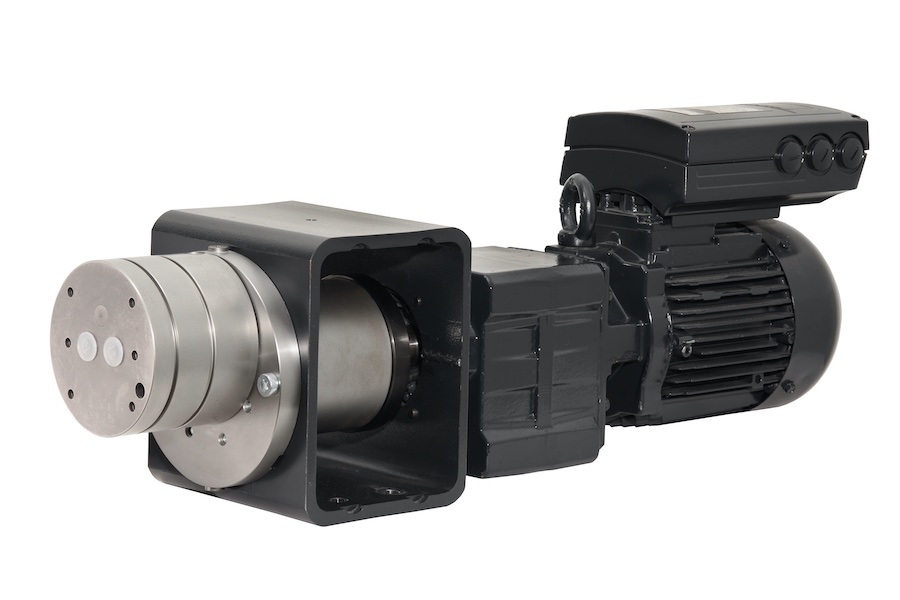
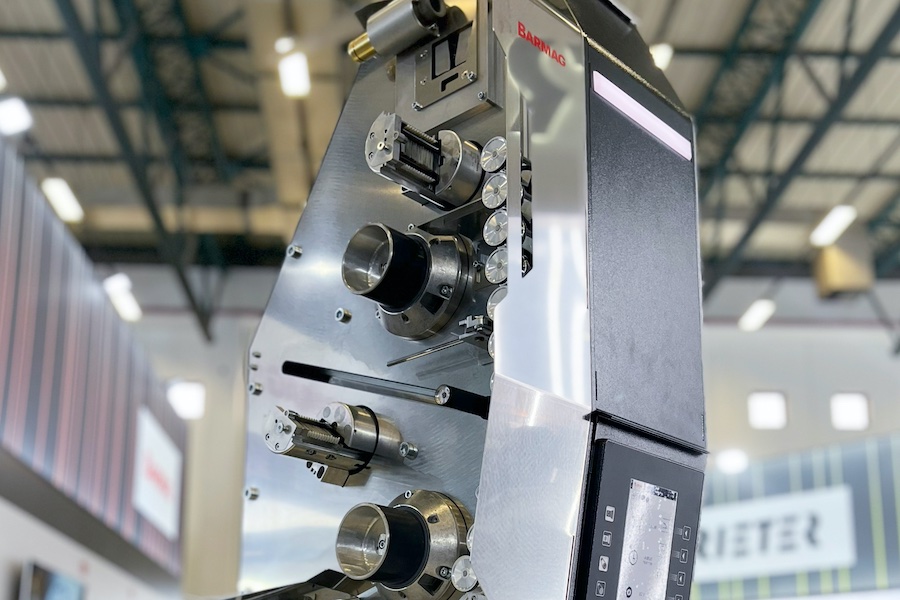
Oerlikon Barmag supplies its industrial yarn systems individually configured; the system concept for High Tenacity (HT) yarns and its unique properties on the market ensure the production of high-quality yarn for the manufacture of seat belts  © 2024 Oerlikon
Oerlikon Barmag supplies its industrial yarn systems individually configured; the system concept for High Tenacity (HT) yarns and its unique properties on the market ensure the production of high-quality yarn for the manufacture of seat belts © 2024 Oerlikon


Technical textiles on the rise

The technical textiles sector in particular is regarded as a future market. With an average growth rate of 12% since 2013, this dynamic sector accounts for around 13% of the entire Indian textile and clothing market, according to the government organization Invest India. The market volume has almost doubled in the past ten years. In India, the production of industrial yarn has so far relied heavily on polyamide. Oerlikon Barmag has a strong market position here. "In recent years, we have commissioned plants for numerous customers," says Dr. Wolfgang Ernst, Head of Sales of the Oerlikon Business Unit Manmade Fibers Solutions.

Increasing demand for industrial polyester yarns

The construction boom and the increasing use of geotextiles and industrial textiles in various infrastructure projects as well as in agriculture and aquaculture show enormous growth potential. This is supported by the government's 2021 industrial development program, which includes technical textiles as one of ten priority sectors. The program is based on reducing dependence on imports. Until now, a large proportion of the technical textiles and yarns required in the country have been imported. 

The trend towards high-quality technical textiles for the domestic market has also been noted by the Remscheid-based machine and plant manufacturer. "We are receiving more and more inquiries from Indian customers for spinning systems for industrial yarns," says Dr. Wolfgang Ernst. "What is new is the great interest shown by companies from downstream processes that are looking for backward integration. We attribute this to the stricter regulations of the Bureau of Indian Standards. Until now, industrial yarns were mainly imported from China. In order to guarantee the quality of the processed yarns, this has been strictly regulated by the government since last year. It therefore makes sense for Indian textile producers to enter the yarn manufacturing sector." This development was also noticeable at this year's Techtextil in Frankfurt, where the experts from Oerlikon Barmag were able to hold a disproportionately high number of technical discussions with Indian customers and interested parties. 

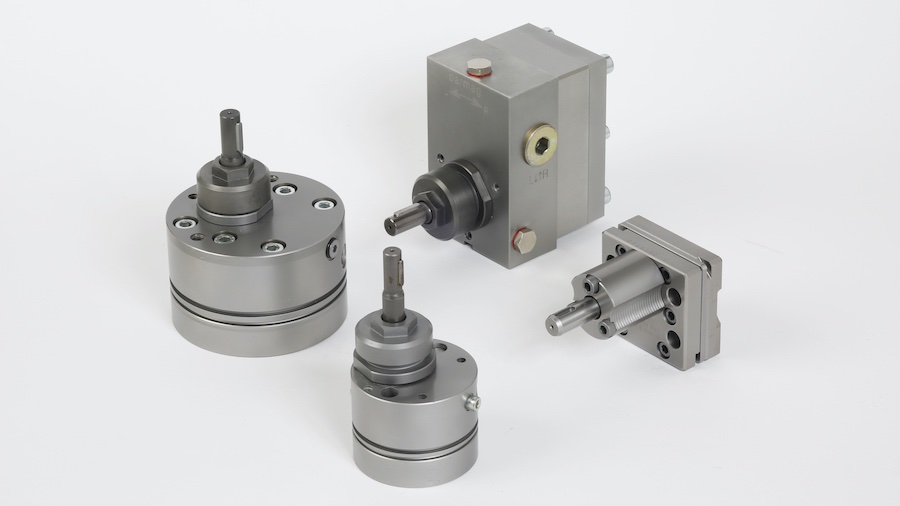
Oerlikon Barmag's industrial yarn technology offers an extensive process window - without compromising on yarn quality. The flexible spinning concepts enable a variety of possible yarn products for numerous applications. The portfolio includes processes for the production of polyamide and polyester yarns with the required physical properties for a wide range of end applications. Whether HMLS yarns for car tires, yarns for geotextiles, safety belts or even airbags - yarn producers will find a tailor-made concept for every end application at the Remscheid-based solution provider.

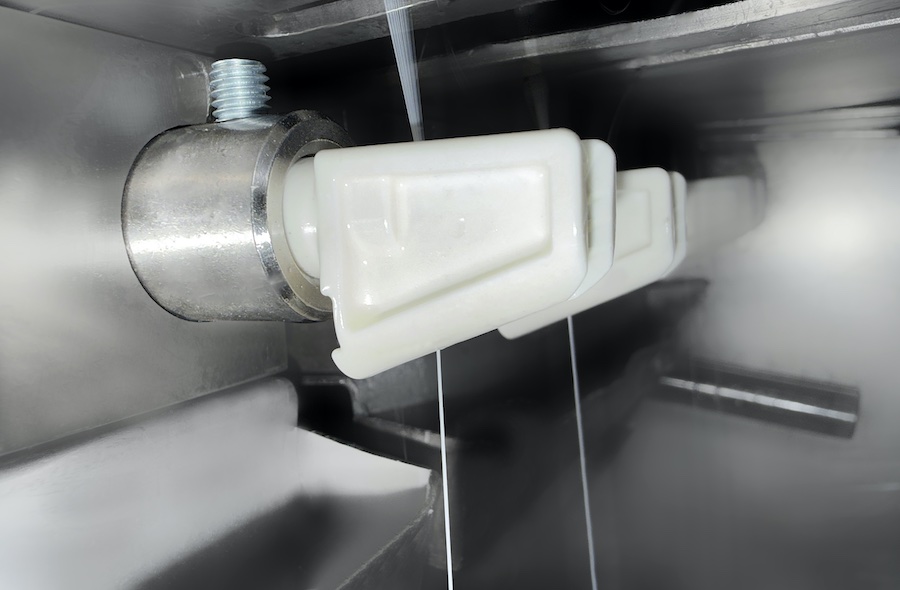
Seat belts need high-quality yarns  © 2024 Oerlikon
Seat belts need high-quality yarns © 2024 Oerlikon


More News from Oerlikon Textile GmbH & Co. KG

#Nonwovens / Technical Textiles

Crimper repair workshop begins operations

Since the beginning of the year, Oerlikon Textile Inc. has been offering a crimper repair service, making it the company's first location worldwide to do so. The workshop in Charlotte specializes primarily in Fleissner and Neumag crimpers.

#Spinning

Oerlikon Manmade Fibers Solutions hosted successful Technology Day 2025 in India

Oerlikon Manmade Fibers Solutions recently hosted its highly anticipated Innovation and Technology Day at the Deltin Hotel in Daman by end of January 2025. The event attracted over 300 participants, including industry experts, partners, and stakeholders, who gathered to explore the latest advancements and trends in the manmade fibers industry in India.

#Spinning

Industrial yarn producer sees growth potential in tire cord sector

The Chinese Junma Group has expanded its HMLS capacities by 20 positions, hence becoming one of the largest tire cord manufacturers in China. At present, the company has 64 positions of HMLS systems, all of which are from Oerlikon Barmag.

#Spinning

Oerlikon reports third quarter 2024 results, highlights strong execution in a challenging market landscape

In the third quarter of 2024, Oerlikon reported a stable operational Group EBITDA margin, despite challenging market conditions, thanks to a focus on pricing, cost management, and efficiency across both divisions. Group order intake saw a 4% year-over-year decline at constant FX, attributed to temporary market softness in Surface Solutions, while orders in Polymer Processing Solutions showed signs of stabilization.

More News on Spinning

#Techtextil 2026

RETECH showcases high-precision godets for high-performance fiber processing at Techtextil 2026

RETECH designs and manufactures godets and draw frames for heated, ambient and cooled processes, enabling precise heat treatment and consistently high yarn quality for a wide range of polymers and applications, with process temperatures of up to 400 °C for high-performance fibers. The company’s key competence lies in exact and stable temperature and speed control, individually adapted to the specific material and process requirements.

#Spinning

Barmag presents the next generation of POY production – energy-efficient and partial-automated

With POY 2.0, Barmag is introducing a completely redesigned spinning concept that takes the production of partially oriented yarn (POY) to a new level in terms of technology and economy. The solution, which was presented to a selected audience of experts for the first time at ITMA Asia + CITME 2025, was met with great enthusiasm: several yarn producers worldwide immediately expressed their interest in a pilot plant.

#Spinning

Development of bio-based polyethylene fibers for textile applications – BB Engineering partici-pates in the bioPEtex research project

In the German research project bioPEtex, BB Engineering (BBE) is working with other partners to develop textiles made from 100% bio-based polyethylene (PE). The aim is to make use of this poly-mer, which has hardly been used in the chemical fiber industry to date. BBE is contributing its spinning and texturizing expertise and developing the texturing process on an industrial scale. The first promising results are already available – opening up new opportu-nities for sustainable and economically attractive applications in the textile industry.

#Techtextil 2026

Saurer sets new standards at Techtextil 2026

When the international textile industry gathers at Techtextil in Frankfurt from April 21 to 24, Saurer is going to present a powerful solution for the growing demands in the field of technical yarns with the TechnoCorder TC2plus.

Latest News

#Raw Materials

Lenzing Group positions bio‑based materials as a strategic asset for Europe’s economic security

The Lenzing Group, a leading supplier of regenerated cellulose fibers for the textile and nonwovens industries, hosted a high‑level roundtable in Brussels to discuss how bio‑based materials can strengthen Europe’s economic security and support the shift toward a fossil‑free future. Organized in cooperation with Euractiv, the event brought together representatives of the European Commission, the UK Mission to the EU, academia, civil society, and industry.

#Natural Fibers

Beyond Cotton: Natural Fibres in the Spotlight at the Bremen Cotton Conference - Branded by DNFI

Climate targets, fragile supply chains, and rising regulatory requirements are fundamentally changing the perspective of the textile industry - the focus is increasingly shifting toward the base material. Not only cotton, but natural fibres are gaining significant importance: they stand out not only because of their outstanding functional properties, but also because they make a valuable contribution to the bioeconomy and responsible product development.

#Textiles & Apparel / Garment

Coats to showcase innovative reinforcement and filler materials for leather goods and accessories at APLF 2026

Coats, a world-class Tier 2 manufacturer and trusted partner for the apparel and footwear industries, will be promoting four advanced materials from its ‘Lifestyle Solutions’ portfolio at APLF 2026 in Hong Kong in March. Each innovation has been specifically engineered to help luxury and premium brands elevate the craft, durability, sustainability and creative expression required in the manufacturing of handbags, purses, and other high-end designer accessories.

#Textiles & Apparel / Garment

Design, innovation and sustainability propel VIATT 2026’s expanding role in ASEAN textile sourcing

At its third edition, the Vietnam International Trade Fair for Apparel, Textiles, and Textile Technologies (VIATT) further reinforced its role as a key sourcing and business platform for ASEAN’s textile industry. The three-day fair welcomed over 17,000 visits from 54 countries and regions, and featured over 460 exhibitors from 21 countries and regions across 18,000 sqm. The 2026 edition was marked by the introduction of new international pavilions and zones, broadening the fair’s sourcing scope across new geographies and product categories. The fringe programme, headlined by the debut Trend Forum, further distinguished VIATT as the region’s most integrated textile trade platform – uniquely spanning the entire value chain.

TOP