[pageLogInLogOut]

#Spinning

High-quality fiber and yarn production solutions for highest demands in technical textiles
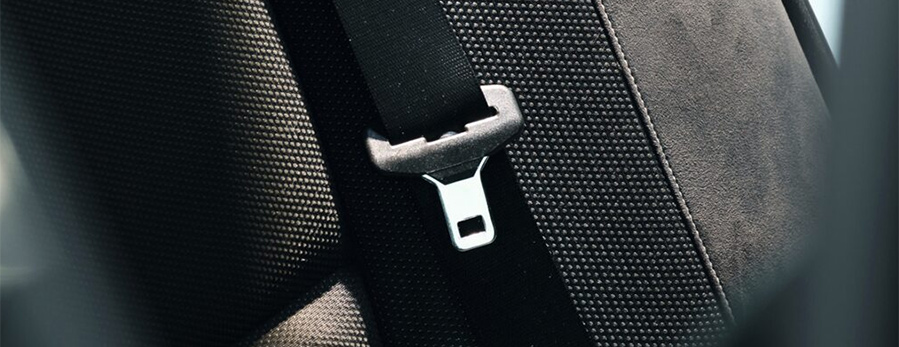
In accidents, the number one lifesaver is not the vehicle's body work or the airbag, but the seat belt. It holds the vehicle occupants firmly in position and thus enables other protective technologies to unfold their full function.© 2023 Oerlikon
At this year’s Techtextil India, the Polymer Processing Solutions Division of the Swiss Oerlikon group will be presenting the trade audience with new applications, special processes and sustainable solutions focusing on the production of industrial textiles. Between September 9 and 12, the discussions at Jio World Convention Centre (JWCC), Mumbai, Pavilion 3, H32 will be concentrating on airbags, seat belts, tire cord, geotextiles, filter nonwovens and their diverse applications.

More polyester for airbags 

Airbags have become an integral part of our everyday automotive lives. The yarns used in them are made predominantly from polyamide. As a result of increasingly diverse airbag applications and also the increasing size of the systems used, polyester is today used as well, depending on the application requirements and cost-benefit considerations. Against this background, the Oerlikon Barmag technol-ogies make an invaluable contribution. In addition to high productivity and low energy consumption, they particularly excel in terms of their stable production processes. Furthermore, they comply with every high quality standard for airbags, which – as in the case of virtually all other textile products used in vehicle construction – must provide the highest level of safety for vehicle occupants. And all this without any loss of function in any climate and anywhere in the world for the lifetime of the vehicle. 


Buckle up! 

Seat belts play a decisive role in protecting vehicle occupants. They have to withstand tensile forces in excess of three tons and simultaneously stretch in a controlled manner in emergencies in order to reduce the load in the event of impact. A seat belt comprises approximately 300 filament yarns, whose individual, high-tenacity yarn threads are spun from around 100 individual filaments. “With our unique, patented Single Filament Layer Technology, we offer a sophisticated and simultaneously gentle high-tenacity (HT) yarn process for manufacturing these lifesavers and other applications made from industrial yarn”, explains André Wissenberg, Head of Marketing.


Invisible, but essential – road reinforcement using geotextiles 

But it not just inside vehicles, but also under them, that industrial yarns reveal their strengths. Low stretch, ultra-high tenacity, high rigidity – industrial yarns offer outstanding properties for the demand-ing tasks carried out by geotextiles; for instance, as geogrids in the base course system under asphalt. Normally, geotextiles have extremely high yarn titers of up to 24,000 denier. Oerlikon Barmag system concepts simultaneously manufacture three filament yarns of 6,000 denier each. Due to the high spinning titers, fewer yarns can be plied together to the required geo-yarn titer in a more cost- and energy-efficient manner. 


hycuTEC – technological quantum leap for filter media 

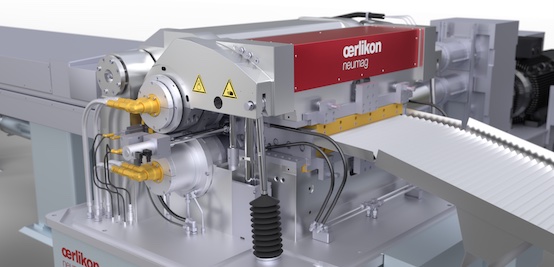
In the case of its hycuTEC hydro-charging solution, Oerlikon Neumag offers a new technology for charging nonwovens that increases filter efficiency to more than 99.99%. For meltblown producers, this means material savings of 30% with significantly superior filter performance. For end users, the consequence is noticeably improved comfort resulting from significantly reduced breathing resistance. With its considerably lower water and energy consumption, this new development is also a future-proof, sustainable technology.


The organizer Messe Frankfurt India is honoured to receive once again the much valued support from the Ministry of Textiles, Government of India for the 9th edition of the show. This support from the Ministry of textiles further demonstrates the huge emphasis laid for this key sector in boosting the economy of the country given the enormous scope to grow rapidly apart from the remarkable opportunities present to do business in India.
More News from Barmag GmbH & Co. KG

#Spinning

Barmag showcases pump solutions for demanding PU applications at PU China 2026

At PU China, taking place November 3–5, 2026, at the Shanghai World Expo Exhibition Center in Shanghai, Barmag’s Pumps Division will present high-performance metering solutions for the processing of polyurethane systems (Hall 1, Booth 135). The focus is on high-precision gear metering pumps that enable the exact delivery of PUR components as well as other high-viscosity and reactive media. With their high metering accuracy, they help reduce material consumption, stabilize processes, and ensure consistently high product quality.

#Spinning

Barmag presents metering pump solutions at ASE China

From September 15 to 17, 2026, Barmag’s Pumps Division will present its solutions for the precise delivery and metering of adhesives, sealants, and other high-viscosity media at ASE China at the Shanghai New International Expo Centre. The focus of the exhibition will be on high-precision gear metering pumps that help plant managers sustainably optimize material usage, process stability, and product quality. (Booth E4235).

#Spinning

Barmag expands its portfolio for PA6/PA6.6 applications — also available as a retrofit solution

With the new type 6020 ceramic oiler, Barmag is introducing a powerful addition to its product portfolio for processing PA6 and PA6.6 yarns. The solution is specifically designed for low-titer applications in the range of 5 to 100 denier.

#Nonwovens / Technical Textiles

Crimper repair workshop begins operations

Since the beginning of the year, Oerlikon Textile Inc. has been offering a crimper repair service, making it the company's first location worldwide to do so. The workshop in Charlotte specializes primarily in Fleissner and Neumag crimpers.

More News on Spinning

#ITMA Asia + CITME 2026

ITMA Asia 2026: How Barmag is reshaping the future of man-made fiber production

The textile industry is entering a groundbreaking era. Manufacturers face rising energy prices, growing sustainability demands, increasing labor shortages, and an unprecedented need for flexibility. For a globally active textile industry, where competitiveness is closely linked to production efficiency and cost leadership, this means that technology is no longer merely a means of improving operational processes – it is increasingly becoming a strategic differentiator.

#Spinning

Eltex takes the tension out of heat-setting

The ACT-MULTI system developed by Eltex – a member of TMAS, the Swedish textile machinery association – is bringing individual yarn tension monitoring and automatic control to the heat-setting process, helping manufacturers maintain consistent processing conditions across every yarn position.

#Spinning

Heberlein reinforces its commitment to the Chinese market

Heberlein, globally recognised as a leading provider of air interlacing and air texturing jets for synthetic filament yarns, is consolidating its success in the Chinese market with its APh- and APe-series for DTY applications. Particularly in the field of Air Covering, Heberlein technologies combine excellent quality with significant savings in compressed-air consumption. A new service hub in Shengze City underlines the company’s long-term commitment in the Chinese market.

#Recycled Fibers

Driving circularity with Uster Recycled Fiber Matrix

The textile industry’s commitment to circularity continues to accelerate, and mechanical recycling is viewed as a targeted approach to cutting textile waste and its environmental impact. At the forefront of this drive, Uster has developed the Recycled Fiber Matrix, a two-dimensional assessment of mechanically recycled fibers to guide optimum processing and end-uses.

Latest News

#Associations

HeiQ & Archroma and Lenzing & Armedangels win ITMF International Collaboration Awards 2026

The International Textile Manufacturers Federation (ITMF) has named two industry partnerships as winners of the ITMF International Collaboration Awards 2026. The awards go to collaborations between HeiQ and Archroma as well as Lenzing and Armedangels, highlighting joint approaches to innovation and sustainability across different parts of the textile value chain.

#Research & Development

180 years of TESTEX: From Zurich silk testing to global certification

For 180 years, TESTEX has developed alongside the textile industry while maintaining the same underlying purpose: creating trust through independent and reliable measurement. Founded in Zurich in 1846 as the Zurich Silk Conditioning Institute, TESTEX has grown from a local institution serving the silk trade into an international Swiss testing and certification institute for textiles and leather.

#Recycling / Circular Economy

Moving Advanced Recycling from Innovation to Implementation

The Advanced Recycling Conference 2026 explores technologies, markets, financing and scale-up of innovative recycling solutions for waste streams including mixed plastic waste, textiles and PVC. Europe’s chemical and materials sector faces growing pressure to close carbon loops, strengthen raw-material safety and resilience and meet increasingly ambitious EU recycling targets. Against this backdrop, the Advanced Recycling Conference (ARC) will bring together industry leaders, technology providers, researchers, innovators and policy-makers on 17–18 November 2026 in Cologne, Germany.

#Associations

German textile industry and retailers form alliance to shape textile EPR system

Germany’s textile and fashion industry and retail sector have joined forces to establish the “Alliance for Textile Circularity” (Allianz für textile Kreisläufe). Initiated by the German Textile and Fashion Industry Association (Gesamtverband textil+mode) and the German Retail Federation (HDE), the alliance aims to contribute industry expertise to the development of Germany’s future Extended Producer Responsibility (EPR) system for textiles and footwear.

TOP