[pageLogInLogOut]

#Spinning

Solution for more transparency in the supply chain
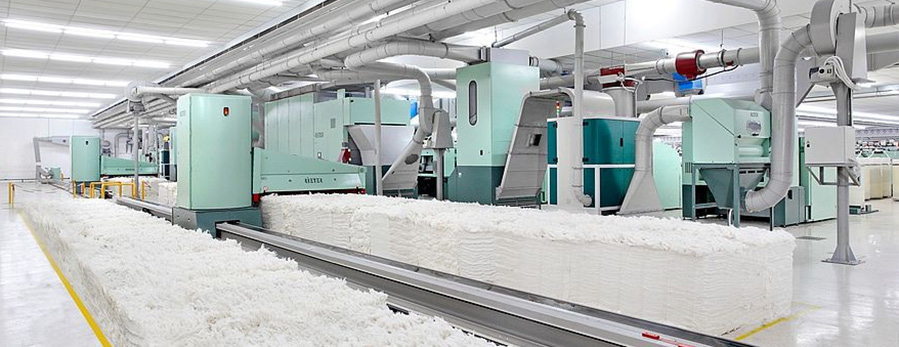
Rieter and Haelixa have joined forces to offer an innovative concept of marking fibers during yarn production. © 2022 Rieter
Rieter and Haelixa, offering a DNA traceability solution to mark and track fibers along the complete supply chain, have joined forces to offer an innovative concept of marking fibers during yarn production. The solution addresses the increasing demand for reliable traceability data. It provides forensic evidence of the origin of textile materials, which is becoming increasingly important given the growing demand for organic or recycled raw materials.

Haelixa offers a traceability solution based on a revolutionary and patented DNA technology for full textile supply chain transparency from source to retail. The company develops a unique marker that is applied directly to the fiber, which allows to identify either a brand, a supplier, a production lot, or a producer. The marker is harmless for humans and the environment, Oekotex 100 compliant, and Global Organic Textile Standard (GOTS) certified, yet strong enough to withstand all industrial processing. The test to verify the origin or authenticity of the material can be completed with the garment or any intermediate product.

Combining Rieter’s expertise for processing short-staple fibers with Haelixa’s solution will create more transparent and resilient supply chains with a solution that seamlessly integrates into existing equipment. Haelixa and Rieter have already completed joint in-house testing and validation, resulting in the launch of an automated application of the marker in Rieter spinning systems in liquid form.


"At Rieter, we see an increasing demand of our customers to provide more transparency along the supply chain. With this solution, Rieter is offering customers an automated traceability function as part of their systems which will help them add value to their products for greater success. Rieter and Haelixa will advance the application concept in line with spinners’ needs."

Rico Randegger, Head Rieter Business Group After Sales

"The partnership will give Rieter’s customers access to an integrated and ready to use traceability solution. Traceability creates added value as it enables trust and credibility by providing reliable product information. The Haelixa technology perfectly complements Rieter’s product portfolio, and we are excited about the synergies and added value we create."

Michela Puddu, CEO and Co-founder of Haelixa



More News from Rieter Textile Systems

#Spinning

"We will become a recycling powerhouse"

The textile industry is now in its fourth consecutive year of crisis, while automation, artificial intelligence and recycling are reshaping the rules of the game. In this interview, Rieter CEO Thomas Oetterli discusses the first signs of a market recovery, reflects on his first three years at the helm of the company, explains the integration of Barmag, outlines Rieter’s vision of the fully automated spinning mill and highlights the strategic importance of recycling. In doing so, he explains why the new Rieter Group aims to play a leading role in transforming the textile value chain into a circular economy.

#ITM 2026

Rieter at ITM 2026: Spinning Redefined with Automation and Intelligence

Spinning mills need solutions that deliver stability, efficiency and future-proof performance. Rieter has put together a powerful portfolio for ITM 2026 in Istanbul, Türkiye. These innovations give customers the tools to enhance cost efficiency, improve responsiveness and actively develop their competitive edge. Step-by-step, Rieter is moving closer to its Vision 2027 – the fully automated spinning mill. With each new technology, Rieter enables spinning mills worldwide to operate with greater precision and reliability, ensuring they remain at the forefront of an increasingly demanding global market.

#Spinning

Rieter Annual General Meeting 2026: Shareholders approve all board proposals

At the Annual General Meeting of Rieter Holding Ltd. held on April 16, 2026, 342 shareholders representing 64.0% of the share capital approved all motions proposed by the Board of Directors. The shareholders adopted the Annual Report as well as the Financial Statements and Consolidated Financial Statements for 2025. They also granted discharge to the members of the Board of Directors and the Group Executive Committee for their activities in the reporting year. In an advisory vote, the 2025 Report on Non-Financial Matters was also approved.

#Spinning

Rieter advances strategic repositioning amid market volatility

Rieter successfully completed the acquisition of Barmag on February 2, 2026, and reached an important milestone in the company’s repositioning. Barmag will be integrated into the Rieter Group as the “Man-Made Fiber” Division. With this strategically transformative acquisition, Rieter is expanding its core business beyond the short-staple fiber business in a targeted way. This positions Rieter as the global market leader along the entire value chain for natural and man-made fibers. In addition, as a complete systems supplier, Rieter is further strengthening its technological leadership in the areas of automation and digitization.

More News on Spinning

#Spinning

Ibrahim Fibres and Trützschler: A strong partnership enters its next phase with the TC 30Si

For more than two decades, Ibrahim Fibres and Trützschler have grown side by side, driven by a shared ambition to continuously improve spinning performance, strengthen technology leadership and set new benchmarks in the textile industry. Today, Ibrahim Fibres is a leading yarn and polyester staple fiber manufacturer in Pakistan. The company operates the largest number of Trützschler cards in the country, with more than 200 machines running across its mills in Faisalabad, and plays an important role in one of Asia’s largest textile industries.

#Spinning

Object Carpet tests production of rPET BCF yarn on Neumag BCF line

In a joint project with Object Carpet GmbH, Denkendorf; the Institute for Textile Technology (ITA), Augsburg; and Next Generation Recyclingmaschinen GmbH (NGR), Feldkirchen, Austria, Barmag investigated the processing of recycled polyester for BCF yarn. The goal was to evaluate the fundamental suitability of 100% recycled carpet material for reuse in carpet yarn production to create a closed-loop system in carpet manufacturing. To date, commercial rPET BCF processes have been based solely on rPET from bottle pellets.

#Spinning

New spinning package with two-step filtration for recycled yarns and more

At the ITM in Istanbul, BB Engineering unveiled its new, patented ValuePack spinning package for the first time, which features a two-stage filtration system. This is particularly beneficial for re-cycling processes. Until now, spinning packs have used either metal powder (“sand”) or filter candles as filter media. Both options are suitable for differ-ent applications, and each has its own specific advantages and dis-advantages.

#Research & Development

GenuTrace client advisory: Is your cotton supply chain UFLPA ready?

U.S. Customs and Border Protection has released updated operational guidance (CBP Publication No. 5560-0526) expanding its forced labor enforcement framework. The guidance supersedes the original 2022 UFLPA Operational Guidance and now covers all forced labor enforcement authorities — UFLPA, CAATSA, and WROs/Findings — in a single unified document. For cotton importers, the enforcement posture has not softened. It has become more structured, more documented, and more demanding. Learn more about UFLPA.

Latest News

#Recycling / Circular Economy

Ence and ShareTex begin initial testing of the ATENEA innovation project to promote textile recycling in Spain

Ence and ShareTex are making progress on the Atenea R&D project, which aims to develop a complete value chain for textile recycling in Spain. Specifically, the goal of the ATENEA project—which is funded by the Center for Technological Development and Innovation (CDTI)—is to connect all the necessary stages for the recovery of textile waste, from collection and management, through recycling and transformation into new raw materials, to their incorporation into new textile products.

#Recycling / Circular Economy

DePoly Inaugurates its Showcase Plant in Monthey Switzerland

What if used plastic bottles, PET packaging material and polyester textiles could become raw materials just as high performing as virgin resources? That is the ambition of DePoly, a circular materials company based in Sion, Switzerland which inaugurated its Showcase Plant in Monthey on July 6th & 7th. The first depolymerization facility of its kind and scale in Switzerland, this industrial Showcase Plant represents a major milestone in the company's growth and its journey toward commercialization.

#Recycling / Circular Economy

Commission clarifies rules on plastic bottles recycling

The European Commission today adopted new rules on recycling of single-use plastic beverage bottles made primarily of polyethylene terephthalate (PET bottles). These rules establish, for the first time, a methodology to calculate, verify and report chemically recycled content. This is part of the Commission’s December 2025 plastics package.

#Sustainability

Global Standards establishes new non-profit foundation to strengthen governance

Global Standards gGmbH, the nonprofit organisation behind the globally recognised Global Organic Textile Standard (GOTS), announced a new governance structure designed to support its long-term mission and reinforce organisational autonomy of its Voluntary Sustainability Standards and programmes.

TOP